
Business Interruption Insurance Claim
- Business Interruption Insurance Claim
- Crestview Public Adjusters
A business interruption insurance claim becomes critical the moment operations slow, revenue stops, or doors are forced to close due to a covered loss. Fires, floods, storms, equipment failures, and other disruptions can halt income while expenses continue to pile up.
Crestview Public Adjusters helps businesses document lost income, calculate extra expenses, and pursue full payment under complex business interruption policies. Serving companies across New York, New Jersey, Florida, and other licensed states nationwide, our team provides fast, precise claim support when cash flow and survival are on the line.
When Business Operations Stop, the Insurance Claim Becomes the Lifeline Get Complicated
A business interruption insurance claim is often the difference between recovery and long-term financial damage. When a covered event forces operations to slow or shut down entirely, lost income begins immediately. Payroll, rent, loan payments, and vendor obligations do not stop just because revenue does. At the same time, insurers quickly request documentation, calculations, and proof tying income loss directly to the covered event.
Many business owners underestimate how technical a business interruption claim can be. Insurers analyze revenue trends, historical financials, seasonal patterns, and expense classifications. A single mistake in income calculations, documentation gaps, or poorly framed timelines can delay or drastically reduce payment. Loss of income insurance claims are frequently disputed not because coverage does not exist, but because losses are not presented in a way that aligns with policy language.
Common loss components in a business interruption insurance claim include:
- Ongoing expenses such as payroll, rent, utilities, and loan payments that continue even when revenue stops
- Lost income tied to reduced operations, partial shutdowns, or full business closures
- Extra expenses incurred to keep the business running or shorten downtime
- Revenue losses caused by delayed reopening, access restrictions, or extended repair timelines
Crestview Public Adjusters works exclusively for policyholders. Our team handles both the damage-triggering event and the business income insurance claim that follows. We collaborate with owners, accountants, and operational teams to prepare accurate business income loss claim documentation that reflects real operational impact rather than insurer-friendly assumptions.
Businesses often search for guidance on how to file a business interruption claim or what the business interruption claim process actually looks like. Crestview provides that structure while protecting clients from delays, underpayment, and premature claim closures.
Common Business Interruption Scenarios That Lead to Insurance Claims
A business interruption insurance claim can stem from many different events, but the financial impact is often similar. Revenue declines sharply while fixed costs remain. Understanding how the disruption occurred and how it affected operations is essential before the claim is submitted.

Fire and Smoke Damage Closures
Fire-related incidents are one of the most common triggers for commercial business interruption claims. Even when a fire is quickly controlled, smoke, soot, and fire suppression systems can render a business unusable for extended periods. Businesses may be forced to close entirely or operate at reduced capacity while repairs, inspections, and air quality remediation are completed.
A business income insurance claim in these situations often includes loss of income during mandatory shutdowns, reduced customer access, and extended restoration timelines that go beyond the physical repair work. Insurers frequently challenge how long operations were reasonably interrupted, making clear documentation essential.
Water Damage and Flood Events
Water damage from burst pipes, roof failures, or flooding can destroy inventory, damage equipment, and interrupt essential systems. These losses often lead to business downtime insurance claims that include lost revenue, extra expenses, and temporary relocation costs.
In business interruption claims in NJ and business interruption claims in NY, disputes commonly arise over whether downtime was caused by covered water damage or secondary issues such as delayed drying or mold concerns. Accurate timelines and repair records play a major role in protecting loss of business income coverage.
Storm and Weather-Related Disruptions
Severe weather events such as hurricanes, windstorms, and heavy rain can force businesses to close due to structural damage, power outages, or restricted access to the property.
Even when a building remains standing, utility failures or unsafe conditions may prevent operations. Business interruption claims tied to storms often involve disagreements about when the restoration period should begin and end, especially if repairs are delayed by material shortages or contractor availability.
Equipment Breakdown and Utility Failures
Operations can also stop when critical equipment fails or utilities are disrupted, even if there is no visible property damage. Manufacturing facilities, medical practices, restaurants, and service providers rely on specialized equipment to operate. A loss of business income insurance claim may apply when policies include endorsements for equipment breakdown or service interruption. These claims require proof that the failure directly caused the operational shutdown.
Government-Ordered Closures
Some business interruption insurance claims arise when authorities restrict access after a covered loss, such as fire damage to neighboring properties or safety concerns. Even without direct damage, income loss can occur. These claims depend heavily on policy language and are often contested.
Supply Chain and Vendor Disruptions
When a key supplier or dependent property suffers damage, businesses may lose income despite no physical loss on site. These scenarios are frequently disputed and require strong policy interpretation.
Across all situations, Crestview focuses on connecting the triggering event, operational disruption, and financial loss directly to the applicable coverage.
Why Choose Crestview For Your Business Interruption Insurance Claim
Business interruption claims are among the most contested insurance claims because they rely heavily on financial interpretation rather than visible physical damage. Insurers closely scrutinize revenue projections, expense classifications, historical performance, and the defined loss period to limit payouts wherever possible. Even small differences in how income trends, seasonality, or recovery timelines are presented can lead to substantial reductions in settlement amounts. Early framing of a business interruption insurance claim often determines whether income loss is fully recognized or narrowly constrained to the insurer’s preferred assumptions.
Crestview Public Adjusters brings structured, policyholder focused advocacy to commercial business interruption claims. Our team begins with a detailed review of the insurance policy, including business income coverage, extra expense provisions, waiting periods, sublimits, and exclusions that may affect recovery. Many loss of income insurance claims are weakened when calculations are performed before the policy is fully understood. Crestview ensures financial documentation and loss projections are aligned with policy language rather than insurer interpretations that minimize exposure.
During a business income insurance claim, Crestview assists with:
Reviewing business interruption and extra expense policy provisions to identify all applicable coverages
Calculating lost income using accurate financial benchmarks tied to actual operations
Documenting continuing expenses and mitigation efforts required to reduce downtime
Managing insurer requests, audits, and follow-up questions to prevent delays
Identifying overlooked loss periods and underreported revenue impact
Business income insurance claims frequently involve complex financial analysis. Insurers may rely on shortened historical windows, exclude growth trends, or classify expenses in ways that reduce compensable loss. Crestview works with business owners and financial professionals to calculate business income loss using accurate benchmarks that reflect real operating conditions.
Independent Florida data has shown that policyholders who worked with public adjusters on certain insurance claims received significantly higher average settlements than those who handled claims alone, in some studies reaching increases of up to 747 percent. While results are never guaranteed, commercial business interruption claims are particularly vulnerable to underpayment when insurers control both the financial narrative and claim process without policyholder advocacy.
Trustindex verifies that the original source of the review is Google. I've been in the Property Claims industry for over 25 years and have worked with Crestview Public Adjusters. Highly recommend their services should you need an advocate to fight the insurance carrier!Trustindex verifies that the original source of the review is Google. Crestview was very attentive to our needs in a very difficult time.Trustindex verifies that the original source of the review is Google. I highly recommend Crestview Public Adjusters. They worked diligently to recover my losses from a flood in my apartment. They were always accessible, always responsive and ultimately got me what I was owed, something I could not have done on my own.Trustindex verifies that the original source of the review is Google. Josh and his team at Crestview Public Adjusters were extremely easy to work with. A tree fell on our house after a storm and I reached out to Josh and he went to work right away. He made the process really easy and answered all of my questions. His team took care of everything and the results were excellent.Trustindex verifies that the original source of the review is Google. Marc and Josh what a team...Marc spent the time to really hear and understand our pain points dealing with ASSURANT INSURANCE COMPANY ..The worst insurance company to deal with the worst staff... I would go through details but too much to cover and my family and I are just glad the nightmare is over thanks to Crestview Public Adjusters...would recommend to anyone...Trustindex verifies that the original source of the review is Google. Crestview was an absolute pleasure to work with. We got a call from a long term commercial tenant at 6am the morning after Hurricane IDA saying there is 4 ft of water filling up the space and that they were doing a walk through that day to sell their business. Crestview got their contractors over right away . We were able to prevent a lot of damage due to their quick response. Once onsite, they assessed all of the damage, we discussed rebuild plans and there was little for me to do as a landlord other than cash a check. Josh's assessments' were accurate and he was easy to communicate with. They also took a holistic approach to maximize my payout and even got the physical payment expedited so we can begin the rebuild. I would definitely use them again.Trustindex verifies that the original source of the review is Google. Great team to work with; they are reliable, efficient and trustworthy!!!Trustindex verifies that the original source of the review is Google. Josh was extremely conscientious and responsive. He got the damage response started immediately with great results and was able to get us a much larger settlement than we could have anticipated.Trustindex verifies that the original source of the review is Google. A tree fell on my house and knocked the chimney through my roof. I told my friend how hard it was dealing with the insurance company. He told me to call Crestview Public Adjusters and I am so happy I did. They handled everything for me with the insurance company and even helped me find a contractor to do the repairs. I couldn't be happier that I used them. I'd give them 6 stars if I could. Give them a call for all your insurance claim needs. I'm sure you won't be disappointed.Trustindex verifies that the original source of the review is Google. Josh and his team are great to work with. They really helped us with the entire process from start to finish, highly recommended.
Crestview represents businesses across New York, New Jersey, Florida, and other licensed states with one clear objective: presenting a complete, defensible business interruption insurance claim that reflects the true financial damage caused by business downtime, not a reduced version shaped by insurer assumptions.
Business Interruption Claim Process Explained
Understanding the business interruption claim process helps businesses avoid costly mistakes, missed deadlines, and unnecessary disputes with insurers. Because these claims rely on financial documentation and policy interpretation rather than visible damage alone, each step must be handled carefully to protect the full value of the loss.
01
Stabilize operations
The first priority after a covered loss is mitigating further damage and limiting downtime where possible. This may involve temporary repairs, relocating operations, renting equipment, or adjusting workflows to continue partial operations. These actions often generate extra costs, which may be recoverable under extra expense coverage. It is critical that all mitigation efforts are documented, including invoices, timelines, and the reasons these steps were necessary to reduce overall loss. Insurers routinely examine whether mitigation was reasonable and whether expenses were properly tied to the interruption.
02
Preserve financial records
Accurate financial records form the backbone of a business interruption insurance claim. Profit and loss statements, tax returns, sales reports, payroll records, bank statements, and vendor contracts establish pre loss performance and ongoing obligations. Missing or incomplete records can allow insurers to apply unfavorable assumptions when calculating lost income. Preserving and organizing these documents early prevents delays and protects the credibility of the claim.
03
Early policy review
Before detailed loss calculations are prepared, the insurance policy must be reviewed in full. Coverage triggers, waiting periods, exclusions, sublimits, and calculation methods vary widely between policies. Crestview evaluates the policy language to ensure that loss projections align with what the policy actually covers, rather than what insurers may attempt to restrict. Early policy review prevents wasted effort and strengthens the overall claim strategy.
04
Document the loss period
The restoration period defines how long business income losses are compensable. This period must be supported by repair timelines, inspection reports, permitting delays, supply chain issues, and operational milestones. Insurers often attempt to shorten the loss period, so documentation must clearly show when normal operations could realistically resume.
05
Prepare the business income loss claim
Lost revenue, continuing expenses, and extra expenses are calculated using policy compliant formulas. Growth trends, seasonality, and operational capacity are factored into the analysis to reflect real world performance rather than simplified averages.
06
Submit proof of loss
A complete proof of loss package includes financial support, written explanations, and documentation tying the loss directly to the covered event. Clear presentation reduces follow up requests and audit challenges.
07
Negotiate settlement
If the insurer delays, underpays, or disputes the claim, Crestview challenges unsupported assumptions and negotiates toward a fair resolution that reflects the full business interruption impact.

What Does Business Interruption Insurance Cover?
Business owners often ask what business interruption insurance actually covers and why these claims are so frequently disputed. While the intent of business interruption coverage is to replace lost income during a shutdown, the reality is far more complex. Coverage depends heavily on the exact policy wording, endorsements, exclusions, and the specific cause of loss. Even small differences in language can significantly affect how much compensation a business ultimately receives.
Business interruption insurance is designed to help a company stay financially stable while operations are suspended due to a covered loss. This includes not only lost revenue but also certain ongoing expenses that continue even when doors are closed. However, insurers often interpret coverage narrowly, focusing on strict definitions of the restoration period, proof of loss requirements, and financial documentation. When projections are unclear or records are incomplete, insurers may reduce or deny parts of the claim.
A helpful way to understand how business interruption coverage typically works is to compare losses that are often included versus those that are commonly limited or excluded. While every policy is unique, the table below highlights general coverage patterns seen in many claims.
Often Covered Under Business Interruption
- Loss of net income during a covered shutdown
- Continuing operating expenses such as rent and utilities
- Extra expenses to reduce downtime and resume operations
- Temporary relocation or alternative operating costs
Often Limited or Excluded
- Losses outside the defined restoration period
- Undocumented or speculative revenue projections
- Losses caused by uninsured or excluded perils
- Delays unrelated to physical repairs or restoration
One of the most contested aspects of these claims is the business income loss calculation. Insurers often rely on historical averages or conservative assumptions that fail to account for growth trends, seasonal fluctuations, or contracts that were already in place before the loss. This can significantly undervalue the true financial impact on the business.
Crestview Public Adjusters carefully reviews financial records, tax returns, sales trends, and policy language to challenge inaccurate calculations. By identifying flawed assumptions and unsupported reductions, the team works to ensure business owners receive a settlement that accurately reflects their real losses. This detailed approach helps businesses recover more fully and return to normal operations with greater financial confidence.
Business Interruption Claim Help In Your Area
Cyber incidents can disrupt any business in New Jersey or New York, from small offices to multi-location companies. Ransomware, data breaches, phishing, or system outages can halt operations and create financial strain.
Crestview Public Adjusters helps businesses navigate cyber insurance claims, document losses, and respond to insurer requirements. Whether one location or several are affected, the team ensures ransomware costs, system restoration, and business interruption losses are properly supported.
Businesses in NJ and NY can rely on Crestview for prompt, structured guidance to reduce delays and maximize recovery under their cyber policy.

- New York Cities that we Service:
- Albany
- Binghamton
- Cortland
- Glen Cove
- Ithaca
- Little Falls
- Mount Vernon
- North Tonawanda
- Oneonta
- Poughkeepsie
- Salamanca
- Tonawanda
- White Plains
- Amsterdam
- Buffalo
- Dunkirk
- Glens Falls
- Jamestown
- Lockport
- New Rochelle
- Norwich
- Oswego
- Rensselaer
- Saratoga Springs
- Troy
- Yonkers
- Auburn
- Canandaigua
- Elmira
- Gloversville
- Johnstown
- Long Beach
- New York City
- Ogdensburg
- Peekskill
- Rochester
- Schenectady
- Utica
- Batavia
- Cohoes
- Fulton
- Hornell
- Kingston
- Mechanicville
- Newburgh
- Olean
- Plattsburgh
- Rome
- Sherrill
- Watertown
- Beaver Falls
- Chester
- DuBois
- Franklin
- Jeannette
- Lower Burrell
- Nanticoke
- Philadelphia
- Port Jervis
- St. Marys
- Titusville
- Williamsport
- New Jersey Cities that we Service:
- Absecon
- BordentownBordentown
- Cape May
- Elizabeth
- Hackensack
- Linwood
- Newark
- Passaic
- Rahway
- Summit
- Wildwood
- Asbury Park
- Bridgeton
- Clifton
- Englewood
- Hoboken
- Long Branch
- Northfield
- Paterson
- Salem
- Trenton
- Woodbury
- Atlantic City
- Brigantine
- Corbin City
- Estell Manor
- Jersey City
- Margate City
- North Wildwood
- Perth Amboy
- Sea Isle City
- Perth Amboy
- Bayonne
- Burlington
- East Orange
- Garfield
- Lambertville
- Millville
- Ocean City
- Plainfield
- Somers Point
- Plainfield
- Beverly
- Camden
- Egg Harbor City
- Gloucester City
- Linden
- New Brunswick
- Orange
- Pleasantville
- South Amboy
- Vineland
- Pennsylvania Cities that we Service:
- Aliquippa
- Bethlehem
- Clairton
- Duquesne
- Greensburg
- Johnstown
- McKeesport
- New Castle
- Pittsburgh
- Scranton
- Uniontown
- York
- Allentown
- Bradford
- Coatesville
- Easton
- Harrisburg
- Lancaster
- Meadville
- New Kensington
- Pittston
- Shamokin
- Warren
- Altoona
- Butler
- Connellsville
- Erie
- Hazleton
- Lebanon
- Monessen
- Oil City
- Pottsville
- Sharon
- Washington
- Arnold
- Carbondale
- Corry
- Farrell
- Hermitage
- Lock Haven
- Monongahela
- Parker
- Reading
- Sunbury
- Wilkes-Barre
- Beaver Falls
- Chester
- DuBois
- Franklin
- Jeannette
- Lower Burrell
- Nanticoke
- Philadelphia
- St. Marys
- Titusville
- Williamsport
- Florida Cities that we Service:
- Abbeville
- Arcadia
- Bayonet Point
- Belleview
- Brandon
- Cairo
- Cape Coral
- Chattahoochee
- Clewiston
- Coral Gables
- Dania Beach
- DeFuniak Springs
- Doral
- Englewood
- Florida City
- Fort Walton Beach
- Gulfport
- Harlem
- Holmes Beach
- Indian Rocks Beach
- Jasper
- LaBelle
- Lake Mary
- Lauderdale Lakes
- Leesburg
- Macclenny
- Margate
- Mexico Beach
-
Midway (Gadsden
County) - Neptune Beach
- North Bay Village
- Oak Hill
- Oldsmar
- Oviedo
- Palm Coast
- Parkland
- Pinecrest
- Punta Gorda
- Sanibel
- St. Cloud
- Tallahassee
- Titusville
- West Melbourne
- Winter Haven
- Alachua
- Bal Harbour
- Bay Pines
- Beverly Beach
- Briny Breezes
- Callahan
- Carrabelle
- Chiefland
- Cocoa
- Crestview
- Davenport
- DeLand
- Dunnellon
- Fanning Springs
- Fort Lauderdale
- Fruitland Park
- Haines City
- Hawthorne
- Hollywood
- Inverness
- Key Colony Beach
- Lake Alfred
- Lake Wales
- Lauderhill
- Lehigh Acres
- Madison
- Marianna
- Miami
- Monticello
- New Port Richey
- North Lauderdale
- Oakland Park
- Opa-locka
- Pahokee
- Palmetto
- Pembroke Pines
- Poinciana
- Queens
- Sarasota
- St. Petersburg
- Tampa
- Union Park
- West Palm Beach
- Winter Park
- Altamonte Springs
- Baker
- Bayport
- Blountstown
- Bristol
- Callaway
- Casselberry
- Chipley
- Cocoa Beach
- Cross City
- Daytona Beach
- Delray Beach
- Eagle Lake
- Fellsmere
- Fort Meade
- Frostproof
- Hallandale Beach
- Hialeah
- Homestead
- Jacksonville
- Key West
- Lake Buena Vista
- Lake Worth Beach
- Laurel Hill
- Lighthouse Point
- Maitland
- Mary Esther
- Miami Beach
- Mount Dora
- New Smyrna Beach
- North Miami
- Ocala
- Orange City
- Palatka
- Panama City
- Pensacola
- Pompano Beach
- Riverview
- Satellite Beach
- Stuart
- Tarpon Springs
- Venice
- Weston
- Zephyrhills
- Anna Maria
- Bartow
- Belle Glade
- Bradenton
- Brooker
- Calera
- Cedar Key
- Clearwater
- Coconut Creek
- Crystal River
- Daytona Beach Shores
- Deltona
- Edgewater
- Fernandina Beach
- Fort Myers
- Gainesville
- Hamilton
- Hialeah Gardens
- Homosassa Springs
- Jacksonville Beach
- Keystone Heights
- Lake City
- Lakeland
- Lawtey
- Live Oak
- Malabar
- Mascotte
- Miami Gardens
- Mulberry
- Newberry
- North Miami Beach
- Ocoee
- Orlando
- Palm Bay
- Panama City Beach
- Perry
- Port Orange
- San Antonio
- Sebring
- Sunny Isles Beach
- Tavares
- Vero Beach
- Wilton Manors
- Apopka
- Bay Lake
- Belle Isle
- Bradenton Beach
- Brooksville
- Cape Canaveral
- Center Hill
- Clermont
- Coleman
- Dade City
- DeBary
- Destin
- Elfers
- Flagler Beach
- Fort Pierce
- Gulf Breeze
- Hampton
- High Springs
- Indian Harbour Beach
- Jacob City
- Kissimmee
- Lake Helen
- Largo
- Layton
- Longwood
- Marco Island
- Melbourne
- Miami Springs
- Naples
- Niceville
- North Port
- Okeechobee
- Ormond Beach
- Palm Beach Gardens
- Parker
- Pinellas Park
- Port St. Lucie
- Sanford
- St. Augustine
- Sunrise
- Temple Terrace
- Wauchula
- Winter Garden
Business Interruption Claim Results
Real business interruption insurance claims demonstrate how proper documentation, policy interpretation, and loss presentation change outcomes.
- Case 1: Fire‑Related Shutdown at a Professional Services Firm
In a well‑documented New York case, a law firm lost its primary office floor and client systems to a major fire. The firm submitted a large business interruption insurance claim, seeking income for the 12 months it would have operated absent the fire. The insurer initially denied the income portion, arguing the policy definition of “Business Income” precluded speculative future earnings. This dispute shows how insurers challenge loss periods and income projections when physical damage impacts operations. With detailed financial and client activity data, many successful settlements hinge on aligning projections with policy definitions.
- Case 2: Flood Impact at a Retail or Service Location
Flood and water damage often lead to prolonged closures that extend beyond physical repairs. External case studies show that businesses hit by coastal flood events or broken pipes must account not only for cleanup but also for loss of revenue over multiple weeks. Active claims that include repair timelines and documented sales history often result in broader coverage for lost income, especially when the interruption period exceeds initial estimates made by insurers.
- Case 3: Extended Downtime After Physical Damage
Commercial claims content highlights how insurers aim to restrict business interruption recoveries to narrowly defined periods. However, seasoned professionals use historical financials and actual repair durations to strengthen the loss period calculation. For example, business interruption coverage often pays for lost net income plus continuing expenses when a business resumes operations later than the insurer originally estimated.
Each of these real‑world outcomes underscores a key point: documenting the full period of interruption, tracking continuing expenses, and tying financial impacts directly to the covered event help expand recoveries beyond initial insurer positions. Professional advocacy often makes the difference between partial and full compensation under business interruption policies.
Business Interruption Insurance Claim FAQs
Get Help With Your Business Interruption Insurance Claim
When revenue stops, every day counts. A business interruption insurance claim is more than paperwork, it is a critical step in protecting your cash flow, maintaining operations, and securing your long-term business viability. Mistakes, missed deadlines, or incomplete documentation can significantly reduce the amount your insurer will pay, leaving your business exposed to financial stress.
Crestview Public Adjusters works exclusively for policyholders, helping businesses document income loss, organize financial records, respond to insurer requests, and pursue a fair settlement that reflects the true impact of the disruption.
Whether your business is experiencing a complete shutdown, partial operational slowdown, or facing a denied claim, Crestview provides professional guidance at every step. Our team is available 24/7 to review your situation, clarify policy coverage, and ensure your claim is presented accurately and effectively.
Related Insurance Claim Services
Business interruption losses often overlap with other insurance claims. Crestview also assists with:
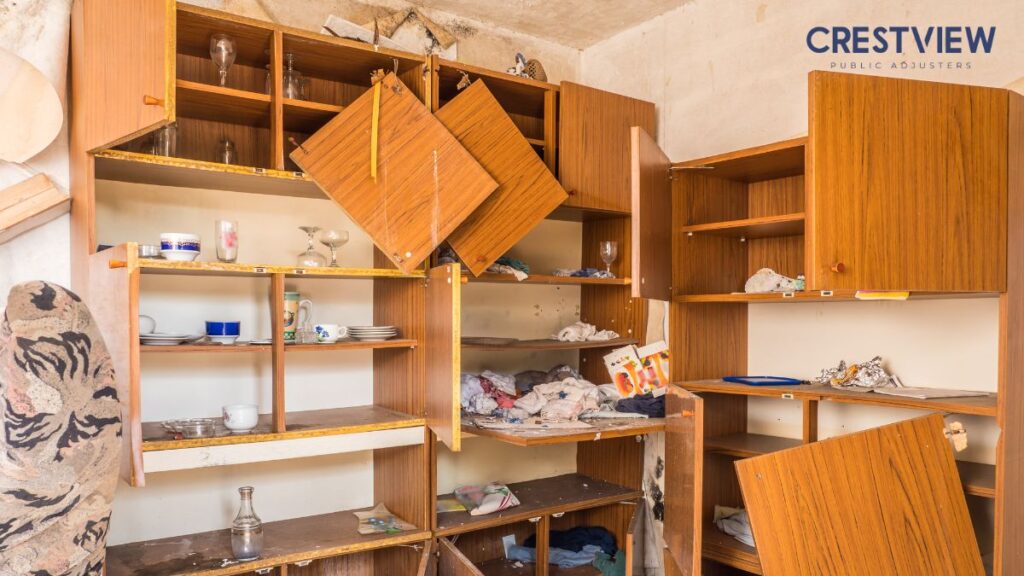
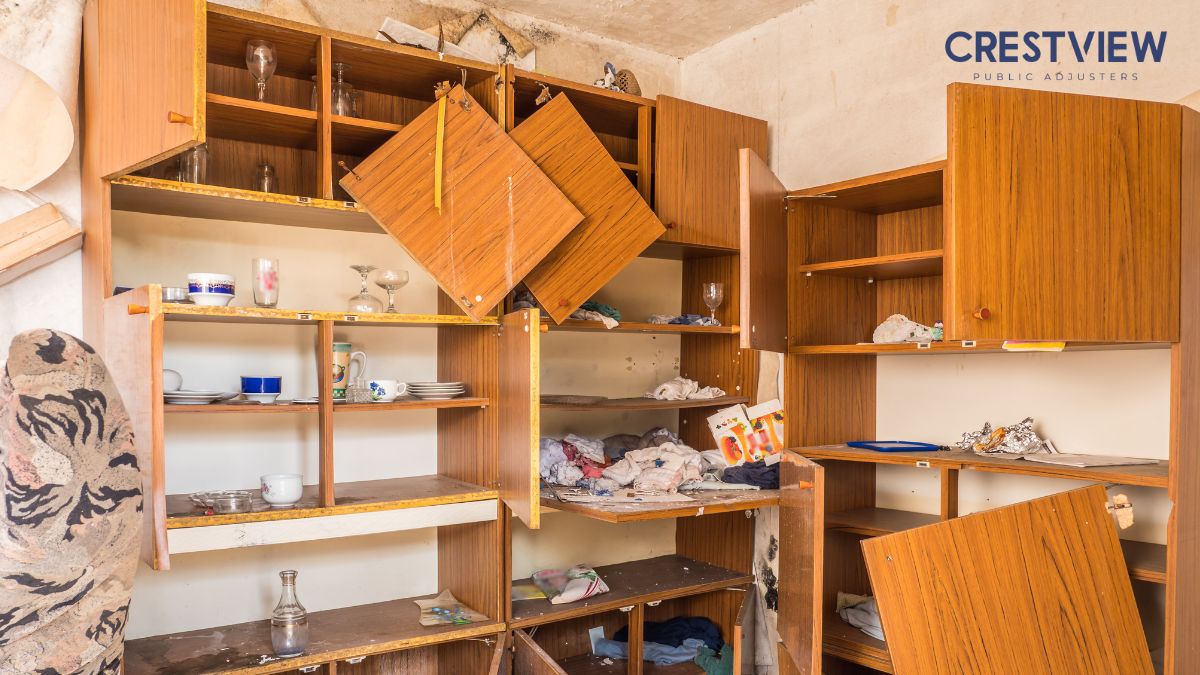
Property Damage Insurance Claims – Covers physical damage to buildings, machinery, and inventory; ensures all impacts are accurately documented and included with your business interruption claim.
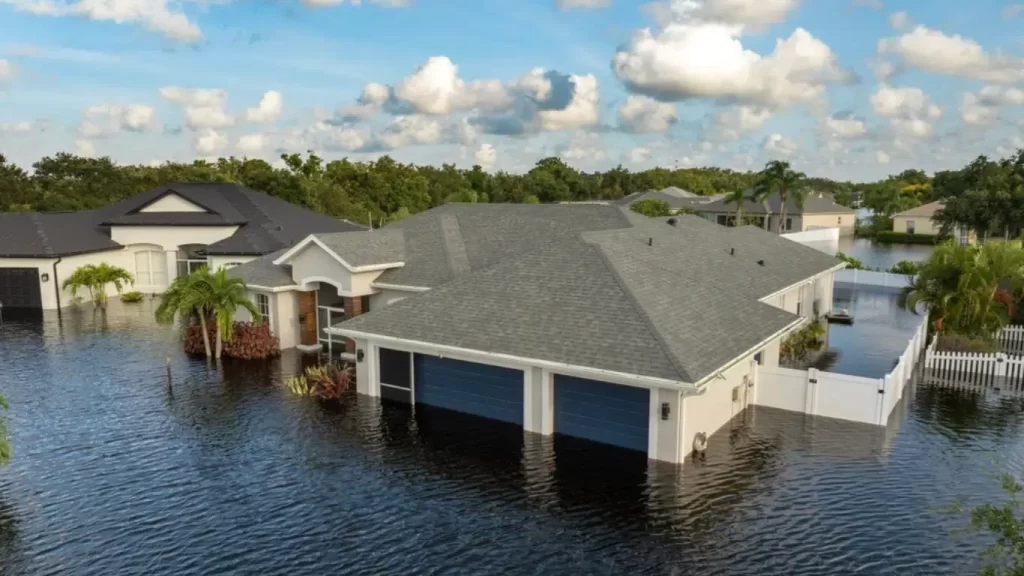
Water and Flood Damage Claims – Addresses losses from burst pipes, flooding, or stormwater; Crestview helps track repair costs and operational downtime for proper compensation.

Fire and Smoke Damage Claims – Covers structural, equipment, and inventory damage; integrates these losses with your income interruption documentation.

Equipment Breakdown Claims – Supports claims for failed machinery or systems that halt operations.

Emergency Loss Documentation Services – Captures early records, logs, and forensic reports to strengthen and expedite claim processing.
These services ensure all related losses are coordinated under one consistent, professional claims strategy.