
Mold Claims
- Mold Claims
- Crestview Public Adjusters
- Mold Damage Insurance Claim Help
- Crestview Public Adjusters
Walls keep spotting, air smells worse every day, and your mold damage insurance claim already feels like a fight. Crestview Public Adjusters reviews mold exclusions, documents water and mold damage, and guides the claim from first inspection through settlement.
When a leak or humidity issue turns into a toxic mold insurance claim, Crestview coordinates experts and mold remediation insurance claim help for homeowners and businesses in New Jersey, New York, Florida, and other approved states.
Mold Damage Insurance Claim Support When Water Problems Spread
Mold can start quietly after a leak, flood, or damp basement, then turn into a mold damage insurance claim that affects walls, flooring, contents, and sometimes health. Growth often hides behind cabinets or under subfloors, so insurers question when it began, what caused it, and how much mold remediation insurance coverage really applies. Many carriers try to frame a toxic mold insurance claim as a maintenance issue, or point to small mold sub-limits, even when the real problem started with a sudden water loss.
Crestview Public Adjusters represents policyholders only, not insurers. The team documents mold contamination insurance and the underlying water source, lines up estimates, and guides the mold damage claim process from first notice through negotiation. Mitigation often needs to begin within 24–48 hours of discovery, so Crestview helps you act quickly while still protecting your rights on a mold damage insurance claim.
Practical mold and water damage claim guidance ties every water damage mold claim back to the full loss story, especially after plumbing failures, roof leaks, or storm events in New Jersey, New York, and Florida.
If you are dealing with spreading mold, you can upload photos, moisture readings, and your policy so Crestview can review your mold damage insurance claim and flag next steps before you accept any offer.
What Mold Damage Insurance Claim Scenarios Does Crestview Handle?
Crestview Public Adjusters often sees mold appear weeks or months after a leak, flood, or HVAC issue, right when the insurer starts saying it looks like maintenance rather than a sudden loss. A strong file connects the first water problem to the later growth, so the mold damage insurance claim is treated as one continuous event, not two separate issues.Common scenarios include:
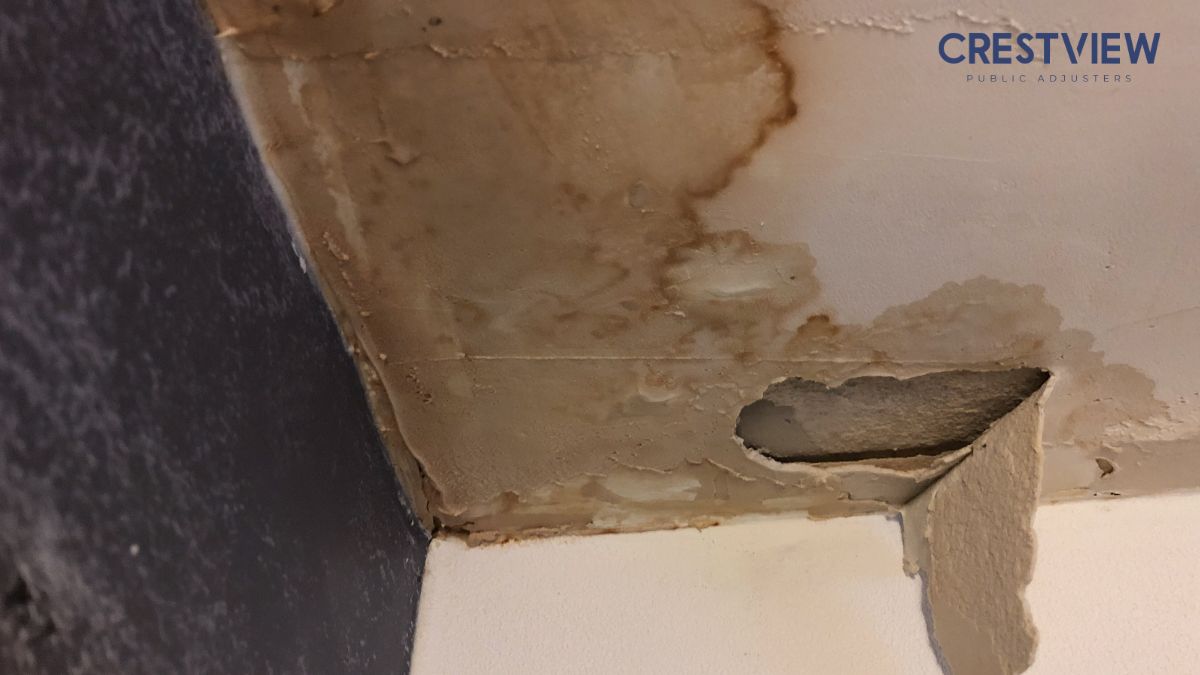

Mold After Water Damage or Leaks
Small pipe leaks, appliance failures, bathroom overflows, and roof leaks can leave moisture inside walls and subfloors. In many mold claims in NJ, owners discover mold while repairing drywall or flooring after a prior water loss, and the claim needs clear notes tying the two problems together.
Mold After Flood or Hurricane
Saturated building materials and slow drying can trigger mold even after visible water is gone. Coastal properties often face humidity and repeated storms. Many mold claims in FL come from condos and single-family homes trying to manage storm repairs, contents issues, and mold remediation at the same time.
Mold in Metro Buildings and Multi-Unit Properties
In dense cities, leaks from one unit can spread into others. Elevators, stairwells, and shared walls can hide damage. Some mold claims in NY involve disputes between unit owners, boards, and carriers over who pays for common-area mold and who pays for interiors and contents.
Toxic Mold and High-Sensitivity Environments
Some properties involve infants, older adults, or medically fragile people. Schools, assisted living facilities, and health offices may need stronger containment, negative air, and independent testing. A mold insurance claim public adjuster helps show why these projects require careful protocols, not quick patchwork.
Mold in HVAC Systems, Attics, Basements, and Crawlspaces
These areas are harder to access and easy to overlook. A well-documented mold remediation insurance claim highlights hidden cavities, ductwork, insulation, and structural materials, so the scope reflects everywhere growth can spread, not just where it is easiest to see.
Crestview studies how each loss started, how long moisture was present, and what contractors have already observed before shaping the strategy. The team works with remediation and environmental professionals to align reports, photos, and estimates.
If mold spreads after a leak or storm, they can review photos, reports, and estimates before you accept any settlement, so your mold damage insurance claim reflects the full condition of the property. In many homes and commercial spaces, that wider story is what moves an insurer to reconsider.
Why Choose Crestview For Your Mold Damage Insurance Claim?
Mold adds extra worry because it affects buildings and people at the same time. Repairs, contents, and health concerns all show up in the same mold damage insurance claim, and carriers often move quickly to cap costs or point to the fine print. Property owners need a steady voice that understands both water and mold losses and has experience pressing insurers for better outcomes.
Crestview Public Adjusters represents policyholders only, never the insurance company. The team has handled complex water and mold claims for years, reviewing policies, comparing competing estimates, and organizing evidence so the story of the loss is clear. For each claim, Crestview looks at the original leak or storm, the spread of moisture, and the later mold findings so the file shows one connected chain of events.
How Crestview Builds Strong Mold Claim Files
Crestview works closely with remediation contractors and environmental professionals to gather:
Photos of impacted areas and mold-prone structures
Moisture readings and thermal images to trace hidden spread
Air-test reports and lab results to confirm spore levels and affected zones
Coverage reviews focus on mold language, sub-limits, and special endorsements, helping owners understand what is available for demolition, cleaning, contents, and rebuild—not just surface cleaning.
Industry data from a large government study in Florida found that policyholders who used public adjusters on certain catastrophe claims received settlements that were many times higher than those who went alone, with some events showing differences as high as 747%. Crestview Public Adjusters never promises a specific number, yet this statistic shows how often damage or coverage is missed when no one challenges the carrier’s initial position.
Crestview has helped recover millions of dollars across water, fire, storm, and mold damage insurance claim files for homeowners, landlords, boards, and business owners in New Jersey, New York, Florida, and other approved states.

 Louis Biester
Trustindex verifies that the original source of the review is Google.
I've been in the Property Claims industry for over 25 years and have worked with Crestview Public Adjusters. Highly recommend their services should you need an advocate to fight the insurance carrier! Judy EtmanCrestview was very attentive to our needs in a very difficult time.
 P GI highly recommend Crestview Public Adjusters. They worked diligently to recover my losses from a flood in my apartment. They were always accessible, always responsive and ultimately got me what I was owed, something I could not have done on my own.
 Jay SchwartzJosh and his team at Crestview Public Adjusters were extremely easy to work with. A tree fell on our house after a storm and I reached out to Josh and he went to work right away. He made the process really easy and answered all of my questions. His team took care of everything and the results were excellent.
 Chris ChesterMarc and Josh what a team...Marc spent the time to really hear and understand our pain points dealing with ASSURANT INSURANCE COMPANY ..The worst insurance company to deal with the worst staff... I would go through details but too much to cover and my family and I are just glad the nightmare is over thanks to Crestview Public Adjusters...would recommend to anyone...
 Jeffrey HeiserCrestview was an absolute pleasure to work with. We got a call from a long term commercial tenant at 6am the morning after Hurricane IDA saying there is 4 ft of water filling up the space and that they were doing a walk through that day to sell their business. Crestview got their contractors over right away . We were able to prevent a lot of damage due to their quick response. Once onsite, they assessed all of the damage, we discussed rebuild plans and there was little for me to do as a landlord other than cash a check. Josh's assessments' were accurate and he was easy to communicate with. They also took a holistic approach to maximize my payout and even got the physical payment expedited so we can begin the rebuild. I would definitely use them again.
 David EiseltGreat team to work with; they are reliable, efficient and trustworthy!!!
 David BaumJosh was extremely conscientious and responsive. He got the damage response started immediately with great results and was able to get us a much larger settlement than we could have anticipated.
 Zev GontownikA tree fell on my house and knocked the chimney through my roof. I told my friend how hard it was dealing with the insurance company. He told me to call Crestview Public Adjusters and I am so happy I did. They handled everything for me with the insurance company and even helped me find a contractor to do the repairs. I couldn't be happier that I used them. I'd give them 6 stars if I could. Give them a call for all your insurance claim needs. I'm sure you won't be disappointed.
 Albert ChuJosh and his team are great to work with. They really helped us with the entire process from start to finish, highly recommended.
Property owners who want experienced eyes on their mold file can pause before signing any release and talk with a mold insurance claim public adjuster from Crestview about what comes next. That conversation looks at the offer on the table, the gaps in the estimate, and any mold or water damage the insurer has not fully addressed. Many clients only see the true size of their loss once someone lays out the coverage, limits, and options in plain language, so they can decide their next step on solid ground.
How Does The Mold Damage Claim Process Work?
Understanding the mold damage claim process can ease some stress while you focus on safety and repairs. These steps show how to file mold insurance claim in a way that documents both the water source and the resulting mold.
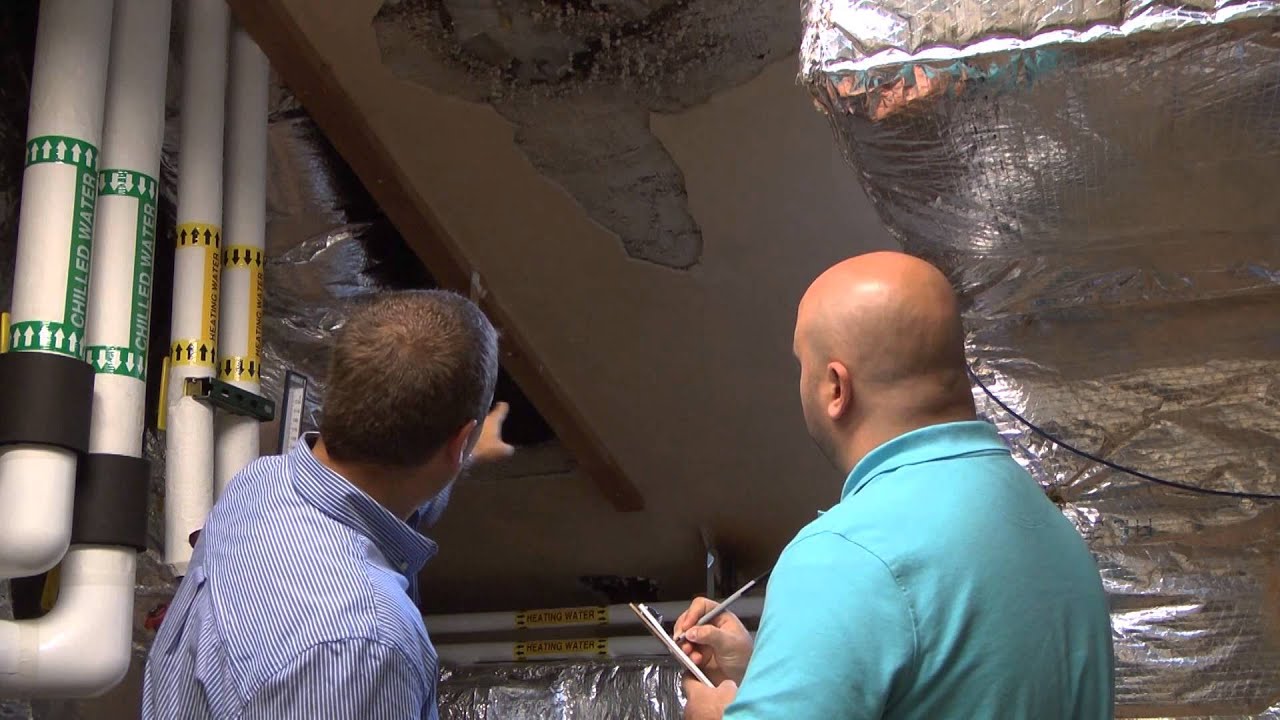
01
Protect health and safety
Start by keeping people away from areas with heavy growth, strong odors, or soft walls and ceilings. Bring in qualified remediation or environmental professionals if needed, especially for large or suspected toxic areas.
02
Stop the water and stabilize the property
Fix the leak, broken pipe, roof opening, or drainage issue that led to the moisture. Use fans and dehumidifiers as advised by your contractor, but avoid tearing out building materials before they are photographed and documented.
03
Document mold and water damage
Take clear photos and videos of staining, warped materials, and any visible mold growth, along with wide shots that show entire rooms. Save moisture readings, lab reports, and remediation estimates so the mold damage claim process connects lab data and scope of work to each damaged area.
04
Have your policy reviewed before detailed insurer talks
Crestview Public Adjusters reviews mold exclusions, endorsements, and sub-limits, and looks at how mold interacts with water and storm language in your policy. That review helps you understand what the carrier is likely to argue before you provide long recorded statements or written answers.
05
Open and track the claim with the carrier
Once the claim is reported, log every email, letter, and phone call, including when adjusters or vendors visit the site. The team can help organize a claim diary so deadlines, requests for information, and inspection notes do not get lost over time.
06
Prepare a detailed estimate and present your position
A strong mold damage insurance claim file includes a full remediation plan, a build-back estimate, and a contents inventory, when needed. Crestview works with contractors and consultants to build a package that explains why containment, air scrubbing, and rebuild work are necessary, not optional extras.
07
Respond to low offers or a mold damage claim denied outcome
If the insurer underprices the job, overuses mold sub-limits, or issues a denial, your public adjuster can pursue supplements, second inspections, or reopening options allowed by your state and policy. Deadlines and rules vary in places like New Jersey, New York, and Florida, so quick action after a low offer or denial is important.
08
Close the claim and watch for recurring issues
When a settlement is reached, keep copies of all checks, letters, and estimates in one place. If a new mold claim after water damage appears in the same area later, that history helps show whether the problem is truly new or tied to work that never addressed the full loss.
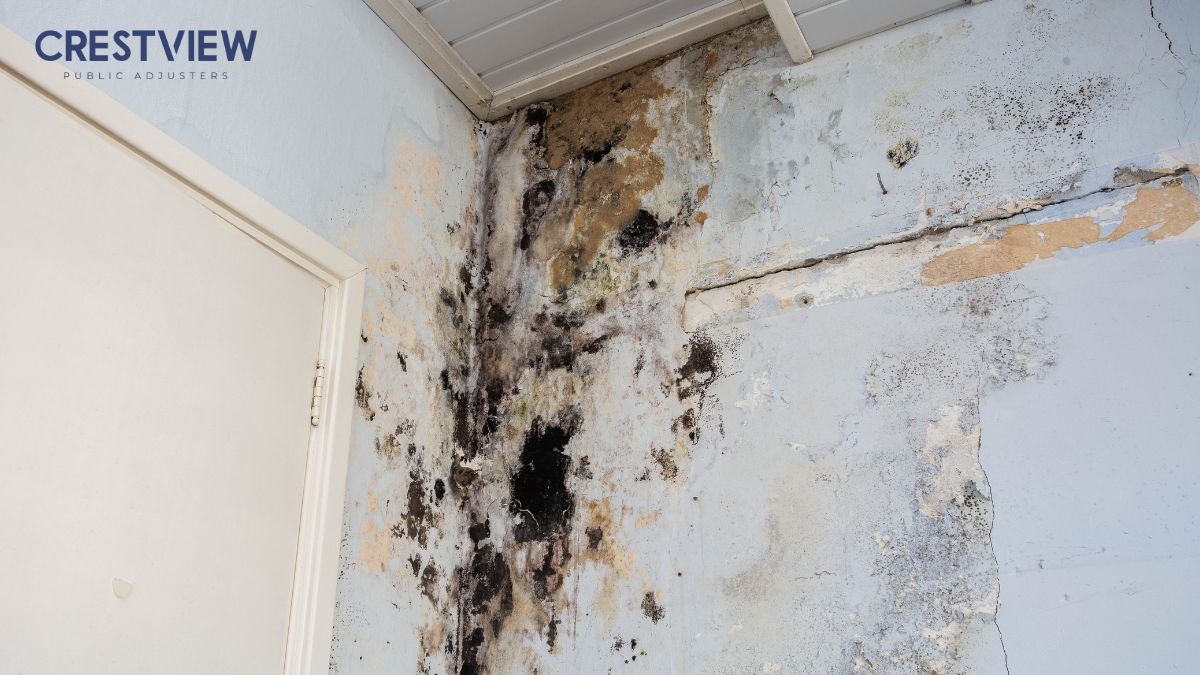
What Does Insurance Cover For Mold Damage?
Many people search “Does insurance cover mold damage?” right after they see stains or smell a musty odor, and the honest answer is that it depends on what started the problem. If mold grows from a covered burst pipe, sudden leak, or storm loss, policies often pay for at least part of the cleanup. If mold slowly builds over the years because of humidity, poor ventilation, or long-term seepage, carriers usually point to exclusions and maintenance rules instead.
In most policies, mold remediation insurance coverage follows the cause of the loss. Coverage can extend to removing damaged materials, running air scrubbers, and performing clearance testing, but it can also be capped by tight mold insurance coverage limits or sub-limits that apply only to mold, fungus, or bacteria. Those limits may fall under broader water or storm coverage, which is why connecting mold back to the initial leak or storm event is so important on a mold damage insurance claim.
Often covered
- Mold after a sudden pipe burst that soaks walls, ceilings, and floors
- Mold that follows a wind-driven storm opening in a roof, window, or exterior wall
- Testing and remediation tied to a clearly covered water loss
Often Disputed or Excluded
- Mold tied to long-term plumbing leaks or constant dampness that was never repaired
- Mold in spaces with chronic humidity, poor ventilation, or prior visible growth that was never addressed
- Claims where only cleaning is requested and the building was never dried or repaired properly
Mold Damage Insurance Claim Help In Your Area
Mold issues do not stay in one room or one neighborhood. A single leak, storm, or humidity issue can affect entire buildings, and many owners need local help understanding how their mold damage insurance claim aligns with state rules and policy language.
Property owners turn to Crestview Public Adjusters for mold claims in NJ, NY, and FL, and in other licensed states when losses involve homes, condos, rental properties, and commercial spaces. Crestview operates as a service-area firm, meeting clients where they live and work and adapting to each region’s inspection, timeline, and permitting practices.
Crestview supports policyholders in these key service areas and surrounding communities:
- New York Cities that we Service:
- Albany
- Binghamton
- Cortland
- Glen Cove
- Ithaca
- Little Falls
- Mount Vernon
- North Tonawanda
- Oneonta
- Poughkeepsie
- Salamanca
- Tonawanda
- White Plains
- Amsterdam
- Buffalo
- Dunkirk
- Glens Falls
- Jamestown
- Lockport
- New Rochelle
- Norwich
- Oswego
- Rensselaer
- Saratoga Springs
- Troy
- Yonkers
- Auburn
- Canandaigua
- Elmira
- Gloversville
- Johnstown
- Long Beach
- New York City
- Ogdensburg
- Peekskill
- Rochester
- Schenectady
- Utica
- Batavia
- Cohoes
- Fulton
- Hornell
- Kingston
- Mechanicville
- Newburgh
- Olean
- Plattsburgh
- Rome
- Sherrill
- Watertown
- Beaver Falls
- Chester
- DuBois
- Franklin
- Jeannette
- Lower Burrell
- Nanticoke
- Philadelphia
- Port Jervis
- St. Marys
- Titusville
- Williamsport
- New Jersey Cities that we Service:
- Absecon
- BordentownBordentown
- Cape May
- Elizabeth
- Hackensack
- Linwood
- Newark
- Passaic
- Rahway
- Summit
- Wildwood
- Asbury Park
- Bridgeton
- Clifton
- Englewood
- Hoboken
- Long Branch
- Northfield
- Paterson
- Salem
- Trenton
- Woodbury
- Atlantic City
- Brigantine
- Corbin City
- Estell Manor
- Jersey City
- Margate City
- North Wildwood
- Perth Amboy
- Sea Isle City
- Perth Amboy
- Bayonne
- Burlington
- East Orange
- Garfield
- Lambertville
- Millville
- Ocean City
- Plainfield
- Somers Point
- Plainfield
- Beverly
- Camden
- Egg Harbor City
- Gloucester City
- Linden
- New Brunswick
- Orange
- Pleasantville
- South Amboy
- Vineland
- Pennsylvania Cities that we Service:
- Aliquippa
- Bethlehem
- Clairton
- Duquesne
- Greensburg
- Johnstown
- McKeesport
- New Castle
- Pittsburgh
- Scranton
- Uniontown
- York
- Allentown
- Bradford
- Coatesville
- Easton
- Harrisburg
- Lancaster
- Meadville
- New Kensington
- Pittston
- Shamokin
- Warren
- Altoona
- Butler
- Connellsville
- Erie
- Hazleton
- Lebanon
- Monessen
- Oil City
- Pottsville
- Sharon
- Washington
- Arnold
- Carbondale
- Corry
- Farrell
- Hermitage
- Lock Haven
- Monongahela
- Parker
- Reading
- Sunbury
- Wilkes-Barre
- Beaver Falls
- Chester
- DuBois
- Franklin
- Jeannette
- Lower Burrell
- Nanticoke
- Philadelphia
- St. Marys
- Titusville
- Williamsport
- Florida Cities that we Service:
- Abbeville
- Arcadia
- Bayonet Point
- Belleview
- Brandon
- Cairo
- Cape Coral
- Chattahoochee
- Clewiston
- Coral Gables
- Dania Beach
- DeFuniak Springs
- Doral
- Englewood
- Florida City
- Fort Walton Beach
- Gulfport
- Harlem
- Holmes Beach
- Indian Rocks Beach
- Jasper
- LaBelle
- Lake Mary
- Lauderdale Lakes
- Leesburg
- Macclenny
- Margate
- Mexico Beach
-
Midway (Gadsden
County) - Neptune Beach
- North Bay Village
- Oak Hill
- Oldsmar
- Oviedo
- Palm Coast
- Parkland
- Pinecrest
- Punta Gorda
- Sanibel
- St. Cloud
- Tallahassee
- Titusville
- West Melbourne
- Winter Haven
- Alachua
- Bal Harbour
- Bay Pines
- Beverly Beach
- Briny Breezes
- Callahan
- Carrabelle
- Chiefland
- Cocoa
- Crestview
- Davenport
- DeLand
- Dunnellon
- Fanning Springs
- Fort Lauderdale
- Fruitland Park
- Haines City
- Hawthorne
- Hollywood
- Inverness
- Key Colony Beach
- Lake Alfred
- Lake Wales
- Lauderhill
- Lehigh Acres
- Madison
- Marianna
- Miami
- Monticello
- New Port Richey
- North Lauderdale
- Oakland Park
- Opa-locka
- Pahokee
- Palmetto
- Pembroke Pines
- Poinciana
- Queens
- Sarasota
- St. Petersburg
- Tampa
- Union Park
- West Palm Beach
- Winter Park
- Altamonte Springs
- Baker
- Bayport
- Blountstown
- Bristol
- Callaway
- Casselberry
- Chipley
- Cocoa Beach
- Cross City
- Daytona Beach
- Delray Beach
- Eagle Lake
- Fellsmere
- Fort Meade
- Frostproof
- Hallandale Beach
- Hialeah
- Homestead
- Jacksonville
- Key West
- Lake Buena Vista
- Lake Worth Beach
- Laurel Hill
- Lighthouse Point
- Maitland
- Mary Esther
- Miami Beach
- Mount Dora
- New Smyrna Beach
- North Miami
- Ocala
- Orange City
- Palatka
- Panama City
- Pensacola
- Pompano Beach
- Riverview
- Satellite Beach
- Stuart
- Tarpon Springs
- Venice
- Weston
- Zephyrhills
- Anna Maria
- Bartow
- Belle Glade
- Bradenton
- Brooker
- Calera
- Cedar Key
- Clearwater
- Coconut Creek
- Crystal River
- Daytona Beach Shores
- Deltona
- Edgewater
- Fernandina Beach
- Fort Myers
- Gainesville
- Hamilton
- Hialeah Gardens
- Homosassa Springs
- Jacksonville Beach
- Keystone Heights
- Lake City
- Lakeland
- Lawtey
- Live Oak
- Malabar
- Mascotte
- Miami Gardens
- Mulberry
- Newberry
- North Miami Beach
- Ocoee
- Orlando
- Palm Bay
- Panama City Beach
- Perry
- Port Orange
- San Antonio
- Sebring
- Sunny Isles Beach
- Tavares
- Vero Beach
- Wilton Manors
- Apopka
- Bay Lake
- Belle Isle
- Bradenton Beach
- Brooksville
- Cape Canaveral
- Center Hill
- Clermont
- Coleman
- Dade City
- DeBary
- Destin
- Elfers
- Flagler Beach
- Fort Pierce
- Gulf Breeze
- Hampton
- High Springs
- Indian Harbour Beach
- Jacob City
- Kissimmee
- Lake Helen
- Largo
- Layton
- Longwood
- Marco Island
- Melbourne
- Miami Springs
- Naples
- Niceville
- North Port
- Okeechobee
- Ormond Beach
- Palm Beach Gardens
- Parker
- Pinellas Park
- Port St. Lucie
- Sanford
- St. Augustine
- Sunrise
- Temple Terrace
- Wauchula
- Winter Garden
Whether you own a single-family home, condo unit, rental portfolio, or commercial property, Crestview can coordinate inspections and claim work remotely or on site where licensing allows. If your property is in one of these areas, the team can review your mold damage insurance claim at no cost and outline practical next steps.
Mold Claim Results For Policyholders
Real outcomes show how a mold damage insurance claim can change once an experienced advocate gets involved. Crestview Public Adjusters has helped homeowners, associations, and business owners move from low offers or partial denials toward settlements that actually support the work required.
- Case 1: North Jersey basement mold after seepage
A family in North Jersey discovered heavy mold behind paneling after years of minor seepage along one basement wall. The carrier initially called it long-term maintenance and offered just $7,500 for limited cleaning and paint. Crestview traced the problem back to a documented plumbing leak and prior water damage claim, worked with contractors to scope full demolition and rebuild, and showed how structural materials had been affected. After supplements and negotiations, the total payment reached about $48,000, which allowed proper remediation and reconstruction.
- Case 2: Toxic mold in a New York condo
In a New York City condo, an AC condensate line leaked inside a chase for months, leading to hidden growth that later tested as part of a toxic mold insurance claim. The association’s carrier attempted to apply a small mold sublimit and argued that much of the damage was the unit owner’s responsibility. Crestview coordinated environmental testing, documented damage in both the unit and common areas, and separated responsibilities between policies. The combined recovery for remediation, build-back, and temporary relocation costs totaled roughly $92,000, up from the original $15,000 offer.
- Case 3: Mold in an assisted living wing after a roof leak
A regional assisted living facility in Florida found mold in several resident rooms after a roof leak that had been patched but never fully addressed. The insurer’s first proposal focused on surface cleaning and partial repairs, with an estimate under $60,000 and no allowance for moving residents. Crestview conducted detailed moisture mapping, expanded the demolition and rebuild scope, and documented business interruption impacts from the wing closure. Final payments for this mold damage insurance claim, including construction and business interruption coverage, reached approximately $185,000, allowing management to complete proper repairs and reopen safely.
Mold Damage Insurance Claim FAQs
If your mold question is specific to your building or policy, you can send your documents to Crestview for a free mold damage insurance claim review before you make any big decisions.
Get Help With Your Mold Damage Insurance Claim
Days of smelling damp air, seeing new spots on walls, and worrying about hidden damage can wear anyone down, especially when an adjuster seems more focused on limits than on fixing your home or business. A mold damage insurance claim should give you a real plan for cleanup and repairs, not just another round of confusing letters and partial estimates.
Crestview Public Adjusters stands on the policyholder’s side from early documentation through settlement talks, coordinating with remediation contractors and environmental professionals so the technical pieces make sense. Whether you are sorting through lab results, reviewing a contractor quote, or reacting to a low offer, Crestview can help you organize the file so your story is told clearly.
Property owners across New Jersey, New York, Florida, and other approved states can reach out to us before or after opening a claim to get an honest look at coverage, mold language, and next steps.
No Recovery? No Fees until settlement is offered.
Related Insurance Claim Services
Mold often starts with another covered loss, so these related services keep the rest of your property damage aligned.
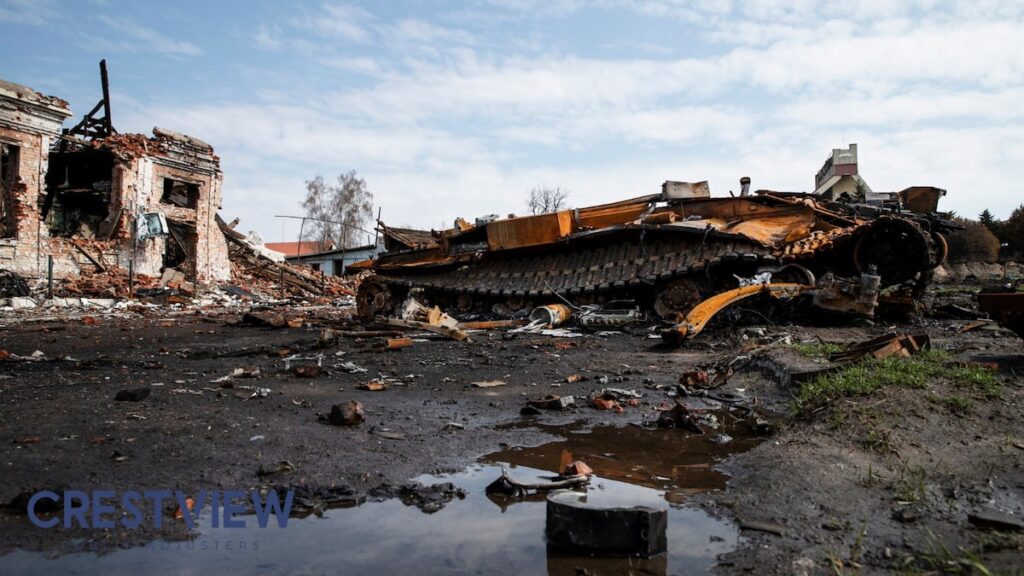
Water damage insurance claim help for pipes, appliances, roofs, or storms that led to the moisture problem.

Fire and smoke damage claim support when hose water and humidity lead to later mold issues.
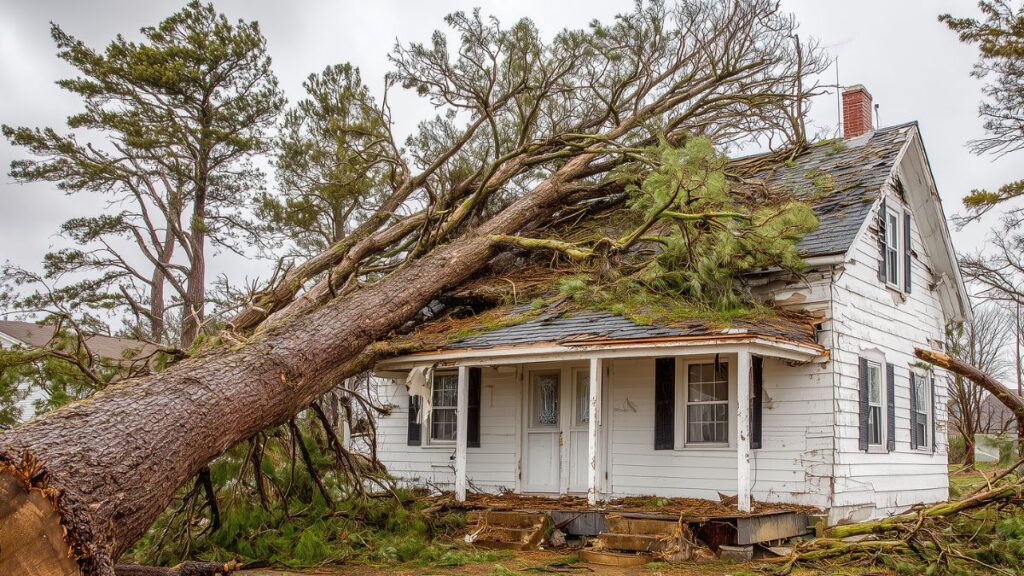
Hurricane and storm damage claim services for wind, rain, and surge events that leave buildings wet.

Help with underpaid insurance claims when mold remediation, testing, or rebuild work was priced too low.

Business interruption insurance claim help for offices and other commercial properties that lose income during cleanup and rebuild.
Looking at these together with your mold loss helps build one clear story for the carrier.