
Key Points:
- Understanding different types of property damage, such as fire, water, mold, wind, and more, helps homeowners know what’s covered, what’s excluded, and how to document claims.
- Fire claims are usually clear and well-documented; water and mold claims are more often denied due to gradual damage.
- Each type requires specific proof, and an appraisal helps resolve pricing disputes without a court.
Homeowners usually discover property damage at the worst possible time: a soaked ceiling, a smoky hallway, or a musty smell that will not go away. Insurance language then turns a stressful day into weeks of uncertainty.
Understanding different types of property damage gives you a clearer picture of what is likely covered, what may be excluded, and which documentation carries the most weight. You can then decide when to handle the claim yourself, when to call in property damage restoration professionals, and when a public adjuster or appraisal process may be worth the cost.
What Are the Main Types of Property Damage Homeowners Face?
Home insurance claims within the broader property damage claims process fall into a few categories. Industry data shows that wind and hail, water damage and freezing, and fire and lightning account for the majority of homeowners’ losses in recent years.
For practical planning, most types of property damage fall into:
- Fire and smoke damage
- Water-related damage (burst pipes, roof leaks, sewage backups, storm water)
- Mold growth and secondary moisture damage
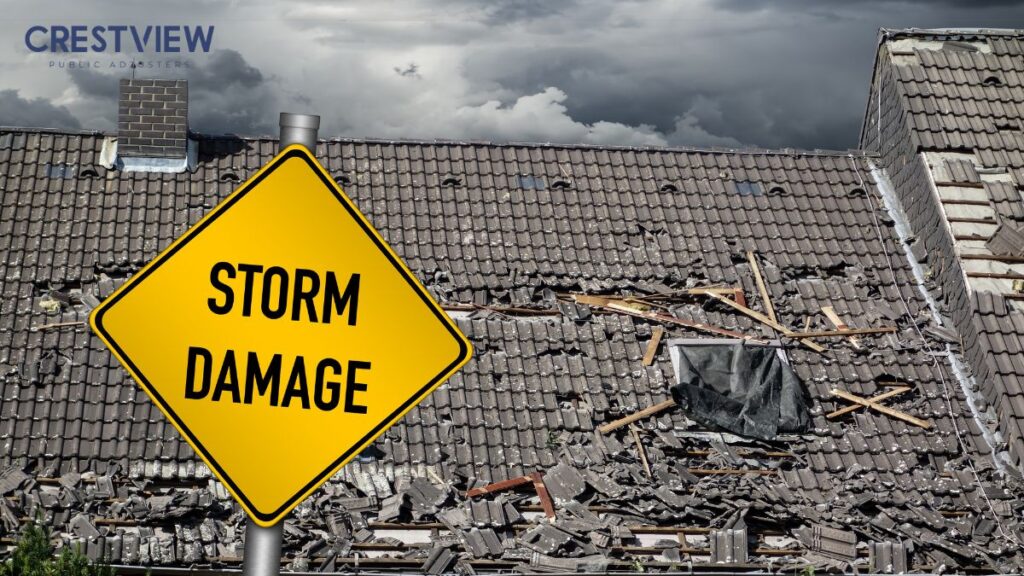
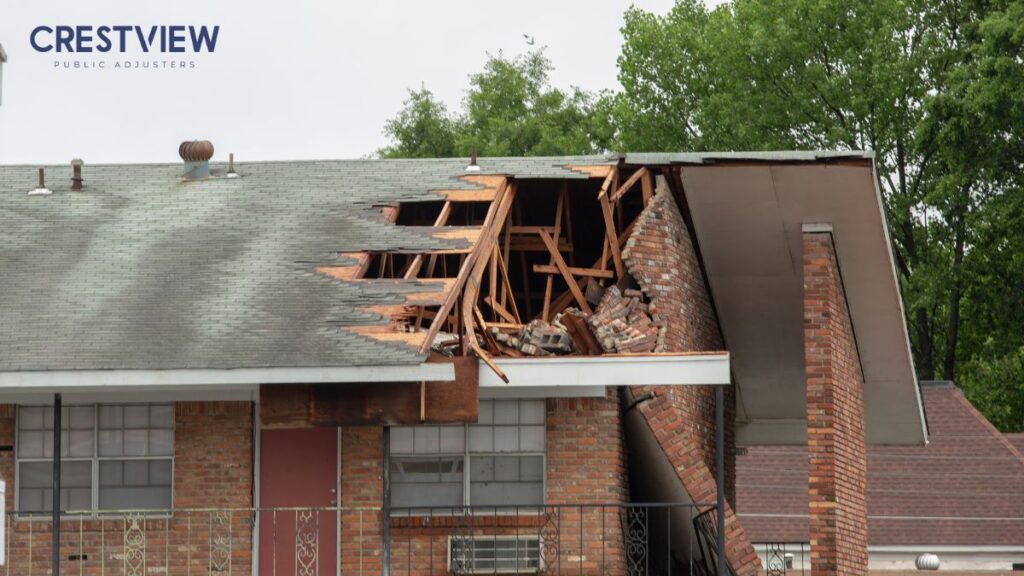
- Wind and storm damage (hail, hurricanes, tornadoes, tree impacts)
- Theft and vandalism
- Environmental or contamination-related damage (chemical spills, smoke from nearby industry, soot from wildfires)
Each group behaves differently when you file a claim:
- Speed of spread: Fire can destroy a room in minutes, while slow roof leaks or mold may take months to notice.
- Ease of proof: Charred studs are obvious; subfloor rot or gradual corrosion is harder to link to one event.
- Coverage pitfalls: Policies tend to favor sudden, accidental losses and limit long-term wear, long-standing leaks, or pre-existing mold.
How Does Fire and Smoke Damage Behave in Insurance Claims?
Fire damage moves fast and tends to be expensive. National fire statistics show about 332,000 home structure fires in 2023, leading to 2,890 deaths and 10,190 injuries in the United States. That scale is one reason fire claims often carry high payouts and scrutiny from insurers.
Standard fire damage insurance usually covers:
- Structural damage: Framing, roof, drywall, insulation, and flooring.
- Smoke and soot: Cleaning or replacement of materials affected by smoke migration.
- Contents: Furniture, clothing, appliances, electronics.
- Additional living expenses: Hotel stays and related costs if the home is uninhabitable.
Key differences compared with other perils:
- Evidence is strong: Burn patterns, fire department reports, and photos create a clear timeline.
- Sub-limits are fewer: Fire is a core peril in many policies, so fewer carve-outs apply than with water or mold.
- Disputes focus on scope and pricing: Arguments usually center on whether items can be cleaned or must be replaced and which building codes apply.
Fire claim underpayment suspicion becomes clearer when you understand the common reasons insurance companies deny fire claims. The right insight then helps you and an appraiser or public adjuster prepare a strong competing estimate for structural, smoke, and contents losses.
That estimate often becomes central if you later invoke appraisal to resolve “amount of loss” without going straight to court.
How Do Different Types of Water Damage Work With Insurance?
Water losses are common and messy, and insurers separate them into narrow categories. Recent industry figures show that water damage and freezing account for roughly 22–29% of homeowners insurance claims, second only to wind and hail.
Typical policy language splits water damage insurance into:
- Sudden, accidental events: Burst pipes, supply line failures, and appliance malfunctions.
- Storm-related water: Wind-driven rain entering through storm-created openings.
- Excluded or limited events: Groundwater, flood, long-term seepage, and poor maintenance.
Compared with other types of property damage, water claims are unique because:
- Spread can be hidden: Moisture moves under flooring and into wall cavities, so professional moisture mapping and dry-out logs carry weight.
- Coverage hinges on cause: The exact source (pipe vs. groundwater vs. roof age) often decides whether insurers pay or deny.
- Denials for “gradual damage” are typical: Insurers frequently argue that slow leaks fall under maintenance rather than covered loss.
When you hire property damage restoration companies after a water loss, keep:
- Plumber and mitigation reports that describe the cause and timing, and help you properly document water damage for an insurance claim.
- Daily dry-out logs with photos and equipment readings.
- Invoices and estimates that follow recognized standards such as ANSI/IICRC S500.
Those records help determine whether you negotiate directly, work with a public adjuster, or proceed with appraisal on scope and pricing.
How Do Mold Damage Claims Get Treated?
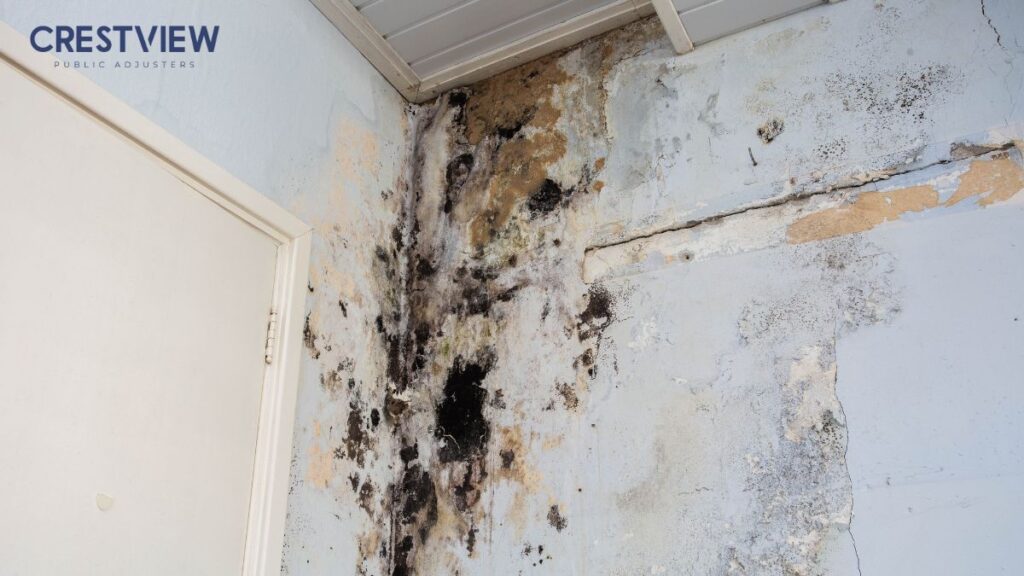
Mold usually follows moisture, so insurers view it as a symptom rather than a standalone peril. Health agencies warn that mold exposure can trigger nasal congestion, coughing, wheezing, skin irritation, and asthma attacks in sensitive people.
Policy treatment of mold damage claims depends on:
- Cause: Mold from a sudden covered water loss may have limited coverage; mold from long-term humidity or ignored leaks often does not.
- Endorsements: Some policies add optional mold riders with strict caps per occurrence.
- Deadlines: Many insurers require prompt reporting and mitigation to consider any mold-related costs.
Compared with other types of property damage:
- Evidence is harder: By the time mold appears, the original leak may be repaired, so disputes are common.
- Coverage limits are tighter: Caps and exclusions mean only a fraction of remediation may be reimbursed.
- Health concerns are greater: Children, older adults, and people with asthma are especially vulnerable.
For mold claims, detailed photos, lab reports if available, and clear linkage to a covered water event improve your position. When a carrier pays the water portion but rejects most mold costs, public adjusters often challenge the split or use an appraisal to argue that full build-back and cleaning are part of a single covered loss.
What Counts as Wind and Storm Damage?
Wind and hail rank at the top of many claim lists. One national carrier reports that wind and hail damage affect about 1 in 35 homes, with average claim costs over $11,000. Hanover Insurance industry data likewise shows that hail and wind have accounted for the largest share of losses over recent years.
In storm events, policies often cover:
- Exterior damage: Roof shingles, siding, windows, gutters, and vents.
- Interior water damage: Only when wind creates an opening that lets rain inside.
- Tree or debris impact: When falling objects damage the structure.
Key comparison points with water and fire:
- Cause is easier to prove: Weather reports and neighborhood damage patterns support your story.
- Scope is contested frequently: Insurers may pay for patching a roof even when complete replacement is needed to avoid future leaks.
- Deductibles may differ: Some states allow separate wind or hurricane deductibles based on a percentage of the dwelling limit.
Because storm seasons generate many claims at once, delays and rushed inspections are common after your property suffers winter damage or other severe weather loss. That is where side-by-side estimates from contractors, public adjusters, and the insurer’s adjuster can justify appraisal or mediation without jumping to a lawsuit.
How Do Theft, Vandalism, and Other Human-Caused Losses Work?
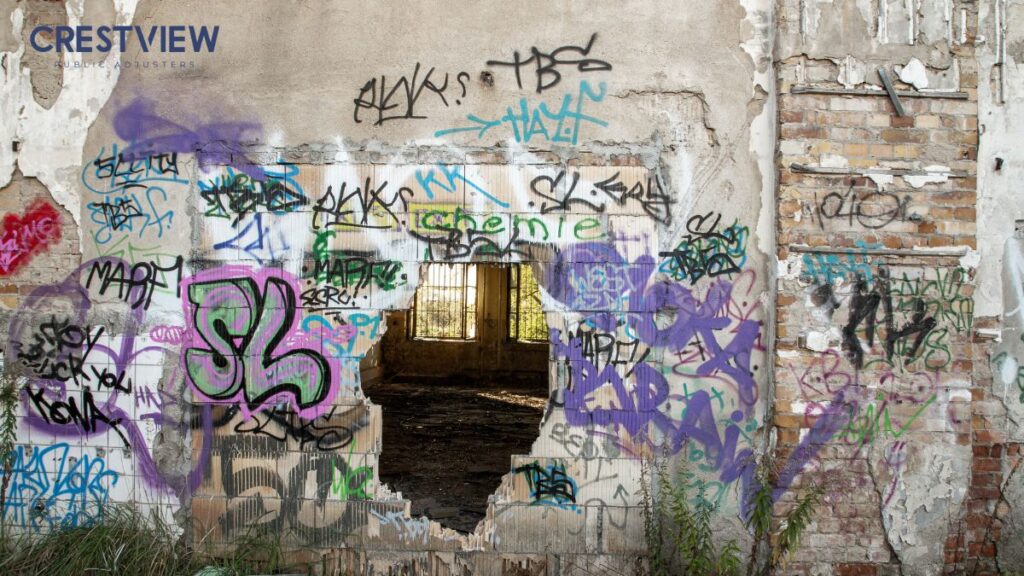
Theft and vandalism represent a smaller share of homeowners’ losses than fire, water, or wind, but they still matter when you face them personally. Insurance data places theft at under 1% of property damage losses, with vandalism folded into “all other property damage.”
Claims for these events usually involve:
- Burglary or forced entry: Stolen electronics, jewelry, tools, and broken doors or windows.
- Vandalism: Broken fixtures, graffiti, deliberate destruction.
- Civil disturbance damage: Broken glass or looting during unrest when covered by policy terms.
Compared with other types of property damage:
- Police reports are crucial: Adjusters rely heavily on official reports and timelines.
- Documentation is inventory-heavy: Serial numbers, purchase receipts, and photos carry more weight than repair estimates.
- Coverage depends on limits and endorsements: High-value items like jewelry or art often need separate riders or scheduled coverage.
When an insurer disputes value or suggests that items were previously damaged or missing, appraisers for both sides can still be used; still, the dispute tends to focus on pricing and ownership rather than the scope of physical repair.
What About Environmental and Contamination-Related Damage?
Environmental damage covers a wide range: smoke and soot from distant wildfires, chemical spills, fuel leaks, or contamination from neighboring properties. Some of these risks are rising as extreme weather and industrial incidents increase overall property losses.
Insurers tend to:
- Limit pollution coverage: Many policies exclude or sharply cap “pollutants,” which can include smoke, fumes, chemicals, and biological contaminants.
- Tie coverage to a sudden event: A specific spill, explosion, or wildfire may be covered while long-term exposure is not.
- Rely on expert reports: Environmental engineers or hygienists often need to define the extent of contamination.
Compared with other types of property damage:
- Testing adds cost: Air, soil, and material sampling are included in the claim file.
- Restoration is specialized: Property damage restoration may include HEPA filtration, selective demolition, and clearance testing.
- Disputes often go to higher-level review: Because costs are high and coverage terms narrow, carriers may escalate these files internally or treat them as complex losses.
When coverage is accepted but amounts are low, the same appraisal and umpire framework that applies to fire or storm losses can help resolve disputes on cleaning scope and rebuild costs without a whole lawsuit.
Why Do Insurers Treat Each Type of Property Damage Differently?
Insurance coverage for damage is built around two big ideas: cause and timeframe. Sudden, accidental events like fires, burst pipes, and wind-driven damage usually receive broader protection than slow problems such as seepage, long-term mold, or gradual deterioration.
Across all types of property damage, insurers look at:
- Cause of loss: Was it a covered peril or an excluded one, like flood or earth movement?
- Speed and visibility: Did you report and mitigate as soon as you reasonably could?
- Documentation quality: Do photos, invoices, and expert reports back up your version of the loss?
When you and the carrier agree on coverage but disagree on price or scope, policies often allow either side to invoke appraisal. Each party chooses an appraiser; those appraisers select an umpire, and any two of the three set the amount of loss in a binding award.
Key contrasts between appraisal and litigation include:
- Timing: Appraisal usually resolves faster than a lawsuit.
- Costs: Each side pays its own appraiser and splits the umpire; lawsuits typically involve broader legal fees.
- Scope: Appraisal decides the number; courts decide coverage and bad-faith issues.
For homeowners facing underpayment, the choice between continued negotiation, appraisal, and litigation depends on claim size, dispute complexity, and how clearly the policy supports your position.
Frequently Asked Questions
Does a standard homeowners policy cover all types of property damage?
A standard homeowners policy leaves several forms of property damage uncovered. Most policies include fire, wind, and theft but exclude floods, earthquakes, gradual damage, and many types of pollution. Mold coverage is limited unless tied to a covered water loss and endorsed. Review exclusions and endorsements to confirm protection.
Why are water and mold claims denied more often than fire claims?
Water and mold claims are denied more often than fire claims because they typically involve gradual damage, hidden leaks, or maintenance issues, which policies usually exclude. Fire claims are more transparent and better documented. Insurers closely review water-related claims for cause, timing, and response. Timely action and strong records lower denial risk.
When does it make sense to use the appraisal process instead of going straight to a lawsuit?
The appraisal process makes sense when your insurer accepts coverage but disputes the payout amount. It is effective for pricing disagreements over fire, roof, or water repairs. It is not helpful if coverage is denied, causation is complex, or bad-faith issues arise. Legal advice is better for those situations.
Get Expert Help Comparing Property Damage Types and Claim Options
Choosing the right strategy starts with understanding what caused your loss, how your policy treats it, and what evidence will support your claim from the first phone call. Public adjusters in Florida, New York, and New Jersey help policyholders compare estimates, document hidden damage, and decide when to pursue an appraisal rather than accept an underpaid offer.
At Crestview Public Adjusters, we focus on fire, water, storm, mold, and complex commercial claims so homeowners and business owners are not left to manage those differences alone. Our team reviews policy language, builds detailed estimates, and coordinates experts so your settlement reflects the real cost to repair or rebuild.
If your property has recently been damaged or your claim feels stalled or underpaid, let’s connect and see how we can support your next step in the claims process.