
Key Points:
- Insurance payouts after property damage increase when you thoroughly document losses, understand your policy, file quickly, and keep written records.
- DIY claims gain higher settlements when you obtain independent repair estimates and use them to challenge low adjuster offers in writing.
- Public adjusters suit large, denied, or complex claims with structural or business losses.
Most property owners feel pressured when a low first offer arrives after water, fire, storm, or mold damage. Many want to avoid paying a percentage fee to a licensed public adjuster and try to handle the claim alone, at least at first. At the same time, there is a real risk of leaving money on the table.
Home insurance claims are common. In recent years, about 5–6% of insured homes have a claim each year, and over 97% of those claims involve property damage. Property damage claims from 2016 to 2020 averaged around $13,962, which can have a significant impact on savings.
This guide shows how to maximize insurance payout without a public adjuster using clear DIY insurance claim tips. It also explains when it’s a good choice to get the services of a public adjuster, especially for large or complex losses.
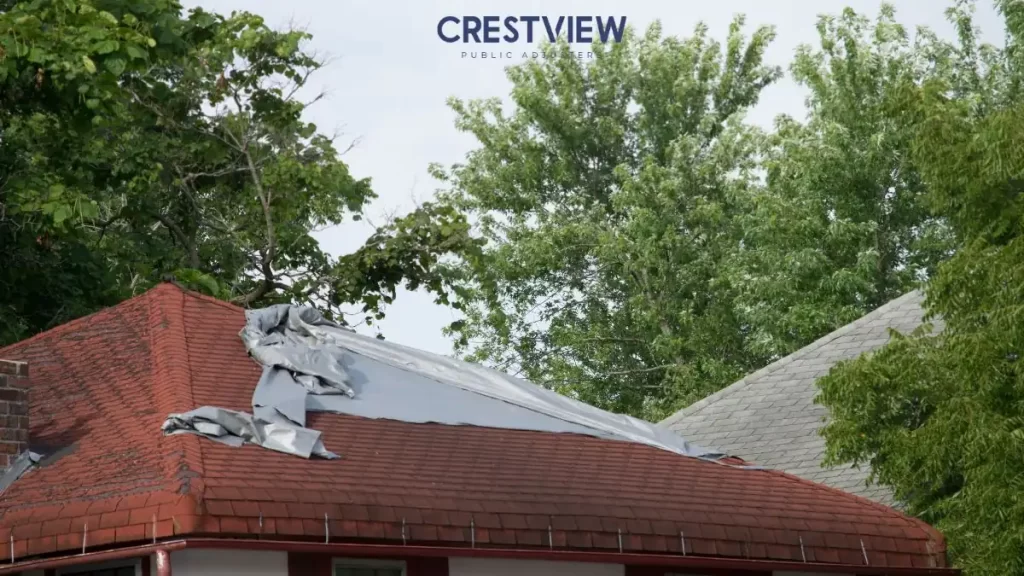
Step 1: Document Damage Before The Insurance Adjuster Arrives
Right after the event, move through the property before cleaning or disposing of anything. Try to capture the entire scene in real time so you can later support each part of your claim.
Use these property damage claim tips:
- Take wide and close-up photos of each room and item from several angles, in good light.
- Record video walkthroughs of hallways, rooms, and the outside of the building.
- Turn on time and location settings so photos include metadata with the date and GPS coordinates, which can help verify when and where they were taken.
- Create a written inventory listing each damaged item, its age, brand, approximate purchase price, and estimated replacement cost.
- Store damaged items in a safe area and avoid discarding them before the inspection.
- Make temporary emergency repairs that prevent extra damage, such as tarping a roof or shutting off water, and keep all receipts. Many policies reimburse these costs.
Cloud photo backups and videos with metadata are especially useful because they create clear property damage documentation that is harder to challenge than a few printed images. Good evidence is one of the strongest tools to maximize property damage claim value on your own.
Step 2: Read Your Policy Before You File The Claim
Many people only read their policy after a problem starts. A policy acts like a rulebook that sets what the company must pay and what it can deny. Knowing those rules helps you handle insurance claim without adjuster more effectively.
Focus on these sections as you review:
- ACV vs RCV: Actual Cash Value (ACV) pays the cost to replace items minus depreciation. Replacement Cost Value (RCV) pays the cost to replace at today’s prices, often in two steps (an initial ACV payment followed by a holdback once repairs are complete).
- Coverage limits: Look for separate limits on the building, personal property, and additional living expenses (ALE) if you need to live elsewhere during repairs.
- Endorsements and riders: Check for extras like “ordinance or law” coverage, which may pay for code upgrades required during rebuilding and is often overlooked.
- Deadlines: Note proof-of-loss time limits and any “suit limitation” clause that shortens the time you have to sue the insurer.
- Exclusions: Flag anything about flood, earth movement, mold caps, or wear and tear that could come up later in discussions.
When you understand these details, it becomes easier to plan how to get more from insurance claim payments and decide where to push back.
Step 3: File Promptly And Keep A Written Paper Trail
Timing and written records are just as important in the insurance claims process as photos. Many policies require “prompt” notice of loss. Some states also set deadlines for how fast insurers must respond.
Consumer guides from national regulators encourage policyholders to contact the insurer quickly, prevent more damage, and keep copies of all claim paperwork. Florida’s Homeowner Claims Bill of Rights, for example, explains that insurers must acknowledge a claim within 7 days and take specific steps within set time frames.
Use these DIY insurance claim tips to manage the process:
- Report the loss as soon as you reasonably can by phone and online, and write down the claim number.
- Ask for follow-ups in writing, including inspection dates, adjuster names, and coverage decisions.
- Keep a claim log that lists dates, times, who you spoke with, and what was said.
- Request an itemized estimate rather than a single total number, so you can see how the adjuster priced each item.
- Send follow-up emails or letters if the insurer is silent, and reference any state-specific rights to timely communication.
Written records make it easier to self adjust insurance claim details later and show where the insurer may have fallen short.
Step 4: Get Independent Repair Estimates To Challenge The Insurer’s Numbers
The company adjuster’s estimate usually reflects conservative repair choices and internal pricing. If you depend on that one number, you may under-repair the property or cover gaps out of pocket.
Independent estimates give you real-world prices to compare with the insurer’s offer and support your insurance claim negotiation tactics.
Use this approach:
- Request at least two or three written estimates from licensed contractors who handle similar fire, water, or storm losses.
- Ask for detailed scopes that break down labor, materials, equipment, and code upgrades line by line.
- Bring in specialists, such as certified water mitigation or mold remediation firms, when needed, as they often find hidden moisture or contamination.
- Compare each contractor’s scope to the insurer’s estimate and highlight missing or underpriced items in a simple list or table.
- Submit your estimates in writing with a short explanation of why they better reflect the work needed.
This process helps you negotiate insurance settlement yourself using facts, not emotion, and gives the insurer clear documentation to review when re-pricing the claim.

Step 5: Negotiate The Settlement Offer To Maximize Insurance Payout Without Public Adjuster
Most first offers are negotiable, even when labeled as “final.” The goal is to align the payout with what you actually need to repair or rebuild, within policy limits.
To maximize insurance payout without public adjuster, send a structured counteroffer instead of a quick phone complaint. Attach your best contractor estimate, photos, inventory, and relevant sections of your policy. Then explain, in simple terms, where the adjuster’s estimate falls short.
Use these maximize claim payout strategies when you negotiate with insurance adjuster staff:
- Point to policy language that supports your request, such as replacement cost coverage or endorsements adding extra protection.
- Ask for written reasons for each item the insurer reduced or denied, and which clause they say supports that decision.
- Request a reinspection if parts of the damage were missed or if more damage became visible after emergency repairs.
- Clarify how RCV will be paid and what you must do to receive any withheld depreciation.
- Invoke the appraisal clause in states where it applies when you and the insurer cannot agree on the amount of loss. New York, for example, has an appraisal process in standard homeowners policies that lets each side pick an appraiser and use a neutral umpire to set the value.
Appraisal focuses on the dollar amount, not coverage, and can help with underpaid claims without going to court when used correctly.
Step 6: Avoid Common Mistakes That Reduce Settlements
Small missteps can quietly cut your claim value, especially when you handle everything yourself. Avoiding these mistakes is a key part of strong DIY insurance claim tips.
Be careful about:
- Signing releases or cashing checks that say “full and final” before you confirm that all damage and extra living expenses are included.
- Giving recorded statements too early, before you understand the full damage and review your notes.
- Posting about the loss on social media, especially photos that could be taken out of context.
- Throwing away damaged items before they are clearly documented or inspected.
- Missing proof-of-loss deadlines or other policy time limits, since late paperwork can give the insurer a reason to limit payment.
Recent reporting, based on data from large insurers, noted that around 42.1% of home insurance claims in 2024 closed without payment, even though premiums have been rising. Careful steps can improve the chance that your property damage claim receives a fair settlement.
When DIY Is Not Enough: When You Actually Need A Public Adjuster
Handling a small, clear claim alone can make sense. A minor theft, a limited roof leak, or a simple appliance leak may be manageable with good documentation and follow-through.
For larger or complicated losses, the risk grows. Consider hiring a licensed public adjuster when:
- Damage is extensive, such as full-room burns, major structural issues, or widespread flooding.
- The claim was underpaid or denied, and you cannot close the gap between the estimates and the insurer’s number.
- Business interruption documentation is often extensive because calculating lost income and additional expenses is complex.
- There are several damage types in a single event, such as wind, interior water intrusion, and mold.
Public adjusters often charge contingency fees, depending on the size and complexity of the claim. Many states regulate these fees:
- Florida caps them at 20% on standard claims and 10% for claims tied to a declared emergency in the first year after the event.
- New York caps fees at 12.5% in most situations.
- Pennsylvania and New Jersey require written contracts and stress that fees must be reasonable.
A Florida legislative study of Citizens Property Insurance claims found that policyholders who used public adjusters received much higher average payments in many categories, including over 9,000 dollars per non-catastrophe claim versus about 1,391 dollars for similar claims without public adjusters.
That kind of gap shows why professional help can be important when major damage occurs.

FAQs About Public Adjusters
Is it worth it to use a public adjuster?
Yes, it is worth using a public adjuster for large or complex property damage claims where payout differences can be substantial. Public adjusters often increase settlements on major fire, hurricane, or multi-system losses involving policy disputes. Small, straightforward claims may not justify the typical 5%–15% contingency fee.
How can I get more money from an insurance settlement?
You can get more money from an insurance settlement by documenting every detail of the loss with photos, video, and a written inventory before the adjuster’s visit. Independent contractor estimates strengthen your position with real market pricing. Review policy terms, such as ACV vs RCV, limits, and code upgrades, and submit written counteroffers with supporting evidence.
What is the average fee for a public adjuster?
The average public adjuster fee typically ranges from 5% to 20% of the final insurance settlement, paid on contingency. Smaller claims often carry higher percentages, while large six-figure losses may fall closer to 5%–10%.
Get Help Deciding Whether To Go DIY Or Bring In A Pro
Handling a property damage claim alone can work when the loss is small and the issues are clear. The steps in this guide give you a practical way to document damage, understand coverage, manage deadlines, and push back on low estimates so you can seek a fair payout on your own.
For larger or more complex claims, Crestview Public Adjusters is ready to help. We provide public insurance adjusting and claims management services for residential and commercial policyholders in Florida, New York, Pennsylvania, and New Jersey, and can also support owners nearby who need guidance on next steps. You can learn more at
Property owners do not have to face major water, fire, storm, or mold losses alone. Get in touch with us for a claim review, and our team can look at your policy, evidence, and prior offers, explain your options, and help you decide whether professional representation is the right next move for your situation.