
Key Points:
- A commercial water damage claim in New Jersey requires proof of the water source, damaged property, and business losses.
- Business owners should separate water damage from flood damage and review policy limits.
- Photos, repair reports, inventory records, and income documents support claim valuation.
A burst pipe above a Newark office can shut down desks, servers, records, and client meetings before the morning starts. A kitchen leak in Jersey City can stop food prep, damage floors, and force a restaurant to cancel reservations. A mixed-use building can face tenant calls, cleanup crews, and lease questions in the same afternoon.
A commercial water damage claim in New Jersey is not only about wet walls or flooring. A business owner may also need to prove damaged equipment, tenant improvements, inventory loss, and lost revenue. The claim depends on the water source, policy wording, proof of damage, and how clearly the financial loss is documented.
Commercial Water Damage Claim New Jersey: Why The First Facts Shape The Claim
Commercial water claims move quickly. Cleanup, repairs, and insurance decisions often happen at the same time, so the early details carry a lot of weight.
For a commercial property water damage NJ case, the first facts should answer:
- Where did the water come from?
- When was it discovered?
- What areas were affected?
- Was the business fully closed, partly closed, or still open?
- Which property belongs to the owner, tenant, or another party?
Commercial non-weather water damage losses cost the insurance industry over $16 billion per year. When hurricane and flood damage are added, the broader figure can rise above $50 billion annually.
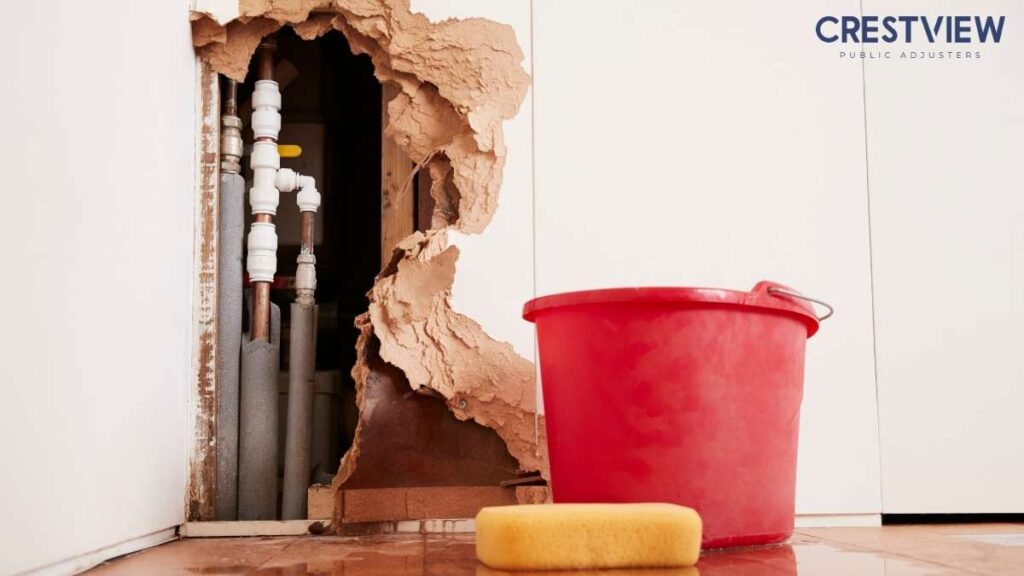
For example, a pipe bursts overnight in an older Newark office building. The carrier may agree there is water damage but dispute how far moisture traveled behind walls, whether flooring needs full replacement, and whether tenant build-outs are covered.
Water Damage And Flood Damage Are Not The Same Claim
A business water damage insurance claim in New Jersey often involves sudden internal water. Flood damage usually means outside water, such as storm surge, rising rivers, or surface water entering the building.
In New Jersey, 553 of 565 municipalities participate in the National Flood Insurance Program, or NFIP. Non-residential property owners may buy up to $500,000 for the structure and up to $500,000 for contents.
Flood insurance is not part of standard insurance policies written for businesses, condominium owners, renters, or homeowners.
| Claim Detail | Standard Commercial Property Policy | Flood Policy |
|---|---|---|
| Burst Pipe | Often reviewed under property coverage | Usually not the main policy |
| Roof Leak | Depends on cause and exclusions | Usually not flood |
| Storm Surge | Often excluded | Usually a flood policy issue |
| Surface Water | Often excluded | Usually a flood policy issue |
| Business Income Loss | Must tie to covered physical damage | Depends on flood policy terms |
Business Interruption Has To Be Proven With Numbers
Lost income is not added to a claim just because water damage happened. Commercial property coverage generally applies to direct physical loss or damage, while business income coverage usually includes net income that would have been earned plus the normal operating expenses that keep running during the restoration period.
Here is what that can look like in real life:
- A restaurant loses dining room access for nine days.
- A medical office cancels appointments because exam rooms are unusable.
- A warehouse pauses shipping because wet inventory must be checked.
To support the income side of the claim, owners should pull together profit-and-loss statements, sales reports, payroll, tax returns, lease terms, utility bills, invoices, closure logs, and reopening dates.
One online discussion thread on commercial claims showed how a sewer backup sublimit can combine property damage, contents, and business interruption under one cap, which often surprises owners who assumed each piece had its own limit.
Why Commercial Water Claims Often Come Back Low
A first offer on a commercial building water damage in New Jersey loss can feel light, and there are usually clear reasons behind it:
- Hidden moisture is missed behind walls or under flooring
- Carrier estimates use a smaller repair scope
- Tenant improvements are treated incorrectly
- Equipment, inventory, and documents are not fully itemized
- Mold, sewer backup, or water categories trigger sublimits
- Business income losses are figured too narrowly
Roofs account for an estimated 15% of commercial water damage claims, toilets 15%, sprinkler malfunctions 14%, water heaters 11%, HVAC units 8%, vacancy-related water emergencies 8%, sewer backups 5%, and water mains 3%.
A multi-tenant Jersey City building shows how this gets messy. Water from one unit can travel into another, which raises questions about the building policy, the tenant policy, lease duties, and who is liable for what.
How A Public Adjuster Helps Build The Claim File
A commercial property claim public adjuster NJ works for the policyholder, not the insurance company. In New Jersey, public adjusters must be licensed, and their role is to represent the insured in presenting the property damage claim.
When To Bring In Help For A Commercial Water Damage Claim In New Jersey
Outside help often makes sense when the loss affects daily operations, involves multiple units, includes lost income, or comes back with a low estimate.
A commercial property claim public adjuster in NJ can support the file in several ways:
- Reviewing declarations, endorsements, exclusions, and sublimits
- Documenting moisture readings, photos, and repair scope
- Working with restoration companies, contractors, and accountants
- Separating building damage, business personal property, and income loss
- Responding to carrier questions with organized records
That coordination matters because most owners are also trying to reopen, talk to tenants, and keep staff paid. At Crestview Public Adjusters, we help commercial owners in New Jersey document water damage, respond to insurer questions, and support related business interruption claims tied to lost income and extra expenses.
Documentation To Collect Before The Claim Is Valued
Strong proof early on protects a water damage claim business owner in NJ from filing later. One organized folder works best, and it should hold:
- Date and time the loss was found
- Photos and videos before cleanup
- Notes on the water source
- Plumber, roofer, or restoration reports
- Moisture readings and drying logs
- A damaged inventory list
- Equipment model and serial numbers
- Repair estimates
- Invoices and receipts
- Lease and tenant responsibility notes
- Emails, calls, and carrier messages
Fast cleanup still matters for safety and to limit further damage. Just capture proof first whenever it is safe to do so.
FAQs About Commercial Water Damage Claims In NJ
Can mold from water damage be covered on a commercial NJ policy?
Mold from water damage can be covered on a commercial NJ policy when it follows a sudden covered water loss. The policy may still include mold limits or exclusions. Water-damaged areas should be dried within 24 to 48 hours to lower mold risk. Save drying reports, photos, invoices, and cause details.
How long do i have to file a commercial water damage claim in New Jersey?
Commercial water damage claim deadlines in New Jersey usually come from the policy, not one statewide filing window. The safest step is to report the loss quickly, protect the property from further damage, keep repair receipts, and check any proof-of-loss date listed in the policy.
Can a business clean up water damage before the insurance inspection?
Yes. A business can start a cleanup before the insurance inspection when the goal is to stop further damage and keep people safe. Take photos and videos first, save damaged items when possible, keep invoices, and record who performed emergency work so the claim file shows what changed.
Protect Your Claim Before Costs Keep Growing
Commercial water damage can affect repairs, revenue, inventory, tenants, and reopening plans at the same time. A stronger claim begins with clear proof of the water source, the damaged property, and the financial loss tied to the interruption.
At Crestview Public Adjusters, we help business owners in Hackensack, Newark, Jersey City, and across New Jersey organize their claims and fight for a fair settlement. Our team handles the heavy lifting of documenting the loss and talking to the insurance company so you can get back to work.Reach out to us for a free review of your claim. We can look at your current estimate and help you decide if you are getting the full amount you need to truly recover. Do not settle for a low offer before you know the real cost of the damage.