
Key Points:
- A basement flooding insurance claim in New Jersey depends on the water source, policy language, and proof gathered before cleanup.
- Homeowners should document water levels, sump pump equipment, damaged items, costs, and storm timing.
- Coverage may involve homeowners insurance, water backup endorsements, or separate flood insurance.
A basement flooding insurance claim in New Jersey often depends on the water source, policy wording, and proof collected before cleanup. Homes in dense towns like Montclair, Freehold, Rahway, Parsippany, and Westfield often rely on sump pumps because basements face intense pressure from sudden storms, saturated soil, and drainage backups. Standing in a wet basement is stressful, but taking the right steps within the first 24 hours can protect your property.
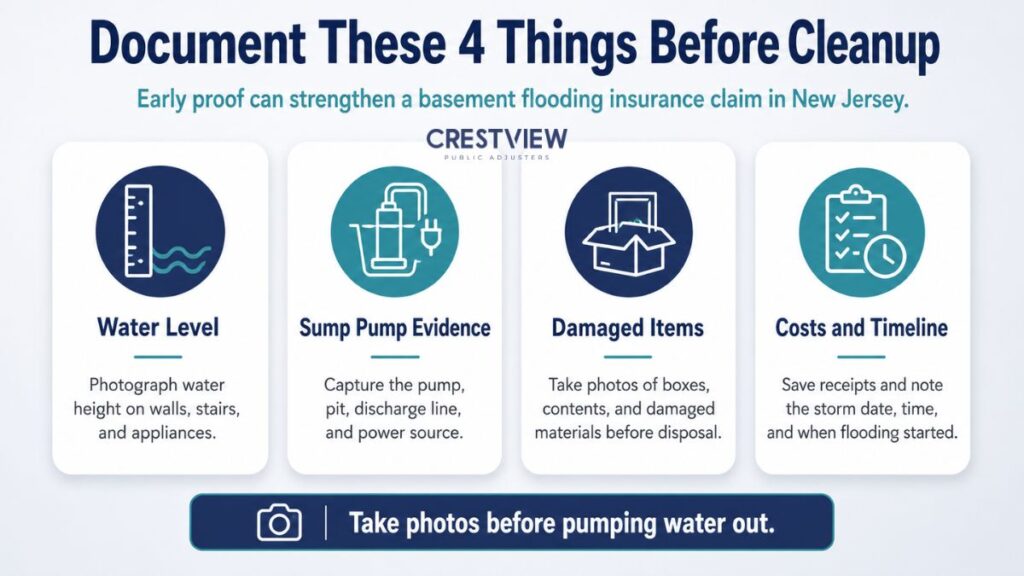
Use This Basement Flooding Insurance Claim New Jersey Checklist Before You File
Before you call your insurance company, you need a clear plan. A strong basement water damage claim starts before the first call to the carrier. The first photos often explain more than a written statement.
1. Secure the area safely: Immediate.
Stop and check safety before entering the basement. Shut off power if water is near outlets, panels, appliances, or heating and cooling systems.
2. Keep everything visually documented: Before cleanup.
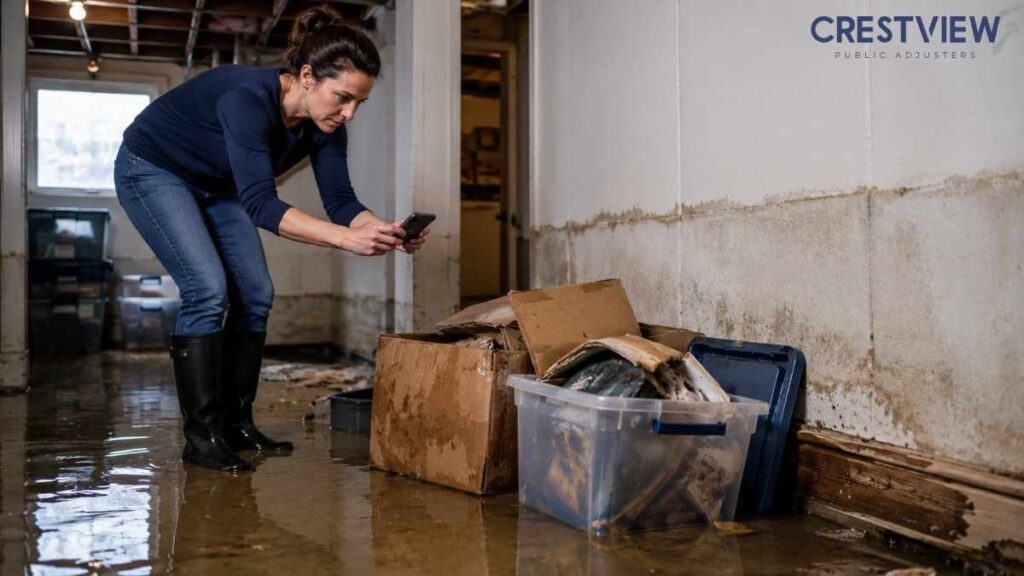
Take photos before pumping water out. Record the exact water height on walls, stairs, boxes, and appliances.
3. Inspect the equipment: Before cleanup.
Photograph the sump pump, the discharge line, the pit, and the power source to show why it failed.
4. Track items and costs: Ongoing.
Save damaged items until photos are complete. Keep receipts for water removal, fans, and repairs. Ask the insurer how they want items separated before disposal. Write down the storm date, time, and when the pump stopped working.
Following these steps will help you gather the exact physical proof your insurance adjuster will demand to see.
Check Whether the Water Came From a Sump Pump Failure or Heavy Rain
Cause drives the claim. A sump pump failure insurance claim in NJ is not reviewed the same way as outside floodwater.
You must understand these two distinct causes:
- Sump pump failure: Water rose from the sump pit, the pump stopped, the pump lost power, the discharge line failed, or the backup pump did not work.
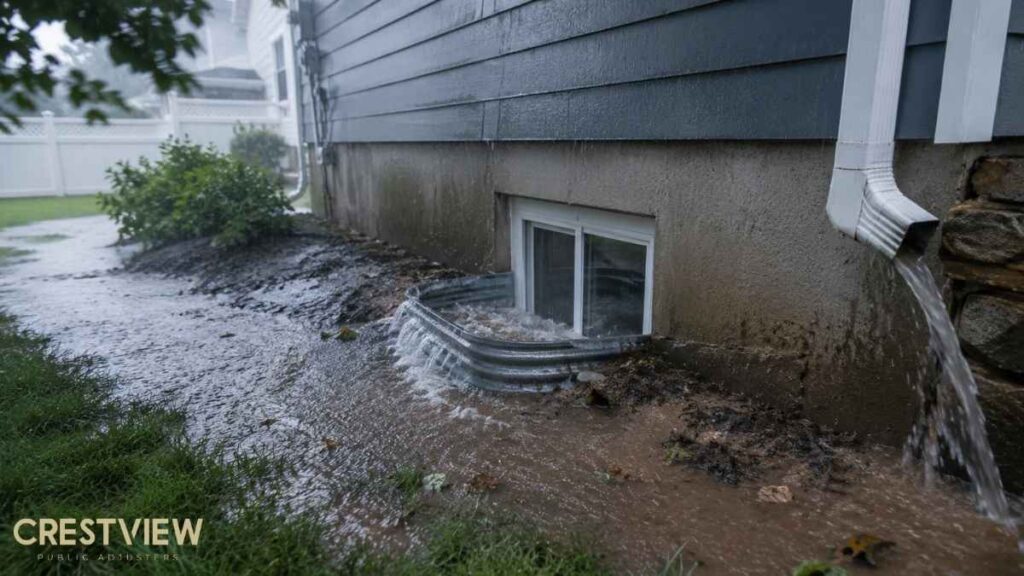
- Heavy rain entry: Water came through windows, foundation cracks, exterior drains, groundwater, storm surge, or surface water.
Many homeowners clean first, then lose proof showing whether water came from the sump pit or outside.
Know Which Coverage Bucket Your NJ Basement Flood Falls Into
The answer to whether homeowners insurance covers basement water damage in NJ depends on the cause and the policy.
| Coverage Bucket | What It Usually Applies To | Key Claim Risk |
|---|---|---|
| Standard Homeowners Policy | Sudden internal water damage, depending on the policy | External floodwater and seepage are usually excluded |
| Water Backup / Sump Pump Endorsement | Sump pump failure, sewer backup, or drain backup when added to the policy | No endorsement can mean no coverage for this cause |
| Separate Flood Insurance | External rising water, heavy storm runoff, or floodwater entering the home | Basement coverage under the National Flood Insurance Program is limited |
Data from FloodSmart confirms that standard insurance leaves out flood damage, making separate flood options necessary for surface water.
Document a Heavy Rain Water Damage Claim New Jersey Insurers Can Review Clearly
Summer storms, nor’easters, and flash floods easily overwhelm drainage systems in dense New Jersey towns. For example, federal reports show that in July 2025, storms dropped 3 to 6+ inches of rain across parts of the state, while another event brought up to seven inches to certain areas.
To build a heavy rain water damage claim in New Jersey that insurers can review easily, use these steps:
- Get clear pictures of water pooling against your foundation walls.
- Photograph the basement window wells.
- Capture images of the exterior door thresholds.
- Make sure to save local emergency weather alerts on your phone.
- Download official rainfall reports for your town.
- Mark the exact high water line on the basement drywall.
- Take photos or videos of nearby street flooding to show the local water pressure.
- Record the precise hour the water first appeared.
Separate What the Insurer Needs From What Cleanup Crews Need
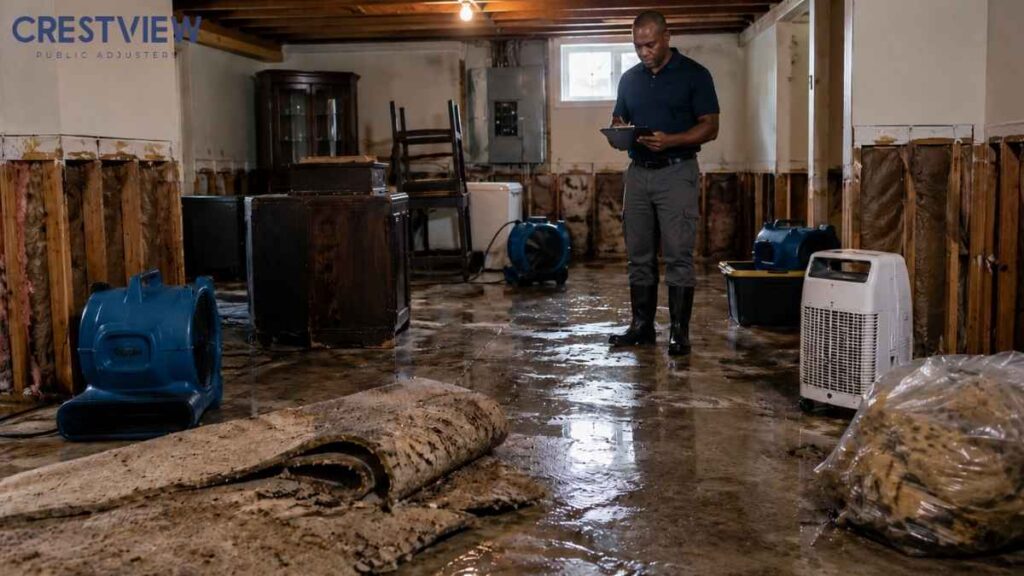
Do not delay emergency mitigation when standing water creates mold damage concerns or threatens your health. However, throwing items away too fast can ruin your payout. Document the area first when safe.
Keep these separate lists in mind:
For the insurer:
- Photos of water levels and damaged materials
- Appliance model and serial numbers
- Sump pump photos and contractor notes
- Policy pages showing endorsements and receipts
For cleanup crews:
- Wet carpets and ruined drywall
- Contaminated boxes and damaged contents
- Moisture readings and structural drying logs
Separating these tasks allows the recovery crew to do their job without destroying evidence.
Watch for Reasons a Basement Flood Claim Denied NJ Case Can Happen
Knowing common insurance pitfalls helps you avoid a basement flood claim denied NJ scenario.
Common denial triggers include:
- Policy has no water backup endorsement.
- Insurer classifies the loss as external flooding.
- Damage looks gradual instead of sudden.
- Photos were taken after cleanup only.
- Damaged items were thrown away before review.
- Homeowner assumed the cause too early.
- Claim description used “flood” when the loss was a water backup.
The safest wording is always accurate wording. Say where the water appeared, what failed, and what you observed. Do not label the cause before evidence supports it.
Ask for Help Before Accepting the First Basement Flood Assessment
Dealing with insurance companies after a storm can be confusing. At Crestview Public Adjusters, we review basement flooding claims across New Jersey, including sump pump failures, heavy rain damage, and claim disputes after a carrier inspection. We look at the policy, the damage, the cause of loss, and the documentation before you accept an underpaid insurance claim assessment.
FAQs About Basement Flooding Insurance Claim in New Jersey
Does flood insurance cover basement damage in New Jersey?
Yes, federal policy covers specific structural items when you file a basement-flooding insurance claim in New Jersey. However, this coverage remains restricted. Covered items include electrical systems, furnaces, and sump pumps. Finished walls, carpeting, and personal items like furniture are excluded.
What is a water backup endorsement?
A water backup endorsement is an optional insurance policy addition that covers a basement flooding insurance claim in New Jersey caused by drain failures. This specific coverage pays for damage caused by water flowing backward through lines or by failed sump pumps. Standard policies exclude these losses without this rider.
Can my basement flood claim be denied if I did not have a sump pump?
Yes, your claim can face rejection if your policy explicitly requires a pump. A basement flooding insurance claim in New Jersey can also be denied if the water entered from surface runoff. Your policy coverage depends entirely on the verified source of the water.
Protect Your Basement Flood Claim Before the Insurer Decides
A flooded basement creates two problems at once: water cleanup and claim proof. Fast documentation of the cause, water level, damage, and policy details can make the claim file clearer.
At Crestview Public Adjusters, we handle basement flooding claims across New Jersey, including sump pump failures and summer rain damage. We serve homeowners, property owners, and business owners from Hackensack to Freehold, Montclair, Rahway, Parsippany, Westfield, and nearby areas.
Before you accept your insurer’s first assessment, call (551) 316-7204 for a free claim assessment. Share what happened, send the photos you have, and we’ll review whether your basement flood claim is being handled fairly.