
Key Points:
- Roof and gutter maintenance records help establish a property’s condition before a storm and show completed repairs.
- Strong records include inspection reports, paid invoices, permits, warranties, and original dated photos.
- A clear timeline can separate sudden wind or hail damage from long-term wear during claim review.
The roof and gutter maintenance records worth keeping are professional inspection reports, paid cleaning and repair invoices, roof installation documents, permits, warranties, and dated photos that show the property’s condition before a storm. These records can help separate sudden wind or hail damage from long-term wear, but they do not guarantee that a policy will cover the loss.
A strong record of roof and gutter maintenance changes how insurers view your file. Knowing what details to preserve and how to rebuild a missing timeline protects your property’s history before the next storm hits.

Why Insurers Examine Records When the Cause of Roof Damage Is Disputed
When you file for storm damage, your insurer looks backward. Property policies cover sudden events rather than gradual deterioration. To separate the two, a carrier may examine the roof age, prior leaks, and clogged drainage. They focus heavily on these details during roof leak and wind-driven rain claims.
Without records, an evidence gap forms. The insurer then relies on its own inspection, which might attribute the damage to wear or neglect. While records do not guarantee a payout, they show that known issues were repaired.
The National Association of Insurance Commissioners states that home insurance is not a maintenance contract and advises policyholders to keep repair invoices. A simple statement like “it never leaked before” cannot match a dated inspection. A missing receipt does not cause the loss. The policy terms, physical evidence of the storm, and timeline still guide the review.
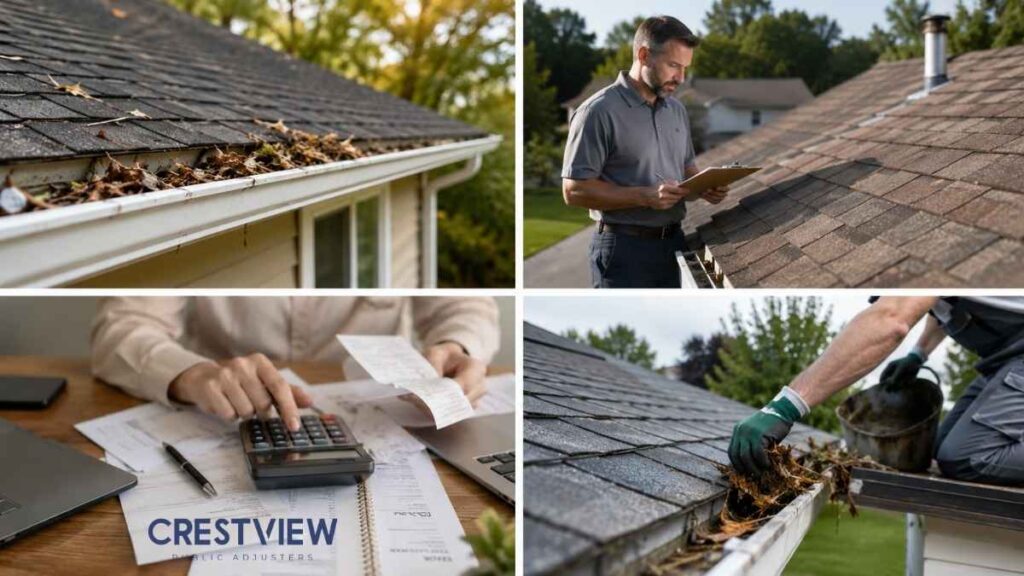
Which Roof and Gutter Maintenance Records Carry the Most Weight
Not all paperwork carries the same weight. While a broader property maintenance schedule keeps your home in order, specific storm-related proof requires a targeted approach.
Professional Inspection Reports
A strong report establishes a baseline of your roof’s health. It should detail the address, inspection date, roof material, and slopes inspected. The inspector must note the condition of flashing, vents, seams, and gutters, linking written findings directly to photos. A vague statement like “roof inspected” provides no value.
Paid Repair and Cleaning Invoices
An estimate only shows proposed work, not completed actions. Save invoices for gutter cleanings, roof patches, and fascia repairs as part of routine property maintenance. Saving receipts for tree work also supports your claim. These tree-service records can support your landscaping property protection if falling limbs strike the building. Make sure each invoice shows a zero balance or proof of payment.
Timestamped Photos
Keep wide-angle views of all roof slopes, gutter lines, and dry attic ceilings. Save original files without cropping or editing. Changing file names or altering images can destroy the metadata that proves when you took the photo.
Installation and Permit Records
Store your roof replacement dates, materials, warranties, and building permits. Municipal records from local offices, such as those in Cherry Hill, New Jersey, or Hempstead, New York, confirm that past work met local codes.
| Record | What It Can Show | Common Weakness |
|---|---|---|
| Professional inspection report | Pre-storm condition and known defects | Vague wording or no photographs |
| Paid service invoice | Completed work, location, and date | Estimate only or no property address |
| Original dated photographs | Visible change between two dates | Edited files or missing metadata |
| Installation and permit file | Roof age, materials, and replacement | Missing final approval or incomplete scope |
No single document decides coverage by itself.
How Roof and Gutter Maintenance Records Build a Before-and-After Timeline
To evaluate your documents, ask simple questions.
- Does the invoice show the exact date and address?
- Does it specify which slopes were repaired?
A useful record connects the observed condition directly to the completed, paid work. Dates are critical here. A roof report from two weeks before a Florida hurricane carries far more weight than one from three years ago. This timeline is vital when dealing with hail.
A 2025 study in Frontiers in Materials found that asphalt shingles exposed to natural weathering and repeated small hail impacts became about ten times more susceptible to later severe hail damage. A dated condition baseline shows the roof’s state before the major storm occurred, helping separate old wear from sudden damage. While this baseline does not guarantee coverage, it provides the factual proof your insurer needs to evaluate the loss accurately.
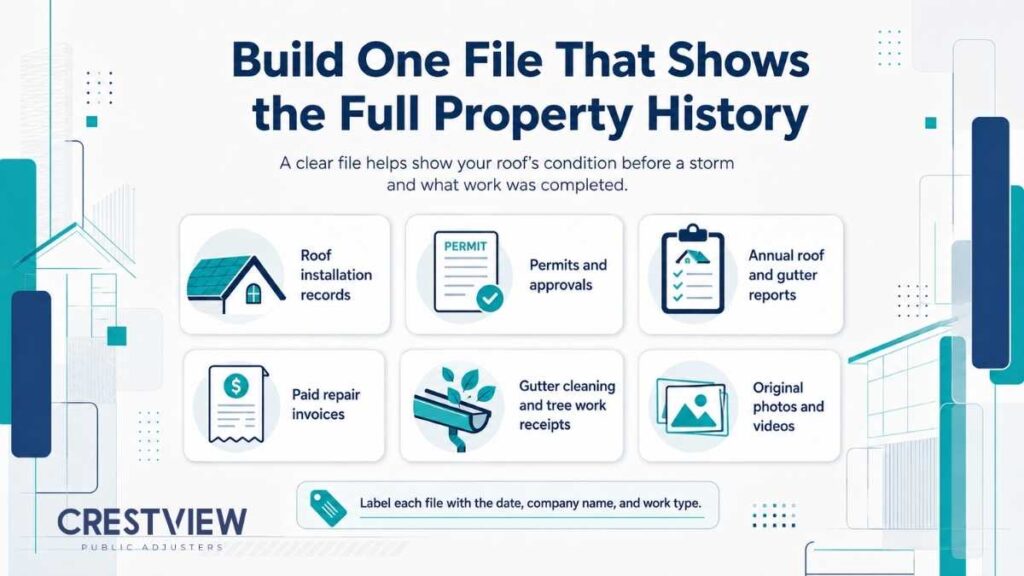
Build One File That Shows the Full Property History
Organizing your property history does not require complex software. A simple digital folder is enough. Structure your file into clear categories:
- Roof installation records and warranties
- Permits and local municipal approvals
- Annual roof and gutter reports
- Paid repair invoices
- Gutter cleaning and tree work receipts
- Original photos and videos
Label each file with the service date, company name, and work type. For example, use “2025-10-12-ApexRoofing-RepairInvoice.” Keep your original photographs in a separate folder to protect their metadata.
If you recently purchased your property in Pennsylvania or New York, your buyer’s report provides a starting baseline. However, general home inspection tips cannot replace a dedicated roof inspection, as general inspectors rarely walk the entire roof or examine gutter pitch. Save these records for as long as the roof remains in service. Storing them in cloud storage means you can access them even if severe storm damage occurs.
When Records Are Missing, Rebuild the Timeline Without Altering It
What happens if a sudden storm hits your building in Orlando, or in Philadelphia, and your files are empty? You can still reconstruct your property’s history. Start by contacting past contractors for duplicate invoices. Search emails, text messages, and bank statements for proof of payment. Municipal building departments also keep records of closed permits and completed inspections.
When rebuilding this timeline, distinguish between direct and supporting evidence. A bank statement proves you paid a contractor, but it does not specify which roof section they repaired. Similarly, an email confirmation shows an appointment occurred but does not prove work completion.
If you recently switched insurers or bought the property without the old roof file, gather whatever supporting documentation you can find. Never make up dates or details. Most importantly, never ask a contractor to backdate invoices or write a false report. Honest guidance from a public adjuster can help you compile this scattered evidence legally and present it clearly, protecting your claim.
Incomplete records do not always end your claim review, but they can make a cause-of-loss dispute harder to win, sometimes leading to underpaid insurance claims. At Crestview, we can examine the documents you still have, compare them with your policy, and identify which evidence needs further support.

Records That Prove Less Than Property Owners Often Expect
When organizing your files, some documents provide very little help. After a storm, you might search for steps to take after hail damage, but presenting the wrong paperwork can delay your review.
Avoid relying on these items:
- Unsigned contractor estimates with no inspection findings
- Cash receipts lacking property addresses or work descriptions
- Undated photographs missing original file metadata
- Weather-app screenshots showing local storm activity
- Blank maintenance checklists with no completed details
- Door-to-door roofers’ flyers without written damage reports
These items may offer minor context, but they do not prove your roof’s condition. Avoid presenting them as solid facts in a storm damage insurance claim.
FAQs About Roof and Gutter Maintenance Records
Do DIY gutter-cleaning photos count if I do the work myself?
Yes. Original, unedited photos showing the date, gutter condition, and downspout flow provide valid evidence. Keep the original image files to preserve their metadata. While independent professional service records carry more weight, your dated DIY photos still help establish a baseline of care.
What should I do if I bought the home without any old roof records?
Contact the seller, the prior home inspector, and local permitting offices. Purchase inspections and municipal permit histories often confirm roof age and earlier repairs. Label any unknown details as unknown on your claim forms rather than making up specific dates.
Should I send every maintenance document when I first report the claim?
No. Your initial notice should focus on reporting the loss promptly. Keep your maintenance records in an organized file and submit them when the insurer asks about the roof’s pre-storm condition. Overwhelming the adjuster with unrelated files can delay your review.
Review Your Roof Records Before the Claim Becomes a Dispute
Inspection reports, paid invoices, installation files, and dated photographs can show what your roof and gutters looked like before the storm and which repairs were completed. An organized timeline helps separate new wind or hail damage from conditions that existed earlier.
At Crestview Public Adjusters, we review storm damage and roof-leak claims for homeowners, property owners, and businesses across New York, New Jersey, Florida, and Pennsylvania. Reach out to us or submit our online claim-assessment form. Our team will review your policy, available records, and damage details, then explain the exact documentation steps you need to take to proceed.