
Key Points:
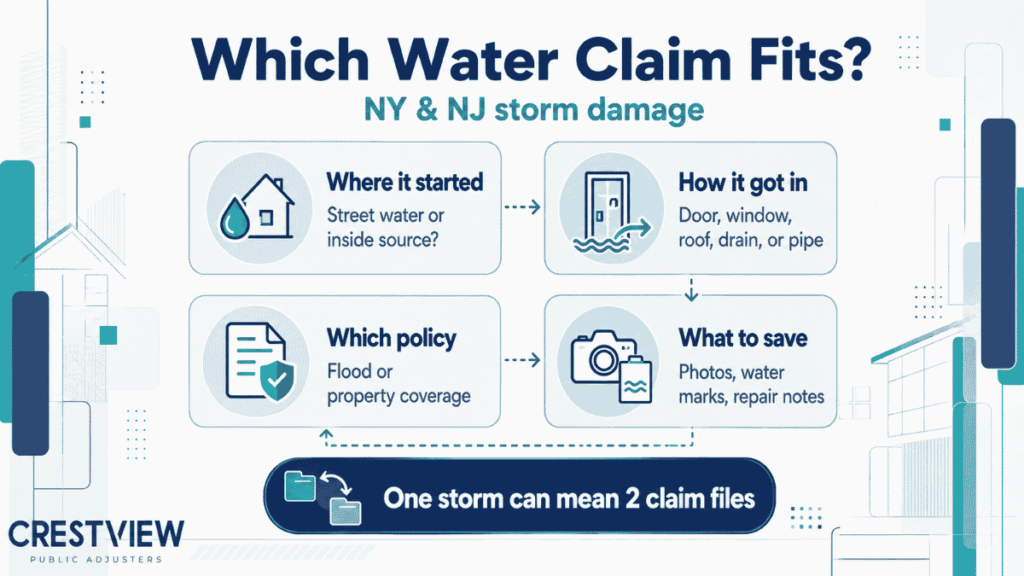
- A flash flood insurance claim NY-wide depends on the water source and entry route.
- Outside surface water usually falls under flood insurance, while storm-created openings, internal plumbing failures, or endorsed backups may fall under property insurance.
- Mixed-cause losses may require two claims supported by separate records.
When a sudden autumn storm drenches your property, determining which policy covers the damage comes down to where the water started. However, your homeowners coverage still applies to water that enters through a storm-damaged roof opening, a failed pipe, or a drain backup with a special endorsement.
When filing a flash flood insurance claim in NY or NJ, property owners often face the surprise of needing two separate claims for one weather event. At Crestview Public Adjusters, we see how easily a complex water damage claim can confuse policyholders when two carrier adjusters show up at the door.
Which Policy Applies to a Flash Flood Insurance Claim in NY?
Understanding which policy takes charge starts with the official definition of a flood. Under NFIP guidelines, an event qualifies as a flood only when surface water covers at least two acres of normally dry land or impacts at least two separate properties, with at least one belonging to you.
Rapid surface runoff rushing down a driveway or overflowing from a street curb easily meets this standard.
Seeing a flooded basement or soaked ground floor does not automatically tell you which policy covers the loss. To file a flash flood insurance claim after New York and New Jersey flooding, you must look beyond the standing water and prove the exact route it took.
Policy terms and clear water-route documentation control how the claim gets assigned, not just the presence of water on your floor.
When the Homeowners Policy May Still Apply After the Storm
Does Homeowners Insurance Cover Flash Flooding?
So, does homeowners insurance cover flash flooding in any scenario? Only when the damage stems from a secondary cause that your policy specifically includes.
Your standard policy or commercial property plan may still step in if:
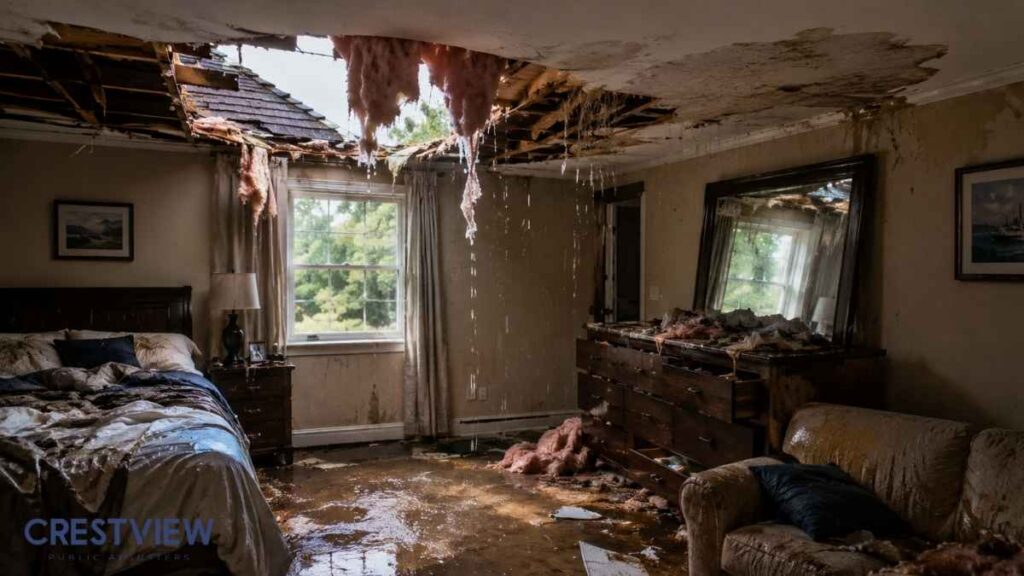
- Heavy winds tear off shingles or break a window, allowing rain to pour directly inside.
- An interior pipe, appliance connection, or plumbing fixture fails during the storm.
- A sewer, drain, or sump pump system discharges water, provided your policy has a water-backup endorsement.
A water-backup endorsement does not cover surface water that gathered outside before entering through a door or window well. That distinction is why we advise property owners to avoid labeling every wet space as flood damage on initial forms.
When Separate Flood Insurance Controls the Claim
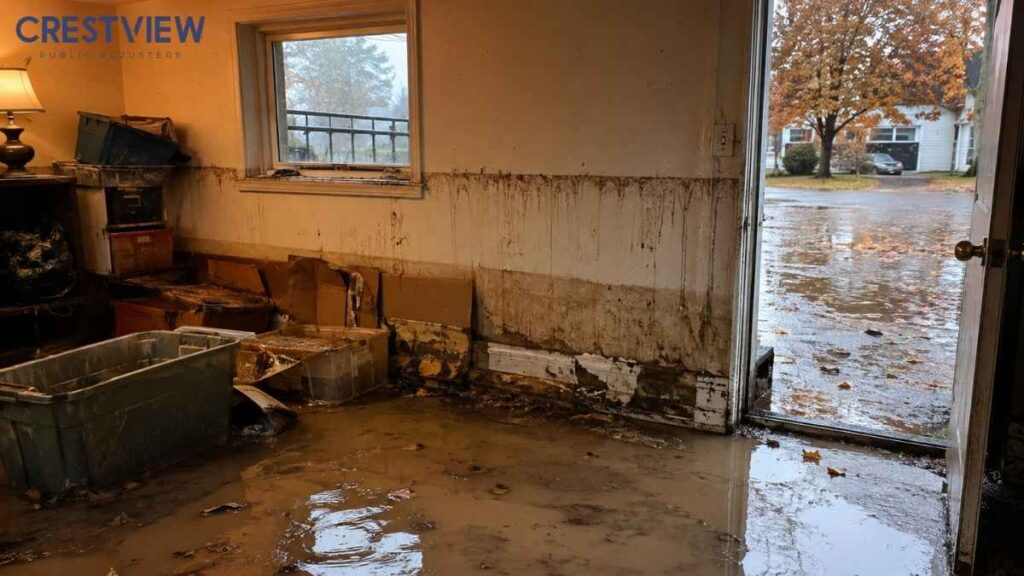
When rising surface water enters your building from the outside, your flood policy takes over. Flood insurance covers direct physical loss caused by a qualifying flood event, but coverage divides into two distinct parts: building coverage and contents coverage.
Buying building coverage does not automatically include your personal belongings, so you must purchase both to protect the structure and what sits inside it.
Flood policies also place strict limits on below-grade spaces. This impacts many New York and New Jersey properties, including garden units, ground-level apartments, finished basements, and below-street retail storefronts.
How a Flash Flood Insurance Claim in NY Is Reviewed Under Flood Coverage
When you file a flash flood insurance claim in NY, flood carriers send their own specialized adjuster to evaluate the site. That adjuster checks high-water marks, notes the flood’s scope across the neighborhood, and reviews damaged building components.
As the property owner, you must make sure that the carrier adjuster’s report includes every damaged item. The carrier’s estimate serves as the baseline for your claim, so missing structural details early on will create delays later.
One Storm Can Produce Two Policies and Two Carrier Adjusters
When a single autumn storm brings both high winds and rushing surface water, your loss can split into two separate claims. You may end up working with two different carrier adjusters on the exact same property.
| Observed Cause or Evidence | Likely Claim Route | Assigned Carrier Adjuster | Records to Preserve |
|---|---|---|---|
| Surface runoff entered through doors, window wells, or foundation openings | NFIP or private flood policy | Flood carrier adjuster | Exterior waterlines, street flooding photos, neighboring property conditions, municipal warnings |
| Rain entered through a storm-created roof or window opening | Homeowners or commercial property policy | Property carrier adjuster | Exterior opening photos, damaged roofing shingles, interior water tracks, contractor repair notes |
| Sewer, drain, or sump system discharged water | Homeowners policy with water-backup endorsement | Property carrier adjuster | Plumber invoice, camera inspection footage, sump pump equipment photos, policy endorsement pages |
| Pipe, appliance, or interior plumbing fixture failed | Homeowners or commercial property policy | Property carrier adjuster | Failed pipe segment or plumbing part, repair documentation, timeline of discovery |
We use the word “likely” here because the written terms in your specific policy always control the final outcome. Managing two claims for one storm date means tracking two separate claim numbers and sets of forms.
Each insurance carrier adjuster works directly for the company that hired them. When we manage a dual claim, our role is representing you, the policyholder. We examine how both scopes fit together so that neither carrier passes its responsibilities onto the other or uses an unsupported cause description to deny coverage.

Build One Evidence File That Supports Both Claim Paths
Organizing your evidence early keeps both carrier adjusters on track and prevents confusion over what caused each piece of damage. Extreme precipitation events in the Northeast have increased by roughly 60 percent, leading to frequent mixed-cause losses across our area.
Start by building a master timeline of the storm. Then, organize your records into clear physical or digital folders:
- Outside conditions and street flooding photos
- Roof, door, and window storm openings
- Interior waterlines and height marks
- Plumbing, drain, and sump equipment reports
- Damaged building materials and contents lists
- Receipts for temporary cleanup work
- Communication logs and letters from each carrier
Clear proof is vital whether you file a flood damage claim in New York or deal with flash flooding property damage in Bergen County, Hudson County, Passaic County, Long Island, NYC, or the lower Hudson Valley.
- Take wide photos of street conditions alongside close-ups of water lines on walls.
- Video footage showing the direction water moved can resolve disputes before they start.
- Keep separate physical copies of your property and flood policies in this central file so both representatives receive accurate information from day one.
A flash-flood loss can split into separate files before either carrier has reviewed the full event. Crestview Public Adjusters can review your homeowners policy, endorsements, flood policy, damage photos, and carrier letters together. Contact our team before signing a scope that assigns all damage to one cause without enough support.
How We Review a Mixed-Cause Loss Before Either File Is Closed
When our team steps in on a complex property insurance claim, we review your complete policy picture before either carrier finalizes its scope. We pull your property declarations, water-backup endorsements, flood policy terms, mitigation receipts, and contractor reports into one place.
Here is how we handle a dual-claim review:
- We map room-by-room damage to distinguish between internal water leaks, drain backups, and external surface water.
- We separate building components, contents, and cleanup costs according to the documented cause.
- We cross-reference estimates from both carriers to catch missing line items or overlapping exclusions.
- We send targeted documentation to each adjuster based strictly on what their policy covers.
Here’s something property owners often find surprising: the size of a water spill does not dictate whether flood insurance applies. We represented a commercial property in New York where a broken urinal flooded nearly 20,000 square feet of interior space.
Despite the massive volume of water, the source was entirely internal. That clear evidence kept the claim under the property policy and prevented an improper insurance claim denial under a flood exclusion.
FAQs About Flash Flood Insurance Claims in NY and NJ
Does a federal disaster declaration create flood insurance coverage?
No. A disaster declaration may open government grant programs, but it does not add flood insurance to your property after an event. Your claim relies entirely on the homeowners, commercial, or flood insurance policies that were active on the date the damage occurred.
Can I buy flood insurance after the storm and use it for this damage?
No. You cannot purchase a policy after a storm to cover existing losses. NFIP policies typically require a 30-day waiting period before taking effect. Property owners in NY and NJ must file claims through coverage that was active when the storm hit.
Does the amount of water decide whether it is an NFIP flood claim?
No. The water source and policy definitions determine the claim assignment, not the water volume. In our work with policyholders, we often see large internal plumbing failures that look like floods but remain primary property claims because no outside surface water was involved.
Review Both Policies Before the Claim Paths Separate
Identifying where water entered your property determines which policy must cover your damage. When a single fall storm causes both wind damage and surface flooding, separating your losses into the right claim files preserves your coverage rights.
At Crestview Public Adjusters, we represent homeowners, commercial property owners, and business owners across New York and New Jersey. Before you sign off on a carrier’s initial inspection report, gather your property declarations, policy endorsements, flood policy documents, damage photos, and contractor estimates.
Call us at (551) 316-7204 or reach out through our online contact form today. When you connect with our team, we will review your coverage, inspect your damage records, and explain exactly how to handle your carrier communications.