
Last updated: October 20, 2026
Key Points:
- A basement flooding insurance claim needs records connecting the water source with the affected property.
- An initial report can describe an unknown cause, with professional findings added later.
- Necessary emergency drying can begin before an insurance inspection when conditions are safe.
Basement water damage after a New Jersey summer storm can leave you facing two urgent questions: Is the basement safe, and who needs to know? A basement flooding insurance claim should start with safety and prompt contact with your insurer.
Water near the stairs after overnight rain does not always reveal its source. A pipe, drain, or sump pump may also need attention. The steps below explain what to report, which records to keep, and how to protect your home while the cause is checked.
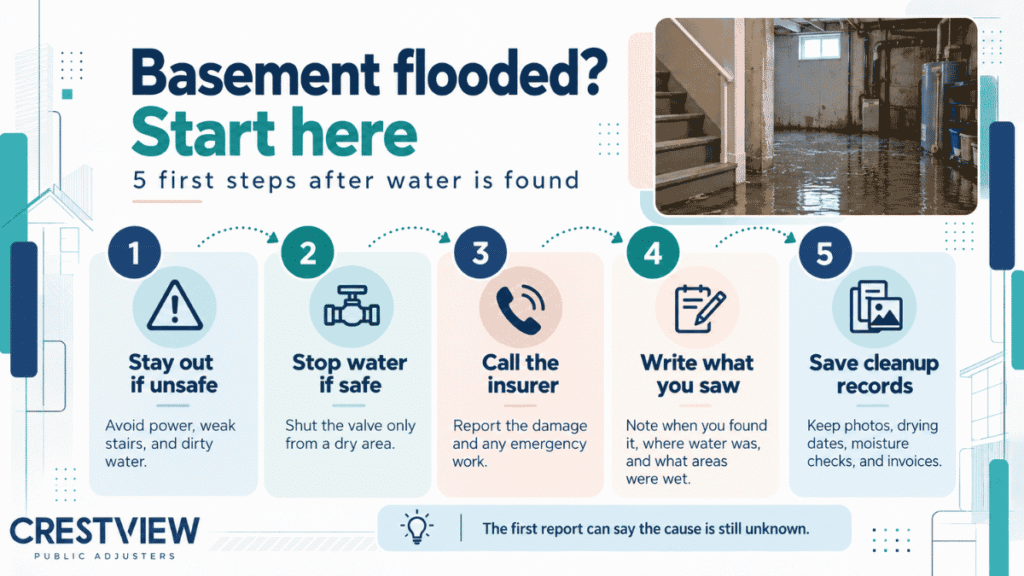
What Should You Do First When Your Basement Floods?
A flooded basement can hide electrical hazards, damaged stairs, and contaminated water. Everyone should stay out until those dangers have been addressed.
Water and Electrical Hazards
Standing water near outlets, appliances, or an electrical panel creates a risk of electric shock. The CDC warns against operating electrical controls while standing in water.
Power shutoff is only an option when the main switch is dry and safely reachable from a dry location. An electrician or utility company should handle an unsafe shutoff. Children and pets also need to stay away from the basement.
An Active Plumbing Leak
A broken pipe may keep releasing water until someone closes the water-supply valve. A homeowner can close that valve only if it is safely reachable from a dry area.
A plumber should handle an unsafe valve or an ongoing plumbing problem. Suspected sewage and damaged stairs also call for professional help before entry. Photographs can wait.
What to Tell Your Insurance Company
Homeowners should report basement water damage as soon as possible after addressing immediate safety needs. A plumber’s report and a complete set of photographs can follow the first call.
New Jersey’s storm claim instructions recommend prompt notice and asking which documents the insurer needs. Your first report can include:
- The date and time you discovered the damage
- The affected rooms or areas
- Anything you observed about the water source
- Emergency work already completed or arranged
The claim number, representative’s contact details, and instructions belong together in your records.
An uncertain cause should remain uncertain in the report. For example, “Water was beside the basement door after the storm” describes an observation without claiming to know how it entered.
Where Did the Basement Water Come From?
Basement water can come from plumbing, outside runoff, drains, or equipment that removes groundwater. These examples can help explain what you noticed:
- Broken pipe or appliance line: Water may collect near a water heater connection, washing machine hose, or damaged pipe.
- Outside rainwater: Water may gather beside a basement door, window well, or foundation opening after heavy rain.
- Drain or sewer backup: Water may rise through a floor drain or plumbing fixture.
- Sump-pump problem: Water may collect around the sump pit when the pump loses power, fails, or cannot keep up.
One wet area does not prove the source. Water can travel across the floor before anyone discovers it, so a plumber or other qualified specialist may need to investigate.
Our article on sump-pump failure and homeowners insurance explains the coverage questions that can follow a pump problem.
Record the Damage Before and During Cleanup
Safe photographs and professional findings help show both the visible damage and moisture hidden inside building materials.
Photographs of the Affected Areas
Wide photographs can show how wet areas connect. Closer pictures can capture waterlines, stained baseboards, damaged furniture, and wet belongings.
A wet carpet may be the first sign of trouble. During cleanup, a contractor might also find damp padding or moisture behind the baseboard. Photos of those findings help show damage that an earlier picture could not capture.
A room-by-room list can connect each damaged item with its photograph. Stored belongings, appliances, and equipment belong on that list when affected.
Records That Explain the Water Clues
The records below can help explain what happened. Each observation is a starting point, not a confirmed cause.
| What You Notice | Supporting Record | What It Helps Explain |
|---|---|---|
| Water near a broken pipe | Plumber’s findings and pipe photographs | Whether a plumbing failure caused the water |
| Water beside a basement door after rain | Safe exterior photographs and dated weather records | Whether outside water may have entered |
| Water rising through a floor drain | Drain inspection findings | Whether the drain or sewer system backed up |
| Water around a sump pit | Pump inspection notes and maintenance records | What happened to the pump system |
| Damp walls or flooring after water removal | Contractor moisture readings | How far moisture spread into building materials |
At Crestview Public Adjusters, we review damage photographs alongside contractor findings and estimates. Our water damage claim services help connect the affected areas with the work needed to repair them.
How the Water Source Affects Coverage
Insurance coverage depends on the cause and policy terms. Certain sudden plumbing losses may fall under homeowners insurance. New Jersey’s flood coverage notice explains that standard homeowners policies exclude flood damage.
Outside surface flooding generally requires separate flood insurance. Sewer backups and sump-pump overflows may depend on an endorsement, which changes the policy’s coverage. Long-term seepage, wear, and maintenance problems can raise separate exclusion questions.
The presence of water alone does not establish coverage. A failed pump and outside flooding can occur during the same storm, but different policy terms may apply. At Crestview, we review those terms alongside the available source findings.
Keep Records as the Basement Dries
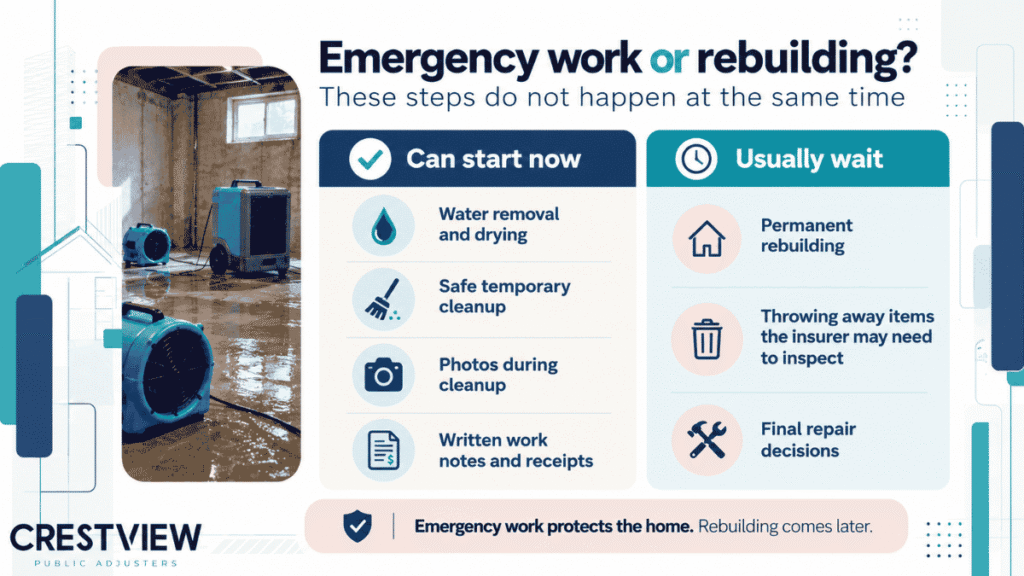
Necessary water removal and drying should proceed when conditions are safe. An upcoming insurance inspection should not delay emergency work needed to prevent further damage.
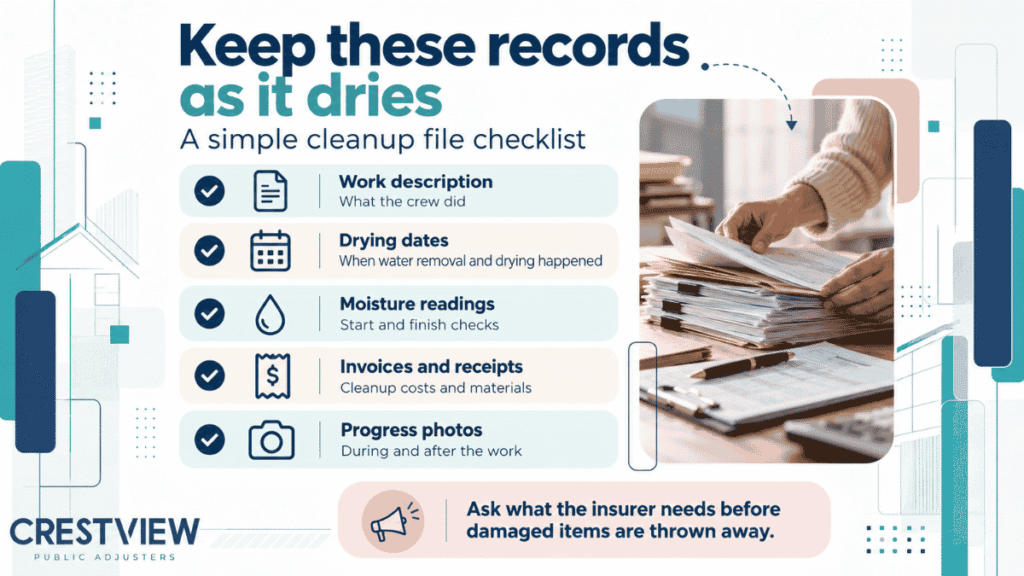
Cleanup records should include:
- Written descriptions of the work
- Dates of water removal and drying
- Moisture readings and equipment records
- Contractor invoices and receipts
- Photographs during and after the work
Moisture readings taken at the start and end of drying can help explain which materials needed attention.
The insurer should explain what it needs to inspect before belongings are discarded. The NFIP claims checklist makes exceptions for items that pose health hazards or require disposal under local rules. Safe photographs and item descriptions can preserve information when retaining damaged property is unsafe.
Permanent rebuilding should wait until the insurer has had an opportunity to inspect the damage. Emergency work and rebuilding serve different purposes.
What Happens During the Claim Inspection?
The insurer’s adjuster reviews the damage and supporting records for the insurance company. The inspection may include questions about the source, cleanup, and affected building materials.
Your damage list can help you point out areas that need attention. Newly discovered damage can be reported with additional photographs or contractor findings.
A public adjuster represents the policyholder. Our New Jersey public adjusters inspect property damage, prepare supporting documents, review policy terms, and communicate with insurers. A public adjuster is optional; homeowners can also handle claims directly with their insurance company.
FAQs About Basement Flooding Insurance Claims in New Jersey
Can I choose my own cleanup contractor?
Homeowners can choose their contractor. New Jersey DOBI states that owners do not have to use the insurer’s recommended contractor. A written work description and price help document the arrangement. Contractor choice does not guarantee that the policy covers every service.
What if I no longer have purchase receipts for damaged belongings?
Older photographs, order histories, model numbers, and bank or card records may help document ownership and age. Your insurer can explain which alternatives it accepts. Any list should distinguish known details from estimates, including approximate purchase dates.
Who reports basement damage at a rental property?
Tenants should promptly tell the landlord or property manager. The building’s policyholder should report building damage to the property insurer. Tenants may need to report damaged belongings to their own insurer because renters coverage and the landlord’s building coverage serve different purposes.
Request a Review of Your Basement Water Damage Records
A basement claim needs an account of the source, affected areas, and emergency work. Together, photographs and professional findings help explain what happened and what still needs attention.
At Crestview Public Adjusters, we help New Jersey property owners assess water damage and prepare claim records. A free claim assessment gives us an opportunity to review your incident details, available photos, and any plumber or drying reports.
Your available records can start the conversation.