
Key Points:
- A chimney fire insurance claim requires evidence connecting a sudden fire to covered structural, smoke, soot, or water damage.
- Maintenance records, fire reports, chimney inspections, photographs, and estimates help establish cause and scope.
- Property owners should protect the site, preserve damaged parts, and delay permanent repairs until inspection.
A sudden chimney fire may support a covered fire claim, but the final outcome depends on your policy, the cause of the fire, evidence of damage, and any disagreement over prior deterioration. Filing a chimney fire insurance claim requires clear records long before you strike a match.
When cold weather hits, families across Pennsylvania light their fireplaces and wood stoves for comfort. That first fire should bring warmth, not a dispute with your insurance carrier.
In this guide, we break down the maintenance records you need before lighting up, the physical evidence required after an incident, and how adjusters separate sudden fire damage from older structural defects.
Before the First Pennsylvania Fire, Create a Maintenance Record
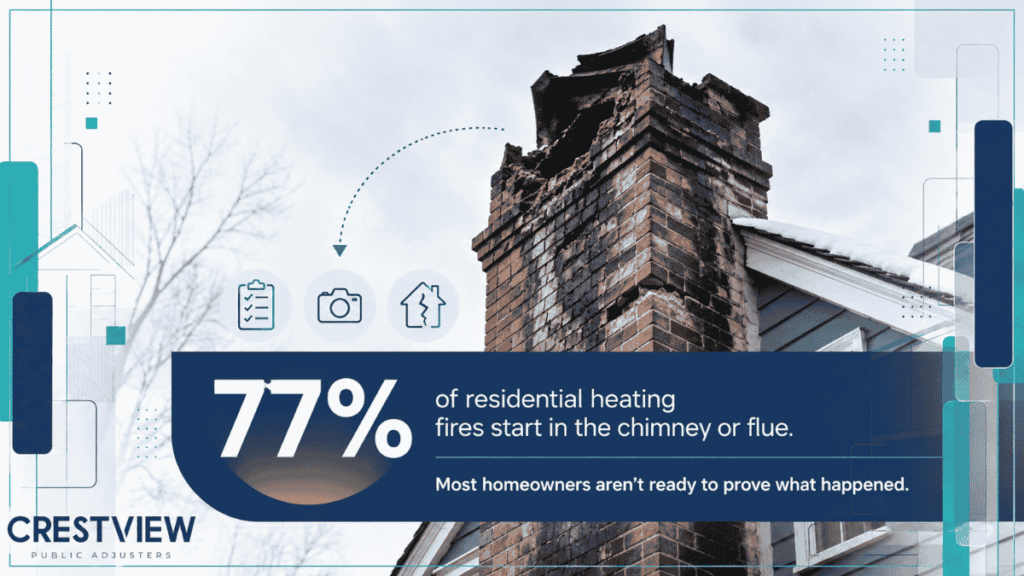
Did you know that confined fires in chimneys, flues, or fuel burners account for 77% of residential heating fires? In fact, chimney or flue fires alone represent nearly half of those incidents, with calls peaking every January.
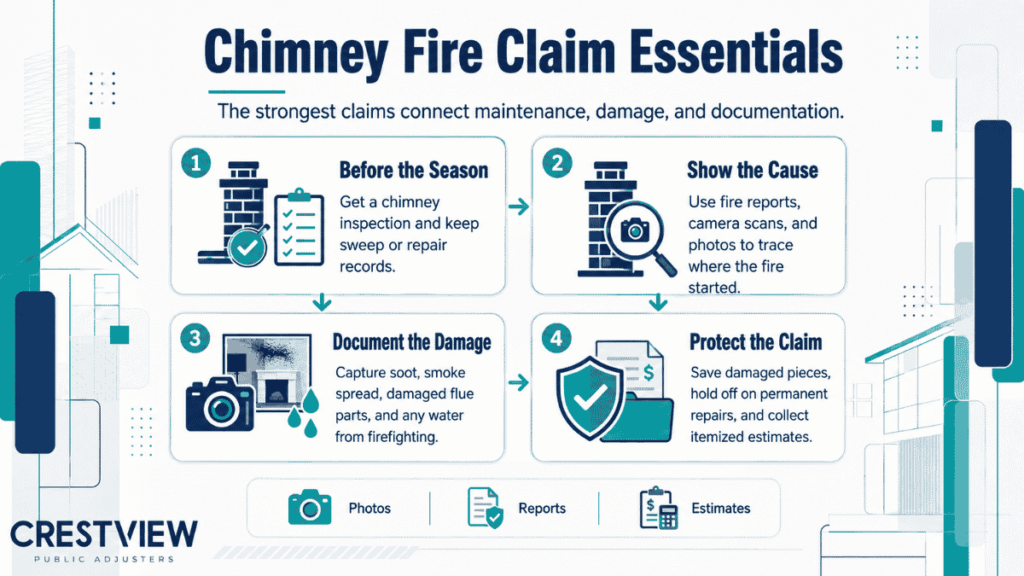
Before lighting your fireplace this winter, set up a professional inspection rather than relying on a quick glance up the flue. Having solid proof of maintenance shows your carrier that your system was in good working condition before any sudden event occurred. Managing a chimney fire insurance claim comes down to presenting clear physical proof.
Keep these essential records in a safe file:
- Dated inspection and sweeping invoices from a certified chimney professional
- Clear photographs of the firebox, damper, liner, chimney cap, and exterior masonry
- Repair receipts for cracked flue tiles, mortar joints, flashing, or connectors
- Installation manuals and purchase receipts for fireplace inserts or wood stoves
- Municipal permits and inspection records from your city, borough, or township
- Written notice to your insurer if your policy application specifically asks about wood burning equipment
Homeowners often ask what happens when a previous owner leaves no paper trail behind. A fresh professional inspection creates a clear starting condition record today, even if it cannot prove when older wear occurred. Having this paperwork ready helps protect your wood stove fire insurance coverage if an unexpected fire breaks out.
What a Pennsylvania Chimney Fire Insurance Claim Must Prove
Homeowners frequently ask us, “Does insurance cover chimney fires?” Fire is generally treated as a covered peril under standard homeowners policies, but every contract contains specific conditions and exclusions. Standard wear and tear, rust, and gradual corrosion are routinely excluded, even when resulting fire damage gets reviewed.
To build a solid flue fire damage claim, you must answer four core questions with physical evidence:
- When did the fire happen? Establish the timeline using emergency call logs, local fire department incident reports, witness notes, and initial photographs.
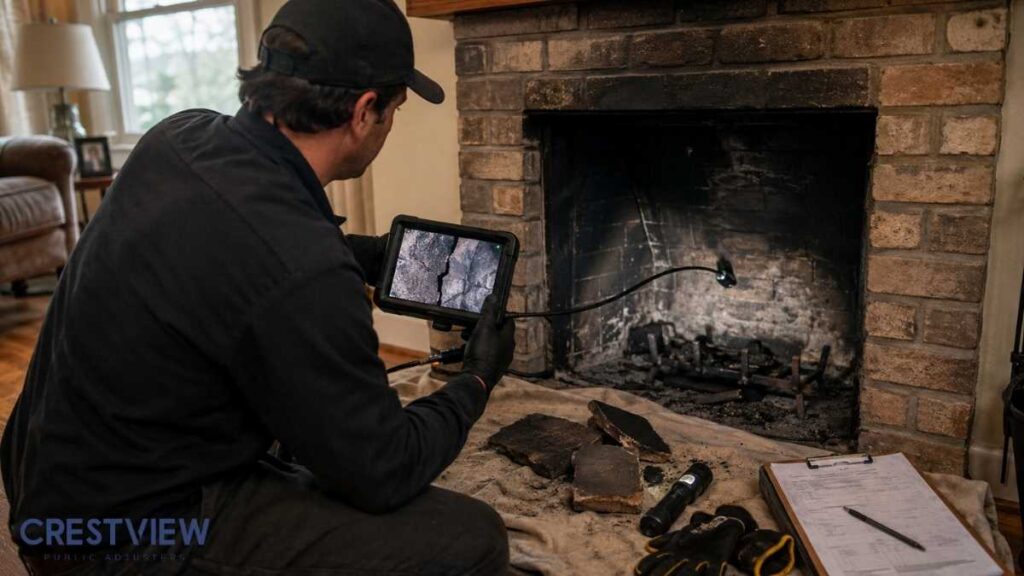
- Where did the fire originate? Point to the exact point of origin using chimney inspection reports, camera scans, and appliance details.
- What physical structure did the fire destroy? Document affected flue tiles, mortar joints, metal connectors, nearby wall framing, roofing materials, and home contents.
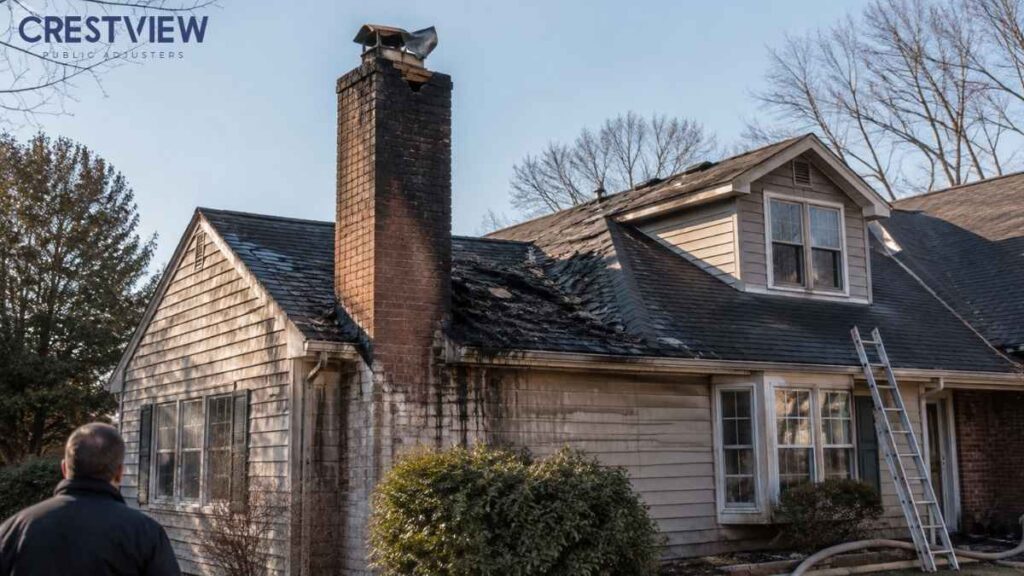
- How far did smoke, soot, or water damage spread? Take photos of adjoining rooms, heating, ventilation, and air conditioning (HVAC) ductwork, insulation, ceilings, and personal belongings outside the fireplace opening.
The local fire department report controls the emergency scene, but a qualified chimney specialist documents the internal condition of your venting system. Because policy forms and exclusions vary across Pennsylvania, your specific policy wording remains the final authority on coverage.
What to Do After the Fire Department Leaves
Once emergency crews declare the property safe, take immediate steps to protect your structure without disturbing vital evidence.
- Stop using the fireplace, chimney, or connected stove right away.
- Board up exposed openings to block winter weather if local officials allow entry.
- Keep every receipt for board-up services, emergency water extraction, and temporary lodging.
- Avoid making permanent repairs to the masonry or liner until the insurance company inspects the site.
Sweeping the chimney or removing charred liner pieces before documenting the residue can destroy key proof needed to confirm the cause of the fire.
What to Save for a Chimney Fire Insurance Claim
To protect your chimney fire insurance claim, organize these records immediately:
- Local fire department incident reports
- Chimney camera inspection images and video files
- Pre-fire sweeping invoices and maintenance logs
- Wide-angle and close-up photos taken before any cleanup begins
- Damaged liner pieces or appliance parts if safe to keep
- Written contractor repair estimates and itemized scopes
- Emails, letters, claim logs, and carrier written requests
- Professional smoke cleaning and water extraction records
One fire file we handled began with the carrier treating much of the affected material as cleanable. Room-by-room documentation and smoke testing showed a wider damage path than the first inspection reflected.
Review Your Claim Records With Our Team
At Crestview Public Adjusters, we can review your Pennsylvania policy, fire report, chimney inspection, photos, and carrier estimate before permanent repairs begin. Reach out to us and send those records. We will identify missing proof, explain disputed policy language, and show which claim steps should proceed next.
How Insurers Separate Maintenance From Sudden Fire Damage
Insurance adjusters carefully examine property damage claims to separate sudden accidental fire damage from long-term property neglect. They look for specific differences between damage caused by the reported fire and pre-existing conditions like masonry cracking, rust, or tile deterioration.
Expect the carrier to ask detailed questions during their investigation:
- Was the chimney inspected or swept on a regular schedule?
- Did creosote buildup or a flue blockage contribute to the fire?
- Was the liner cracked or damaged before the incident?
- Was the stove or fireplace insert installed according to code?
- Did the policyholder disclose the wood-burning appliance to the insurer?
- Could the structural damage predate the current property owner or policy term?
Missing a maintenance receipt gives the carrier something to examine, but it does not mean an automatic denial. If your insurer denies your claim, they must state in writing the exact policy exclusion they are applying.
You can request their decision in writing, compare it to your policy language, submit records that address their points, explore internal appeal options, or contact the Pennsylvania Insurance Department if questions remain. Filing a fireplace fire insurance claim requires showing clear proof that sudden heat or flame caused the structural failure.
How Our Team Reviews a Disputed Pennsylvania Chimney Claim
When we review a disputed file, we start by analyzing your policy form, declarations page, and endorsements alongside the fire department report. We examine chimney camera inspection files, pre-loss maintenance records, and photo documentation of fire, soot, smoke, and water spread. Then, we compare those details against the carrier’s line item estimate and denial letter.
Our scope looks far beyond the immediate hearth. We evaluate hidden flue tiles, framing behind nearby walls, roof penetrations, HVAC ductwork, personal property, and water runoff from firefighting efforts. Whether you need assistance with a smoke damage claim in Pennsylvania or a complex structural loss, we help present a clear, documented picture of the actual damage path.
We handle claims across Pennsylvania, supporting property owners in Philadelphia, Allentown, Bethlehem, Lancaster, Harrisburg, Scranton, and Reading. Many policyholders contact us only after receiving a small check or partial denial. At that stage, the unresolved issue is often the damage scope, such as smoke migration, ductwork, or nearby finishes, rather than the fireplace opening alone.
FAQs About Chimney Fire Insurance Claims
Can a claim include chimney damage found only by a camera inspection?
Yes. A Pennsylvania claim can include concealed damage when a qualified inspection connects cracked tiles, failed joints, warped metal, or liner damage to the reported fire. Our team has seen later testing uncover damage that the first visual inspection did not show.
Does one deductible apply to the chimney, smoke, and water damage?
One property deductible commonly applies when the chimney fire, smoke spread, and firefighting water arise from the same occurrence. Your Pennsylvania policy language and the carrier’s claim decision control the final result. Review your declarations page and written coverage notices for specific details.
Who files the claim when a tenant used the fireplace?
The Pennsylvania building owner normally reports structural damage under their property policy. A tenant may report personal belongings or liability concerns under renters coverage. The official fire report, lease agreement, and policy wording clarify how to separate the building claim from tenant property files.
Review Your Pennsylvania Chimney Fire Claim Before Repairs Begin
Strong claim evidence connects the fire report, chimney inspection, maintenance history, photographs, and smoke scope directly to your policy wording. Establishing a clear timeline separates sudden fire damage from older structural deterioration.
At Crestview Public Adjusters, we review chimney, flue, fireplace, and wood stove fire claims for property owners in Philadelphia, Allentown, Bethlehem, Lancaster, Harrisburg, Scranton, and Reading.
Call (551) 316-7204 or submit our contact form with your policy, reports, photos, estimates, and carrier letters. Our team will review the cause, documented scope, filing deadlines, and any denial language. The review will identify missing records and explain the next claim step.