
Key Points:
- Storm water damage and flood insurance claims follow different policy rules.
- The National Flood Insurance Program (NFIP) uses a specific two-acre or two-property test for rain-related flooding.
- A water-backup endorsement may affect drain losses, while safe documentation and prompt insurer notice support the review.
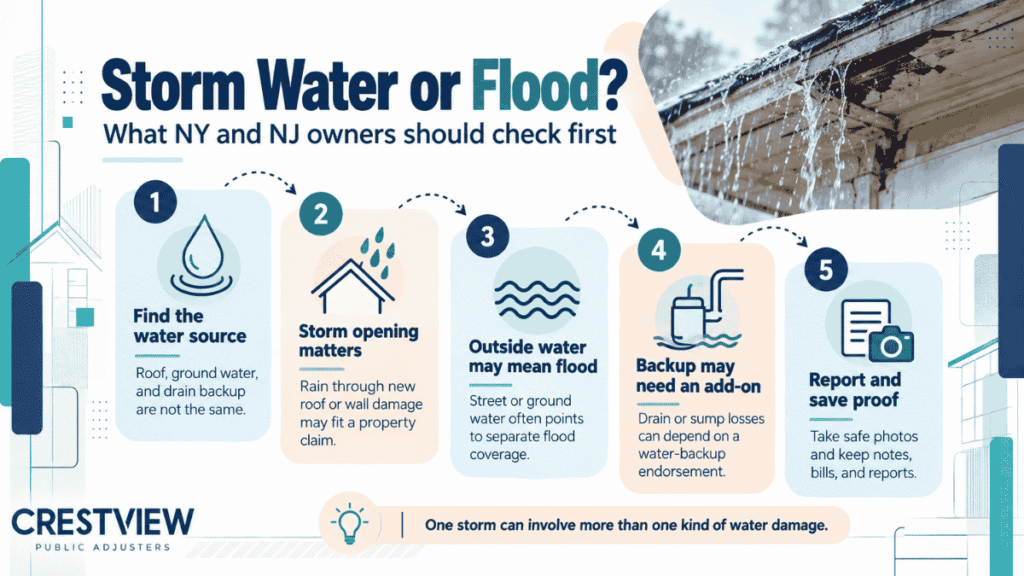
Rain entering through a wind-damaged roof may fall under a homeowners or property policy. Water flowing in from a flooded street usually calls for separate flood insurance. The cause and policy terms decide which coverage may apply.
For example, one rainstorm could leave a dripping ceiling upstairs and standing water at the basement door. Those wet areas may have different causes. For New York and New Jersey owners, the first step is to report what happened, including where the water appeared and what remains unknown.
What Is the Difference Between Storm Water Damage and Flooding?
“Storm water damage” describes a problem, but it does not identify the insurance coverage. Rain through damaged roofing, runoff across the ground, and water rising from a drain can involve different policy terms.
Under the NFIP flood definition, rain-related flooding generally requires temporary water covering normally dry land across either:
- At least two acres; or
- At least two properties, including the insured property.
The water must also come from a listed cause, such as overflowing rivers or unusual, rapid surface runoff. The NFIP area test does not automatically apply to a homeowners policy’s flood or surface-water exclusion.
Example: A puddle beside one driveway does not establish an NFIP flood. Evidence of the affected area or neighboring properties would still be needed. A homeowners exclusion could apply even if the event falls outside the NFIP definition.
When Might a Property Policy Cover Rain Damage?
A homeowners or commercial property policy may cover rain damage when a covered event creates an opening that lets rain inside. Wind tearing away shingles before rain enters the attic is one example.
A roof leak alone does not prove coverage. Some policies require storm damage to the roof or wall before covering incoming rain. Wear, older leaks, and maintenance problems can affect the answer. A roofer’s dated photos and findings can help explain whether the storm created new damage.
At Crestview Public Adjusters, we review how water entered, how far it spread, and which rooms or belongings it affected. Our water damage claim review connects those findings with contractor reports and policy terms, so the file explains the damage beyond a wet ceiling.
When Does Separate Flood Insurance Apply?
An active NFIP or private flood policy may cover damage when outside water enters during a qualifying flood. River overflow and unusual, rapid runoff are examples. A policy must have been in effect for the loss, and its conditions still apply.
New Jersey’s flood coverage notice explains that standard homeowners insurance excludes flood damage and that separate flood insurance may be available.
NFIP building and contents coverage protect different things and are generally purchased separately. A policy covering the building does not automatically insure your belongings. Private flood policies can have different terms, so an owner should check the actual contract.
Does a Sewer or Sump Pump Backup Count as Flood Damage?
A sewer or sump pump backup is not automatically an NFIP flood. Water rising through a basement drain could involve a blockage, pump failure, or outside flooding.
Some homeowners policies offer a water-backup endorsement, an addition that provides specified backup coverage. New York’s coverage information explains that wording varies between insurers. Flood-caused backups may still fall under an exclusion, even with the added coverage.
A plumber’s report can help identify what failed and whether more than one cause contributed. Our guide to a denied sewer backup claim explains how the denial letter, endorsement, and repair findings relate to a backup dispute.
Can One Storm Cause Different Types of Water Damage?
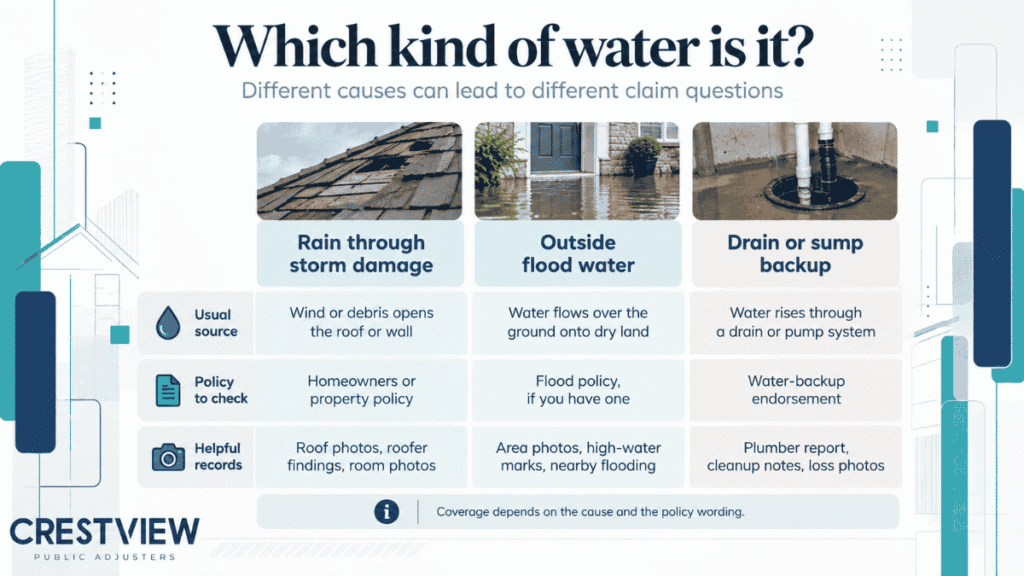
One storm can damage roofing and send street water through a doorway. Owners with separate property and flood policies may need to notify more than one insurer. Each insurer reviews the damage under its own contract.
The examples below show which records can help explain different causes. They do not establish coverage.
| What Happened | Evidence That May Help | Policy Terms to Check |
|---|---|---|
| Rain came through newly damaged roofing | Roofer report, opening photos, interior water marks | Wind and rain-opening terms in the property policy |
| Street water entered a doorway | Outside water levels, nearby flooding, dated photos | Flood exclusion and any active flood policy |
| Water rose from a basement drain | Plumber report, pump condition, storm timeline | Water-backup endorsement and flood-related exclusions |
An uncertain source should remain a question in the records. Photos or professional findings may help answer it later.
What Should You Do After Storm Water Enters?
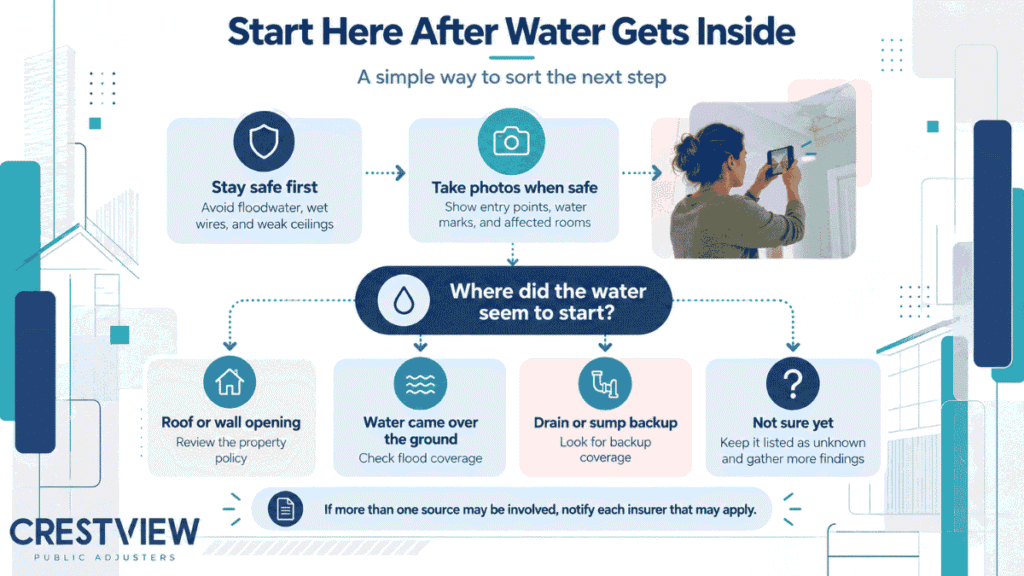
Your safety comes before photographs or cleanup. The National Weather Service warns that floodwater can hide contamination, electrical hazards, and structural damage.
- Safety first. People should stay out of floodwater, damaged roofs, and rooms with sagging ceilings. The utility or qualified emergency professionals should handle wet electrical equipment and unsafe shutoffs.
- Prompt insurer notice. Your insurer or agent should receive notice as soon as possible under the policy’s requirements. New Jersey’s storm claim instructions recommend early contact; a complete photo collection can follow.
- Photos when safe. Images of entry points, water marks, affected rooms, and nearby flooding can preserve details that disappear during drying. A note of when you first noticed each problem adds context.
- Temporary protection and records. Necessary work to prevent further damage should follow professional advice and policy duties. Receipts, drying reports, and repair findings should stay with the claim records.
Our storm water intrusion article also covers how drainage and building conditions can let water inside.
Which Policy Documents Should You Check?
Three documents help explain the coverage: the declarations page, the full policy, and any endorsements. The declarations page summarizes the insurance and policy dates. The full forms and endorsements contain the conditions and exclusions.
Relevant terms may address storm-created openings, flood or surface water, repeated seepage, maintenance, notice, and damaged belongings. An insurer’s explanation should identify the policy wording it relies on.
The insurer’s adjuster works for or on behalf of the insurance company. A public adjuster represents the policyholder. In our water-damage work, we compare the insurer’s findings with damage records and relevant policy language. Neither role can create coverage the contract does not provide.
FAQs About Storm Water Damage vs Flood Insurance
Does a FEMA flood-zone map decide whether my damage is a flood?
A FEMA map describes flood risk; it does not decide what caused a particular loss. Properties outside mapped high-risk areas can flood. The conditions during the event and the policy’s definition determine whether the damage involves a qualifying flood.
Does a federal disaster declaration add flood coverage to my homeowners policy?
A disaster declaration does not add coverage to the insurance held when damage occurred. A declaration may make government assistance available, subject to that program’s requirements. Disaster assistance and flood insurance are separate, and assistance is not guaranteed.
Does NFIP insurance cover basement furniture and finished rooms?
NFIP basement coverage is limited. The program defines a basement as an area with its floor below ground on all sides. Certain installed equipment and listed belongings may qualify, but couches, televisions, and most finished-room improvements do not. The basement coverage rules explain the restrictions.
Request a Review of Your Storm Water Damage
Storm water damage records should connect each affected area with the reported water source and supporting findings. That connection helps explain which policy questions need attention, especially when roofing damage, outside runoff, or a backup occurred together.
At Crestview Public Adjusters, we help New York and New Jersey owners review water-damage records, policy terms, and contractor findings. You can request a free claim assessment using the photos and reports already available.
Your questions can be part of that first conversation.