
Key Points:
- An HVAC water damage insurance claim New Jersey homeowners file depends on whether the leak was sudden, accidental, and well documented.
- Insurers review maintenance records, photos, repair notes, and mitigation timing.
- Mold, AC repairs, and property damage may follow separate policy rules.
Homeowners insurance may cover an HVAC water damage insurance claim in New Jersey when the leak is sudden and accidental. The AC unit is usually the source of the loss, so HVAC repair may be separate from the water damage claim for property damage. Mold coverage depends on your specific policy. It also depends on your timing.
New Jersey summer heat creates high humidity. Heavy AC use can quickly turn a small condensate issue into ceiling stains. It can cause wall moisture and mold concerns. So what does this mean for your property? If you see these signs, filing the right claim requires knowing how carriers view summer cooling failures.
How an HVAC Water Damage Insurance Claim New Jersey Homeowners File Gets Reviewed
When an HVAC water damage insurance claim in New Jersey is reviewed, the insurance company looks at specific details. The insurer checks the exact cause of the water release to see if the loss was sudden or gradual. Here is what you need to know about what they check.
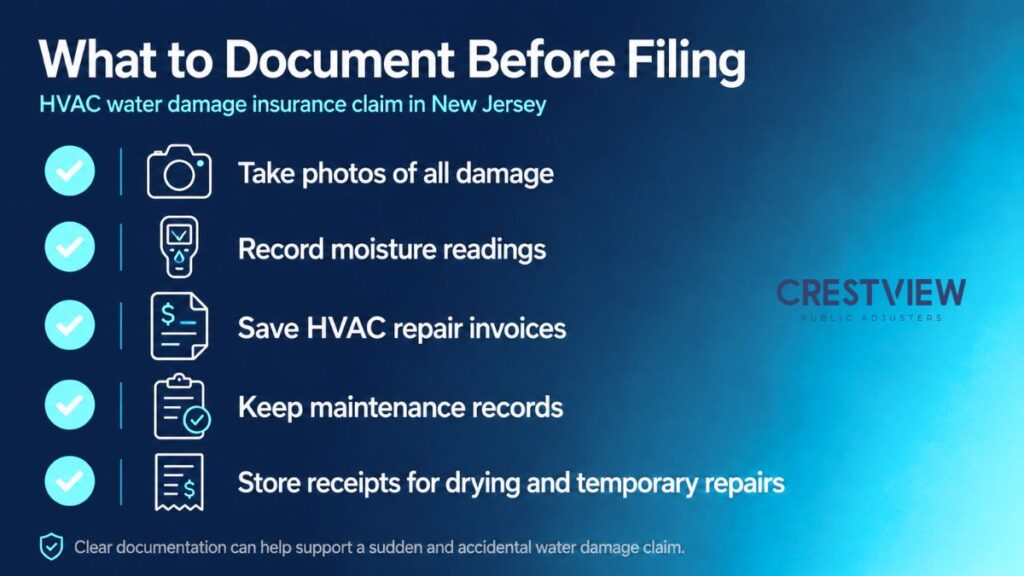
The carrier may ask you for:
- Annual maintenance records
- Recent repair invoices
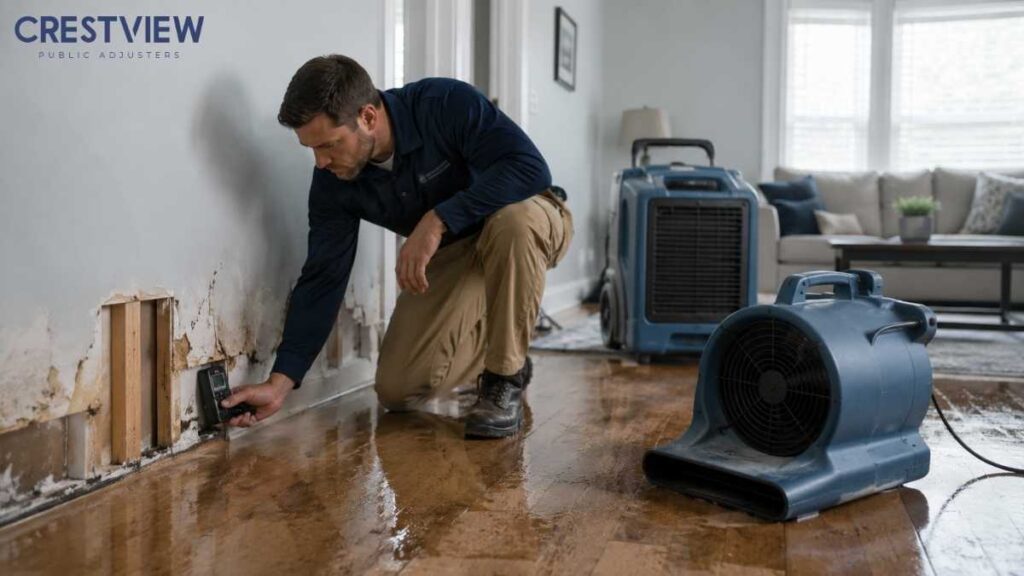
- Photos and moisture readings
The claim file separates your property damage into distinct parts. The mechanical AC repair is handled on its own, and mold claims have their own rules. State officials advise property owners to document all damage right away. They say to keep broken parts when possible. You should also save receipts for temporary repairs.
AC Leak Water Damage NJ Homeowners Often Notice First
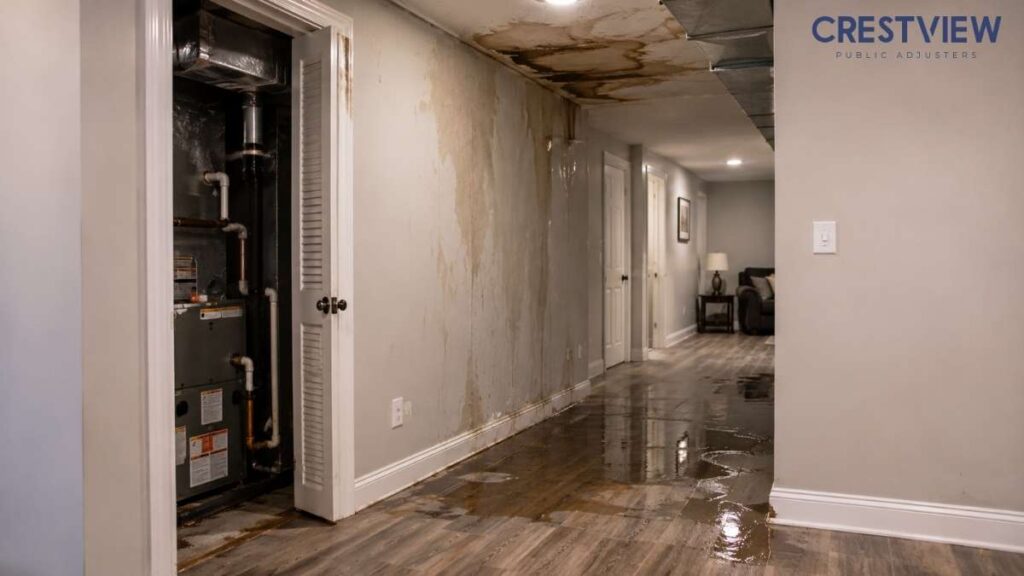
Hot weather forces your cooling system to pull large amounts of moisture from the indoor air. Clogged lines cause rapid overflows, leading to serious AC leak water damage NJ residents notice during summer. Have you checked your utility closets lately?
Watch for these specific signs around your property:
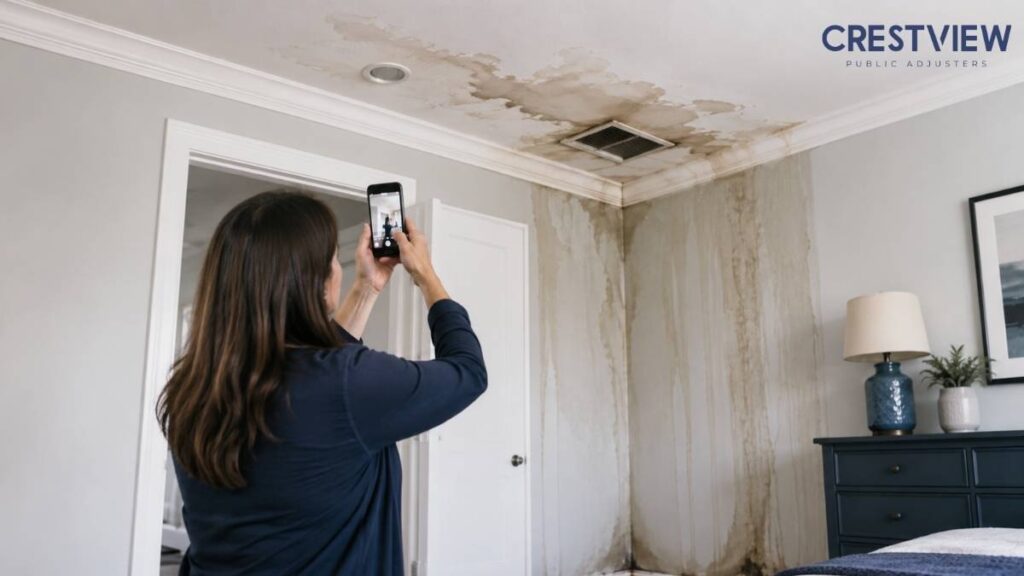
- Brown ceiling marks under an attic unit
- Damp drywall near wall chases
- Buckled flooring near utility closets
- Standing water near the air handler
- Musty smells from your vents
Blocked lines cause water damage when drains overflow. Clogged AC drains also reduce moisture removal. Catching these signs early changes everything.
Sudden AC Failure Vs. Gradual Condensate Leak
A water claim can become harder when the carrier thinks the leak happened over time. The stronger file documents water damage through the discovery date, AC shutoff date, repair date, and mitigation date.
Here is how carriers separate these water losses:
| Sudden HVAC Water Loss | Gradual HVAC Water Loss |
|---|---|
| Line backs up fast during heavy use | Slow drip continues for weeks |
| Ceiling stain appears quickly | Mold suggests older moisture |
| Tech finds a recent clog | Carrier blames wear or poor maintenance |
| Mitigation starts right away | Delayed cleanup weakens the claim file |
The reality is that timing dictates your coverage options.
Why An Air Conditioner Leakage Claim Denied New Jersey Letter May Mention Maintenance
An air conditioner leakage claim denied New Jersey letter often points to long-term seepage, wear and tear, deterioration, delayed reporting, or maintenance concerns. That wording shows what the carrier is questioning.
Useful records may include:
- HVAC service logs
- Repair invoices
- First-discovery photos
- Drying receipts
Maintenance records do not guarantee coverage. They help answer claims that the problem was ignored. Online discussions show the same concern: will the carrier call AC condensation a slow leak instead of sudden damage?
What Insurance May Pay for After an HVAC Leak
Insurance typically addresses the resulting property damage, not the cost to repair the AC unit itself. Mechanical repairs usually belong to the maintenance side unless your policy states otherwise.
For the rest of your home or business, insurance generally helps fix building materials. Covered items often include:
- Drywall and ceiling repairs
- Flooring and insulation
- Paint and built-in trim
- Emergency water extraction
- Impacted personal contents
Every policy has specific structural limits, so check your paperwork early to see what is covered.
Does Mold From an AC Leak Get Covered in New Jersey?
Mold from an AC leak may be covered only when it ties back to a covered water loss. Some policies also place a sublimit on mold testing, removal, or repair. Long-term humidity, delayed cleanup, or a slow leak can weaken the claim.
Experts recommend keeping indoor humidity below 60%, ideally between 30 and 50 percent, and drying moisture quickly when condensation appears. Keeping drying logs helps prove the mold grew fast from a sudden overflow.
New Jersey Summer Risks That Can Complicate HVAC Leak Claims
New Jersey summers bring heavy AC demand, humid weeks, thunderstorms, and power interruptions. Attic air handlers can work harder in hot spaces. Condos and multifamily buildings can add water migration between units.
Newark, Edison, Lakewood Township, Paterson, and Elizabeth homes may include older layouts, multifamily buildings, or finished basements. The same AC leak can look different based on the air handler location.
Lightning injuries peak in July. These storms create sudden appliance failures. Trapped moisture causes fast mold concerns in tight spaces.
When a Public Adjuster for an HVAC Leak in New Jersey May Help
Insurance disputes often happen during the peak summer months. A New Jersey public adjuster can protect your interests when the carrier blames maintenance or gives a low estimate.
Independent help is valuable when:
- The carrier disputes the water source
- Estimates miss hidden wall moisture
- Mold or ceiling damage is widespread
At Crestview, we help New Jersey homeowners and property owners document HVAC-related water damage, review the carrier’s scope, and focus the claim on the property damage caused by the leak.
FAQs About HVAC Water Damage Insurance Claim in New Jersey
Does homeowners insurance cover water damage from an AC leak?
Homeowners insurance may cover resulting water damage when the AC leak was sudden and accidental. An insurance claim review will evaluate the source. Policies typically exclude gradual wear, poor maintenance, or repairing the cooling unit itself.
What should I do if my air conditioner leaks water into my ceiling or walls?
An AC leak water damage NJ claim starts with these steps:
- Shut off the system.
- Stop the water if safe.
- Take photos.
- Call an HVAC technician.
- Start drying.
- Keep receipts and damaged materials until the inspection rules are clear.
Should I hire a public adjuster for an AC water damage claim?
A public adjuster HVAC leak New Jersey claim review may help when damage is extensive, hidden, denied, tied to mold, or handled as an underpaid insurance claim. A public adjuster can review the scope, document the source, and communicate claim details to the insurer when needed.
Review Your HVAC Water Damage Claim Before the Damage Spreads
An AC leak can turn one ceiling stain into damaged drywall, flooring, insulation, and mold concerns during a humid New Jersey summer. A clear timeline, photos, repair notes, and moisture readings can help show whether the damage came from a sudden HVAC issue or a longer leak.
At Crestview Public Adjusters, we help homeowners and property owners in Newark, Edison, Lakewood Township, Paterson, Elizabeth, and nearby areas review HVAC-related water damage before giving a recorded statement or accepting a low carrier scope.
If your AC is leaking into your ceiling, walls, or flooring this summer, call us before the damage spreads. We can review your claim details, explain what documentation may help, and evaluate your situation within 24 hours.