
Key Points:
- Storm preparation is a 48-hour process that reduces property damage and protects an insurance claim before heavy rain.
- Property owners should inspect roofs and drainage, test backup systems, move valuables, and create dated records.
- Outdoor work should stop once wind, lightning, or heavy rain make conditions unsafe.
Getting ready for a major weather event doesn’t require a deep home renovation. Practical storm preparation involves three basic tasks. First, give rainwater a safe route away from your building. Second, protect weak exterior and interior areas. Finally, record your property’s condition before the weather turns.
Even if you’re a homeowner, landlord, property manager, or business owner, this checklist helps keep your property safe. This process starts 48 hours before expected heavy rain and ends when it’s no longer safe to work outside.
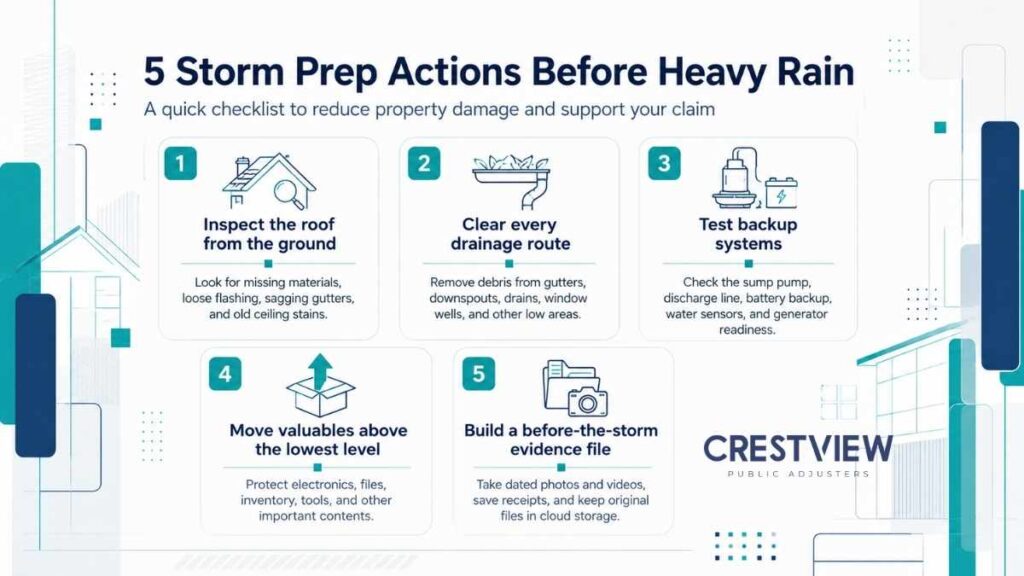
Start Storm Preparation 48 Hours Before Heavy Rain
When a storm approaches, timing is everything. Setting aside time for storm preparation two days early helps you spot hidden vulnerabilities before they turn into major structural failures and costly storm damage claims.
Have you checked your roof lately? A long dry period doesn’t confirm that your flashing and seals are still doing their job. A sudden storm can quickly expose old wear and tear.
Roof Inspection Tips You Can Use From the Ground
A study of properties affected by Hurricane Sally found that verified roof-strengthening reduced claim frequency by 55% to 74% and lowered claim severity by 15% to 40%.
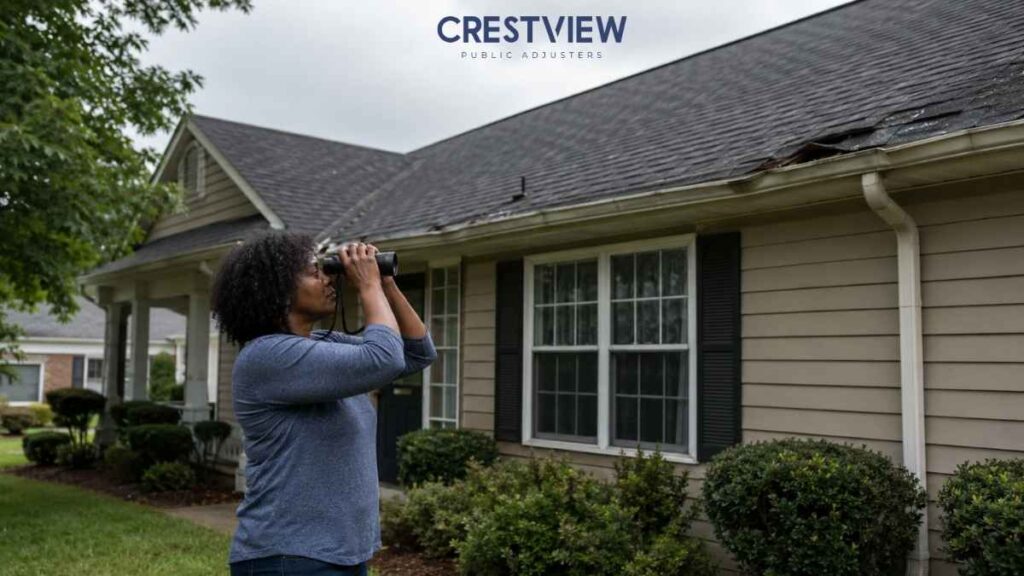
These roof inspection tips help you spot issues without climbing a ladder. Use binoculars or a camera to check for these issues from safe ground:
- Missing, lifted, curled, or displaced roofing materials.
- Loose flashing around chimneys, vents, skylights, and roof edges.
- Sagging gutters or downspouts pulling away from the building.
- Water stains under roof overhangs.
- Loose siding, shutters, awnings, or exterior panels.
- Dead branches above the roof, driveway, or power lines.
- Old ceiling stains that should be photographed before the next rainfall.
Clear Every Route That Carries Rain Away From the Property
Water must flow away from your structure. If your basement has stayed dry for two years, you might assume your foundation is flawless. Yet a single directional downpour can easily push water through a basement wall if your drainage fails. Applying basic heavy rain property tips helps you manage where that water goes before it becomes a water damage claim.
Start your drainage work outside for effective flood prevention. Official guidelines from Ready.gov recommend keeping your roof and gutters free of debris to prevent water accumulation. Clean gutters keep water moving instead of letting it pool near your foundation.
Storm Preparation for Gutters, Drains, and Low Areas
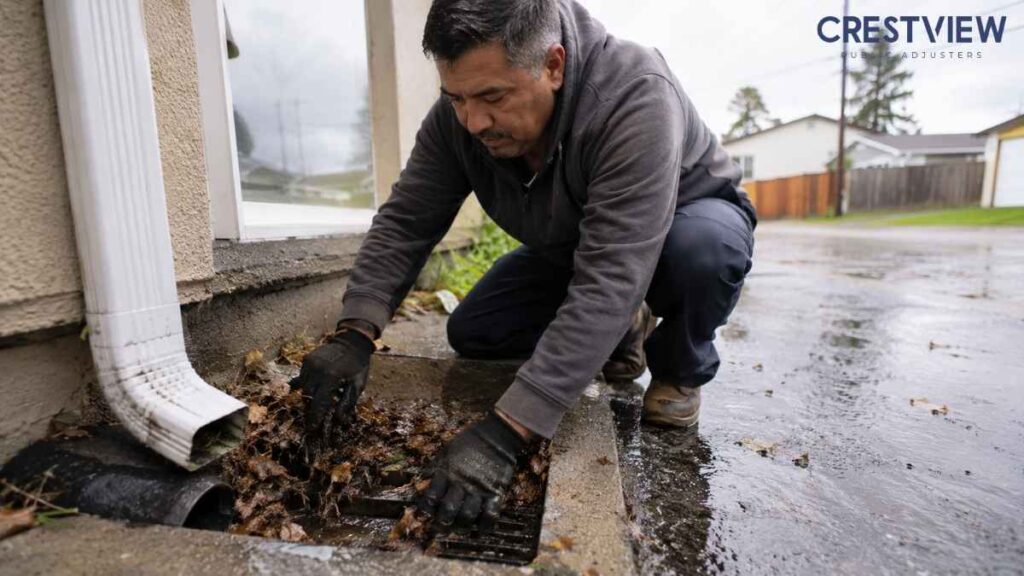
Active storm preparation means tracing the route water takes. Check these drainage points before the rain begins:
- Remove reachable leaves and debris from gutters.
- Check whether downspouts remain attached.
- Confirm that downspouts release water away from the foundation.
- Remove debris covering exterior drains and catch basins.
- Check window wells and basement stair drains.
- Look for soil or pavement that slopes toward the building.
- Check flat commercial roofs for blocked drains or visible ponding.
- Move vehicles and outdoor stock away from known low areas.
Test the Systems That Must Work During a Power Outage
Mechanical systems are your final line of defense. Relying on an indicator light is a mistake that can lead to sump pump failure and cost you thousands in repairs. If you find electrical or plumbing issues, contact a qualified professional to make repairs.
Follow these steps to confirm your backup systems are ready:
- Test the sump pump with water rather than relying on its indicator light.
- Check the discharge line for blockage or disconnection.
- Test the battery backup.
- Confirm that water sensors still send alerts.
- Check sewer or drain backflow devices.
- Charge portable power stations.
- Review safe generator placement and fuel.
- Confirm access to commercial mechanical rooms.
- Record the test date with a photo or video.
Move Valuables and Business Records Above the Lowest Level
Protecting your contents can save your business from a long operational pause and a larger business interruption claim. For commercial properties, assign a specific manager or supervisor to oversee this process. Giving a named person clear responsibility for keys, records, and inventory is far more effective than a general announcement to prepare.
Use this checklist to secure your assets:
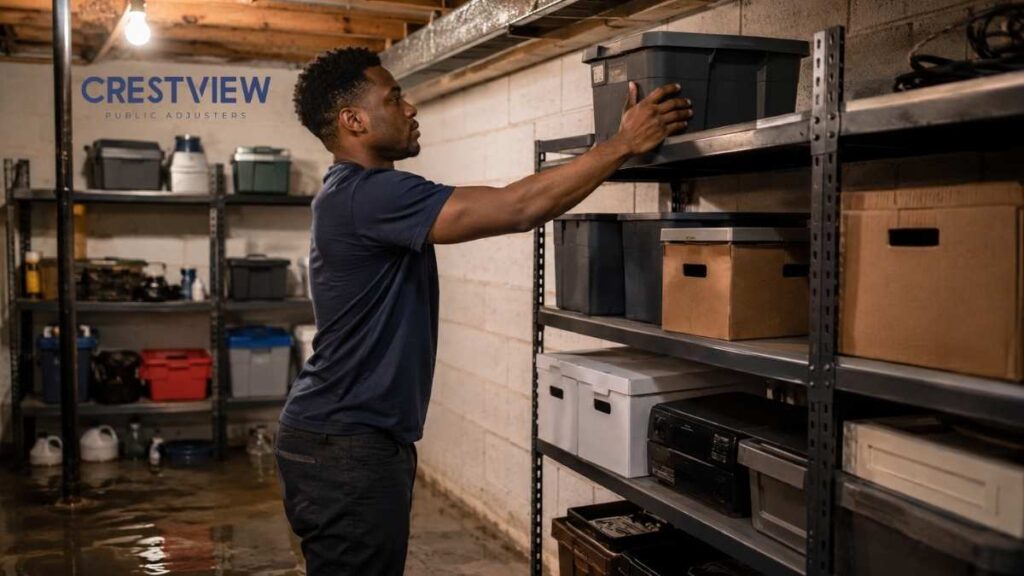
- Raise the basement storage from the floor.
- Move electronics, inventory, boxed files, and irreplaceable items.
- Place documents in waterproof containers.
- Back up lease records, invoices, payroll files, vendor contacts, and property records.
- Move vehicles, tools, and equipment from low garages.
- Give tenants or employees a deadline for moving personal property.
- Record anything that cannot be relocated.
Build a Before-the-Storm Evidence File
An evidence file is your strongest asset if you need to file a claim. Do not rely on old photos from last year. They don’t reflect recent wear, structural changes, or new assets. Fresh, dated records show the exact pre-storm state of your building.
Your storm preparation must include a detailed, unedited visual record. Don’t stage or alter these images.
Collect these items before the storm starts:
- Take wide photos of every exterior side.
- Photograph the roofline from safe ground positions.
- Record gutters, downspouts, drains, windows, doors, and foundation walls.
- Take a slow room-by-room video.
- Record ceilings, attic areas, basements, equipment rooms, and stored contents.
- Photograph serial numbers on major appliances and business equipment.
- Save recent maintenance invoices and contractor reports.
- Keep copies in cloud storage.
- Retain original files with metadata.
- Create one folder for policies, photos, receipts, and contractor records.
Older stains, loose roofing, or a previous storm loss require more than routine preparation. At Crestview Public Adjusters, we can review an existing property damage claim and the records you’ve already collected. Our team provides a free claim assessment to help identify missing documentation, overlooked damage, or unresolved claim concerns before the next storm hits.
Review the Policy for the Questions That Cause Claim Confusion
Understanding your policy terms before a disaster is vital. Policy language and the specific source of water entry will dictate what your insurer covers. Practical guidance on insurance policy key clauses starts with knowing which policy, deductible, and notice terms may apply to your situation.
Find your paperwork and answer these specific questions:
- Where is the declarations page?
- What property and contents limits are shown?
- What deductible applies to wind or hurricane damage?
- Is there a separate flood policy?
- Is sewer or drain backup listed through an endorsement?
- What notice duties apply after damage?
- What records must be kept for emergency work?
- Who should receive the first loss report?
- Which policy covers a condo unit, association area, rental, or commercial tenant improvement?
Finish the Last-Hour Tasks Without Creating New Risks
When the sky darkens, prioritize safety over minor chores. Florida property owners facing tropical systems require extra attention to wind-related preparations for proper hurricane readiness. Finish your remaining tasks quickly, but never put yourself in danger as the weather deteriorates.
Focus on these final steps during your last hours of storm preparation:
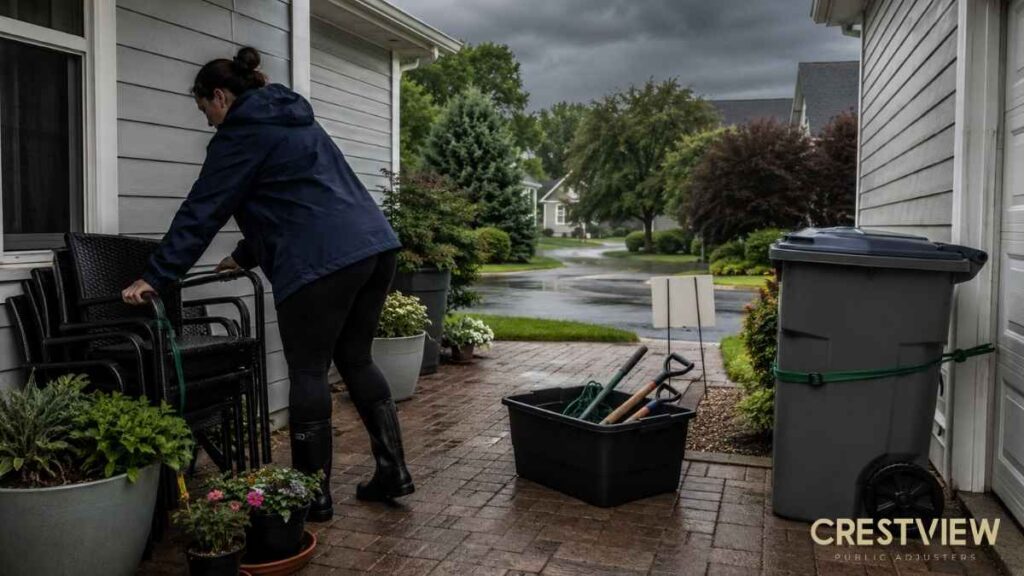
- Bring in or secure outdoor furniture, signs, planters, tools, and trash bins.
- Close and latch windows and exterior doors.
- Charge phones and portable lights.
- Save current property photos.
- Confirm emergency contact details.
- Send instructions to tenants, staff, or building contractors.
- Move vehicles from low areas.
- Check only drains that can be reached safely.
- Stop exterior work when wind, lightning, or heavy rainfall begins.
- Never climb onto a wet roof or use a ladder during worsening weather.
FAQs About Storm Preparation
How often should I repeat this storm preparation checklist?
Repeat this quick checklist whenever heavy rain or strong wind is forecast. While seasonal inspections are helpful, this specific list focuses on the 48 hours before an active storm. Updated photos and drainage checks are useful because your property conditions can change between events.
Should I hire someone to inspect the roof before storm season?
Hire a licensed roofing contractor if you notice lifted roofing, damaged flashing, sagging gutters, or recurring ceiling stains. Never climb onto a wet roof as a storm approaches. A professional inspection report also serves as an official, dated record of your roof’s condition.
What should I do first if the storm damages my property?
Prioritize your safety first. In the first 48 hours after property damage, take detailed photos of all visible damage before cleaning up, stop active leaks if safe, keep damaged items, and save all receipts. Report the loss immediately. A public adjuster can review the damage before you accept an insurer’s settlement.
Protect Your Claim Before Storm Damage Spreads
Reviewing your drainage systems, taking pre-storm photographs, and organizing your policy documents establish a clear, undeniable starting condition for your property. Should a storm strike your area, taking prompt post-storm photos and saving repair receipts will preserve your loss timeline.
At Crestview Public Adjusters, we help property owners in New York, New Jersey, Pennsylvania, and Florida with storm, hurricane, water, and business interruption claims. Call us today or submit our website contact form for a free claim assessment. Our team is available 24 hours a day to review your damage, policy terms, and documentation needs.