
Key Points:
- A summer storm damage insurance claim in New York requires fast documentation, clear proof, and careful separation of wind, flood, and sewer backup damage.
- Property owners should secure the site, photograph losses, review policy deadlines, and file facts only.
- Disputed claims may need a public adjuster help.
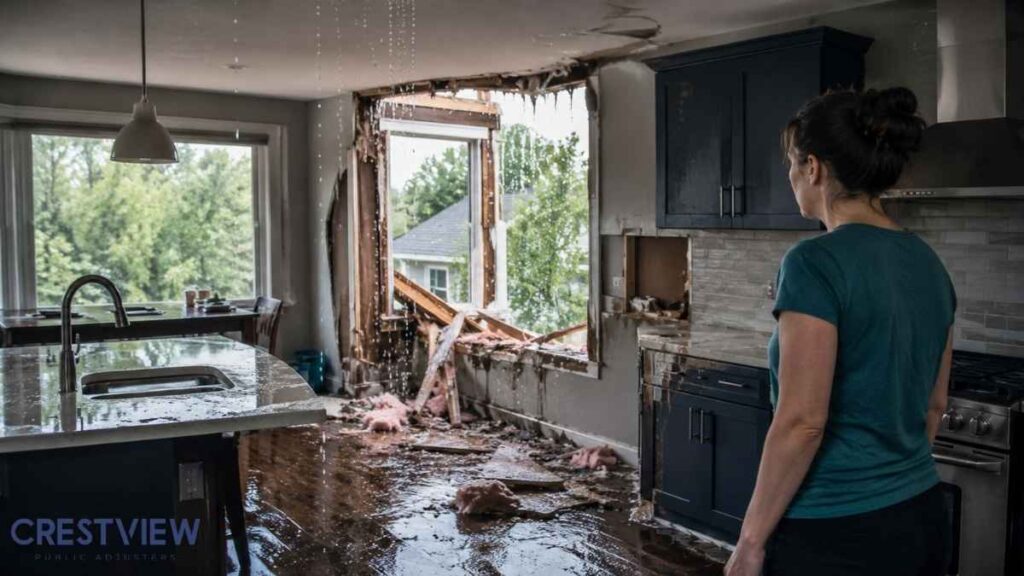
The heavy summer rain stopped. Look around your property. Is water pooling on the floor? Windows, siding, or roofing may be torn open. Before the cleanup changes the proof, record what happened.
A summer storm damage insurance claim in New York needs a clear order for wind, flood, and mixed storm damage across NYC, Long Island, Queens, Brooklyn, and the Hudson Valley. You have a tough choice right now. This guide helps you handle property damage claims correctly.
File a Summer Storm Damage Insurance Claim in New York in The Right Order
Timing changes everything. Many storm claims fail because property owners clean up too quickly, describe water sources incorrectly, or mix up wind and flood losses. Avoid these big mistakes by following a strict timeline.
Here is a quick preview of how to manage your losses:
- Secure the property.
- Document every room before cleanup.
- Separate wind damage from flood damage.
- Review the policy.
- File the claim with organized proof.
- Track insurer responses.
- Get help when the claim becomes disputed.
Step 1: Protect People and Stop More Damage First
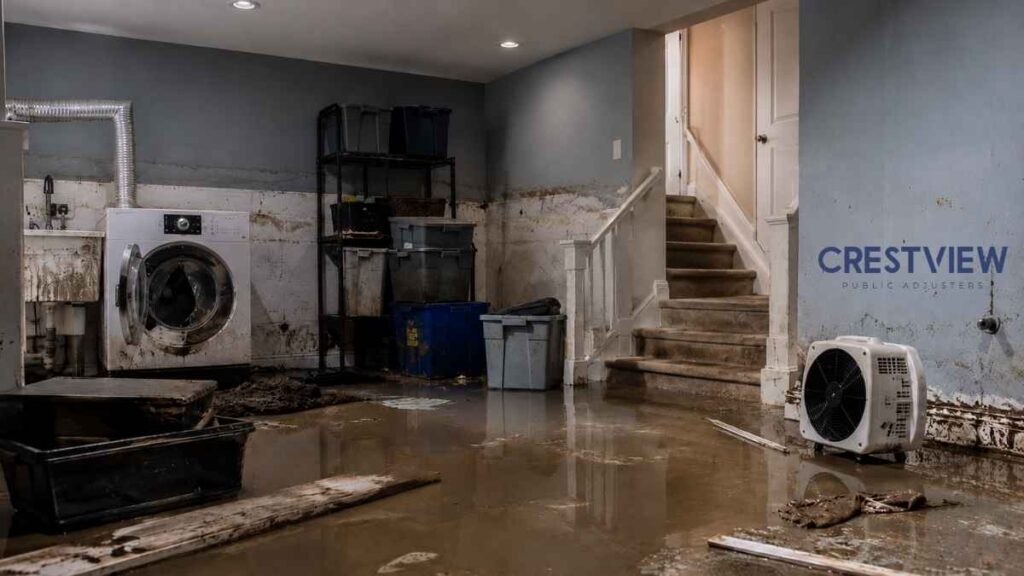
New York summer storms leave behind dangerous conditions. Flooded basements, downed utility wires, and soaked electrical systems pose risks.
Check for these problems before you touch anything:
- Call emergency services for immediate danger.
- Stay out of deep basement water.
- Avoid electrical equipment completely.
- Cover broken openings safely.
- Save your emergency board-up receipts.
- Keep dry-out receipts.
Step 2: Document the Damage Before Cleanup Changes the Evidence
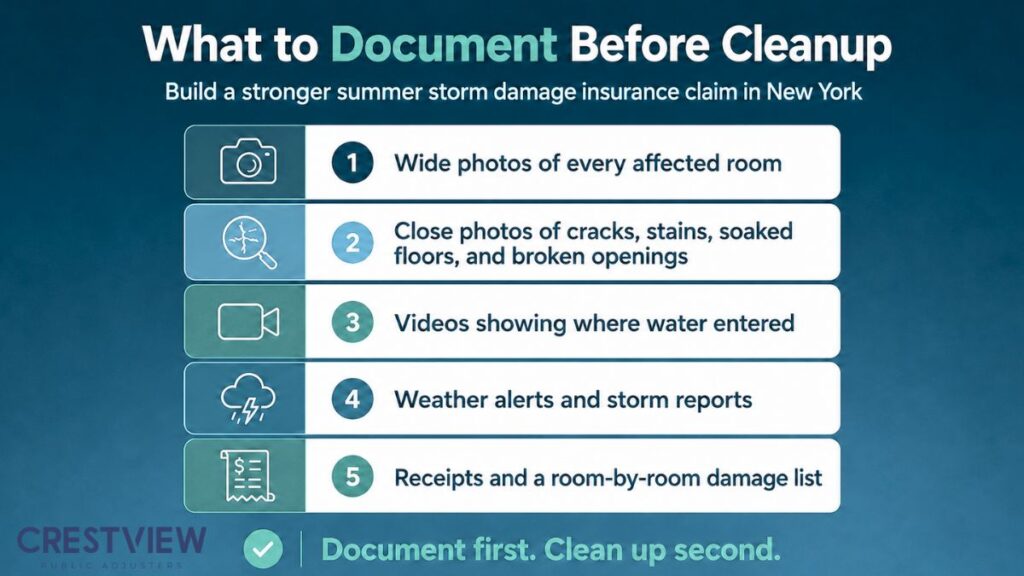
Do not touch a single piece of debris until you have clear proof. Your insurance company needs to see the exact state of the property. Your documentation for water damage claims must show the ruined materials and point to the clear weather source. Treat this step like a field checklist.
What a Summer Storm Damage Insurance Claim in New York Needs Before Filing
- Wide photos of every affected room.
- Close photos of cracks, stains, soaked flooring, broken windows, damaged siding, and water lines.
- Videos showing where water entered.
- Weather alerts, NOAA reports, and local storm notices.
- A room-by-room list of damaged items.
- Contractor or mitigation notes, if available.
NOAA’s Storm Events Database can help confirm the date, location, and type of severe weather because it includes National Weather Service storm data.
Step 3: Separate Wind Damage From Flood Damage Before You File
Mixing up storm losses is a fast way to get a claim dropped. Wind and flood issues are not treated the same way. A wind damage insurance claim in New York summer weather involves different rules than a flash flood property damage claim in New York. Determine exactly how water entered the building before the insurance claims process begins.
| Damage Type | What It Points To | Why It Changes The Claim |
|---|---|---|
| Wind-driven rain through an opening | Homeowners policy issue | The storm-caused opening needs proof. |
| Rising water from streets | Flood policy issue | Standard policies usually exclude flood damage. |
| Sewer backup from heavy rain | Endorsement issue | Coverage depends on policy language. |
| Mixed wind and flood damage | Disputed causation risk | Each damaged area needs separate proof. |
FloodSmart states that most home insurance excludes flood damage. National Flood Insurance Program policies cover structures and business property instead.
Step 4: Review the Policy for Deadlines, Notice Rules, and Flood Exclusions
Before giving a final damage description, review the policy. A storm flood damage claim in NY may involve more than one coverage section. Review the date of loss, policy number, wind, water, flood, sewer backup, mold, duties after loss, proof of loss deadline, and separate deductibles.
Regulation 64 requires insurers to acknowledge claim notice and respond to other relevant communications within 15 business days.
Step 5: File the Claim With One Clear Damage Story
Keep your statement short when filing and do not guess the cause before an expert reviews the evidence. Follow this specific sequence to submit your report:
- Call the insurer or file through the claim portal.
- Give the date, time, and property address.
- Describe visible damage without overexplaining the cause.
- Upload photos, videos, receipts, and mitigation records.
- Ask for the claim number.
- Save every email, text, letter, and adjuster note.
Filing a summer storm damage insurance claim in New York works best when you stick strictly to the facts.
Step 6: Watch for Problems that Lead to a Denied Storm Claim
Insurers often try to turn storm losses into underpaid insurance claims after a massive storm. Watch for common denial triggers during the review. If you see these signs, a storm damage claim denied in NY might be heading your way:
- The insurer calls the loss flood when no flood policy exists.
- The insurer calls the damage wear and tear.
- The insurer says cleanup removed key evidence.
- The insurer separates covered wind from excluded flood damage without detail.
- The insurer misses hidden water behind walls or flooring.
- The insurer delays after receiving documents.
Respond to these issues with documentation, not emotion. The claim file must show what happened and why the storm caused the damage.
Step 7: Bring in a Public Adjuster Before the Claim Gets Harder to Fix
Managing a complicated property loss on your own can lead to mistakes. Bring in help when wind and flood damage overlap, or if the insurer requests repeated documents. When estimates miss rooms or your commercial property has a high loss, independent guidance helps. A public adjuster summer storm New York expert can spot hidden issues. It pays to hire public adjuster for storm damage in NYC when you cannot tell whether the damage belongs under homeowners, flood, or both.
At Crestview, we help New York property owners sort through storm, flood, water, and related claims when the cause of damage is unclear. If your insurer is already questioning the source of the loss, our team can review the claim file before the dispute grows.

FAQs About Summer Storm Damage Insurance Claims in New York
Can a tenant file a storm claim for damaged belongings?
Yes, a tenant may file a summer storm damage insurance claim in New York through renters insurance when personal items are damaged. Flood damage usually needs separate flood coverage. The owner’s policy covers the building, not tenant furniture or electronics.
Should a business owner track lost income after storm damage?
Yes, business owners should track lost income to properly file a claim. Track closure dates, lost sales, payroll, and repair delays. Records must connect the income loss to the covered storm damage.
What if the insurer says the damage was pre-existing?
You should request the reason in writing to challenge a claim. Answer with dated photos, maintenance records, contractor notes, and weather data. A clear timeline separates storm damage from older wear.
Protect Your Storm Claim Before Details Get Lost
New York summer storms can create two claim problems at once: wind damage above the property and flood damage at ground level. The faster you separate the cause, document the damage, and file the claim in order, the stronger the record becomes.
At Crestview Public Adjusters, we help homeowners, property owners, and business owners across New York State review storm, flood, water, and related property claims. If a summer storm damaged your property and you’re unsure whether you’re dealing with a wind claim, a flood claim, or both, contact us for a free claim assessment.