
Key Points:
- A New Jersey insurance claim after a tree falls on a house may include building and belongings damage, depending on the cause and policy terms.
- Tree removal has separate conditions, so a tree hitting the roof differs from one landing in an open yard.
- Roof reports, chimney findings, and indoor moisture records help show the full extent of the damage.
A tree fell on your New Jersey house. The first priorities are keeping everyone away from danger, getting emergency help when needed, and notifying your insurer promptly. Photos and inspections can follow as conditions allow.
A fallen tree can break a roof, crack a chimney, and let rain into rooms below. Your claim may involve several damaged areas and more than one contractor. These six steps explain what to do first, which records to keep, and how to prepare for the insurance inspection.
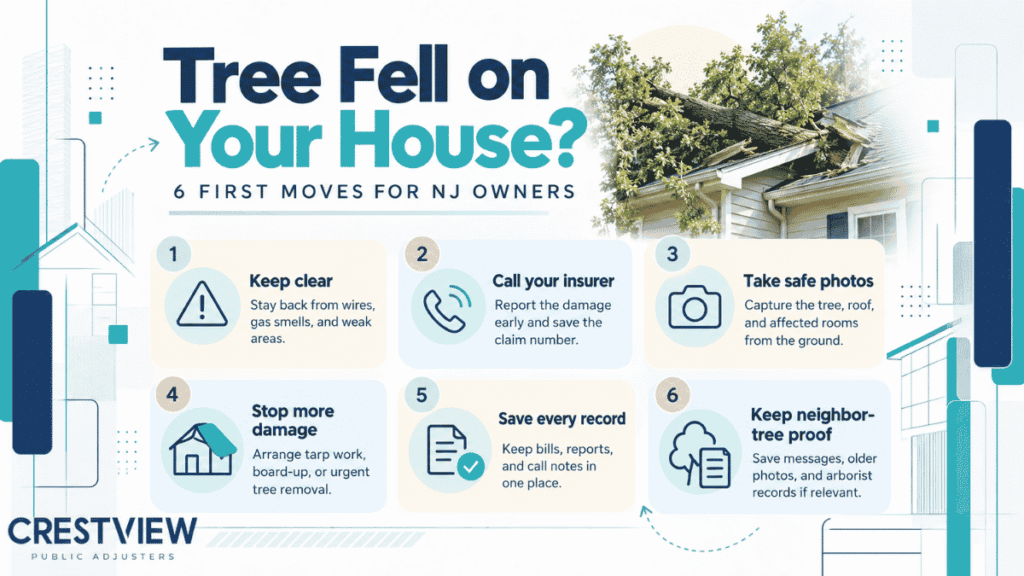
Step 1: Stay Away From the Damaged House and Nearby Hazards
A tree resting on your home may have damaged parts you cannot see. Roof framing can weaken, chimney bricks can loosen, and branches may still fall. Family members and pets should stay away from damaged rooms and the impact area.
Immediate concerns include:
- Fallen wires: Every downed line should be treated as dangerous. The National Weather Service advises staying away and reporting fallen power lines to police.
- Gas odors or exposed wiring: Emergency responders or the utility should handle these hazards.
- Sagging roofs, walls, or ceilings: Everyone should leave the affected area and follow responders’ instructions.
- Hanging branches or a trunk on the roof: Qualified tree professionals should assess the situation before removal.
For example, a tree may press against the chimney while a wire lies across the driveway. Nobody should approach for a better photograph. Emergency help comes first, and the damaged area should remain off limits until qualified professionals say it is safe.
Step 2: Report the Fallen-Tree Damage Promptly
Your insurer should hear about the loss as soon as possible. A finished photo album or contractor estimate is not needed before that first report. New Jersey’s insurance department recommends prompt notice and a record of the assigned claim representative.
The initial report can include:
- The property address and policy number, if available.
- The date and approximate time of the event.
- Where the tree struck and what damage you observed.
- Any emergency help or temporary repairs already arranged.
An example report might read: “During yesterday’s storm, a tree struck our roof and chimney. We left the damaged rooms and called for emergency assistance.”
Your account should describe known facts. The cause of a tree’s failure may need a professional inspection.
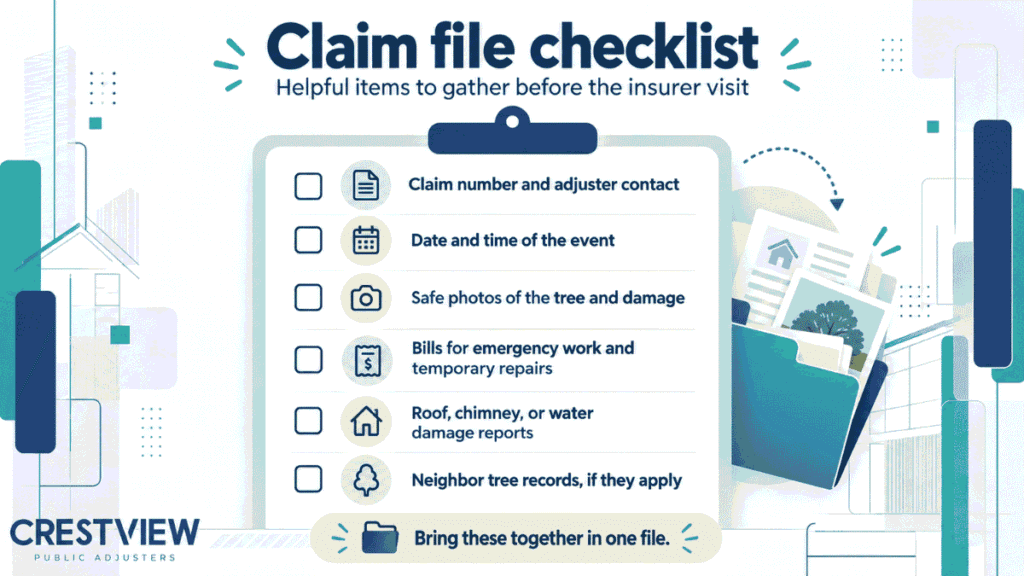
The claim number, representative’s contact details, inspection date, and requested documents belong in one file. Notes from later calls can help everyone track instructions as the claim develops.
Step 3: Photograph the Tree, Roof, and Rooms When Safe
Once conditions allow, wide photos can show where the tree landed and which parts of the building it struck. Closer photos from safe ground can show broken windows, damaged siding, gutters, or chimney bricks. A claim photograph never requires climbing onto a damaged roof.
Damage can extend beyond the trunk’s landing spot. Rain may enter through an opening and wet insulation or ceilings below. A roofer, chimney specialist, or other qualified professional can inspect areas you cannot safely reach.
| What You Notice | Record to Keep | What It Helps Explain |
|---|---|---|
| Tree across the roof | Wide photo from safe ground | Where the tree struck |
| Cracked chimney | Specialist’s report and photos | Which chimney parts need repair |
| Wet ceiling below | Room photos and moisture findings | Where water spread after the impact |
At Crestview, we review photographs and contractor findings when preparing damage records. A scene photo shows the impact, while an inspection report can describe hidden damage.
Existing roof and gutter maintenance records may also help show the roof’s condition before the storm. Their dates should remain separate from the new inspection findings.
Step 4: Arrange Emergency Tree Removal and Roof Protection
Qualified tree crews may need to remove dangerous branches or lift the trunk before roof workers can protect an opening. Necessary emergency work should not wait for a full insurance inspection when people or the building face an active hazard.
New Jersey’s storm-claim instructions support temporary repairs that prevent further damage, along with keeping the bills. A roof covering or boarded window may protect the house while the permanent repair plan develops.
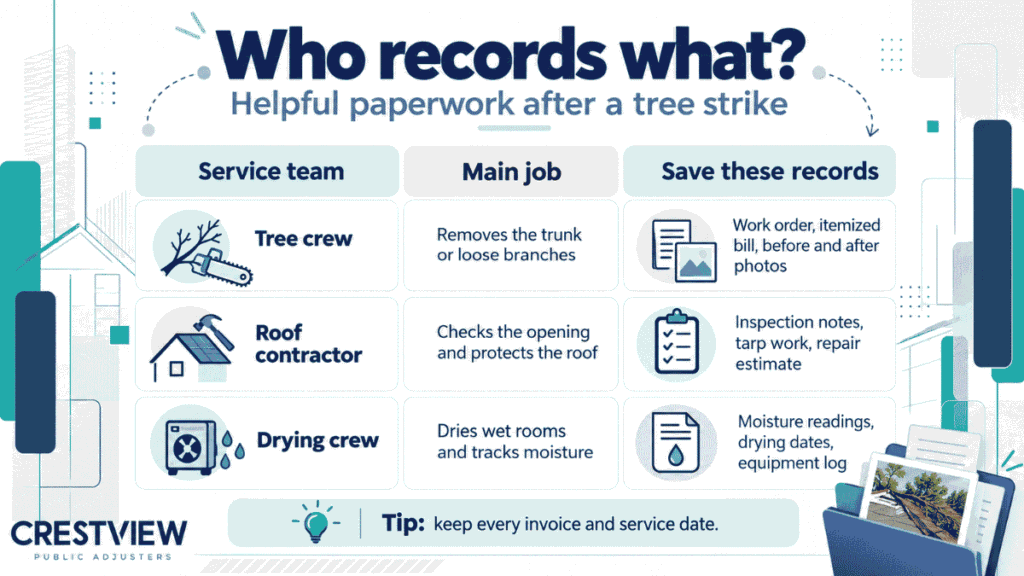
Each crew can provide a different part of the record:
- Tree crew: Work order, removal details, itemized invoice, and available photos before and after removal.
- Roof contractor: Findings about openings, damaged framing, temporary protection, and proposed repairs.
- Water cleanup crew: Moisture readings, affected rooms, drying dates, and equipment records.
For example, tree removal may expose a roof opening that was hidden beneath the trunk. Crew photos can preserve that finding before a tarp covers it.
Our water damage claim support includes reviewing records when rain enters damaged rooms. Our adjusting work covers claim preparation and review; qualified contractors perform the removal, drying, and repairs.
Step 5: Review Coverage and the Insurer’s Inspection
Homeowners insurance commonly covers damage when wind brings a tree onto an insured house. Coverage still depends on the cause, exclusions, and policy wording. The Insurance Information Institute distinguishes tree damage to an insured building from removal of a tree in an open yard.
The policy review should address the damaged roof or chimney, affected belongings, temporary protection, and any rainwater entry. Tree removal has its own conditions. A building-damage claim does not automatically make every cleanup task eligible.
The insurer’s adjuster reviews the loss for the insurance company. A public adjuster represents the policyholder. Our New Jersey public-adjuster services include reviewing damage documents and helping owners prepare their claim records.
A contractor may later find wet insulation or a chimney crack missing from the first inspection notes. That finding can be submitted with photos and an explanation of the needed work.
In a published customer review, Zev Gontownik described a tree knocking his chimney through the roof. He discussed our help with insurer communication and finding a repair contractor. His experience illustrates how one tree strike can involve several repair needs.
Step 6: Keep Records if the Tree Came From a Neighbor’s Yard
A tree from a neighboring yard can still be reported to your own insurer. Its original location does not automatically make the neighbor responsible. The Insurance Information Institute explains that insurers may examine another party’s responsibility after a tree damages an insured home.
Records already available may help explain the situation:
- Safe photographs showing the trunk or stump location.
- Earlier dated photos of the tree.
- Written messages about a known tree concern.
- An existing report from an arborist, a professional who assesses trees.
Nobody should enter a neighbor’s property without permission to collect evidence. A homeowner’s observation and a professional finding also serve different purposes. “The tree leaned over our fence” describes what someone saw; an arborist’s report may explain the tree’s condition.
Your insurer can review those records alongside the damage claim. Questions about legal responsibility belong with an attorney when needed.
FAQs About Tree Damage Insurance Claims
Can I choose my own roof contractor?
Yes. New Jersey’s insurance department says owners do not have to use the insurer’s recommended contractor. A qualified contractor can provide an independent inspection, photographs, and a written repair estimate.
What if the tree damages a detached garage?
A detached garage may fall under the policy’s “other structures” coverage. The building’s use, applicable limits, and exclusions can affect coverage. The insurer can identify which policy section applies.
What if the house is unsafe to stay in?
Emergency instructions come first. Some policies include loss-of-use coverage for added living expenses when covered damage forces residents to live elsewhere. Your insurer can explain the conditions, eligible expenses, and records needed.
Request Help Reviewing Your Fallen-Tree Claim
A fallen-tree claim should connect the original impact with the repairs the home needs. Roof and chimney findings, emergency work records, and the insurer’s inspection notes give the next review a factual starting point.
At Crestview Public Adjusters, we help New Jersey property owners review policy information, damage photographs, contractor records, and claim paperwork. You can request a free claim assessment and share the storm date, known damage, and documents already available.
Your questions are welcome, even if some records are missing.