
Key Points:
- A vacant property insurance claim depends on the policy’s vacancy definition, stated time limit, occupancy facts, and freeze precautions.
- A 60-day clause is policy-specific, not an automatic New Jersey rule.
- Strong evidence includes utility records, inspection logs, photographs, plumber findings, and a day-by-day property-use timeline.
A vacant property insurance claim may be denied when the insurer applies a vacancy clause, but 60 days is not an automatic New Jersey rule. The policy definition of “vacant” or “unoccupied,” the length of the absence, and the precautions taken before a freeze determine whether the clause applies.
New Jersey snowbirds often leave a furnished Shore house or North Jersey home in October and return months later. When water leaks happen, the insurer asks when the property stopped being used, whether the heat remained on, who checked the home, and when the damage was discovered.
Understanding how the 60-day clause works, how policy definitions differ, and which documents support a frozen pipe claim review can help clear up confusion after a denial
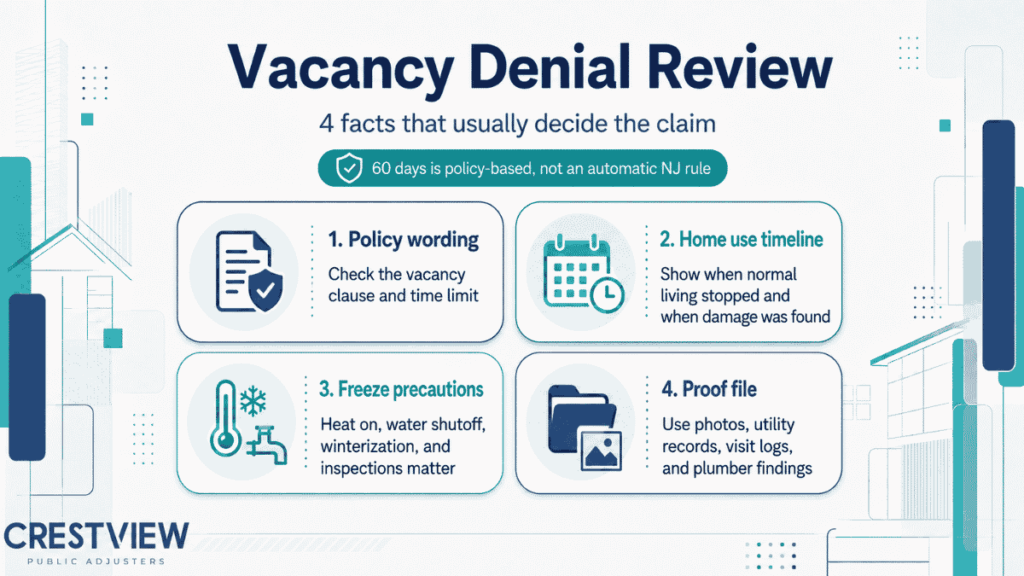
Why a Vacant Property Insurance Claim Can Turn on a 60-Day Clause
The 60-day timeline mentioned in many denial letters comes from specific policy language or endorsements. Other policies state a different timeframe or use distinct conditions.
The vacancy clock usually begins when normal residential use stops, based on the policy wording. A policy renewal date does not reset this timeline. The New Jersey Department of Banking and Insurance notes that vacancy losses can be excluded after the specific number of days stated in your policy.
That same state guidance explains that frozen-pipe losses can be excluded unless you shut off the water supply or maintain heat throughout the building.
When we analyze these cases, we evaluate several key factors:
- The date normal residential use stopped
- The loss date stated by the carrier
- The vacancy period written in the policy
- Any seasonal-home or vacancy endorsement
- Heating, plumbing, and inspection conditions
Vacant and Unoccupied Can Produce Different Claim Arguments in New Jersey
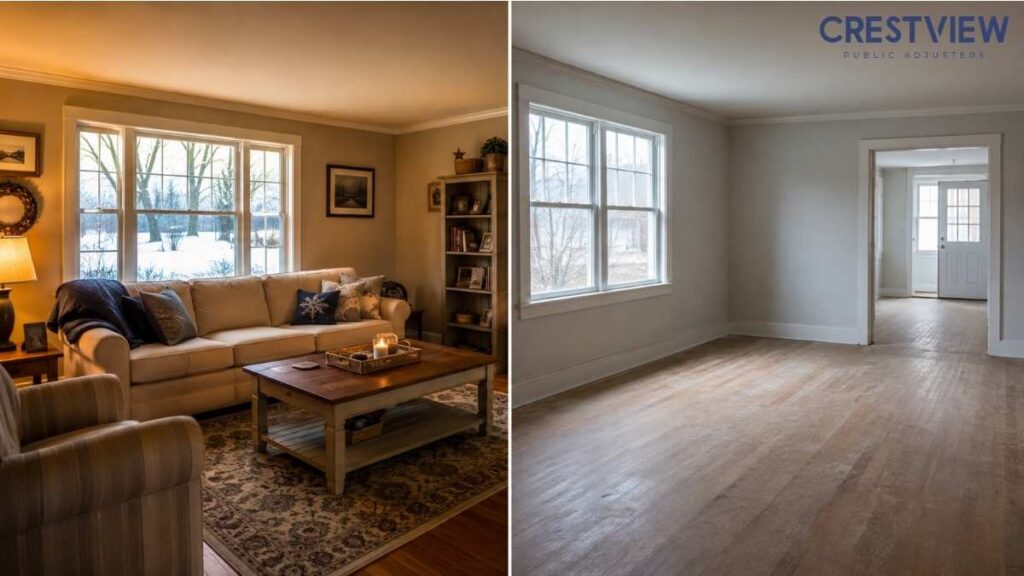
In New Jersey property claims, insurance policies treat vacant and unoccupied properties differently. A vacant home generally has no occupants and lacks the personal property needed for normal living. An unoccupied home stays furnished and ready for your return.
These distinctions show up constantly across the state. A Cape May house closed for the winter with all its furniture inside is usually unoccupied. An Ocean County seasonal home waiting for spring fits a similar pattern. Conversely, a Bergen County property cleared of all furniture before a sale leans toward a vacancy classification.
| Property Fact | Possible Unoccupied Argument | Possible Vacant Argument |
|---|---|---|
| Furniture and personal belongings remain | The home remains ready for residential use | Contents alone may not satisfy the policy |
| Owner has a dated return plan | The absence is temporary | A long absence may still trigger an endorsement |
| Heat, water, and electricity remain active | The property remains maintained | Utility use does not prove occupancy by itself |
| A caretaker checks the home | The home receives regular oversight | Visits may not equal residential use |
| The home was emptied for sale | Limited support | Stronger basis for a vacancy allegation |
Knowing which definition applies changes your strategy. You might need unoccupied property insurance coverage to protect a seasonal residence.
A vacation home damage claim involves proving the house was furnished and maintained. If you have a vacation rental property damage claim, the policy might use a dwelling, landlord, or commercial form instead of a standard homeowner policy.
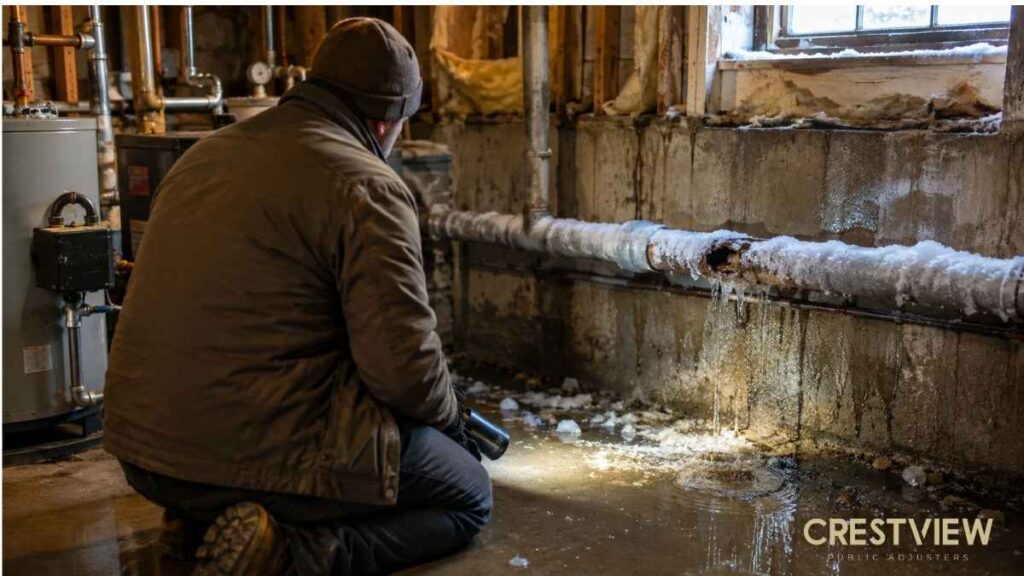
The Denial Must Match the Policy Language and the Cause of Loss
A vacancy clause and a freezing exclusion address different insurance claim coverage issues. A vacancy clause restricts coverage for certain perils after a set time limit. A freezing exclusion focuses on whether you maintained heat, shut off the water, or drained the plumbing system.
Your denial letter must name the exact clause the insurer relied on and show how the facts connect to that clause. Homeowners often point out that a neighbor checked the house or that the living room remained furnished. While those facts help, they must directly answer the language in the policy.
What We Review in a Vacant Property Insurance Claim Denial
During a denied insurance claim review, our team compares the carrier’s allegations directly against the full policy record. We gather and review:
- The full denial letter
- The declarations page and complete policy form
- Vacancy, seasonal-home, or protective-safeguard endorsements
- The carrier’s definition of vacant and unoccupied
- The exact date range used by the insurer
- Heating and water-system requirements
- Utility bills and smart-thermostat history
- Plumber reports on when and why the pipe failed
- Photographs showing the property before and after the loss
- Carrier inspection notes and recorded statements
A frozen sprinkler loss we handled in Newark spread from the fifth floor through six lower floors and affected more than 40 apartments, along with the elevators, fire panel, security system, and HVAC. The full damage pattern became easier to document after the failed line, building systems, and affected areas were tied to one timeline.
Your denial letter should be compared with the full policy, the occupancy timeline, heat records, plumber findings, and photographs. Our team can review those records before you send a detailed response. Ask Crestview Public Adjusters to examine the clause and the facts cited by the carrier.
Build a Day-by-Day Record Before Answering the Vacancy Allegation
A second home water damage claim depends heavily on establishing what happened before the leak started. Your claim file needs to show how the property was used, what safeguards were in place, who visited, when the leak occurred, and how quickly you responded.
We build this timeline using a structured evidence checklist:
- Your departure date and planned return date
- Travel confirmations or calendar entries
- Photographs showing furniture and personal belongings in place
- Electric, gas, heating oil, and water bills
- Smart-thermostat or freeze-sensor data logs
- Property-manager, caretaker, neighbor, or contractor visit logs
- Alarm, digital lock, or security camera access records
- Plumber invoices for winterization or water shutoff
- Heating-system maintenance receipts
- Photographs taken before you left
- The date and time the leak was discovered
- Emergency drying logs and moisture readings
- The saved pipe fitting or failed plumbing piece
If you are wondering who to call for vacant home damage, act in order. Start with a plumber to stop the leak, followed by an emergency water-removal service to dry the building. Contact your insurance carrier to report the loss, and bring in our claims team to protect your interests.
Safety and water control come first. Do not discard damaged pipes or materials before documenting them, and avoid estimating dates or temperatures without supporting records.
A Denial Review Should Separate Occupancy, Maintenance, and Damage Timing
Insurers often lump occupancy, maintenance, and damage timing into one argument during winter storm damage claims. When we review a denial, we divide the case into three distinct questions.
- First, we look at occupancy. Did the property meet the policy’s specific definition of vacant during the timeframe claimed by the insurer?
- Second, we check maintenance. Did you fulfill your duties regarding heat, plumbing, or property safeguards?
- Third, we establish damage timing. When did the pipe burst and leak?
Separating these elements prevents the carrier from making broad assumptions. A lower gas bill during a warm month does not prove a home was vacant. An extended trip does not automatically prove a pipe froze due to lack of heat.
Policyholders often contact us after the carrier requests several months of utility records. Those records can help, but we still compare them with the policy language and the physical cause because energy use alone does not answer every vacancy question.
FAQs About a Vacant Property Insurance Claim in New Jersey
Can a one-night visit restart the 60-day count?
A brief visit does not automatically restart the period. The policy definition and the surrounding facts control, including whether the home resumed normal residential use. Our review of a New Jersey frozen pipe claim compares the visit, furnishings, utility activity, and intended return with the wording cited in the denial.
Does listing my New Jersey house for sale make it vacant?
A sales listing alone does not decide vacancy. The insurer may examine occupancy, furnishings, utilities, renovations, and the policy definition. A furnished home awaiting sale presents different facts from an empty building with disconnected services and no planned residential use.
Can Crestview review the denial while drying and repairs continue?
Yes. Our team can review the policy, denial, photographs, heat records, and plumber findings while emergency work continues. We often hear from owners during dry-out, when damaged materials, moisture readings, and equipment records remain available for inspection and documentation.
Challenge the Denial Before Key Evidence Disappears
Overturning a vacancy denial requires matching the policy language to a clear timeline of property use, heat records, inspection logs, and plumbing findings. Having an organized file shows whether the insurer applied the clause correctly.
Crestview Public Adjusters helps homeowners and property owners across New Jersey, including Bergen, Morris, Monmouth, Ocean, and Cape May counties. We review denied frozen-pipe and water-damage claims directly from our Hackensack office.
Send us your denial letter, full policy, damage photographs, plumber report, utility records, and any inspection logs. Call (551) 316-7204 or submit your claim details through our contact page. Our team will review your files, spot missing documentation, and guide you through the next steps.