
Key Points:
- Insurance companies are legally required to respond within a reasonable timeframe, yet many policyholders face delays or silence.
- Following up in writing and documenting every interaction can strengthen your position in the claims process.
- Public adjusters can help move stalled claims forward and advocate for a fair settlement on your behalf.
Many policyholders find themselves waiting weeks—or even months—with no meaningful updates from their insurance provider. If you’re stuck in this frustrating situation, you’re not alone—and there are specific steps you can take to get your claim moving.
What to Do If Your Insurance Company Isn’t Responding
Start by reviewing your policy and state regulations. Most states require insurers to acknowledge a claim within 10–15 business days. If your carrier remains silent beyond that period, you have the right to push for action. You should not wait indefinitely. Here’s what to do if your insurance company isn’t responding:
Why Do Insurance Companies Delay Communication?
Insurance companies may go quiet for a range of reasons—some benign, others more strategic. While backlogs and staff shortages can slow things down, other times it’s about minimizing payouts or discouraging follow-ups.
Delays can happen when:
- An adjuster is juggling too many claims.
- The claim lacks sufficient documentation (real or perceived).
- Your case is flagged for special investigation.
- The insurer uses “delay and deny” tactics to push claimants into giving up.
Policyholders often aren’t told the reason—they’re just met with silence. That’s why you need to stay proactive. Don’t assume silence is harmless. It could affect your claim’s outcome and timeline.
How Long Should I Wait Before Taking Action?
While specific timelines vary by state, most regulators expect insurance companies to acknowledge receipt of your claim within 10 to 15 business days. Then they must begin the investigation and respond within 30 to 45 days.
If you haven’t heard back after:
- 10–15 business days: Follow up with a written request for confirmation.
- 30 days: Ask for a formal update and investigation status.
- 45+ days: Consider filing a complaint or hiring a public adjuster.
Silence beyond these windows may indicate non-compliance. The longer you wait, the more your financial recovery is at risk.

What Can I Do if My Insurance Company is Ignoring Me?
If you’re not getting responses, escalate the issue. Use formal channels and keep records. Here’s how to push forward:
Send a Written Follow-Up Letter
- Include your claim number, policy details, and a clear summary of all previous attempts to make contact.
- Keep your tone professional and direct.
Request a Response Deadline
- State a specific date (e.g., 10 business days) by which you expect a reply.
Document All Communications
- Track all calls, emails, and letters.
- Note names, dates, and what was discussed.
Use Certified Mail or Email with Read Receipts
- These tools create a paper trail that shows you’ve made every effort to resolve the issue.
Contact the Claims Manager or Supervisor
- If the assigned adjuster is unresponsive, go up the chain.
File a Complaint with Your State’s Department of Insurance
- Most departments have online portals for filing complaints.
Can I Hire Someone to Help Me with a Non-Responsive Insurance Company?
Yes. If your insurance company isn’t responding, hiring a public adjuster can be a game-changer. These licensed professionals work for policyholders—not the insurance company. They help document your loss, value the damages, and negotiate on your behalf.
Benefits of hiring a public adjuster include:
- Clear, professional communication with insurers.
- Thorough documentation that helps push claims forward.
- Less stress and faster resolution.
A public adjuster knows how to get insurers to move and can spot when an insurance company is stalling or being non-compliant. Many policyholders bring one in after weeks of silence—and finally see progress.
What Are My Legal Rights if My Insurer Isn’t Cooperating?
You’re not powerless. Insurance companies are bound by good faith laws that require timely and fair handling of claims. If your carrier fails to meet those obligations, you can take legal or regulatory action.
Your options include:
Filing a regulatory complaint
- Most state insurance departments will investigate if a claim is mishandled or ignored.
Hiring a public adjuster or attorney
- These professionals can force communication and demand timely updates.
Suing for bad faith
- In cases of gross negligence or willful delay, you may be entitled to damages.
Example: In New York, insurance companies must notify you of acceptance or denial of a claim within 15 business days of receiving all required documentation. Not following this can be grounds for regulatory action.
How Can I Prevent Future Delays?
You can’t control your insurer’s operations, but you can take steps to safeguard yourself during future claims:
Be Proactive and Organized
- Submit complete documentation early—photos, receipts, estimates, and forms.
- Keep detailed records of every interaction.
Request Everything in Writing
- Don’t rely solely on phone calls.
- Written documentation holds more weight during disputes.
Understand Your Policy
- Know your coverage limits, exclusions, and required claim steps.
- Review timelines for response and payout written in your policy.
Work With a Public Adjuster Early
- Especially for large losses, bringing in an expert early can prevent mistakes and delays.
What If My Insurance Adjuster Is Ghosting Me?
Sometimes it’s not the company—it’s the individual adjuster assigned to your claim. If your adjuster is ghosting you, here’s how to handle it:
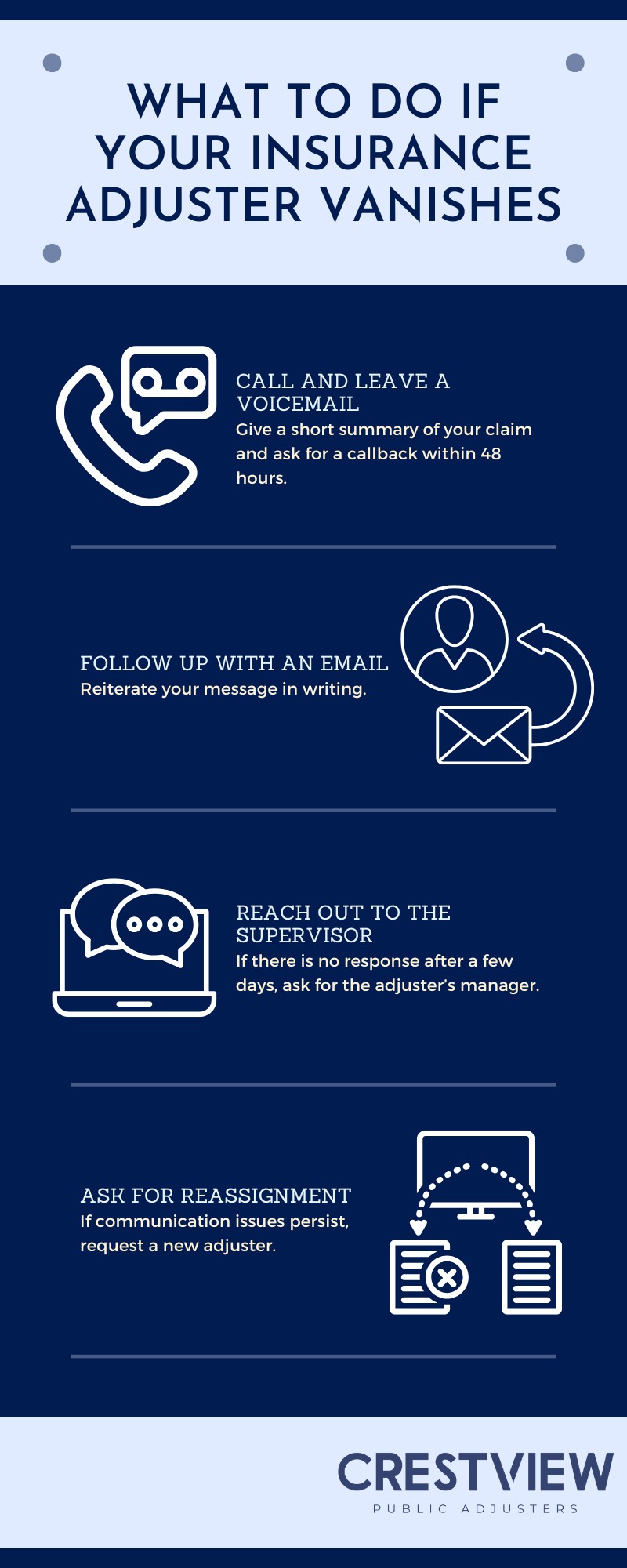
Important Tip: Keep a running log. If the issue escalates, your notes will show you’ve made reasonable efforts to resolve it.
Take Control When the Insurance Company Won’t
Being ignored by your insurer doesn’t just slow down your claim—it adds stress and financial uncertainty when you least need it. You have rights, and you don’t have to handle the burden alone.
Whether you’re navigating storm damage, fire losses, or water claims, knowing what to do if your insurance company isn’t responding helps you advocate for yourself—and protect your home or business.
Get Expert Help from Crestview Public Adjusters
If your insurer isn’t responding and you’re feeling stuck, Crestview Public Adjusters is here to help. We’re experienced public adjusters serving New Jersey, Florida, and New York, advocating for policyholders who need results—not runarounds.
We handle the follow-ups, documentation, and negotiations to help you get the fair payout you deserve. Stop the delays. Call us today and let a public adjuster fight for your claim—because you shouldn’t have to do it alone.