
Key Points:
- A wind damage insurance claim should be evaluated through physical damage, storm data, policy terms, and prior property condition.
- Tornado confirmation, roof age, or missing shingles alone does not decide coverage.
- A full review should separate new wind impacts from wear and document all affected structures.
Filing a wind damage insurance claim does not require a tornado touchdown, a brand-new roof, or yards covered in blown-off shingles. Property claims across Pennsylvania often stall or face quick pushback because owners mistake an initial inspection finding or a weather label for a final answer.
At Crestview Public Adjusters, we review the physical damage, storm information, policy language, and prior condition before treating any single explanation as final. To help you protect your home or business, we are breaking down five common myths about wind loss claims.
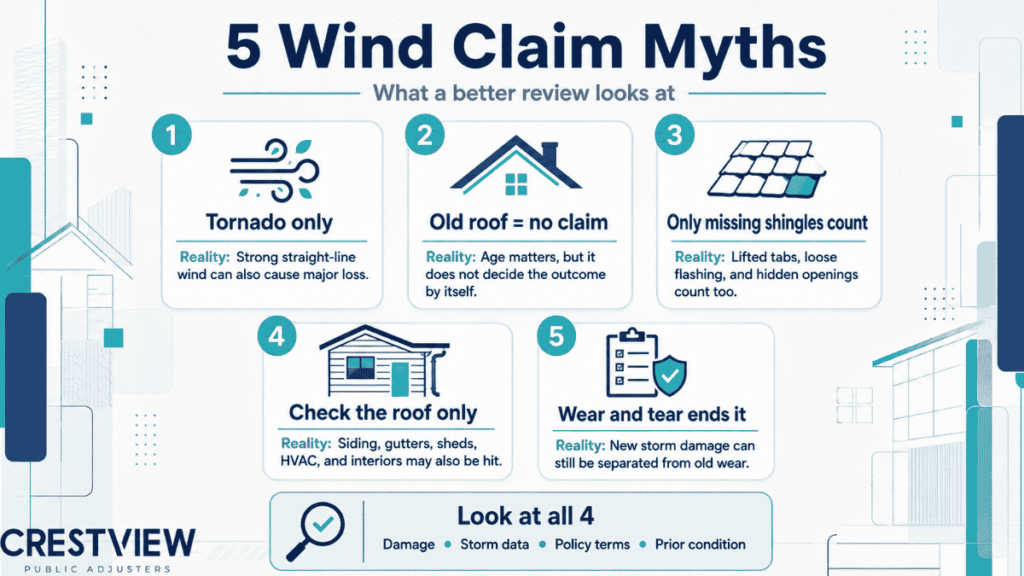
Myth 1: Only a Tornado Can Cause Serious Property Damage
Tornadoes draw major attention because of their dramatic, rotating funnels. However, straight-line winds and sudden microbursts produced by severe thunderstorms often unleash equal destruction across a neighborhood.
A thunderstorm damage claim should identify what the wind actually did to your property rather than depend only on whether weather officials confirmed a tornado.
During severe storm events across central Pennsylvania, microbursts can slam downward and rush outward with extreme velocity. For example, severe weather on June 14, 2026, caused widespread physical destruction across Warren, Centre, York, and Lancaster counties.
Official survey findings confirmed that microbursts and straight-line wind damage were responsible for structural impacts in several surveyed communities, rather than tornado tracks
When powerful winds hit your building, structural materials shift, lift, or break regardless of wind rotation. Signs that may follow severe thunderstorm winds include:
- Lifted or displaced roof components
- Siding pulled away from exterior walls
- Damaged roof vents, gutters, and trim
- Tree limbs striking roofs or detached structures
- Water entry after wind creates an exterior opening
We always examine physical force indicators on the property first. If high velocity winds created openings or structural displacement, the weather classification alone does not dictate your coverage options.
Myth 2: An Older Roof Cannot Support a Wind Damage Insurance Claim
A common belief among property owners in Pennsylvania, including those in Philadelphia, Reading, Lancaster, Harrisburg, and Erie, is that having an older roof automatically rules out storm coverage.
Roof age certainly matters because exposure to Pennsylvania freezing cycles and summer heat changes how materials respond over time. However, an aging roof does not give an insurer automatic grounds to attribute new storm destruction to simple age.
Research from the National Institute of Standards and Technology shows a clear connection between roof age and observed asphalt shingle damage during high wind events. The researchers pointed out that an observed eight-year age breakpoint in their dataset was empirical and should never act as a universal threshold for claim decisions.
Older materials may be more vulnerable to wind, but vulnerability is not the same thing as pre-existing failure.
How Pennsylvania Policies Answer “Does Insurance Cover Wind Damage?”
When evaluating an older roof after a storm, the outcome depends on specific policy provisions and physical evidence rather than a raw age calculation. We examine several core factors during our claim reviews:
- Covered cause of loss terms within your policy
- Specific wind or hail endorsements and exclusions
- Applicable policy deductibles
- Maintenance history and prior repair records
- Physical evidence showing new storm impacts versus gradual wear
Many property owners ask us if filing a claim on a 15-year-old roof is pointless. In reality, an older roof requires a detailed cause evaluation, not a hasty dismissal based on an installation date.
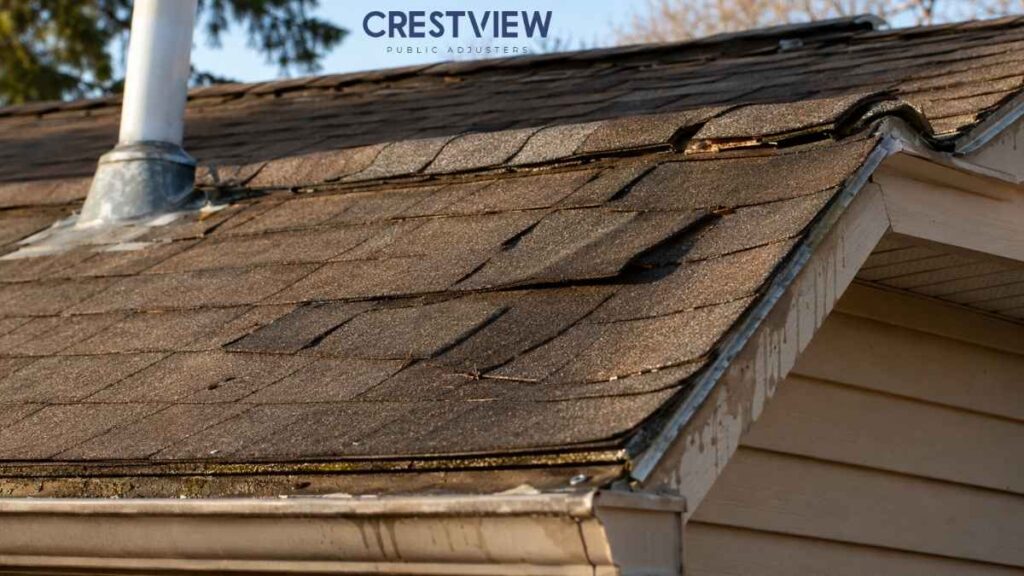
Myth 3: Missing Shingles Are the Only Proof of Roof Damage
High wind creates severe uplift pressure that breaks adhesive seals, creases shingle tabs, and shifts underlying underlayment without blowing the material off the building. Once the wind drops, lifted shingles often lay back down, hiding the compromised seal underneath.
What Our Wind Damage Roof Claim Review Looks for Beyond Missing Shingles
Ground-level inspections miss critical damage points across upper slopes, parapets, and flashings. When we evaluate a wind damage roof claim, we examine several subtle structural indicators:
- Lifted tabs, broken adhesive seals, and creased shingles
- Displaced ridge caps and loose hip shingles
- Bent, unseated, or pulled flashing along valleys and chimneys
- Loosened roof vents, pipe boots, and wall caps
- Interior water entry that matches a new exterior opening
A wind loss claim can become harder to explain once roof age or maintenance becomes the only focus.
Crestview Public Adjusters can review your policy, storm information, inspection findings, and prior property condition when the reported cause does not match the physical evidence. Contact our team through our online claim assessment form before accepting an unsupported explanation.
Myth 4: Wind Damage Only Affects the Roof
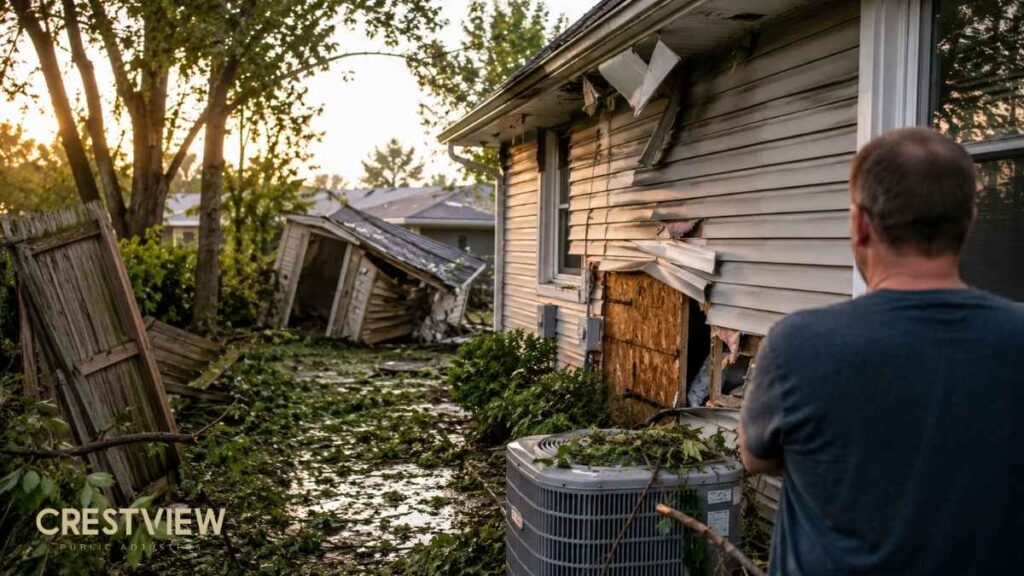
Focusing solely on the roof after a storm causes many owners to overlook surrounding property structures. Wind forces hit exterior walls, drainage components, and detached structures with equal intensity.
When we review a severe storm insurance coverage policy, we check every impacted structural area to make sure the full scope of your loss is documented accurately. High winds push debris into exterior finishes, pull soffits loose, and strain outer walls.
A complete exterior review may include:
- Main building siding, fascia, soffits, and trim
- Detached structures like garages, sheds, and storage units
- Outdoor equipment including HVAC units and commercial generators
- Boundary fencing, outdoor lighting, and business signage
- Interior rooms positioned directly below exterior structural openings
- Business contents affected by water entering after an exterior breach
Evaluating these components together provides clear evidence of wind direction and storm intensity. Documenting exterior wall and gutter damage helps support the overall timeline of your loss.

Myth 5: A Wear-and-Tear Finding Ends the Claim
Receiving a letter stating your claim was denied due to wear and tear can feel like the end of the line. Insurers frequently point to existing weathering, aging materials, or deferred maintenance when issuing claim denials. However, a wear-and-tear label from an initial adjuster inspection is an opinion, not an undisputed fact.
An older building component can suffer new, direct physical loss from a storm even if it showed prior signs of age. Insurance claim disputes over summer storm damage often linger into the autumn months simply because the initial inspection labeled an entire roof as old without identifying which specific conditions existed before the wind event occurred.
How Our Wind Damage Insurance Claim Review Separates Old and New Conditions
When we challenge an unsupported wear-and-tear determination, we follow a systematic review process:
- Identify the exact physical conditions the carrier labeled as wear and tear
- Compare current damage against dated property photos, maintenance logs, and past repair records
- Isolate physical changes that align with verified storm direction, gust speeds, and impact points
- Evaluate the carrier’s stated policy exclusions against the actual physical evidence on site
- Request detailed written explanations when a cause decision lacks supporting documentation
Recently, a property owner in Reading faced a full denial after an adjuster attributed widespread roof lifting to simple deterioration. We presented historical maintenance records and localized storm radar data showing sudden wind shear, proving the primary cause was storm force rather than gradual aging.
FAQs About a Wind Damage Insurance Claim
Can a Pennsylvania landlord file a wind claim for a rental property?
Yes. Landlords can report covered wind damage to the insured building, detached structures, or landlord-owned property. Tenant belongings fall under the tenant’s own policy. During our claim reviews, we first verify property ownership for each damaged item to align with policy terms.
Where can I find a separate wind or hail deductible?
Check the declarations page of your policy, the policy endorsements, and any dedicated wind or hail provisions. This deductible often operates as a percentage of your total building coverage rather than a flat dollar amount. Our team can review your specific policy wording to clarify how your deductible applies after a severe storm.
Can a business include damaged equipment in the same wind claim?
Yes, depending on your policy language. For business property claims, building coverage, business personal property, and outdoor property provisions can apply to exterior equipment damaged by wind or flying debris. We help businesses document how wind caused the equipment failure and map each damaged asset to the correct policy section.
Review the Cause Before Wear and Tear Defines Your Claim
Wind damage can stem from a tornado, microburst, or severe thunderstorm. A sound review separates new storm effects from roof age, prior repairs, and long-term deterioration so you do not accept an unsupported claim denial.
Crestview Public Adjusters reviews wind and storm claims for homeowners, landlords, property owners, and business owners across Pennsylvania. Our team works directly with policyholders in Philadelphia, Allentown, Bethlehem, Lancaster, Harrisburg, Scranton, Reading, and Erie.
If you are dealing with storm damage or facing pushback from your insurer, call +1 551-218-1164 or submit our online claim-assessment form today. Our team will review your policy, storm date, property photographs, inspection findings, and current claim documents to explain which cause questions or evidence gaps need attention.