
Key Points:
- The first steps after discovering water damage are crucial in minimizing cost and preserving your claim.
- Identifying the source, documenting the damage, and notifying your insurance company are immediate priorities.
- Public adjusters can help you navigate the claims process and maximize your settlement.
According to the Insurance Information Institute, around 1 in 60 insured homes file a water damage claim each year, accounting for billions in losses. However, most homeowners are unsure of how to respond in the crucial first hours after finding water damage—yet those early steps can make all the difference in whether insurance covers the repairs in full.
Let’s walk through what to do immediately after discovering water damage, step-by-step, to protect your home, wallet, and peace of mind.
What to Do Immediately After Discovering Water Damage
You should immediately shut off the water source, ensure safety, document the damage, and notify your insurer. The quicker you act, the better your chances of limiting structural damage, mold growth, and claim delays. Proper documentation and early action are critical for a smooth insurance claim process.
How Can You Identify the Source of Water Damage?
The first thing you need to determine is where the water is coming from. That answer will influence everything—from your safety steps to your insurance coverage. For example, a burst pipe inside your wall is treated differently from flooding caused by rising water outside your home.
If you see active water flow, shut off the water supply to the house. Most homes have a main water shut-off valve, typically near the meter or in the basement. If the source is external—like stormwater intrusion—sandbags or temporary barriers may help reduce further damage.
Common Water Damage Sources:
- Leaking pipes or plumbing failures
- Roof leaks from broken shingles or ice dams
- Appliance malfunctions (dishwashers, water heaters)
- Sewer or sump pump backups
- Foundation cracks during heavy rain
If the source isn’t obvious, you may need a plumber or a moisture detection professional to investigate. Don’t skip this step—you can’t stop the damage if you don’t know what’s causing it.
What Should You Do to Make the Area Safe?
Once the water source is under control, safety is your next priority. Water damage can present serious hazards, especially if electricity is involved.
Safety Measures to Take:
- Turn off electricity in the affected area, especially if outlets, appliances, or cords are wet.
- Avoid walking through standing water if you can’t confirm electrical safety.
- Use protective gear like rubber boots and gloves if you must enter a soaked area.
- Check for structural damage—if ceilings are sagging or walls feel unstable, get out immediately.
If you suspect sewage contamination or chemical spills due to floodwater, call a professional. Don’t attempt to clean it yourself. Health risks from contaminated water are severe and require proper PPE and sanitation protocols.
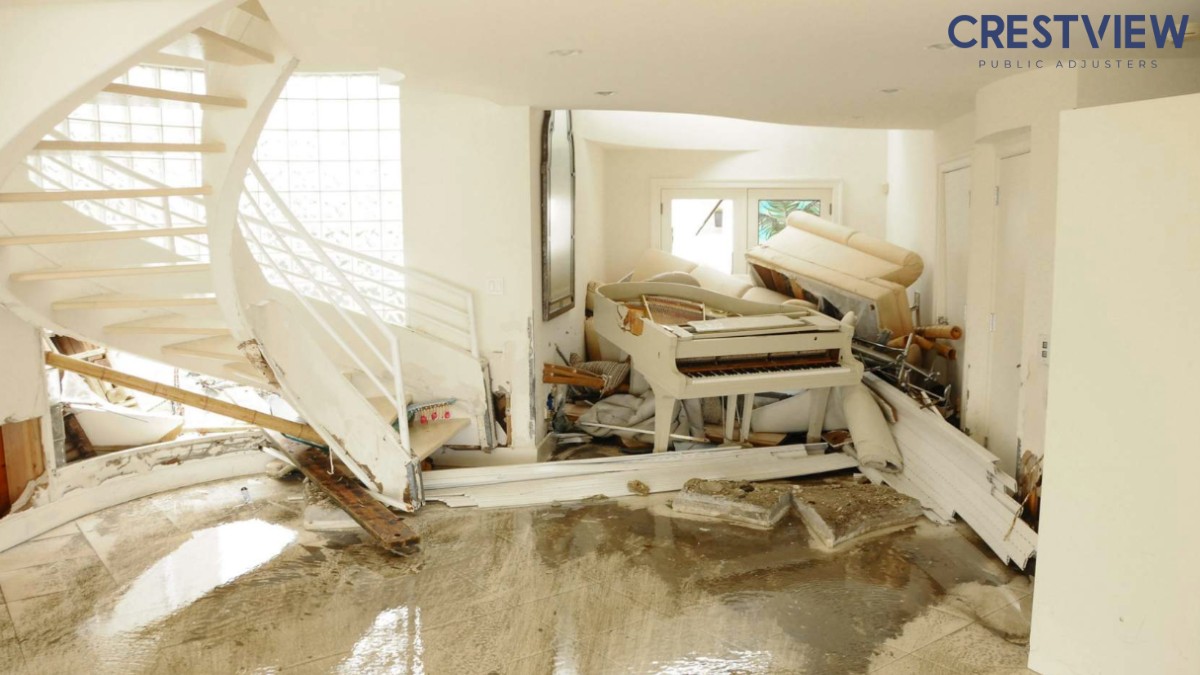
How Do You Properly Document Water Damage?
Dealing with insurers, documentation is your best ally. You need a full and clear record of the damage and your response. This documentation can significantly impact how much your insurer pays—or if they pay at all.
Steps to Document the Damage:
- Take clear photos and videos of all affected areas and belongings. Include close-ups and wide shots.
- Make a written inventory of damaged personal property. Note the brand, model, and estimated value.
- Keep receipts for any immediate expenses like water pumps, hotel stays, or emergency repairs.
- Record the timeline—note when the damage was discovered, when the water source was shut off, and when help was contacted.
Don’t dispose of anything damaged until your insurer has had a chance to inspect it or until your adjuster advises you to.
Should You Notify Your Insurance Right Away?
Yes. Contact your insurer as soon as you can after addressing immediate safety and documentation. Even if you’re unsure of your policy coverage, reporting early helps establish a claim timeline and prevents future disputes.
Be prepared with:
- Your policy number
- The cause and scope of the damage
- The steps you’ve taken so far
- Photos and notes you’ve already gathered
Insurers will typically send out an adjuster to assess the damage. But it’s important to remember: the insurance company’s adjuster works for them—not for you. That’s why many policyholders choose to hire a public adjuster to represent their interests during the process.
When Should You Start Cleanup and Mitigation?
You should begin mitigation efforts right away—waiting can increase your losses and even void parts of your policy.
Start by removing as much water as possible using wet vacs, mops, or pumps. Dry out the space using fans, dehumidifiers, and open windows. Time is critical: mold can begin growing within 24 to 48 hours of water exposure.
What Role Does a Public Adjuster Play in Water Damage Claims?
If this is your first time filing a property damage claim, you might assume the insurance company will guide you fairly. But the process can be more adversarial than most people expect. That’s where a public adjuster comes in.
Public adjusters work exclusively for you, the policyholder—not the insurance company. Their job is to:
- Evaluate the damage independently
- Interpret your policy coverage accurately
- Prepare and submit a comprehensive claim
- Negotiate for the maximum possible payout
This is especially helpful for water damage claims, which are often denied or underpaid due to technicalities in the policy language. A public adjuster ensures your loss is properly categorized, your documentation is complete, and your insurer doesn’t cut corners on what they owe you.
What Should You Avoid During a Water Damage Claim?
Even small mistakes can delay or jeopardize your water damage claim. Knowing what not to do is just as important as knowing what steps to take.
Common Pitfalls to Avoid:
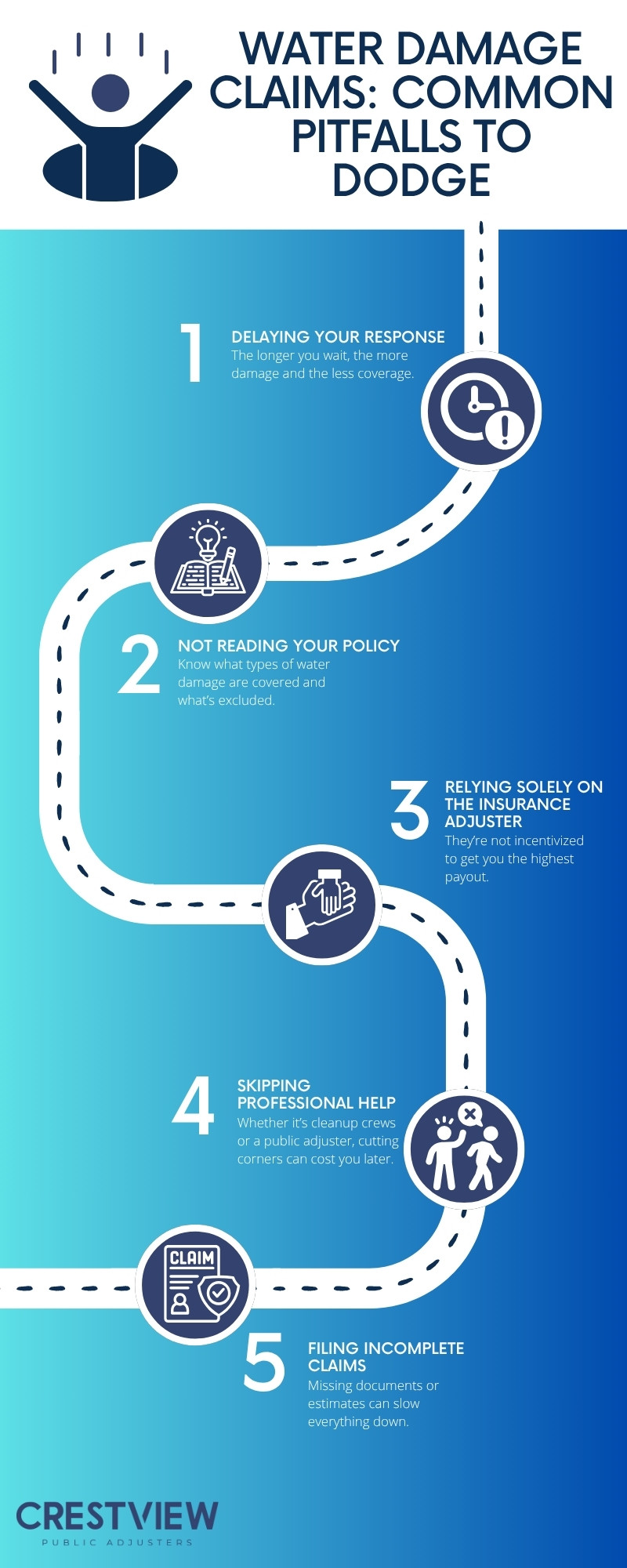
Being proactive and detail-oriented is your best defense against a drawn-out or denied claim.
What to Expect During the Insurance Claim Process?
Once your claim is filed, the process generally includes the following stages:
- Initial Contact & Claim Number: You’ll receive a claim number and an assigned adjuster.
- Damage Inspection: The insurer sends an adjuster to inspect the property.
- Estimate & Payout Offer: Based on their findings, they’ll propose a settlement.
- Review & Negotiation: You can dispute or request a revised payout.
- Payment & Repairs: Once agreed, you’ll receive the funds and start repair work.
With water damage claims, disputes often arise about the source of the water or whether the damage was sudden and accidental—a key qualifier for coverage. A public adjuster helps you navigate these complexities with confidence.
Call in the Experts—Maximize Your Water Damage Claim
Whether you’re unsure about coverage or feeling overwhelmed by the paperwork, we’ll take the lead and ensure your claim is handled with urgency and fairness. If you’re in New York, New Jersey, or Florida, and you’re facing a water damage nightmare, Crestview Public Adjusters is here to guide you.
We specialize in water damage claims and work solely on behalf of policyholders—never the insurance company. Our goal is to protect your rights, maximize your settlement, and take the stress out of the process.
Let us fight for the full value of your claim—contact Crestview Public Adjusters today.