
Key Points:
- Fire insurance covers more than just the flames—it includes smoke, water, and even demolition costs.
- Not all policies are created equal; exclusions and limits can drastically affect your payout.
- Knowing the claims process helps protect your financial recovery after a fire.
Fire insurance coverage typically includes damage caused by flames, smoke, water from firefighting efforts, and even costs related to cleanup and temporary housing. However, the extent of coverage depends heavily on your policy terms, exclusions, and the structure of your claim. To fully protect your property, you need to understand not just what’s covered, but also what’s not.
Why Understanding Fire Insurance Coverage in Your Policy Matters
Fires are unpredictable, and the aftermath can be financially overwhelming—especially if you’re underinsured or unaware of what your policy truly offers.
A fire can make every detail in your insurance policy matter. The coverage limits, deductibles, and fine print determine whether you’ll receive sufficient compensation—or face out-of-pocket expenses. Many policyholders wrongly assume all damage is covered, but that’s rarely the case. Understanding fire insurance coverage in your policy can be the difference between full recovery and financial strain.
What Does Fire Insurance Cover?
Fire insurance typically includes multiple layers of protection, though specific coverages vary. A thorough understanding starts with breaking down the components.
Basic coverage areas usually include:
- Structural Damage: This is the core coverage, addressing physical damage to your home or building caused by fire and heat.
- Smoke Damage: Even if flames don’t touch certain rooms, smoke can ruin walls, ceilings, HVAC systems, and furniture.
- Water Damage from Firefighting: Often overlooked, this includes damage from hoses or sprinkler systems used to extinguish the blaze.
- Personal Property: Policies usually cover the cost to replace belongings, from electronics to furniture and clothes, though item limits may apply.
- Additional Living Expenses (ALE): If your home becomes uninhabitable, ALE pays for hotel stays, meals, and transportation.
Many policies also cover:
- Debris removal and demolition
- Fire department service charges
- Temporary repairs to prevent further damage
These may seem standard, but policy wording dictates scope. For example, “replacement cost” coverage pays to replace items at current market value, while “actual cash value” subtracts depreciation—this difference can cut your payout by thousands.
What’s Not Covered by Fire Insurance?
Fire insurance does have exclusions. Assuming total coverage can be a costly mistake. Here’s what’s often not included:
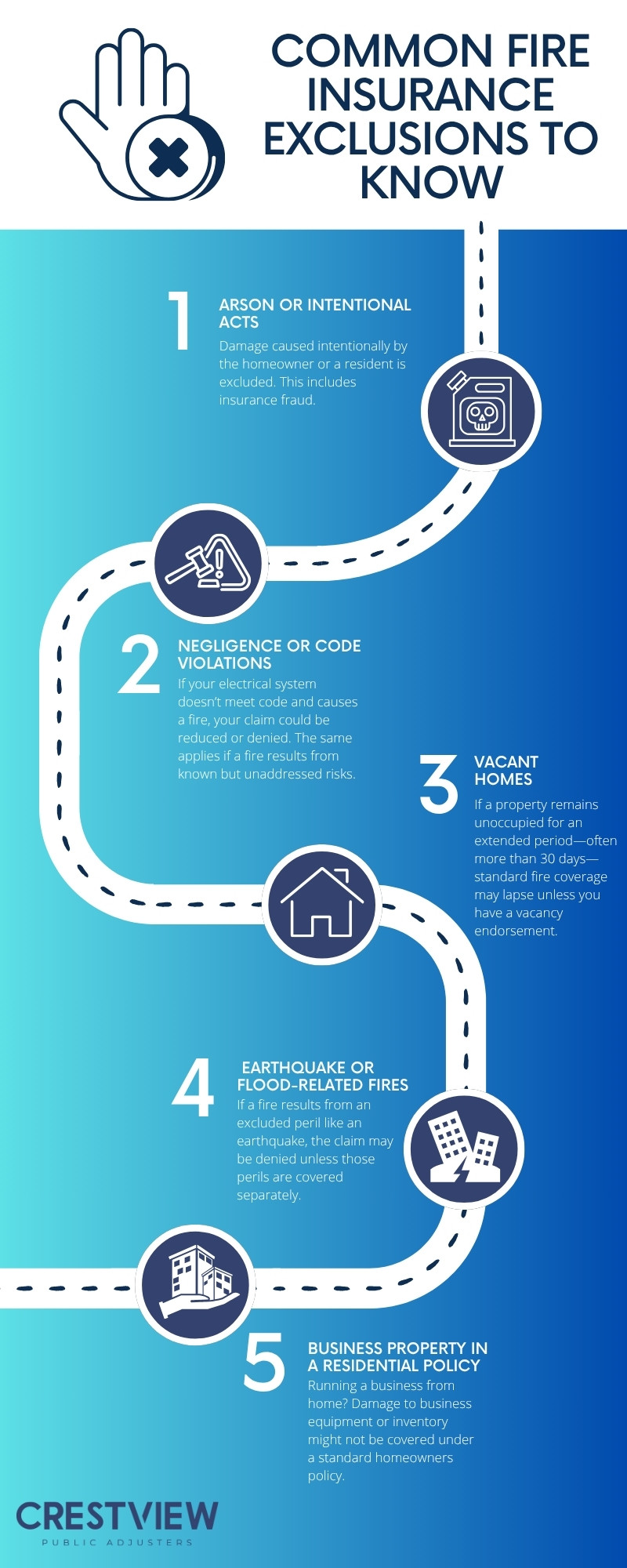
Understanding these exclusions is critical. Many homeowners discover limitations after filing a claim—when it’s too late to adjust their coverage.
How Much Fire Insurance Do You Really Need?
Determining the right amount of coverage depends on more than just your home’s market value. You need to consider rebuilding costs, not resale prices. Here’s how to approach it:
Rebuild Cost Estimate
Work with a contractor or use insurance calculators to get a per-square-foot rebuild estimate. In many areas, this ranges from $150 to $300 per square foot.
Inventory Your Belongings
Create a home inventory, complete with receipts, photos, and serial numbers. Many policyholders are shocked by how much personal property they actually own—and how much it would cost to replace.
Update Coverage Regularly
Renovations, appliance upgrades, or changes in property value require updated coverage. Annual reviews with your insurer are a smart move.
Ask about extended or guaranteed replacement cost endorsements to cover unexpected rebuild cost inflation.
What Are Common Mistakes Policyholders Make with Fire Insurance?
Many homeowners make preventable mistakes that compromise their financial recovery. These include:
- Assuming market value equals rebuild value
- Failing to document belongings
- Not reading the full policy
- Delaying the claim process
- Overlooking endorsements or riders
Some also skip loss of use coverage, underestimating how long a rebuild may take or how expensive temporary housing becomes. Others assume smoke and water damage are always fully covered. They’re not—especially when dealing with indirect damage.
Being proactive before a disaster helps you avoid claim denials later.
How Does the Fire Insurance Claims Process Work?
Once you file a fire claim, the process follows these basic stages:
Immediate Reporting and Documentation
Call your insurer promptly. Provide a police or fire department report, photos, videos, and a detailed inventory list.
Damage Assessment
The insurance company sends an adjuster to inspect the property. Their findings largely dictate your settlement offer.
Claim Evaluation
Based on policy terms, the insurer calculates payouts for structural repairs, contents, and additional living expenses.
Negotiation and Settlement
In many cases, the first offer may not reflect the full damage. Policyholders can negotiate or hire a public adjuster to represent their interests.
Payout and Restoration
Funds are released in installments. The final payment is usually made after repairs are verified.
Keep all receipts, contractor quotes, and communication logs. Meticulous records support faster and more accurate settlements.
When Should You Consider Hiring a Public Adjuster?
A public adjuster works for you, not the insurance company. They help:
- Interpret complex policy language
- Estimate and document all damages
- Negotiate for a better payout
- Expedite the claims process
If your claim involves significant structural loss, disputes over repair scope, or undervaluation of belongings, a public adjuster can be your best asset. They’re especially helpful when the insurer’s offer seems suspiciously low—or you just don’t have time to manage the claim yourself.
Don’t Wait Until It’s Too Late
Understanding fire insurance coverage in your policy isn’t something to put off until disaster strikes. The time to review and prepare is now. A clear grasp of your coverage, exclusions, and claims process empowers you to act quickly and confidently when it matters most. Fires can devastate a home in minutes—but smart preparation helps you rebuild faster.
Get Expert Help for Your Fire Damage Claim
If you’re dealing with fire damage in New York, New Jersey, or Florida, don’t go through the claims process alone. Crestview Public Adjusters specialize in fire damage claims and work solely for policyholders—not insurance companies.
Our team helps you interpret the fine print of your policy, document your losses, and fight for the settlement you truly deserve. With years of experience handling complex residential and commercial fire claims, we’re one of the best choices for reliable advocacy.