
Key Points:
- Frozen pipes are a serious risk during the holidays, causing thousands in damage if not handled properly.
- Immediate action is crucial to minimize water damage and prevent pipe bursts.
- Insurance claims for frozen pipe damage can be complex, but public adjusters help policyholders maximize settlements.
The holidays bring lower temperatures, increased travel, and vacant homes—all creating the perfect storm for frozen pipe emergencies. Homeowners are often caught off guard, facing unexpected water damage, high repair costs, and stressful insurance claims right in the middle of holiday celebrations.
Frozen Pipe Emergencies Over the Holidays: What to Do
During frozen pipe emergencies over the holidays, act fast to prevent further damage and protect your home and finances. Frozen pipes can burst, releasing hundreds of gallons of water per hour. The holiday season compounds the risk because many homes are left unattended while families travel or gather elsewhere.
Let’s break down exactly what you need to do when frozen pipe emergencies strike during the holidays.
Why Are Frozen Pipes So Dangerous During the Holidays?
The holiday season combines several risk factors that increase the likelihood of frozen pipe disasters. Understanding why frozen pipes are more prevalent during this period helps you stay proactive.
Many homeowners travel for extended periods, leaving homes unheated or minimally heated. The drop in temperatures—especially during overnight cold snaps—can easily freeze water inside the pipes. Without regular monitoring, minor freezing can escalate into a full-blown burst before anyone notices.
In addition, holiday stress means homeowners often overlook routine maintenance. Pipes located in uninsulated attics, basements, or exterior walls are especially vulnerable. Once frozen, the expanding ice creates immense pressure inside the pipe walls, eventually causing ruptures.
These issues lead to extensive water damage, ruining drywall, flooring, furniture, and even structural components of the home. The cleanup costs often skyrocket, leaving families overwhelmed during what should be a joyful season.
How to Identify Frozen Pipes Early
Catching frozen pipes early is your best defense against a major emergency. But many homeowners don’t recognize the signs until it’s too late.
Here are clear warning signs of frozen pipes:
- Reduced or no water flow: If you turn on a faucet and nothing comes out, or water trickles slowly, pipes may be frozen.
- Unusual sounds: Listen for banging, clanging, or whistling sounds in your plumbing system.
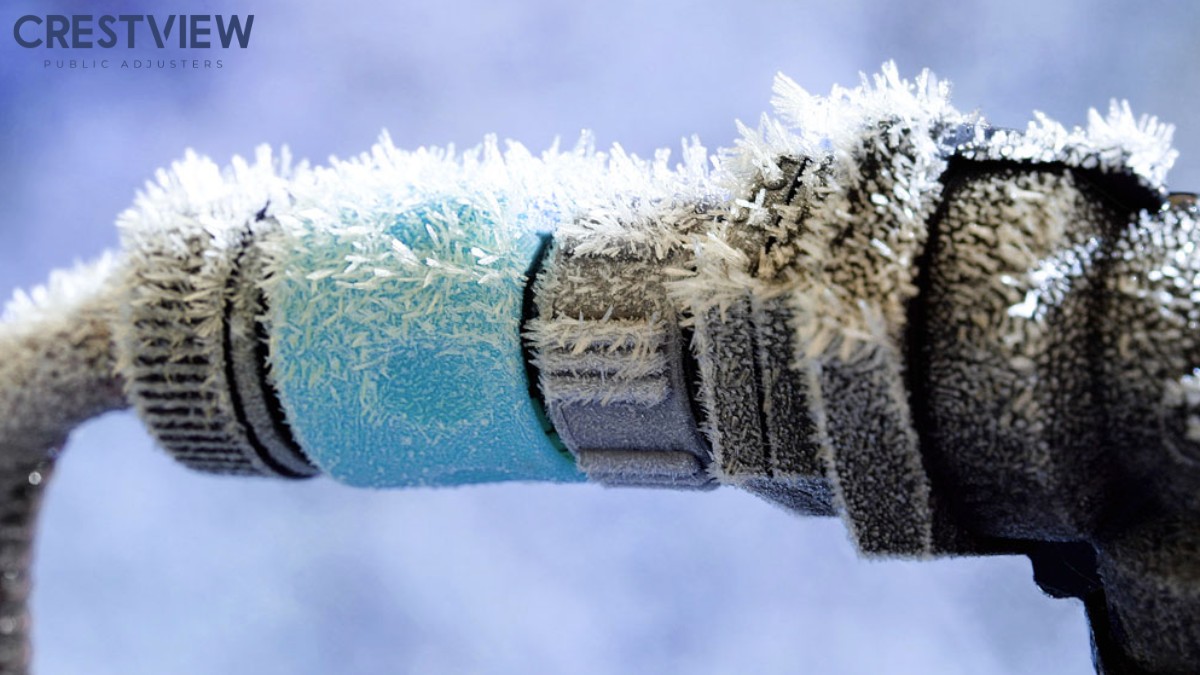
- Frost on pipes: Visible frost buildup on exposed pipes signals ice formation inside.
- Odd smells: Sewer or drain odors could indicate blocked pipes caused by ice.
The sooner you detect these signs, the better chance you have of preventing a full rupture. If any of these symptoms appear, don’t delay your response.
Immediate Steps to Take During a Frozen Pipe Emergency
During a frozen pipe emergency over the holidays, time becomes critical.Taking immediate action can limit the extent of water damage and protect your property.
Here’s a step-by-step guide:
- Shut off the main water supply – Prevent more water from flowing into the frozen area by turning off your home’s water at the main valve.
- Turn off electrical power near affected areas – If water leakage begins, shut off electricity to avoid electrical hazards.
- Locate the frozen section – Check exposed pipes in basements, attics, and crawl spaces first. Touch the pipe to feel for extreme cold spots.
- Begin gentle thawing – Gently warm the pipes with a hair dryer, portable heater, or heated towels. Avoid using open flames or extreme heat sources, as they may cause the pipes to crack.
- Call a professional plumber – If you cannot locate or safely thaw the pipe, bring in a licensed plumber immediately.
Acting quickly during frozen pipe emergencies over the holidays can mean the difference between a minor inconvenience and a major catastrophe.
What to Do If a Pipe Bursts
Even with the best preparation, sometimes frozen pipes still burst. When this happens, your focus shifts to damage control and documentation for insurance purposes.
Start with these steps:
- Stop the water flow – Make sure the main water valve is completely shut off.
- Protect valuables – Move furniture, electronics, and personal items away from the affected area to prevent further water damage.
- Document the damage – Take photos and videos of all affected areas, including walls, floors, ceilings, and personal belongings.
- Contact your insurance company – Report the incident and begin the claims process. Be prepared to provide detailed documentation.
Handling the aftermath of frozen pipe emergencies over the holidays is stressful, but organized documentation ensures your insurance claim has the best chance of success.
How to Prevent Frozen Pipes Before the Holidays
Prevention remains your strongest tool. Before you travel or celebrate, take these proactive steps to lower your risk:
- Insulate exposed pipes – Use foam sleeves or heat tape on pipes located in vulnerable areas.
- Seal gaps and cracks – Prevent cold air from entering your home through foundation cracks or wall gaps near pipes.
- Maintain consistent heating – Keep your thermostat set at a consistent temperature—even when you’re away.
- Allow faucets to drip – A slight water flow keeps pressure lower inside pipes and prevents freezing.
- Open cabinet doors – Let warm air circulate around pipes under sinks, especially on exterior walls.
Following these measures minimizes the likelihood of encountering frozen pipe emergencies over the holidays.
Are Frozen Pipe Damages Covered by Insurance?
Generally, yes — most homeowners insurance policies cover water damage caused by frozen pipes, as long as proper precautions were taken. However, coverage may be denied if the insurer determines that negligence played a role.
Insurance companies may question:
- Was the home adequately heated?
- Were preventative steps taken?
- Was the damage reported promptly?
That’s where the expertise of a public adjuster becomes invaluable. They advocate for policyholders, ensuring that insurance companies honor legitimate claims and offer fair settlements.
How Public Adjusters Help with Frozen Pipe Insurance Claims
Filing a frozen pipe insurance claim may sound simple, but policy language can be complicated. Insurers may downplay damage costs, argue about the cause, or request extensive documentation.
Public adjusters help you by:
- Interpreting your policy – They clarify what is covered and help you understand the fine print.
- Documenting damages thoroughly – They prepare detailed reports, ensuring all losses are accounted for.
- Negotiating directly with insurers – They advocate on your behalf, often securing larger settlements than policyholders obtain on their own.
- Reducing your stress – During an already stressful holiday season, public adjusters handle the paperwork and negotiations so you can focus on recovery.
During frozen pipe emergencies over the holidays, complex insurance claims can arise, and public adjusters ensure you’re not navigating the process alone.
Why Holiday Claims Often Face Added Scrutiny
Insurance companies know that frozen pipe emergencies over the holidays happen frequently. Unfortunately, this high volume of claims often leads insurers to scrutinize holiday damage more aggressively.
Common challenges include:
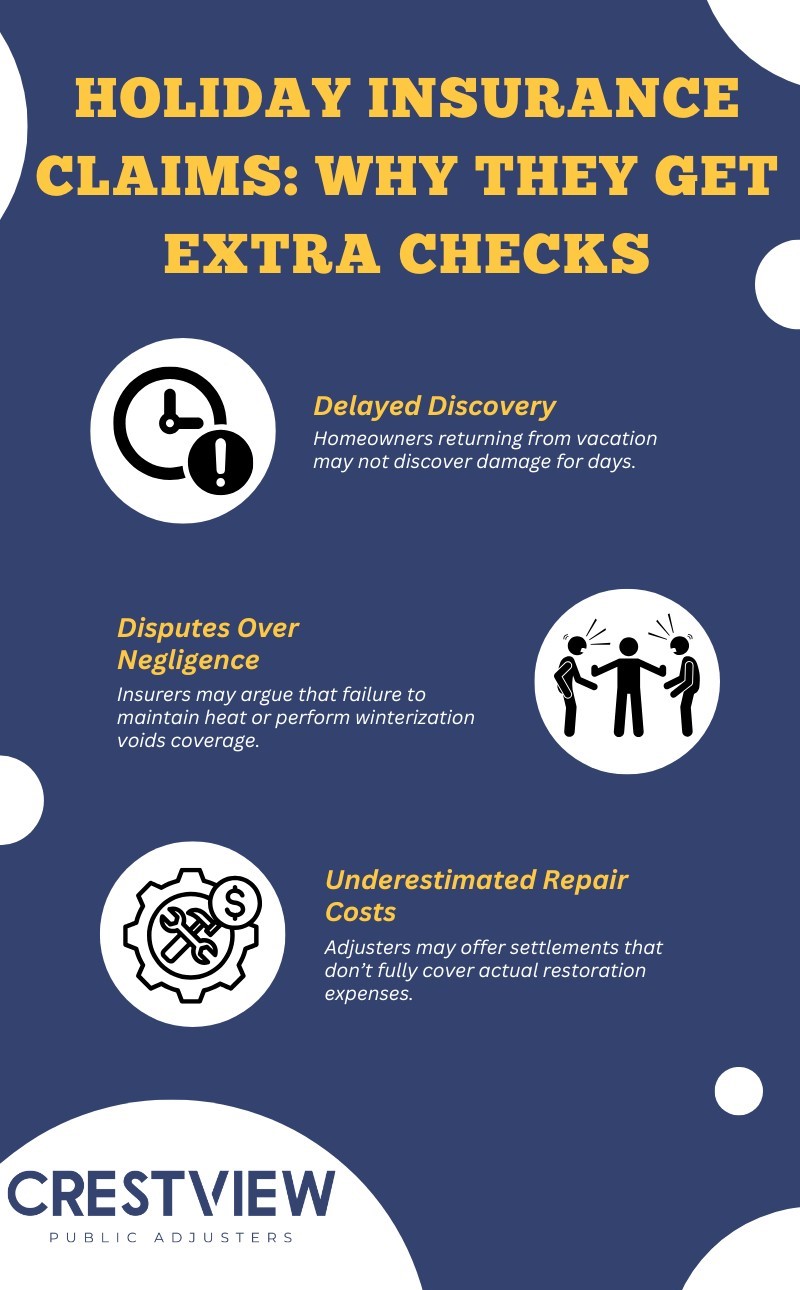
These factors make it even more critical to work with professionals who understand both the technical aspects of water damage and the complexities of insurance policies.
Work with Crestview Public Adjusters to Protect Your Claim
Frozen pipe emergencies over the holidays don’t just damage your property—they create financial headaches that can drag on for months. At Crestview Public Adjusters, we specialize in handling frozen pipe insurance claims for homeowners across New York, New Jersey, and Florida.
Our experienced team fights on your behalf to ensure insurance companies pay what you’re rightfully owed. Don’t let a frozen pipe ruin your holidays—or your finances. Contact Crestview Public Adjusters today and put experts in your corner.