
Key Points:
- Water damage coverage is often limited and excludes common scenarios like gradual leaks or sewer backups.
- Insurance companies may use vague language in policies that can mislead homeowners about what’s truly covered.
- Understanding exclusions, documentation requirements, and how to handle disputes is critical to getting fair compensation.
Many homeowners are blindsided when their claim is denied or underpaid—often due to fine print they weren’t aware of. If you think your standard homeowners insurance fully protects you from all kinds of water damage, you’re likely in for a surprise. The truth is, what insurance companies don’t tell you about water damage coverage can cost you thousands.
What Insurance Companies Don’t Tell You About Water Damage Coverage
Most homeowners insurance policies do not cover all types of water damage. In fact, policies often contain exclusions or vague wording that leaves you unprotected in some of the most common scenarios. What insurance companies don’t tell you about water damage coverage is that unless you understand the technical definitions of “sudden and accidental,” “flood,” or “seepage,” you may assume you’re covered when you’re not.
This misunderstanding frequently leads to denied claims and unnecessary out-of-pocket expenses. Insurance adjusters work for the insurance company—not you. So, their interpretation of your policy often tilts in their favor.
What Types of Water Damage Are Commonly Not Covered?
Policies are often crafted with complex terms that blur the lines between what is covered and what is excluded. While “sudden and accidental” water damage is typically covered, anything deemed as slow-developing, preventable, or originating from outside the home might not be.
Some of the most commonly excluded types of water damage include:
- Gradual leaks from pipes, roofs, or appliances
- Sewer backups and sump pump failures (unless you have a specific rider)
- Flooding from rising water or storm surge
- Poor maintenance-related damage, such as mold or rot
These aren’t rare events. A tiny pinhole leak in a pipe behind a wall can go unnoticed for months—and when you finally discover it, your claim may be denied because it wasn’t “sudden.”
Even worse, many homeowners don’t realize they need separate endorsements or policies for coverage like sewer backup or flood insurance. Unless you specifically asked for these riders and paid extra, you’re likely not covered.
What Should You Do Immediately After Water Damage?
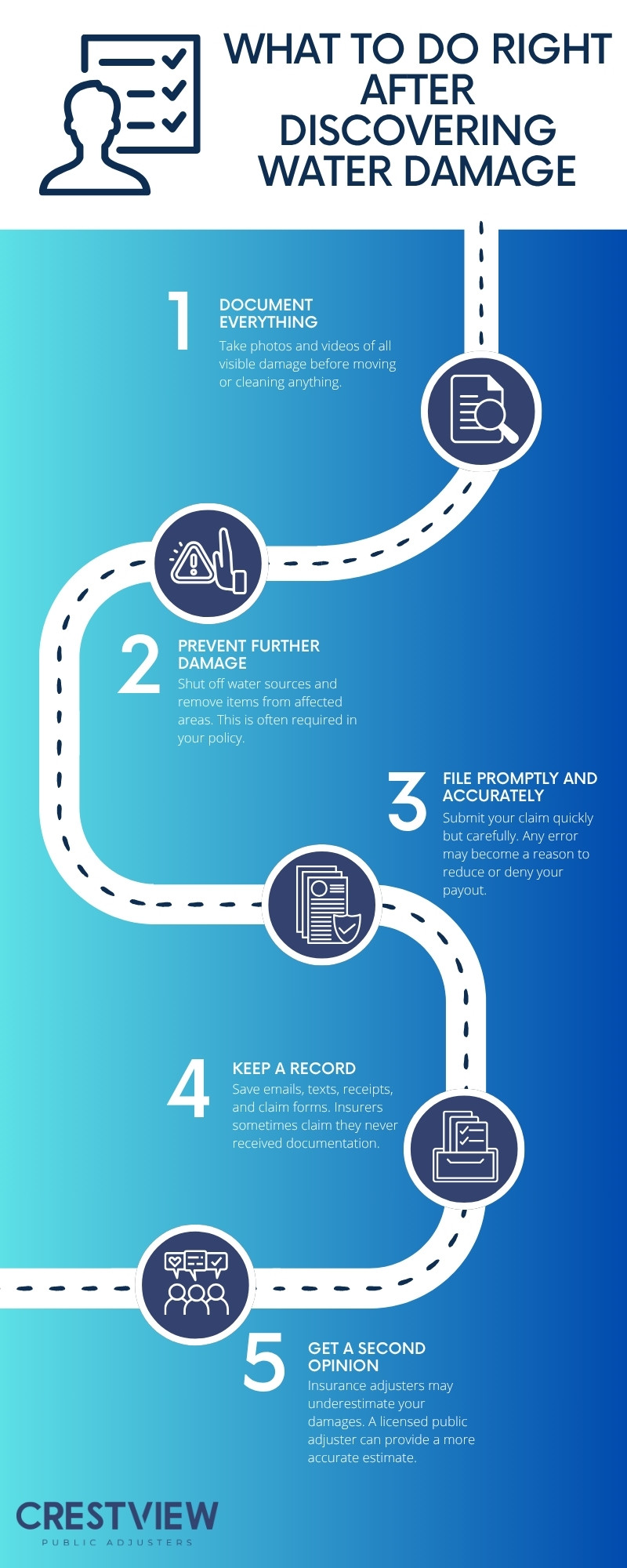
Timing is everything when you experience water damage. Insurance companies may use delays against you, arguing that more damage occurred due to inaction. But they also make it hard to know what exactly you’re supposed to do.
To avoid pitfalls, follow these steps:
Why Policy Language Can Work Against You
One of the major frustrations for policyholders is the use of ambiguous or misleading language in insurance policies. Words like “overflow,” “seepage,” or “infiltration” might sound similar, but in an insurer’s eyes, they have completely different implications for coverage.
Here’s why this matters:
- “Sudden and accidental” usually covers burst pipes, but not slow leaks—even if the result is the same.
- “Flood” refers strictly to external water rising from natural sources—not a broken appliance or roof leak.
- “Backup” vs “overflow” can result in claim denials depending on how the damage originated.
This confusion leads many to file claims they believe should be covered, only to face rejection.
To prevent this, always request a copy of your complete policy—not just the declarations page. Read it carefully and ask for a breakdown in plain English from your insurance agent or a licensed public adjuster.
What Is a Public Adjuster and Why Should You Consider One?
A public adjuster is a licensed professional who advocates for policyholders—not insurance companies. They evaluate your damages, prepare detailed claim reports, and negotiate on your behalf to get the settlement you deserve.
Here’s how they help:
- Identify hidden damages the insurer’s adjuster may ignore or undervalue
- Decode policy terms and coverage limitations you might miss
- Negotiate better settlements, especially in complex or high-dollar claims
In many water damage cases, homeowners who use public adjusters recover significantly more than those who don’t. That’s because insurance company adjusters are incentivized to minimize payouts. Public adjusters level the playing field.
How to Avoid Getting Underpaid or Denied
Most claim denials aren’t due to fraud or errors—they’re based on loopholes and exclusions buried in your policy. Avoiding this starts with knowing your coverage inside and out.
Here are practical ways to prevent underpayment:
- Ask for a coverage review annually with your insurance agent. Ensure you have riders for flood, sewer backup, and mold if needed.
- Keep maintenance records. If your claim is denied due to “lack of maintenance,” you’ll need proof to fight it.
- Understand the “damage trigger.” Some policies won’t pay unless water damage is caused by specific events, like a burst pipe.
- Don’t rely solely on the insurer’s repair estimate. It’s often lower than what’s needed to restore your home to pre-loss condition.
Also, beware of lowball settlements. If something feels off, you’re probably right. Don’t sign a release or accept a check until you’re certain the amount covers all repairs.
Why Disputes Happen—and What You Can Do About Them
Even with proper documentation, legitimate claims often face delays or disputes. Insurers may accuse you of negligence or “failure to maintain,” blame pre-existing conditions, send in-house contractors whose interests don’t align with yours, or drag out the process with repeated requests for information.
If this happens, you don’t have to accept it. You can request a reinspection, file a complaint with your state’s department of insurance, or hire a public adjuster or attorney to challenge the outcome. The key is knowing that you have options. Too many policyholders give up and absorb the loss—when in reality, they’re entitled to more.
Final Thoughts: Knowledge Is Your Best Protection
The biggest takeaway from understanding what insurance companies don’t tell you about water damage coverage is this: you can’t afford to assume your policy has you covered in every scenario. Vague language, exclusions, and technical definitions leave a lot of room for denial—and a lot of financial risk for you.
Start by reading your full policy, asking questions, and documenting everything. And when in doubt, call in a professional who’s on your side.
Get the Settlement You Deserve—Call Crestview Public Adjusters
Dealing with water damage in Florida, New York, or New Jersey? Don’t let the insurance company dictate your payout. Crestview Public Adjusters specializes in water damage claims and fights to ensure policyholders get every dollar they’re entitled to.
Our team breaks down your policy in simple terms, documents damages thoroughly, and negotiates directly with your insurer. You don’t pay us unless you get paid.
Take control of your claim today—contact Crestview Public Adjusters for a free consultation.