
Key Points:
- Document all flood damage before removing items or beginning cleanup.
- Review your insurance policy’s exclusions, limits, and deductible before filing.
- A public adjuster can help maximize your payout and handle insurer negotiations.
Basement flooding is more common than you might think. Whether the flooding was due to heavy rainfall, a burst pipe, or sewer backup, it’s a stressful situation—and dealing with insurance afterward can be just as overwhelming. If your basement floods, knowing what to do right away can be the difference between a rejected claim and a fair payout.
Insurance Claim Tips After Basement Flooding
You can improve the chances of a successful claim by documenting the damage immediately, understanding your coverage, and following the insurer’s guidelines step-by-step.
The moment you discover your basement has flooded, your response matters. Insurance companies require timely and detailed documentation to approve a water damage claim. Acting fast and keeping records of every step you take ensures a smoother process and increases the likelihood of getting reimbursed for cleanup and repairs.
What Kind of Basement Flooding Is Covered by Insurance?
Not all basement floods are covered equally. Coverage depends heavily on the cause of the flooding and your policy type. Here’s a breakdown:
Covered Events:
- Burst pipes
- Appliance malfunctions
- Overflow from HVAC systems
- Accidental water discharges
Often Not Covered:
- Water seepage from foundation cracks
- Groundwater infiltration
- Flooding due to heavy rain (unless you have separate flood insurance)
- Sewer or drain backup (unless you have an endorsement)
Most standard homeowners insurance policies exclude flood damage caused by weather-related events. If you’re in a flood-prone area, a National Flood Insurance Program (NFIP) policy may be necessary.
What Should You Do First After Basement Flooding?
The first few hours after discovering basement flooding are crucial. Your actions during this period will have a direct impact on your insurance claim’s outcome. Here’s what to do before anything else:
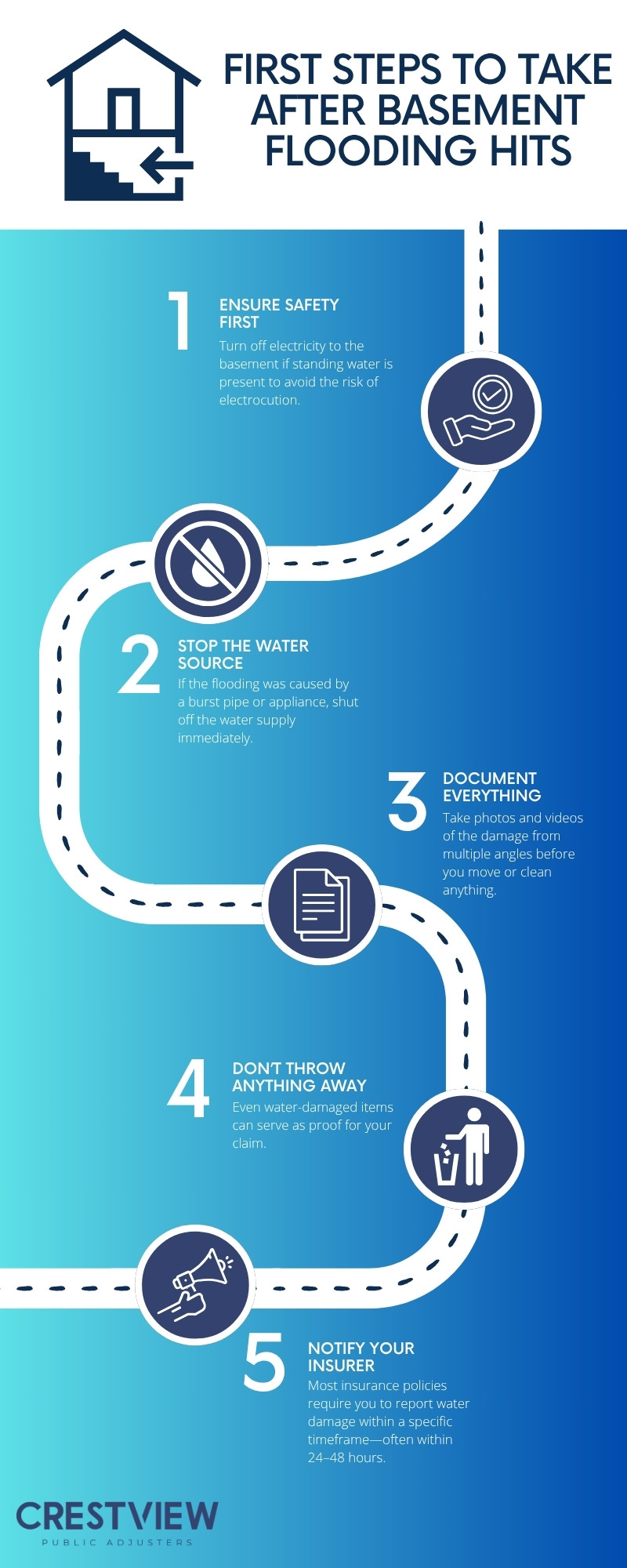
It’s important not to rush into cleanup before your insurer has a clear picture of the damage. Insurers may deny claims if they believe the loss wasn’t properly documented or if the source of damage isn’t covered under your policy.
How to File an Insurance Claim After Basement Flooding
Once you’ve assessed the damage and confirmed your policy covers the cause, it’s time to file your claim. Doing this correctly can save you from delays or denials.
Start by contacting your insurer to begin the claims process. They’ll likely ask for a description of what happened, when it happened, and what damage occurred. Here’s what you need to prepare:
- Claim number and policy details
- Photo and video evidence of the damage
- Receipts or records for any damaged items
- A written inventory list
- Estimates for cleanup and repair (preferably from licensed professionals)
Insurers may send their own adjuster to inspect the damage. This adjuster works for the insurance company—not you. If you feel like your losses are being underestimated or overlooked, consider hiring a public adjuster to represent your interests.
How Long Do Insurance Claims Take After Basement Flooding?
There’s no one-size-fits-all answer, but most insurance claims take 2–6 weeks to process. That timeline depends on several factors:
- Extent of the damage
- How quickly you submitted documentation
- Whether there are disputes over coverage or costs
If your home is unlivable, you might qualify for loss-of-use coverage, which helps pay for temporary lodging. Check your policy for details.
Delays often happen when policyholders don’t provide enough documentation, or when insurers question the source of the flooding. That’s why thorough documentation and proactive communication are essential.
How to Maximize Your Insurance Payout for Water Damage
Getting a fair settlement isn’t just about filing a claim—it’s about building a strong case. Insurance companies are businesses, and they may look for reasons to reduce payouts. Here’s how to push for what you’re owed:
- Keep a damage log. Record the timeline of events, including when the flooding occurred, when you notified your insurer, and all conversations with adjusters.
- Hire licensed contractors for estimates. Insurers tend to trust licensed professionals over DIY numbers.
- Use a public adjuster. They’ll work independently to assess the full scope of your losses and negotiate directly with the insurer.
- Avoid premature cleanup. If you clean too soon, you may erase evidence that supports your claim.
- Challenge low offers. You don’t have to accept the first settlement. You can request a re-evaluation or bring in an independent expert.
How Can a Public Adjuster Help With a Basement Flooding Claim?
Public adjusters are licensed professionals who advocate for policyholders—not insurance companies. In the aftermath of basement flooding, they help you:
- Assess the full scope of water damage
- Navigate complicated policy language
- Estimate the real cost of repairs
- File appeals if the claim is denied or underpaid
They bring deep experience in understanding how insurers work, and they often uncover claimable damages that policyholders overlook. In many cases, the payout difference between handling a claim alone and hiring a public adjuster is substantial.
If you feel overwhelmed or unsure about your claim, a public adjuster can lift the burden—and potentially increase your payout significantly.
Common Mistakes to Avoid When Filing Basement Flooding Claims
Even small missteps can cause big problems. To protect your claim, avoid these common mistakes:
- Delaying the claim: Waiting too long can lead to denial.
- Throwing out damaged property: Always save items for adjuster review.
- Failing to mitigate further damage: Take reasonable steps to prevent mold and worsening damage.
- Not understanding your policy: Know what is and isn’t covered.
- Accepting the first offer without question: Always review settlement terms before signing off.
Basement flooding is stressful, but you don’t have to go through the claims process alone—or blindly. Avoiding these errors can make your recovery much smoother.

What If My Basement Flooding Claim Gets Denied?
Claim denials happen more often than policyholders expect. The most common reasons include:
- Damage not covered under the policy
- Missed reporting deadlines
- Incomplete or missing documentation
- Disputes over cause of flooding
If your claim is denied, you’re allowed to appeal. Start by requesting the denial letter and reviewing your policy. Then, you can:
- Submit additional documentation
- Request a re-inspection
- Bring in a public adjuster for a second opinion
If these efforts fail, consider escalating to your state’s Department of Insurance or consulting a legal expert.
Get Help From Public Adjusters Who Know Water Damage Claims
Basement flooding can turn your world upside down—but you don’t have to fight your insurance company alone. Crestview Public Adjusters specializes in Water Damage Claims and can help you every step of the way.
We work with policyholders in Florida, New York, and New Jersey, ensuring they get the full compensation they’re entitled to under their policies. From inspecting damage to negotiating your settlement, we handle the process so you don’t have to.
Let Crestview Public Adjusters handle your water damage claim—so you can focus on recovery, not red tape. Reach out today to schedule a free consultation.