
Key Points:
- To handle a commercial insurance claim after fire, flood, or storm damage, report the loss promptly.
- Make sure to document everything with photos and logs, and separate damage into building, contents, and business interruption.
- Review your policy for exclusions, especially for flood, and be ready to dispute low offers through appraisal or adjuster support.
Commercial property damage often hits while you still have staff to pay, orders to fill, and lenders to update. Fire, flood, or wind can shut down a location in hours while bills keep moving. A commercial insurance claim is supposed to bridge that gap, yet many owners feel lost once adjusters, exclusions, and deadlines come into play.
By understanding how multi-peril claims work from first notice through settlement, you can protect cash flow, avoid common underpayments, and know when to bring in extra help.
Why Disaster Damage Hits Businesses So Hard
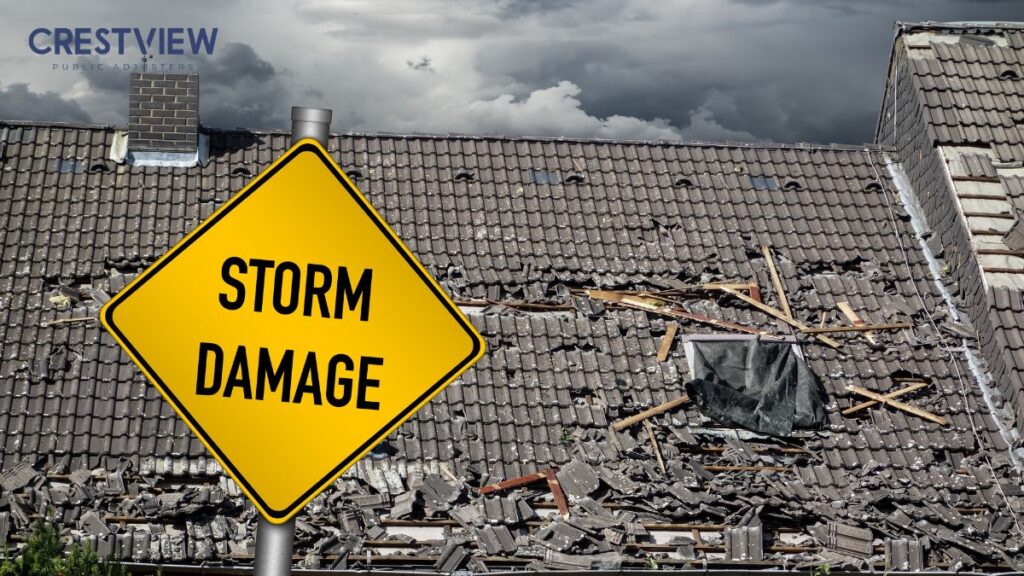
Disasters are no longer rare outliers for commercial properties. From 1980 to 2024, the United States recorded 403 weather and climate events with losses of at least $1 billion each, and the most recent five-year period averaged 23 such events per year.
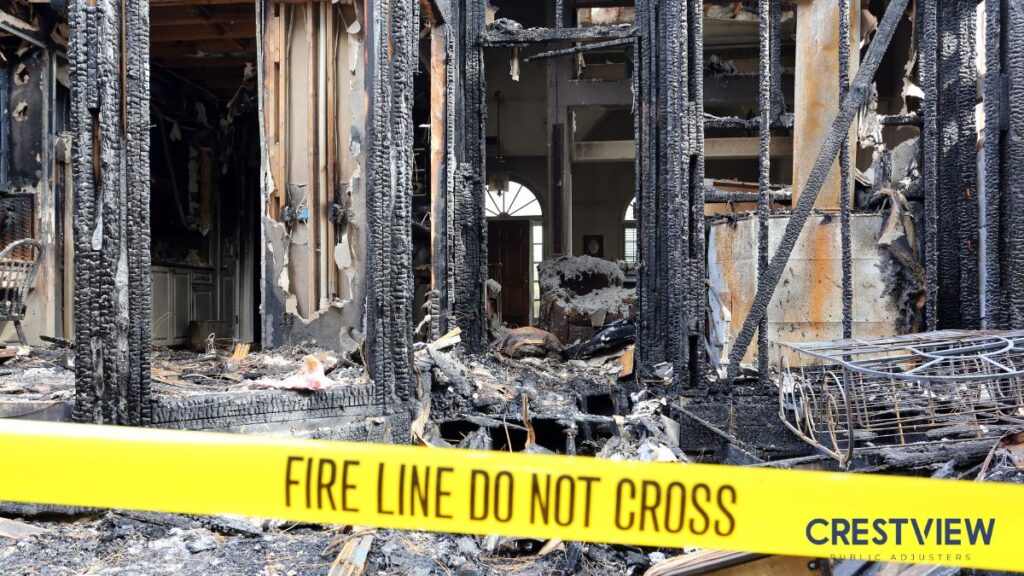
Those events translate into direct hits to buildings, stock, and operations. Federal estimates for 2023 show about 110,000 nonresidential building fires in the U.S., causing roughly $3.16 billion in direct property losses.
Business survival is at stake, not just the next quarter’s profit. The U.S. Small Business Administration notes that around 25% of businesses never reopen after a major disaster, which shows how fragile many operations are when claims and repairs drag on.
Owners who understand how commercial property claims work, or who partner early with a public adjuster, tend to move faster and document more thoroughly. That early structure helps whether you handle a straightforward loss or a contested payout.
When Should You File a Commercial Insurance Claim After a Fire, Flood, or Storm?
Timing starts the entire claim clock. Most policies require “prompt” notice, and state laws layer on their own deadlines.
In Florida, for example, the Homeowner Claims Bill of Rights (often mirrored in commercial handling) gives you the right to an acknowledgment of your reported claim within 7 days, a coverage update within 30 days of complete proof of loss, and payment or denial within 60 days, with limited exceptions.
Even if you operate in New York or New Jersey, where rules differ, waiting weeks to report a loss makes it easier for the carrier to argue late notice or poor mitigation.
Right after the event, focus on three tracks at the same time:
- Safety first: Confirm everyone is out, utilities are shut off where needed, and the site is secure from further injury.
- Emergency mitigation: Arrange board-up, water extraction, and temporary drying to prevent damage from spreading beyond the original event.
- Initial notice: Contact your agent or insurer with the policy number, date of loss, location, and a simple description of what happened so the insurance claims process stays on track from the start.
Commercial Insurance Claim Steps in the First 72 Hours
After securing the site and initiating the claim, the initial 72 hours establish the framework for all subsequent actions.
Focus on tasks like:
- Short damage summary: Write a brief description of the building or area so you remember what conditions looked like before cleaning.
- Vendor coordination: Make sure mitigation contractors understand that all invoices and logs must be itemized and saved for the claim file.
- Communication log: Start a simple log for calls and emails with the insurer, adjusters, landlords, and lenders, with dates and next steps.
Filing quickly does not mean you must know the final dollar amount. You only need enough detail to show what happened, where, and when, so the carrier can assign an adjuster and schedule inspections.
What Damage Does Your Policy Actually Cover?
Coverage decisions hinge on what was damaged and how your policy is structured, especially around business interruption insurance terms that define covered income and extra expenses. Typical commercial property policies break coverage into several buckets:
- Building: Structural elements, roofs, exterior walls, and interior build-out that the policyholder owns.
- Business personal property: Furniture, machinery, computers, tools, and other movable items owned by the business.
- Inventory or stock: Finished goods, raw materials, and work-in-progress affected by heat, smoke, water, or contamination.
- Tenant improvements and betterments: Upgrades paid for by tenants within a leased space, such as partitions or custom lighting.
- Debris removal and code upgrades: Costs to haul away debris and bring repairs up to the current code when a trigger threshold is met.
Fire and storm claims often unlock business interruption coverage and extra expense coverage when operations are partially or fully shut down.
Flood losses are different. Standard property policies often exclude flood coverage, while separate flood policies follow the National Flood Insurance Program (NFIP) definitions. Flood is defined as a general and temporary condition of inundation of normally dry land over at least two acres or affecting at least two properties, often from overflow or rapid runoff.
Because of those distinctions, you may see separate adjusters and claim numbers for building, contents, and BI, and possibly a separate administrator for flood coverage.
How to Build a Claim File That Holds Up
Insurers pay losses based on evidence, not effort. A strong claim file lets their adjusters see what was damaged, how it was mitigated, and how it affected revenue.
Start by separating what you can give the carrier right away from what you will update over time, using a simple insurance claim checklist to keep documents grouped by stage.
Core items to hand over early
- Photo and video record: Take wide shots, mid-range photos, and close-ups before demo or cleanup in every affected room or area.
- Emergency vendor documents: Provide board-up invoices, dry-out logs, and equipment rental records tied to specific dates and locations.
- Initial inventories: Create simple lists of damaged equipment, furniture, and stock with serial numbers and estimated replacement costs where available.
Ongoing documents to keep updating
- Contractor estimates and change orders: Track every revision to the repair scope to show how pricing evolved.
- Payroll and sales reports: Pull reports from before and after the event so business interruption claim documentation reflects your trend, not a single slow month.
- Lease and loan documents: Keep leases, mortgages, and equipment finance agreements ready to show your financial obligations.
A well-organized claim file makes it easier to challenge any scope gaps later. It also helps if you decide to involve a public adjuster or use an appraisal, since they can rely on records you already created.
Storm Water Intrusion vs Flood: Why Wording Changes Your Payout
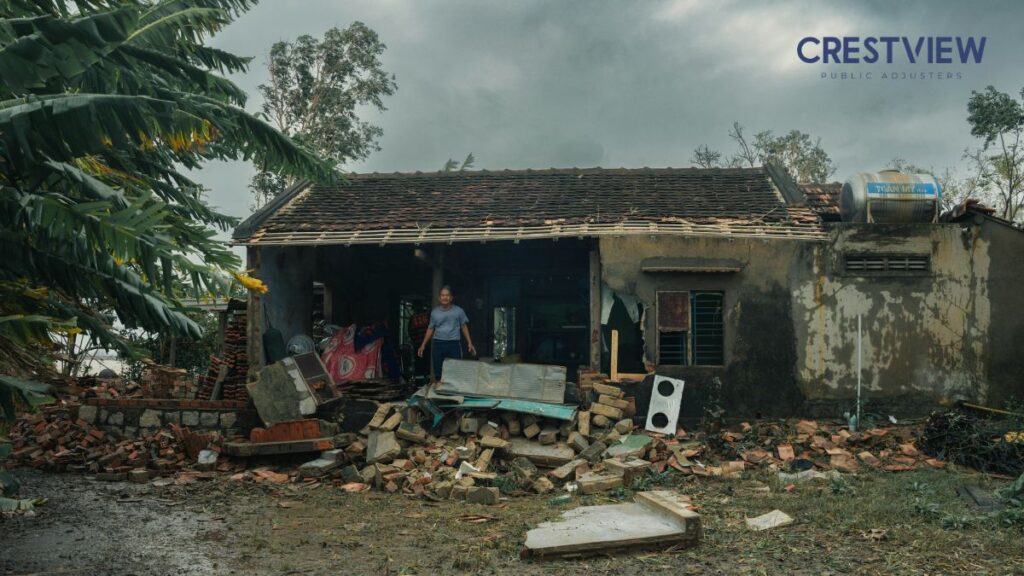
NFIP’s flood definition focuses on inundation of normally dry land over a wide area or multiple properties, usually from overflow or surface runoff. Rain that enters through storm-damaged openings or wind-driven rain that soaks walls may be covered under the property policy as wind or storm damage rather than flood, depending on policy language.
To protect coverage for stormwater intrusion:
- Document openings: Photograph roof damage, broken windows, failed flashing, and wind-driven entry points as soon as it is safe.
- Capture timing: Note when water first entered, when utilities were cut, and when any nearby flooding reached your building.
- Map waterlines: Mark interior waterlines and note whether water appears to have risen from the ground or fallen from above.
If your operation sits in both a flood-prone and wind-prone area, you may end up with a wind or storm claim on the property policy and a separate flood claim that later ties into flood damage and business interruption when income drops. Keeping photos and narratives clear from the start helps reduce arguments over which policy should respond.
Multi-Peril Coverage Map: Fire, Flood, and Storm in One Workflow
Running three separate claim strategies per peril is exhausting. You can instead use one multi-peril workflow and adjust details by hazard.
Think of the workflow in four stages:
- Triage and safety: Stabilize the site, protect staff and customers, shut down hazardous systems, and prevent unauthorized access.
- Mitigation and temporary fixes: Start dry-out, smoke cleaning, temporary roofing, or shoring with licensed vendors, keeping all documentation.
- Scope and coverage: Work with adjusters and your own experts to identify damaged structures, mechanical and electrical systems, finishes, and contents.
- Recovery and BI support: Track revenue, expenses, and reopening timelines so BI and extra expense coverage calculations reflect real business impact.
Across fire, flood, and storm, the coverage map stays similar: building, business, personal property, inventory, tenant improvements, debris removal, code upgrades, and BI/extra expense. What changes are deductibles, sublimits, and exclusions written for each peril.
How to Avoid an Underpaid Settlement on Commercial Losses
Underpayment often happens quietly. You receive one or two checks, vendors keep working, and only later do you realize that major systems or revenue impacts were never fully scoped.
Commercial properties see recurring problem areas such as:
- Complex systems: HVAC, refrigeration, production machinery, and building automation that suffer from smoke, corrosion, or electrical damage often sit at the center of an underpaid fire damage claim.
- Concealed water and soot: Moisture in wall cavities or soot in ducts that shows up as odors, mold, or corrosion months later.
- Downtime accounting: BI calculations that assume a quick return to normal when the supply chain, labor, or permitting slows everything down.
To reduce this risk, track:
- Room-by-room scope reviews with your contractor, noting any items the insurer declined to include.
- Independent opinions from engineers or equipment specialists when damage is disputed or “cleaning only” seems unrealistic.
- BI modeling using real historical data rather than a single slow season, with clear documentation of lost opportunities and extra expenses.
When you see a gap between the real loss and the offer, you can then decide whether to escalate through internal review, appraisal, or legal channels.
What If You Disagree With the Offer? Appraisal and Other Options
Many commercial policies include an appraisal clause in your policy to resolve disputes about the amount of loss without filing a lawsuit. Either party can demand an appraisal when there is a disagreement about value, not coverage.
In a typical appraisal process, each side selects an independent appraiser, who then selects a neutral umpire. If the appraisers cannot agree, the umpire decides the loss amount, and costs are usually shared between the policyholder and the insurer.
When you consider appraisal:
- Check timing: Policies often set deadlines on when you can invoke an appraisal after an offer or denial.
- Compare costs: Appraisers and experts charge fees, but the process can still cost less and move faster than full litigation.
- Clarify scope: Limit appraisal to disputed amounts, leaving agreed portions of the claim free to be paid.
Appraisal does not resolve coverage disputes or bad-faith conduct. For those issues, you may need to file regulatory complaints, seek mediation, or consult legal counsel. Still, for many underpaid commercial claims, appraisal creates a structured way to settle valuation gaps without shutting your doors during a long court case.
Frequently Asked Questions
Can you reopen a commercial claim if new damage is found later?
You can reopen a commercial claim if new damage is found later, as most policies and state laws allow supplemental claims tied to the original event. Submit updated documentation and link it to the initial loss. Check your policy for deadlines and confirm your reporting window in writing with your insurer.
Does business interruption coverage help if customers disappear after a long closure?
Business interruption coverage helps during the restoration period, but may not cover lost customers after reopening. Coverage typically ends once repairs are complete. Some policies offer “extended” or “contingent” BI to address limited post-rebuild losses, but not all do. Review these endorsements with a broker before a loss.
What size loss usually justifies hiring a public adjuster?
Hiring a public adjuster is usually justified when property, contents, or business interruption losses approach six figures or involve complex issues, such as multiple locations, specialized equipment, or code upgrades. Large or complicated claims benefit from professional support with policy interpretation and documentation.
Get Support for Commercial Claims in Florida, New York, and New Jersey
Fire, flood, and severe storms place intense pressure on commercial owners to make quick decisions while protecting long-term operations. Public insurance adjusting and claims management services in New York, Florida, and New Jersey help policyholders organize documentation and pursue full value across building, contents, and business interruption losses.
At Crestview Public Adjusters, we guide businesses through inspections, proof-of-loss preparation, and dispute options for complex commercial property claims. Contact us to review your situation, understand your coverage, and see how our team can help you move from damage assessment to a payout that reflects the real cost of getting back to business.