
Key Points:
- Property fire safety reduces ignition risks and keeps claim proof ready before a loss.
- New York owners should manage exterior fuel, indoor hazards, smoke alarms, maintenance records, and digital backups.
- Clear photos, receipts, and temporary repair records can support insurer reviews after a fire.
Property fire safety in New York means reducing ignition risks before a fire and keeping clean proof before a claim. Owners should focus on exterior fuel control, indoor prevention, and preparing to manage a fire damage claim. Fire risk is not limited to forest fires. Brush, dry leaves, gutters, decks, heating equipment, electrical systems, and smoke can all affect losses.
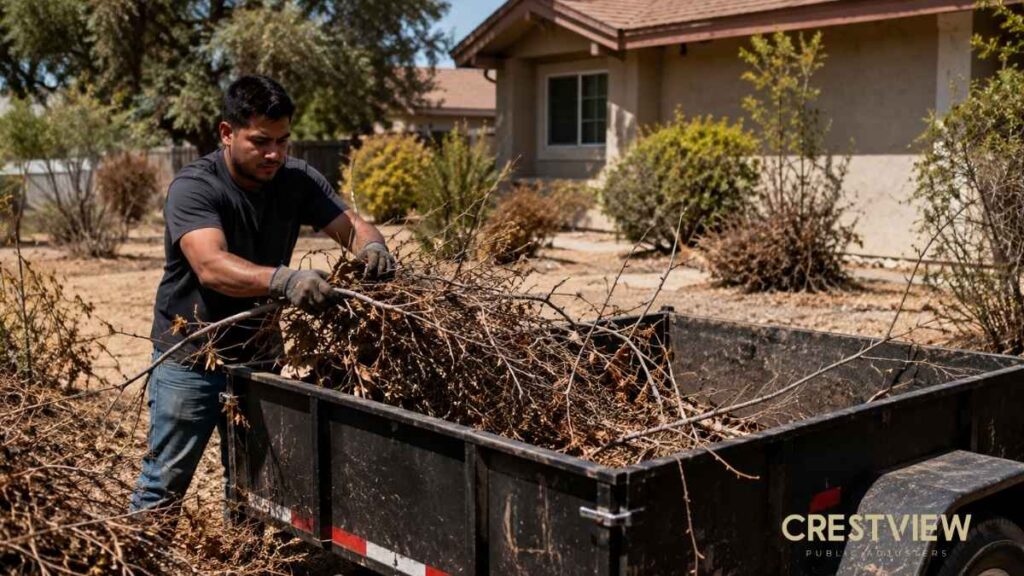
Start Property Fire Safety With the 30 Feet Closest to the Building
The area immediately surrounding your building is your primary defense zone. The New York State Department of Environmental Conservation, or NYSDEC, advises maintaining a 30-foot zone around all structures. This standard applies to homes, commercial spaces, and attached decks or fences. NYSDEC describes this area as the lean, clean, and green zone.
Whether your property sits near the wooded hills of the Catskills, the suburban neighborhoods of the Hudson Valley, or dense lots on Long Island and Staten Island, managing exterior fuel is essential for property fire safety.
- Clear away dead plants, dry leaves, pine needles, and overgrown brush close to the building.
- Stack firewood, lumber, cardboard boxes, and plastic trash bins far from your siding and decks.
- Clean out dry debris from gutters and roof valleys before the dry spring and autumn seasons.
- Keep lawn grass mowed short and well watered during dry spells.
- Inspect wooden fences, detached sheds, and separate garages that could pull a fire toward the main building.
Watch New York Dry Weather Hazards Before Outdoor Fires Spread
Weather directly impacts how easily a fire ignites and spreads. NYSDEC maintains a live Fire Danger Map that tracks seasonal risks across the state. The state issues a Red Flag Warning when high temperatures, strong winds, low humidity, and dry fuel occur. These conditions cause new fires to spread with extreme speed.
Paying attention to these dry weather hazards helps you stop accidents before they happen. This proactive approach forms the foundation of effective wildfire prevention in vulnerable regions.
- Check the state fire danger map before you begin brush clearing, outdoor cooking, or property maintenance.
- Stop all burning of yard debris during high-risk periods and obey local town burn bans.
- Postpone outdoor construction work that creates sparks during official Red Flag Warning days.
- Walk your property after high winds to clear out newly formed piles of leaves and twigs.
- Require your landscaping crews to haul away cut brush instead of leaving piles near structures.
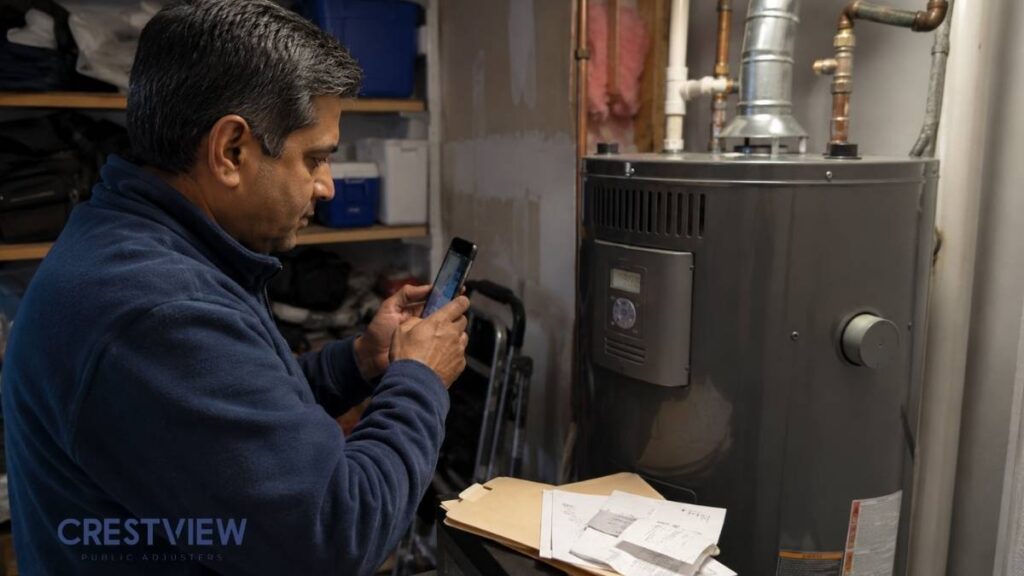
Reduce Indoor Fire Risk Before It Turns Into Smoke and Contents Damage
Interior fire risk management, much like winter damage prevention, protects both the building structure and your personal belongings. Smoke, soot, and strong odors easily travel through air ducts, walls, insulation, and closets. This airborne soot ruins electronics, clothes, and business inventory located far from the actual flames.
- Position portable space heaters at least three feet away from curtains, bedding, papers, and furniture.
- Discard and replace electrical cords that feel hot to the touch, spark, or show frayed insulation.
- Plug large, high wattage appliances directly into wall outlets instead of thin extension cords.
- Clean out clothes dryer lint traps after every load and clear the main vent line annually.
- Remove stored boxes and clutter from commercial kitchens, laundry facilities, boiler rooms, and electrical closets.
- Keep written proof of all professional maintenance done by licensed electricians and heating technicians.
Build a Home Fire Preparedness Plan That Also Supports a Claim
Properties need smoke alarms inside bedrooms, outside sleeping areas, and on every level. Test these alarms monthly, replace the batteries yearly, and replace the whole unit every 10 years. Your home fire preparedness plan must also include an escape strategy with two distinct ways out of every room.
Where Property Fire Safety Records Should Be Stored
Where do you keep important files right now? Paper records left in a desk drawer can easily burn. Move your policy declarations, appraisals, and invoices to secure cloud storage to preserve your property fire safety records. Keep a backup copy off-site. Update these files after renovations or equipment purchases. For business owners, backup inventory lists, leases, and tax records to help verify future business interruption claims.
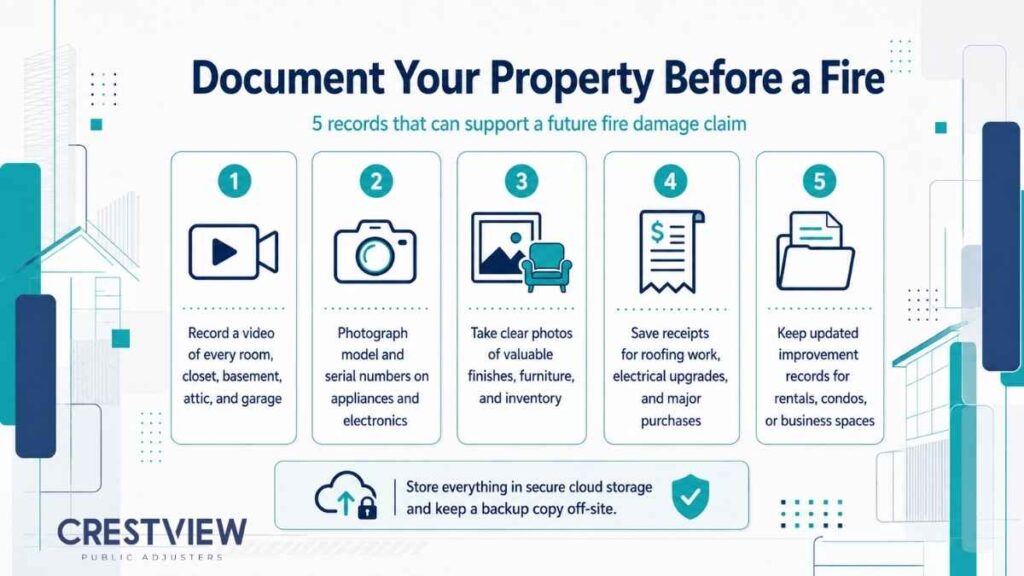
Document the Property Before Any Fire Damage Insurance Claim Exists
Proving the pre-loss condition of your building and personal items remains your responsibility during a claim. Following these fire insurance tips provides undeniable proof of what you own.
- Record a slow, detailed video walking through every room, closet, basement, attic, and garage.
- Capture clear close-up shots of model and serial numbers on appliances, HVAC units, and electronics.
- Take high-resolution photographs of expensive finishes, custom cabinetry, flooring, and specialized business inventory.
- Save digital copies of receipts for recent roofing work, electrical upgrades, and major furniture purchases.
- Collect updated improvement records from tenants if you manage a commercial property, condo, or co-op building.
For New York owners, prevention records can help show what the property looked like before the loss. At Crestview, we help homeowners and business owners organize fire damage claim documentation, review policy details, and prepare for insurer questions after a covered loss. Call us to request a free claim assessment before signing paperwork or accepting a settlement.
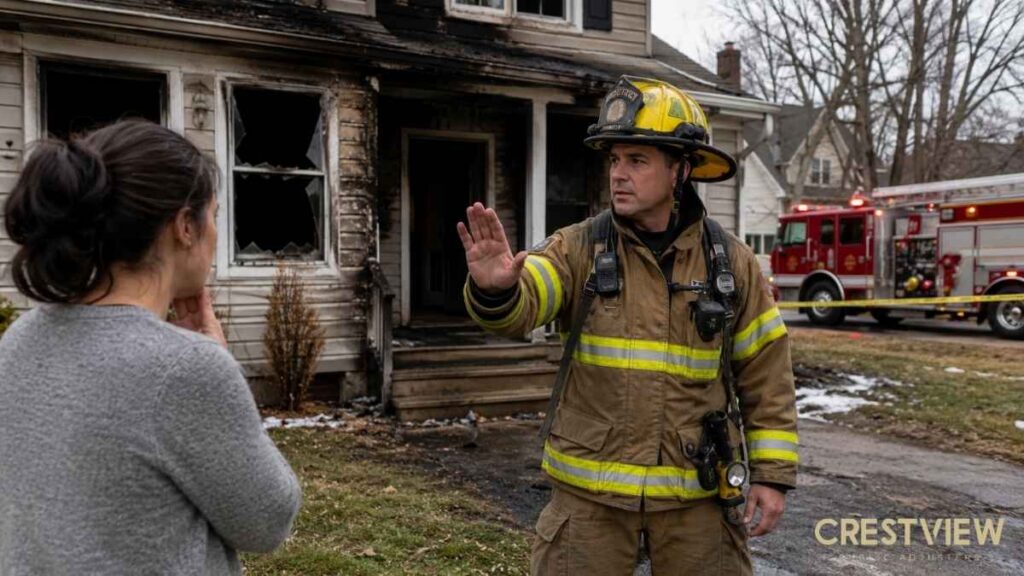
Know What to Do After a Fire Without Hurting the Claim
The choices you make immediately following a fire affect your financial recovery. You must notify your insurance company quickly, confirm the notice in writing, and take immediate steps to protect the property from further damage. Following professional public adjuster advice during these early hours prevents simple administrative mistakes from delaying your payout.
- Wait for local fire officials to formally declare the building safe before you step inside.
- Photograph all visible structure and contents damage before anyone begins cleaning the site.
- Leave burned, smoke logged, and water damaged items on the property until the insurance company logs them.
- Board up broken windows and secure tarps over damaged roofs to prevent weather damage.
- Save every receipt for emergency board up work, temporary lodging, emergency clothes, and meals.
- Request that your insurance adjuster provide the exact policy sections used to make coverage decisions.
FAQs About Property Fire Safety
Does New York homeowners insurance usually cover fire and smoke damage?
Most homeowners policies cover fire and smoke damage, but specific policy limits, deductibles, and exclusions dictate your final payout. Property owners must review their declarations page and personal property limits before a disaster occurs to avoid coverage gaps.
Should I file a claim for a small kitchen fire if the smoke spread through the house?
Yes. Small kitchen fires frequently cause widespread soot, structural odor, and hidden ductwork damage throughout the building. Document every impacted room before starting any cleanup, compare your estimated repair costs against your deductible, and report the loss quickly.
Can New York property owners make temporary repairs before the insurance inspection?
Yes. Owners can make emergency temporary repairs to secure the building, such as boarding windows or tarping roofs. Take clear photos before and after performing any emergency work, save all receipts, and avoid permanent structural repairs until the inspector arrives.
Protect Your Property Before Fire Damage Changes the Claim
Completing fire prevention tasks provides New York property owners with a safer building, better documentation, and fewer insurance disputes. An accessible digital file filled with clear photos, equipment receipts, and safety records answers carrier questions before delays occur.
At Crestview Public Adjusters, we help homeowners, business owners, landlords, co-op boards, condo associations, and commercial property owners across New York, New Jersey, Florida, and Pennsylvania with fire damage insurance claims. Call (551) 316-7204 or submit the claim form to request a free claim assessment. Our team will review the loss details, explain what records may help, and discuss the next step.