
Key Points:
- A fire damage insurance claim needs records of conditions before, during and after smoke, soot and water cleanup.
- Matching room names and item numbers helps connect photos with inspection reports and invoices.
- Coverage depends on the policy, and urgent safety work should not wait for a finished inventory.
A soot-covered cabinet can look different after one cleaning visit. For a fire damage insurance claim, the records should show its original condition, the work performed and any damage that remains. The same applies to smoke-affected rooms, heating systems and water-soaked belongings.
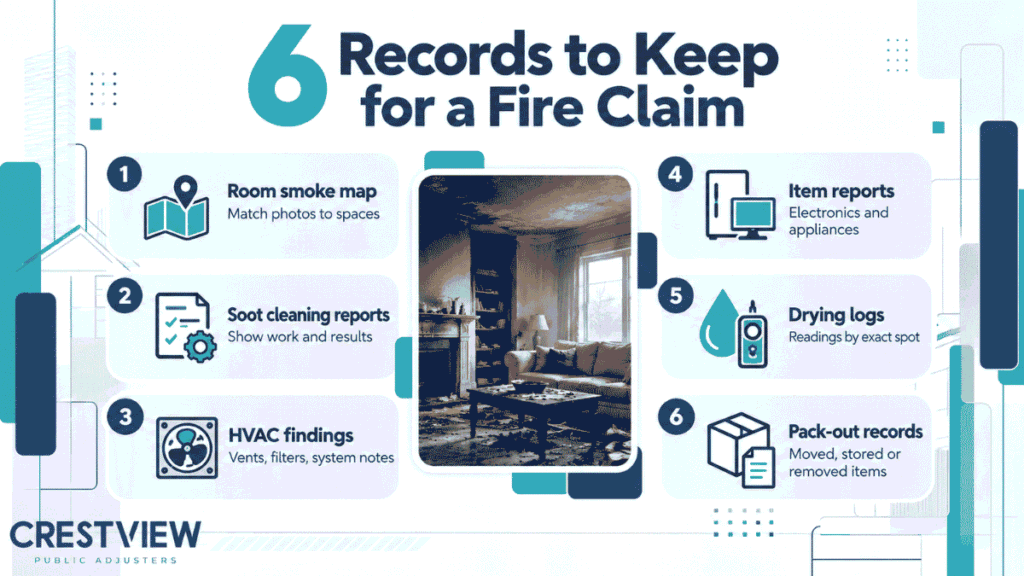
November’s heating season adds a concern for New York and New Jersey owners: whether a fire-affected heating system is safe to use. These six records help track cleanup as crews inspect, clean, dry and move property. The partial-loss fire claim guide covers broader repair and filing questions.
What Comes Before Fire Cleanup Records?
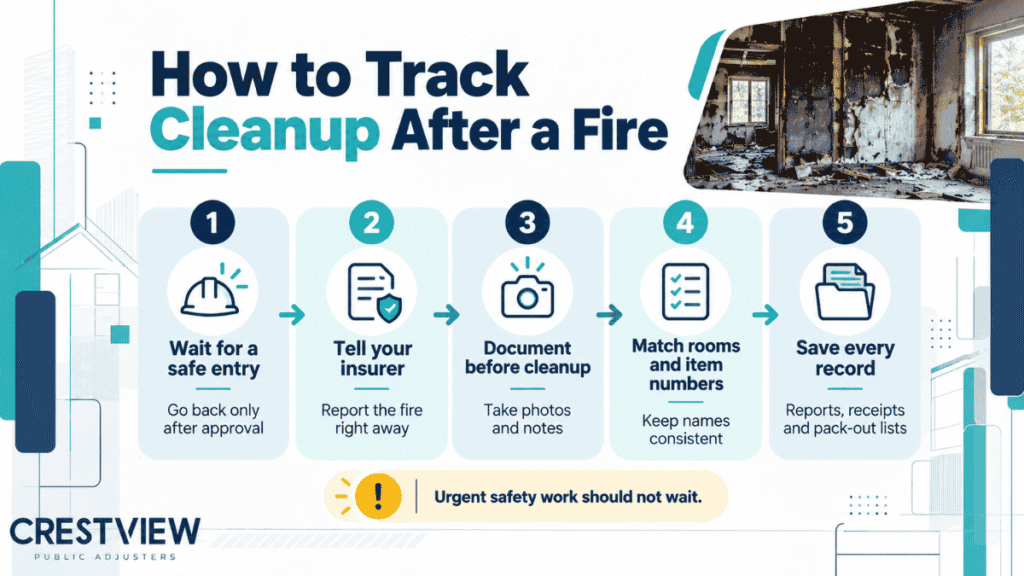
Safety comes first. The fire department must say the property is safe to enter before anyone returns. Soot and firefighting water can contain harmful substances, and damaged floors or walls may be unsafe. Utilities that responders disconnected should remain off until the appropriate professionals restore them.
Your insurer needs prompt notice of the fire. A completed inventory can follow. Necessary emergency work should protect people and prevent further damage; photos should never delay that work. New Jersey’s steps after a property loss distinguish temporary protection from permanent repairs, which must wait for the insurer’s review.
1. A Room Map Showing Smoke Conditions
A room map connects smoke observations to specific spaces. A simple floor sketch can label the kitchen, hallway, closets and nearby rooms, with matching names on photos and inspection notes. A multi-unit property also needs unit and floor numbers.
The photo record should include wide views for location and close views for visible staining. Odor notes need dates and locations because a photograph cannot capture a smell. Professional findings can explain conditions that pictures alone cannot establish.
In a Toms River fire claim we handled, flames damaged two units and smoke affected neighboring spaces. We worked with building consultants, engineers and architects to document the restoration needs. The example shows why each affected unit needs its own records as cleanup progresses.
2. Before-and-After Soot Cleaning Reports
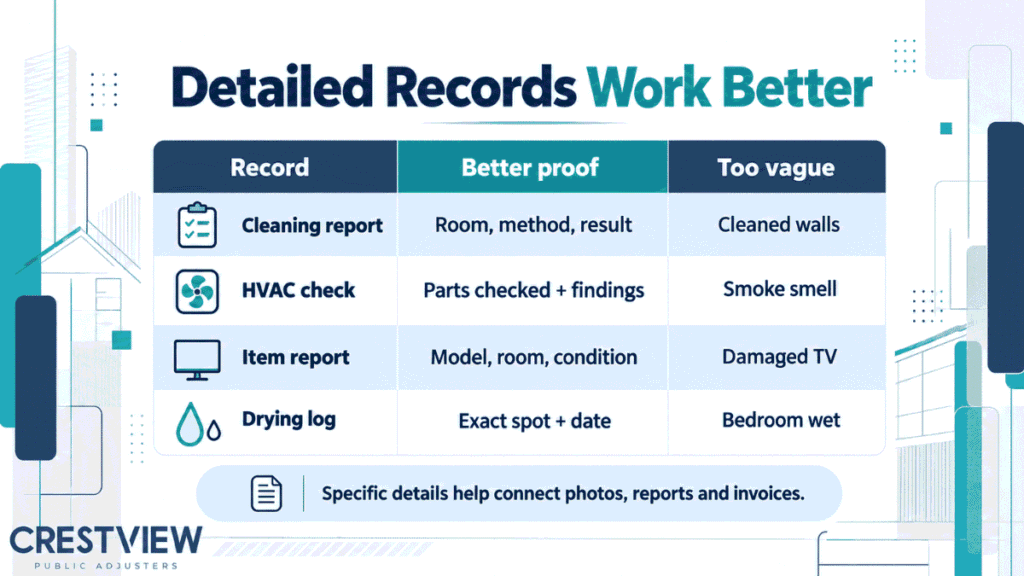
A soot cleaning report should describe the affected surface, the treatment and the result. An invoice saying “clean walls” leaves out which rooms crews treated and whether residue remained.
The restoration contractor’s record can include:
- The room, surface and material, such as painted drywall or a cabinet finish.
- Photos before treatment and after the surface dried.
- The cleaning method and date.
- Any remaining staining, odor or surface damage.
- The reason for recommending more cleaning, repair or replacement.
For example, a cabinet test area may still show staining after treatment. A dated photo and the restorer’s explanation give the insurer a specific condition to review. Owners should leave cleaning tests to qualified professionals.
Smoke damage coverage depends on the policy and circumstances. The cleanup record supports the review; it does not establish coverage by itself.
3. HVAC Inspection and Service Findings
An HVAC report should identify which heating and cooling components the technician inspected and what they found. Visible residue near a vent alone cannot establish the condition of the whole system.
The report can identify filters, return vents, ducts and equipment by location. Photos, any testing results and the technician’s reasons for proposed work help explain whether the recommendation involves cleaning, repair or replacement. Areas the technician could not inspect should appear in the report too.
EPA recommends asking duct cleaning providers to show the contamination behind their recommendations. After a fire, that request helps connect the proposed work to documented findings.
Through our fire damage claim support, we compare contractor findings with the insurer’s repair scope, meaning its list of proposed work. Heating-system safety decisions belong with qualified technicians.
4. Item-Level Reports for Electronics and Appliances
Electronics and appliances need records that identify the item and explain its condition. An exterior photo can show residue without establishing whether internal parts need attention.
A contents entry can pair the brand, model and serial number with its original room, post-fire photos and a technician’s assessment. Commercial stock also needs product descriptions and quantities. Any cleaning or repair report should refer to the same item number as the inventory.
For example, “office printer, item O-12” should remain O-12 on the technician’s report and cleaning invoice. Consistent numbering helps prevent one item from appearing as several losses or disappearing between records. Testing should follow the technician’s safety advice; owners should not power on affected equipment to check it themselves.
5. Moisture Readings and Drying Logs
Water damage after a house fire needs a record of where the water went and how crews addressed it. Hose or sprinkler water can affect floors, walls, ceilings and belongings beyond the burned area.
Drying records should identify the material and measurement location. A reading labeled only “bedroom” gives less information than one tied to the bedroom’s north wall.
| Cleanup Record | Details to Request | What It Helps Explain |
|---|---|---|
| Initial moisture survey | Date, room, material and measurement location | Where crews found moisture |
| Drying log | Dated readings and equipment locations | Changes during drying |
| Removal record | Photos, materials removed and the contractor’s reason | What changed during emergency work |
| Completion report | Final readings and the contractor’s assessment | Why crews ended drying or recommended more work |
Your drying contractor can explain what the moisture readings mean for each material. On an ice dam claim our team handled, we used moisture readings to track where the water had spread. The insurer’s estimate left out damaged flooring.
After a fire, I’d compare the drying log with the repair estimate room by room. If the log shows that crews dried the hallway floor and the estimate leaves it out, ask the insurer how it accounted for that area.
6. Records of Items Moved, Stored, or Removed
A pack-out list tracks belongings that crews move offsite for cleaning or storage. It should connect each item or labeled box to its original room and destination.
A tracking list includes:
- Item or box number and description.
- Pickup date and original room.
- Cleaning company or storage location.
- Treatment performed and reported results.
- Return date and condition, or a documented disposal decision.
Water-soaked rugs, smoke-affected clothing and other contents should keep the same identifiers throughout this process. A pickup list confirms movement; a cleaning report explains treatment. Neither document alone shows the full history.
New York DFS recommends documenting damage before cleanup and retaining emergency repair receipts. When urgent safety work requires removal, contractor photos and written explanations help record what happened. The insurer should have an opportunity to inspect damaged property when safe and practical.
A hypothetical entry might follow “bedroom rug B-04” from its wet condition through pickup, cleaning assessment and return. That record is more informative than an invoice listing only “contents services.”
FAQs About Fire Damage Insurance Claims
Where can I get the fire department report?
The responding department can explain its records request process. In New York City, FDNY’s report request process requires online requests for fire incident and fire marshal investigation reports through NYC OpenRecords. Other NY and NJ departments may use different procedures.
What if the fire destroyed my purchase receipts?
Credit card statements, retailer order histories and older photos may help support the inventory. New York DFS lists receipts, credit card statements and other value records as supporting documents. Accurate descriptions should identify details you cannot verify.
Should I send original records or copies?
Copies let you retain a complete set for later questions. Your insurer can specify its submission requirements. A saved copy of each upload or email, with the submission date, helps you track which documents the insurer has received.
Request a Fire Claim Documentation Review in NY or NJ
Fire cleanup records should connect the condition crews found with the work they performed and any damage that remains. Before the next claim review, missing room labels, item numbers or contractor explanations deserve attention.
At Crestview Public Adjusters, we represent policyholders in New York and New Jersey. We review policies, damage records, contractor estimates and insurer scopes. Your request for a free claim assessment can include the photos and reports already available.
Our team can help identify which parts of your fire claim documentation need further support.