
Key Points:
- An AC water damage claim needs evidence connecting the equipment problem to the affected property.
- Technician reports should describe the observed fault, repairs, and any limits on identifying when the leak began.
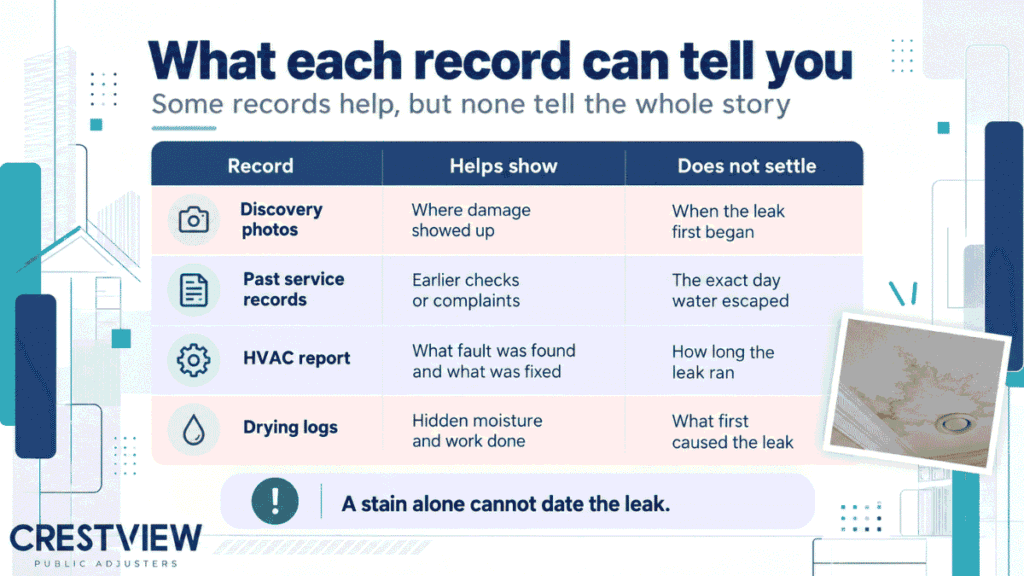
- A stain or moisture reading alone cannot establish how long water escaped.
A ceiling stain can be an unwelcome surprise as summer ends. Your air conditioner may have run through August, but a damp wall becomes noticeable in September. An AC unit water damage claim in New York starts with recording what you know about the leak and the damage.
The discovery date may differ from the date water first escaped. That gap can leave you wondering what to tell your insurer. An honest account can include unknown dates, supported by records showing what happened before and after you found the problem.
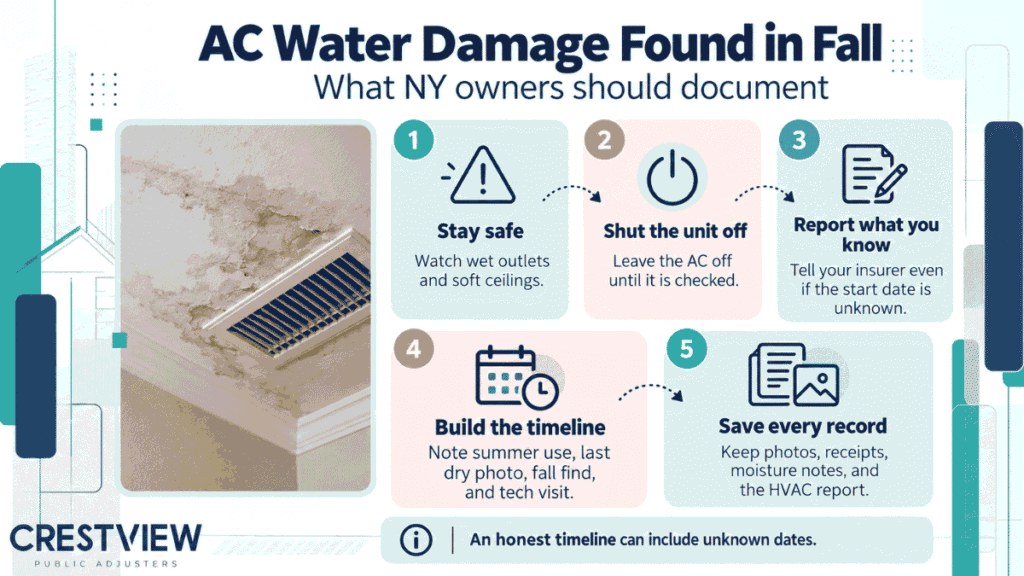
What Should You Do When You Find AC Water Damage?
An active AC leak needs attention even when the cooling season is winding down. These priorities help protect people, limit further damage, and preserve records:
- Safety: Wet electrical equipment, nearby outlets, and sagging ceilings require caution. Qualified professionals should address unsafe conditions before anyone approaches for photographs.
- Leak control: The unit should stay off until an HVAC technician checks it, provided you can operate the controls safely.
- Insurer notice: Your insurer needs prompt notice under your policy’s instructions. An unfinished inspection should not delay reporting what you know.
- Damage records: Photos taken when safe, emergency repair receipts, and notes about your first discovery can support the claim.
New York DFS recommends prompt claim reporting and written communication records. The exact leak-start date can remain unknown when you first report the damage.
Build a Timeline From Summer AC Use to Fall Discovery
An AC leak timeline separates confirmed events from unanswered questions. Each entry should identify what happened, when someone observed it, and which record supports it.
| Event | Record That May Help |
|---|---|
| Last time the room looked dry | Older photos or inspection notes |
| Last known AC operation | Thermostat history or building records |
| First sign of moisture | Dated photos, messages, or notes |
| HVAC inspection | Technician’s findings and invoice |
| Insurer notification | Email, claim number, or call record |
| Drying and repairs | Contractor reports and work dates |
Which Dates Tell Different Parts of the Story?
A hypothetical condo owner photographs an unstained ceiling in August, stops using the AC in mid-September, and notices a brown mark several days later. A technician visits the following morning.
Those dates establish a sequence. The August photo shows the ceiling’s visible condition then; it cannot establish whether moisture was already hidden above it.
At Crestview Public Adjusters, we review damage records and policy terms as part of our water damage claim support. The timeline helps organize the available information for that review.
Which Records Can Help Explain When the AC Leaked?
Records from before discovery can answer questions that a new inspection cannot. A July service invoice may describe a drain inspection, while an August maintenance request may mention dripping.
Past HVAC invoices, repair emails, system alerts, and dated photographs can help establish what people observed. Building managers may also hold access logs or earlier complaints. Original files should keep their dates, with later explanations recorded separately.
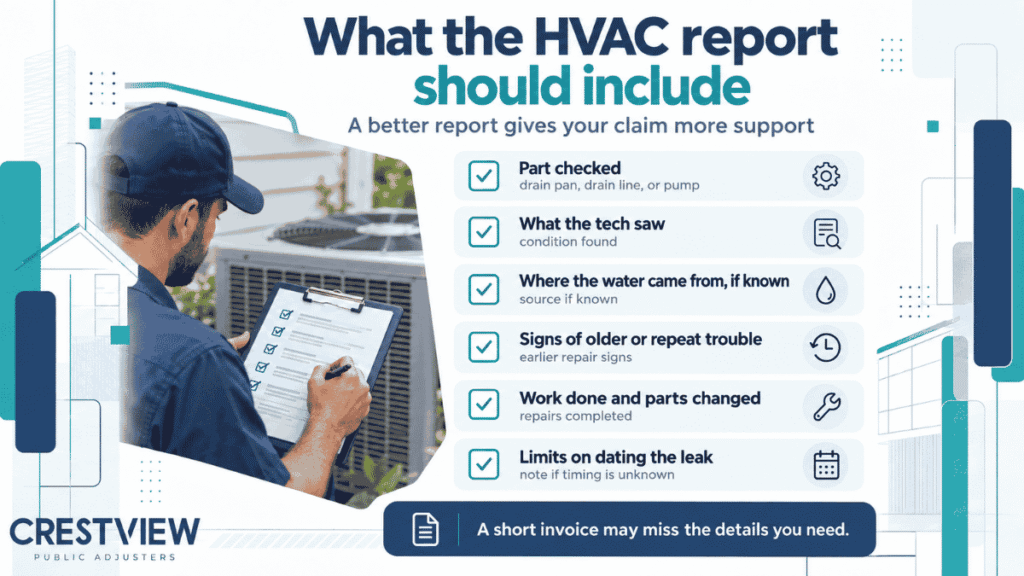
What Should an HVAC Technician’s Report Include?
A report stating “drain cleaned” confirms a service visit but leaves the original condition unexplained. More detailed notes can identify:
- The inspected component, such as the drain pan, drain line, or pump.
- The condition the technician observed.
- The identified water source, if known.
- Evidence of previous repairs or recurring problems.
- The work completed and parts replaced.
- Any limits on determining when the leak began.
A condensate drain carries away water collected during cooling. A blockage in that line is one possible finding; the technician’s observations should establish the actual problem.
Owners with properties across the state line can also consult our New Jersey HVAC water damage claim guide for its maintenance and repair record checklist.
Document Hidden Water Damage During Drying
An AC leak may affect more than the first stain. Water can reach insulation, flooring, trim, and spaces behind walls. A drying professional can assess areas that need further inspection.
A room-by-room record helps connect each affected area to the work performed. The record can include:
- Wide photos showing the room and close photos showing damage.
- Photographs of wet materials exposed during necessary repairs.
- Initial moisture readings with the tested locations identified.
- Drying logs, equipment dates, and follow-up readings.
- Contractor notes describing materials removed.
Moisture readings show conditions at the time of testing. Drying logs track those conditions during the work.
The EPA recommends drying water-damaged areas and items within 24 to 48 hours to help prevent mold growth. Necessary safety work and drying should not wait for an insurance inspection; photographs and contractor records can document that work.
Does Finding an AC Leak in Fall Change Coverage?
Fall discovery does not automatically determine insurance coverage. The cause, duration, damaged property, and policy wording still need review.
New York DFS includes accidental discharge or overflow from air-conditioning systems among the events addressed by certain homeowners policy forms. Your own policy’s exclusions and conditions govern the claim. Sudden releases, repeated leakage, and maintenance problems may receive different treatment.
The failed AC component and surrounding property damage also raise separate coverage questions. A worn drain pan may need replacement even when the insurer separately reviews damage to the ceiling below it. Homeowners insurance can distinguish appliance repairs from damage caused by a leak.
Our policy review connects these questions to the documented loss. A maintenance invoice helps describe equipment condition; it does not guarantee coverage.
AC Leak Records for New York Condo and Co-op Owners
A leak in a shared building may involve records beyond your apartment. Building management might hold the first complaint, equipment service history, or reports from another affected unit.
A condo owner can request the incident report, preserve management emails, and identify affected units or common areas. For example, water above one owner’s ceiling may require access to equipment in another space before anyone can confirm the source.
Building insurance and individual coverage may address different property. New York DFS distinguishes condominium building coverage from unit-owner insurance. The policies and building documents determine responsibilities; co-op arrangements may differ. Management notification also does not replace notice to your own insurer when your policy requires it.
What If the Insurer Questions How Long the AC Leaked?
An insurer’s question about leak duration needs a specific response. Your written request can ask which observations and policy wording support its concern.
For example, an invoice saying “blocked drain” may identify the repair without explaining the condition found. The technician may have photographs or inspection notes that add detail. Any later report should identify when the technician prepared it and which observations came from the original visit.
Our public adjusters represent the policyholder. We can review the insurer’s explanation alongside the available evidence and help prepare a documented response. Missing information should remain identified as unknown.
FAQs About AC Unit Water Damage Claims in New York
Can I document the leak if the technician already discarded the damaged part?
A missing part does not erase the remaining records. The invoice, technician’s notes, and any photographs may still describe its condition. Your claim file should accurately state that the part is no longer available.
Can a video help if individual photos miss the room layout?
A video can show how the AC equipment, stained ceiling, and affected flooring relate to each other. Close photographs can capture details that the recording misses. Your insurer can explain which file formats and submission methods it accepts.
What if I find more damage after reporting the claim?
New damage findings should reach your insurer promptly under the claim’s reporting instructions. Updated photographs, contractor findings, and a revised repair estimate can explain the addition. Your insurer can confirm whether another inspection is needed before permanent repairs proceed.
Review Your AC Leak Records With Crestview
An AC leak found after summer can leave gaps in the history. An organized file helps you see which events have support and which questions still need attention before the claim moves forward.
At Crestview Public Adjusters, we provide New York property claim support through damage inspections, policy review, documentation, estimates, and insurer communication. You can request a free claim assessment and share your discovery notes, technician report, photographs, and insurer correspondence.
Your first conversation can start with the records you already have.