
Key Points:
- Landlord records after a burst pipe in an apartment building should identify the failed pipe, affected units, shared areas, and emergency work.
- Tenant messages establish discovery times, while professional reports explain the source and spread of water.
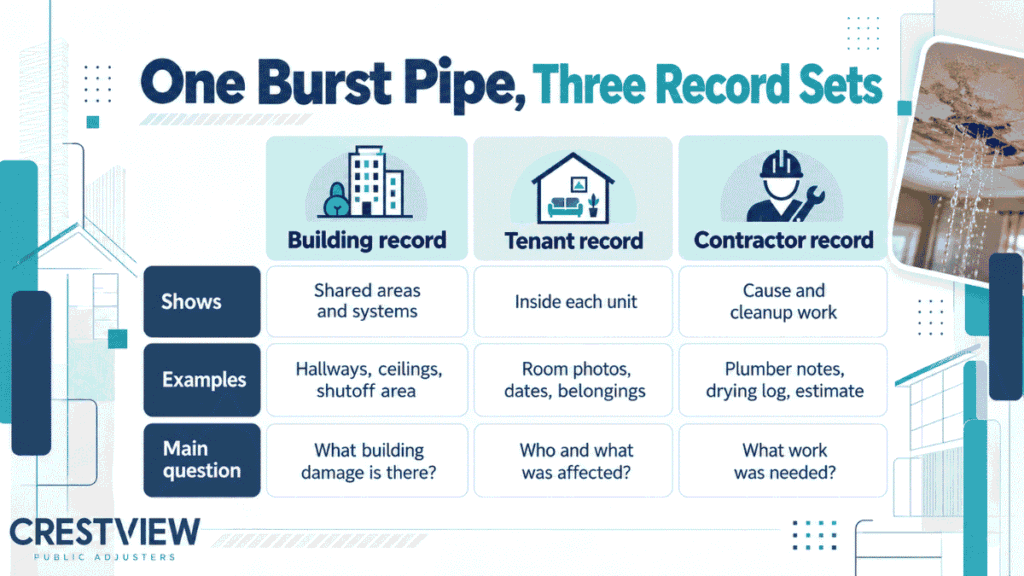
- Separate records for building damage and tenant belongings help keep different insurance claims organized.
A burst pipe in an apartment building can leave one landlord answering calls from several floors at once. New York and New Jersey owners should start one building timeline, then create a damage record for each affected apartment and common area. Coverage depends on the cause and policy terms.
During the winter heating season, the file may also need records of heat, service visits, and empty units. The goal is to show what happened in each location without losing track of the building as a whole.
Safety and Claim Notice Come First
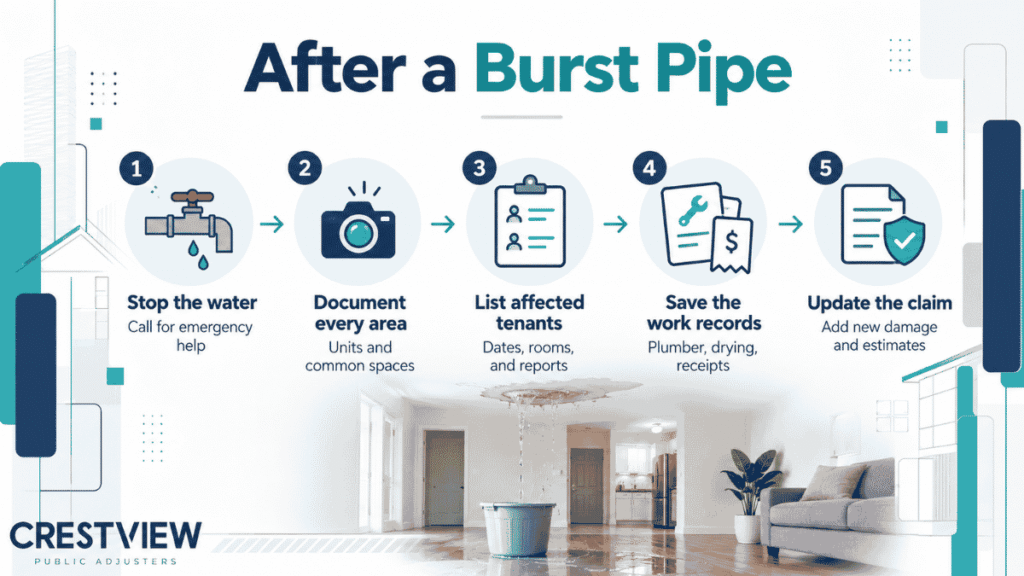
Personal safety comes before paperwork. Residents should stay away from wet electrical equipment, standing water near electrical sources, and sagging ceilings. A qualified emergency professional should handle unsafe water or power shutoffs. Water valves should only be approached when safe.
Landlords should report the loss promptly, even while other apartments still need inspection. New York DFS recommends prompt claim reporting and damage records. New Jersey DOBI also advises owners to report the loss and ask which documents the insurer needs.
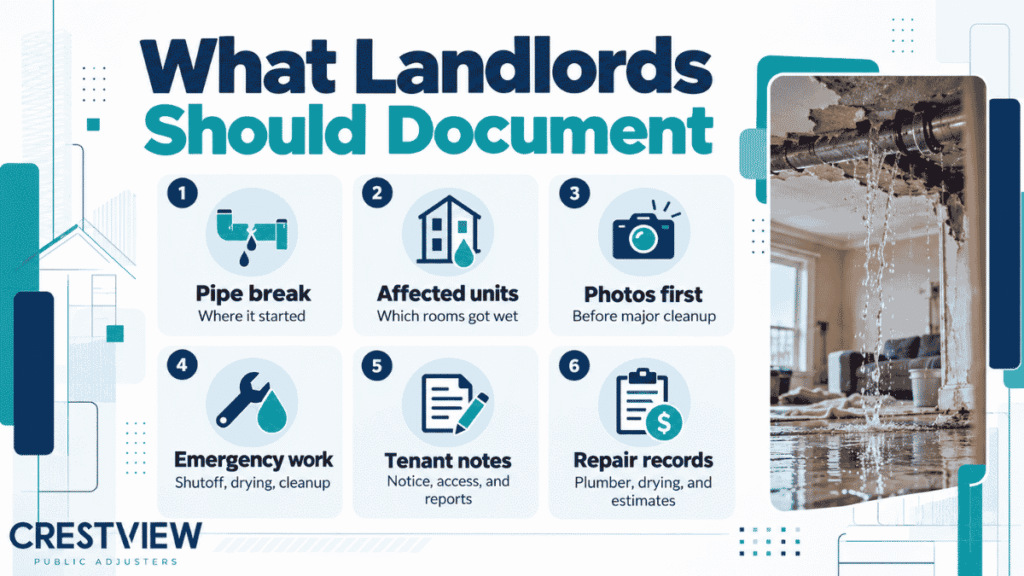
The initial entry should identify the discovery time, reporting person, suspected source, emergency contractor, and claim number. Photos should show conditions before cleanup when safe and practical. Necessary emergency work should not wait for a complete photo collection; receipts and contractor notes can document that work.
What Should Landlords Record for Each Apartment?
Each affected apartment needs a record that identifies its rooms, damaged materials, discovery times, and work completed. Consistent unit numbers and room names help everyone compare tenant messages, photos, and estimates.
A simple unit record can include:
- Location: Floor, apartment number, room, and wall or ceiling involved.
- Discovery: Date, time, and person who first noticed water.
- Visible damage: Wet surfaces, stains, loose paint, or swollen flooring.
- Photographs: Wide room views and close views with dates and location labels.
- Professional visits: Inspection, water removal, drying, and repair dates.
- Updates: Newly found damage, with its own discovery date.
For example, Apartment 4B might report water through the kitchen ceiling at 7:10 a.m. Apartment 3B might show staining at 8:00 a.m. Both can belong to one event, but the times describe different observations. Neither report alone establishes when the pipe broke.
Original photos should remain unchanged. A working copy can carry labels such as “3B kitchen ceiling,” while the original preserves the available date information.
Common Areas Need Their Own Entries
Hallways, stairwells, mechanical rooms, and shared systems should appear separately in the building list. An affected hallway should not disappear inside Apartment 3B’s folder. Reports about elevators, electrical equipment, or fire protection systems should come from qualified professionals.
Which Tenant Reports Help Establish the Timeline?
Tenant texts, emails, maintenance requests, and dated photos can establish when residents first saw water. The original message should stay with any summary so the sender, date, and wording remain available.
A short report should identify the apartment, room, observation, and time. For example, “Water started dripping through the bedroom ceiling around 8:20 a.m.” records an observation. A resident’s belief that the upstairs pipe froze still needs technical support.
Phone calls need a dated note identifying who called and what they reported. Approximate times should remain marked as approximate. Earlier maintenance requests also belong in the file, even when they mention a previous leak. A complete history helps professionals assess whether the damage relates to one event or separate problems.
I spoke with NBC News about ways owners can protect their buildings, including water leak detectors. If a detector sent an alert, save it with the tenant reports. The timestamp shows when the device picked up a problem. The plumber’s report can help explain where the water came from.
Building Damage and Tenant Belongings Need Separate Lists
The landlord’s file should identify building materials and other owner-owned property. Tenant clothing, furniture, and electronics need their own inventory. New York’s renters insurance information explains that a landlord’s property policy generally does not insure tenants’ possessions.
The distinction also appears in New Jersey’s consumer guide to renters insurance. Actual coverage depends on the relevant policies and circumstances. An ownership list does not decide who caused the loss or who may be responsible.
For example, the landlord may own a damaged refrigerator while the tenant owns the dining table beside it. Purchase records or the lease can help identify ownership. Tenant photos may still support the building claim when they also show wet flooring or wall stains.
What Should the Plumber and Drying Crew Document?
A plumber report for a burst pipe should identify the failed section, its condition, the inspection date, and the work performed. The report should distinguish observations from conclusions and state when the cause remains unknown.
Professional records answer different questions:
| Record | Details to Request | Question It Helps Answer |
|---|---|---|
| Plumber report | Pipe location, condition, findings, and repair details | Where did the pipe fail, and what evidence supports the cause? |
| Moisture report | Unit, room, tested material, reading location, and date | Which areas were wet when tested? |
| Drying records | Affected areas, equipment locations, dates, and progress readings | What drying work took place in each area? |
| Repair estimate | Room locations, measurements, materials, and proposed work | What building repairs does the contractor recommend? |
Winter records can include boiler service notes, thermostat history, heating complaints, and dates when units were empty. A heat setting alone does not establish the temperature beside the failed pipe. The policy’s freezing conditions still need review.
The distinction between sudden and accidental water damage and an older leak depends on evidence. Our frozen pipe claim support includes reviewing policy terms, damage records, and professional findings to help prepare the claim.
How Can Water Damage Across Several Floors Be Connected?
A multi-unit water damage claim should connect the confirmed source with affected rooms through photos, moisture findings, and professional observations. A floor plan can mark those locations. Unchecked areas should remain labeled as awaiting inspection.
In our Newark sprinkler-pipe case, a fifth-floor break damaged six floors below, including more than 40 apartments and common areas. Elevators and other building systems were also affected. We used moisture mapping to locate wet materials and 3D imaging to document the property.
That example shows why an inspection should extend beyond the room containing the pipe. Physical findings should support each connection. A nearby stain should not automatically become part of the same loss.
The Insurer’s Inspection Needs One Building List
The insurer’s adjuster needs an affected-area list that points to the supporting unit files. The list should also identify rooms awaiting access, completed emergency work, and areas needing further investigation.
On a New York City claim our team inspected, the contractor had already written an estimate before the walls were opened. We used moisture readings to see how far the water had spread. If part of your building still needs inspection, mark it on the list so the insurer knows which areas may need a closer look.
Later discoveries need dated photos and contractor findings where available. Updates should reach the insurer promptly, with a note explaining what changed. New Jersey DOBI recommends written claim notes and cooperation with the inspection.
Through our water damage claim support, we help owners organize damage information, prepare estimates, and respond to insurer questions. As public adjusters, we represent the policyholder. The insurer’s adjuster works for or on behalf of the insurance company.
FAQs About a Burst Pipe in an Apartment Building
Should the landlord keep the removed pipe section?
The failed section may help explain the break. The landlord should ask the plumber and insurer about safe storage and inspection before disposal. If retention is unsafe or impossible, photos and a written description can preserve details. Necessary emergency repairs should continue.
Can older photos help document a burst pipe claim?
Older photos can show a room’s condition before the loss. Move-in inspection photos or earlier contractor images may help compare existing marks with new damage. Their original dates should remain visible, with each image labeled as showing conditions before the pipe break.
How should one cleanup bill covering several apartments be recorded?
An itemized invoice should identify work by unit and list shared work separately. A contractor’s written breakdown can explain a combined charge. The master expense list should reference the original invoice once so the same charge does not appear several times.
Organize Your Apartment Building Burst Pipe Claim
A building claim needs a review of the places water reached, including shared areas and rooms still awaiting inspection. The affected-area list helps landlords identify missing reports before comparing the proposed repairs with the documented damage.
At Crestview Public Adjusters, we help New York and New Jersey owners review policies, document frozen-pipe and water damage, and prepare claim information. A free claim assessment can begin with the photos, tenant reports, and contractor records already available.
Your existing records are a starting point for that conversation.