
Key Points:
- A commercial HVAC water damage claim in New Jersey depends on proving whether the leak was sudden, accidental, and documented before cleanup.
- Business owners should preserve service records, photos, moisture readings, repair invoices, and tenant reports.
- Strong records help separate covered damage from gradual condensation or maintenance disputes.
Imagine walking into your commercial property on a Monday morning. You notice a dark water stain on the ceiling right next to an air vent. The office feels sticky and humid. A drain pan under the cooling unit spilled over a tiny bit, but it did not look like a big deal. hen, your tenants start complaining about wet carpets and visible water damage. Filing a commercial HVAC water damage claim New Jersey insurers will take seriously starts before the adjuster arrives. It starts with the warning signs your building left behind.
Why a Commercial HVAC Water Damage Claim New Jersey Businesses File Can Get Disputed
Insurance companies look at Heating, Ventilation, and Air Conditioning (HVAC) water claims with a magnifying glass. They want to answer one primary question. Did your cooling system break down all at once from an accident, or did the water leak out slowly over many months?
Commercial property insurance policies usually cover sudden accidents, but they often do not cover regular wear and tear or poor maintenance. This is why your building maintenance logs and repair bills matter so much.
New Jersey properties face a higher risk of moisture problems during the hot summer months. State climate statistics show that July 2024 was the seventh warmest July for the state since record-keeping began n 1895.
This extreme heat forces office buildings in Newark, retail shops in Edison, and large multi-unit buildings in Paterson to run their cooling units constantly. When machines work that hard, small weaknesses quickly turn into big leaks. If your service records are missing, your insurance company might claim the damage happened slowly over time and refuse to pay.
HVAC Water Damage Warning Signs Business Owners Miss Before A Claim
Many commercial property owners miss the early clues that an air conditioner is about to cause a flood. A commercial AC leak insurance claim NJ business owners file becomes stronger when early HVAC warning signs are dated, photographed, and tied to a clear source. The American Society of Heating, Refrigerating and Air-Conditioning Engineers (ASHRAE) states that proper inspection of lines, pans, and coils is necessary to stop moisture accumulation.
Here are the main warning signs you need to look for around your building:
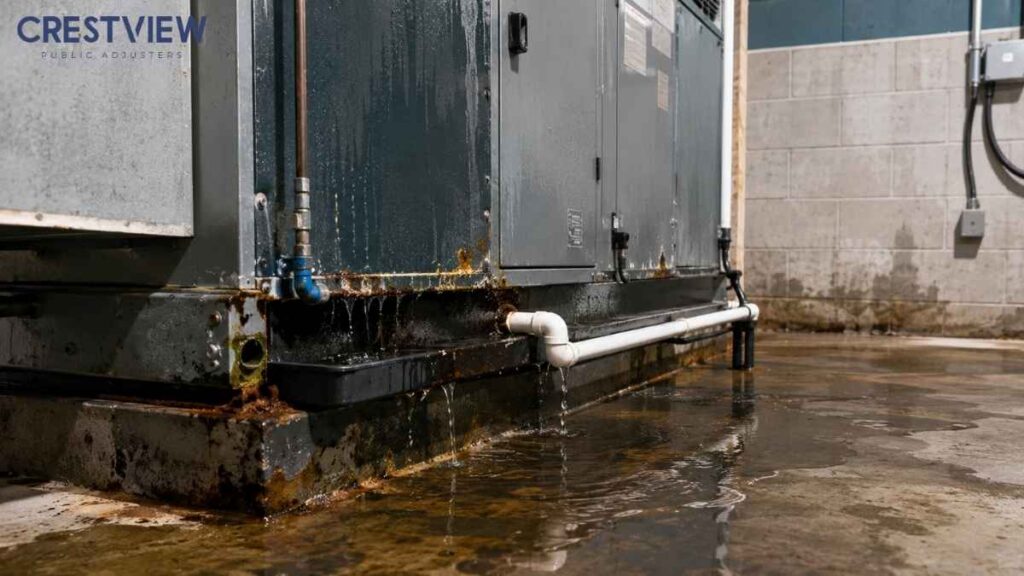
- Condensation pooling around the air handlers. Water puddling on the floor near the main cooling unit means drain lines are blocked, or your drip pan is cracked.
- Rust stains near ceiling tiles or duct runs. Orange or brown stains show that water has been dripping onto the metal or tiles for weeks.
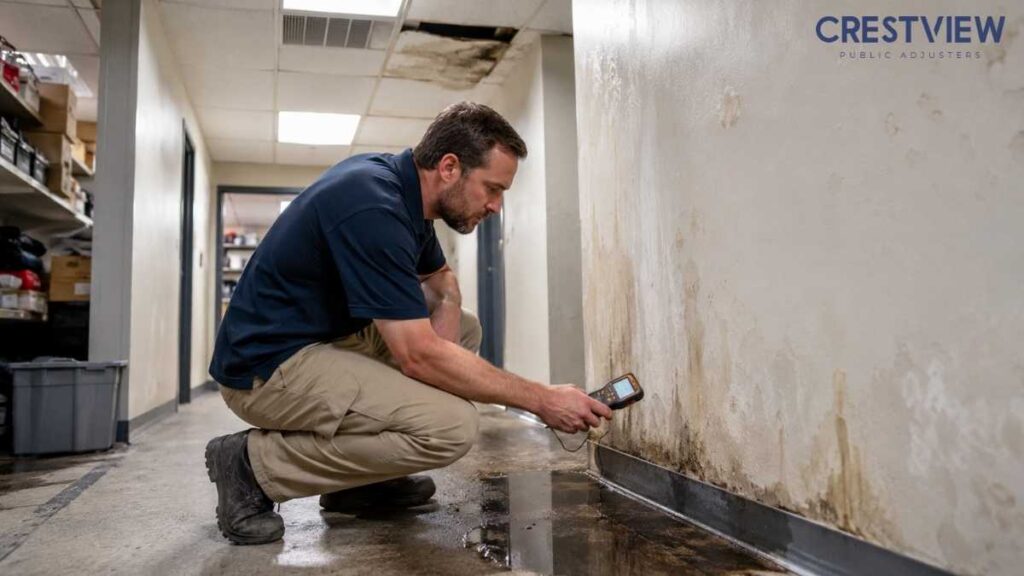
- Musty odors in occupied spaces. A strange, earthy smell usually means hidden mold damage has started inside dark ceiling spaces or behind drywall because of a hidden leak.
- Recurring drain pan overflows. If your maintenance team has to empty a full pan multiple times, you have an ongoing drainage problem.
- Higher humidity in cooled areas. When indoor air feels thick and clammy, the machine is failing to remove moisture from the air properly.
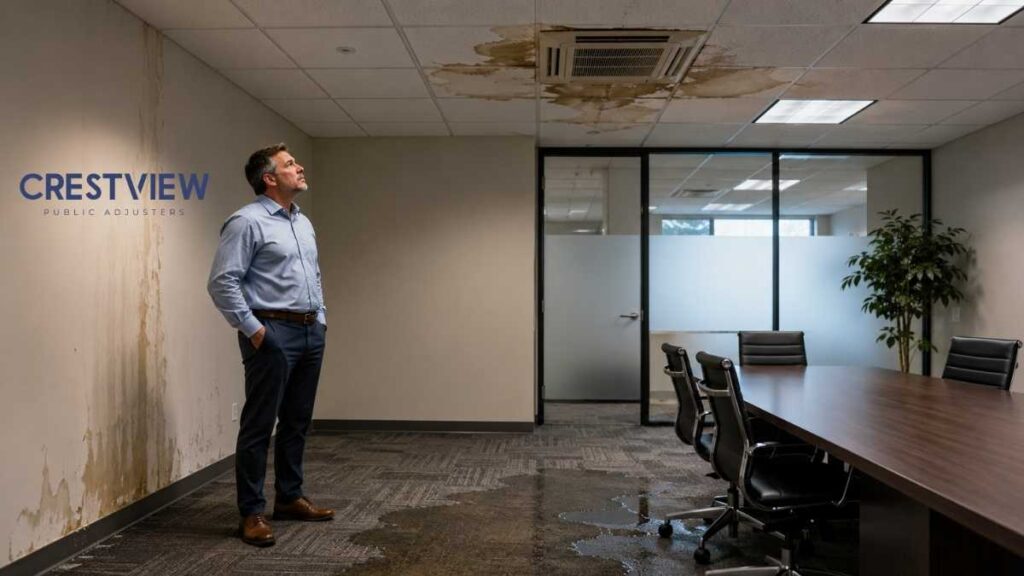
- Tenant complaints near the same HVAC zone. Pay close attention when workers or renters report damp carpets or water spots.
Ignoring these warning signs gives your insurance company the perfect excuse to deny your paperwork later.
Sudden Cooling System Failure Vs. Gradual HVAC Condensation Damage
Knowing the difference between a sudden accident and gradual wear helps you handle your paperwork correctly. Insurance companies view these two situations very differently.
| Claim Issue | Stronger Claim Signal | Claim Risk |
|---|---|---|
| Sudden condensate line break | Clear date, service report, immediate damage photos | Less dispute over timing |
| Drain pan overflow after recent service | Invoice, technician notes, photos | Insurer may ask about prior issues |
| Ongoing ceiling stains | Dated tenant reports, repair history | Insurer may argue gradual damage |
| Musty odor over weeks | Moisture readings, inspection report | Mold or maintenance exclusion concerns |
| Repeated humidity complaints | HVAC logs, service records | Insurer may question upkeep |
What Insurers Review in a Commercial HVAC Water Damage Claim New Jersey File
When you send in a request for repair money, the insurance company reviews specific items very closely. They will check:
- HVAC service records to confirm you took proper care of the machinery.
- Lease terms to find out who pays for ruined tenant property.
- Photos and videos taken before any cleanup crews changed the scene.
- Moisture readings to show exactly how far the water traveled.
- Repair invoices from your licensed contractor.
- Building maintenance logs to prove you inspect the property regularly.
How to Document AC Water Damage Business Owner NJ Claims Before Cleanup
When an air conditioning unit leaks, you must collect proof before anyone starts cleaning up. Tearing out wet carpets too fast can ruin your AC water damage business owner NJ insurance case. The United States Environmental Protection Agency (EPA) explains that cooling systems are directly linked to your indoor air quality, ventilation, and room comfort. This means your paperwork must prove how the water ruined the surrounding rooms.
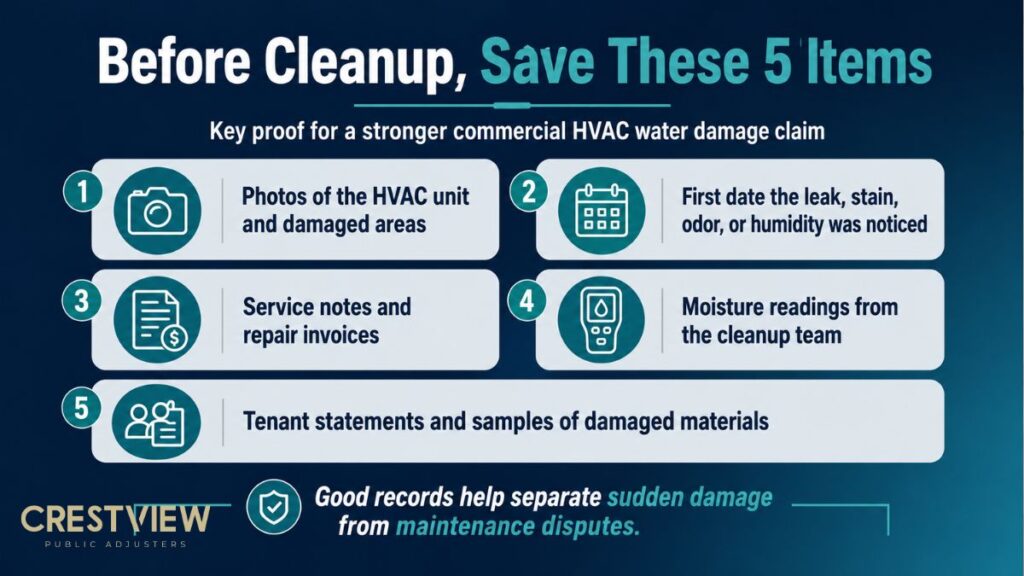
Follow these specific steps to keep your file strong:
- Photograph the HVAC unit, drain pan, ductwork, ceiling tiles, walls, flooring, and tenant areas.
- Record the first date anyone noticed the leak, stain, smell, or humidity issue.
- Save all invoices and written notes from your cooling technician.
- Keep pieces of the damaged materials, like a ruined ceiling tile.
- Request official moisture readings from your cleanup team.
- Separate emergency repair bills from long-term permanent repair estimates.
- Ask tenants for written, dated statements about the damage.
When to Bring in a Business Cooling System Damage Public Adjuster NJ Owners Can Work With
Managing a large property insurance loss takes a massive amount of time. If the insurance adjuster starts blaming your maintenance team instead of the broken line, you need professional support. A business cooling system damage public adjuster NJ owners can work with defends your rights and protects your money.
You should consider getting professional help if:
- The insurance company questions your building maintenance history.
- The water spreads and ruins expensive tenant property.
- The exact source of the leak is hidden deep inside a wall.
- The first insurance estimate misses hidden moisture.
- The building closure causes you to lose regular business income.
- The insurer agrees to fix the machine but ignores the ruined walls.
At Crestview Public Adjusters, we work with NJ business owners when cooling system leaks turn into disputed commercial property claims. We help document the HVAC source, affected building areas, repair scope, and claim file before the insurer defines the loss too narrowly.
FAQs About Commercial HVAC Water Damage Claims In New Jersey
Can a business file an insurance claim for a cooling system leak?
Yes, a business can file a claim for a cooling system leak when damage appears tied to a covered event under the commercial property policy. Coverage depends on the cause, timing, exclusions, maintenance history, and damage documentation.
What happens if my commercial AC leaks and damages tenant property?
Tenant property damage may involve the tenant’s policy, the building owner’s policy, lease terms, or liability questions. The building owner should document the HVAC source, affected units, tenant reports, photos, service records, and emergency repairs before the claim review.
Does business interruption insurance apply to HVAC water damage?
Business interruption insurance may apply when covered HVAC water damage forces a business to suspend or reduce operations. The claim usually needs proof of covered property damage, income loss, repair timing, expenses, and policy language that includes business income coverage.
Act Before the HVAC Leak Controls the Claim
HVAC water damage can start as a small ceiling stain, drain pan issue, or humidity complaint. Once the insurer reviews the file, missing maintenance records and weak documentation can shape the entire claim.
At Crestview Public Adjusters, we help New Jersey business owners document cooling system damage, organize HVAC service records, and present commercial property claims with the full loss picture. We serve policyholders across New Jersey, New York, Florida, and nationwide.
Call (551) 316-7204 for a free claim assessment and have your HVAC water damage file reviewed before the insurance company sets the terms. Crestview’s water damage page lists support for homeowners, condo boards, commercial owners, business owners, mold-related concerns, and business interruption review.