
Key Points:
- Frozen pipes, roof collapses, and ice dams are among the common types of winter property damage covered by insurance.
- Homeowners and business owners should review their policies closely to understand limitations and exclusions related to winter-related claims.
- Documenting damage promptly and working with public adjusters can help maximize insurance payouts after a winter loss.
Each winter, property owners face substantial risks from harsh weather. In fact, the Insurance Information Institute reports that winter storms caused an estimated $1 billion in insured losses annually across the U.S. Ice, snow, and freezing temperatures can turn routine maintenance issues into major claims. That’s why knowing what winter damage is typically covered by insurance is crucial for protecting your investment.
Common Types of Winter Property Damage Covered by Insurance
Most standard property insurance policies cover winter-related damages such as burst pipes, roof collapses from snow, and damage caused by ice dams, provided maintenance responsibilities were met. These protections help safeguard property owners from financial loss due to the unpredictable and sometimes destructive nature of winter weather.
What Types of Winter Storm Damage Are Typically Insured?
Winter storms can wreak havoc on both homes and commercial properties. Policies usually cover direct physical damage, but understanding the specifics matters.
Property insurance generally covers:
- Frozen or burst pipes that cause water damage to interiors.
- Roof damage or collapse due to excessive snow or ice accumulation.
- Ice dams that result in water backing up under shingles and leaking into the property.
- Wind damage from winter storms that tear off shingles, siding, or even knock over trees onto structures.
- Weight of snow or ice on outbuildings like sheds or detached garages.
That said, insurance typically won’t cover damage if the insurer determines it resulted from negligence—like failing to maintain heat or clear snow from roofs where feasible.
Does Insurance Cover Frozen Pipes and Water Damage?
One of the most frequent causes of winter claims is burst pipes. Water expands as it freezes, putting pressure on plumbing systems. Even a small crack can release hundreds of gallons of water per day.
Insurance usually covers sudden water damage from burst pipes, but not the cost to repair the pipe itself. However, if the insurer believes you failed to maintain adequate heat or insulation, the claim could be denied.
Here’s what’s typically included under water-related winter coverage:
- Water damage to flooring, walls, and ceilings.
- Replacement of damaged personal property like furniture or electronics.
- Mold remediation if addressed promptly and part of the initial covered loss.
How Do Policies Handle Roof Collapses and Snow Weight Damage?
Heavy snow and ice can put incredible strain on roofs. Standard homeowners and commercial property policies usually provide coverage when a roof or ceiling collapses under the weight of snow, ice, or sleet.
Coverage usually includes:
- Repair or replacement of the roof and structural components.
- Interior damage resulting from the collapse.
- Damage to contents inside the building.
However, insurers expect property owners to perform reasonable maintenance. If a roof was already in poor condition or improperly maintained, the insurer may limit or deny the claim.
Are Ice Dams and Resulting Leaks Covered?
Ice dams develop as melted snow flows down the roof and refreezes near the edges, creating a barrier that holds back water. That water can back up under shingles and leak into the structure, causing damage to walls, ceilings, and insulation.
Most policies cover damage from leaking caused by ice dams, but not the cost of removing the ice dam itself.
Typical covered losses include:
- Water damage to interiors.
- Repairs to walls, ceilings, and insulation.
- Replacement of damaged personal property.
Preventive measures—such as insulating attics and keeping gutters clear—are essential, as insurers may challenge claims linked to neglect.
Does Insurance Protect Against Winter Wind Damage?
Winter storms often bring powerful winds capable of tearing shingles off roofs, dislodging siding, and knocking trees onto structures. Wind-related damage is typically covered under standard property insurance.
This protection usually applies to:
- Repairs to exterior building damage (roof, siding, windows).
- Damage from falling trees or limbs (including removal if they damage covered structures).
- Water intrusion caused by wind-created openings.
Damage caused by fallen trees that don’t hit a structure may not be covered for removal unless they block a driveway or handicapped access.
What Winter Damage Exclusions Should Property Owners Watch For?
While policies cover many common types of winter property damage, there are important exclusions and limitations. Some scenarios where claims may be denied include:
- Damage from long-term leaks or seepage that develop over time rather than from a sudden event.
- Losses tied to negligence, like failing to maintain heat in an unoccupied property.
- Pre-existing damage that weakens a structure before a storm hits.
Reading your policy’s fine print can help prevent surprises when filing a claim.
Quick Examples of Winter Property Damage Typically Covered
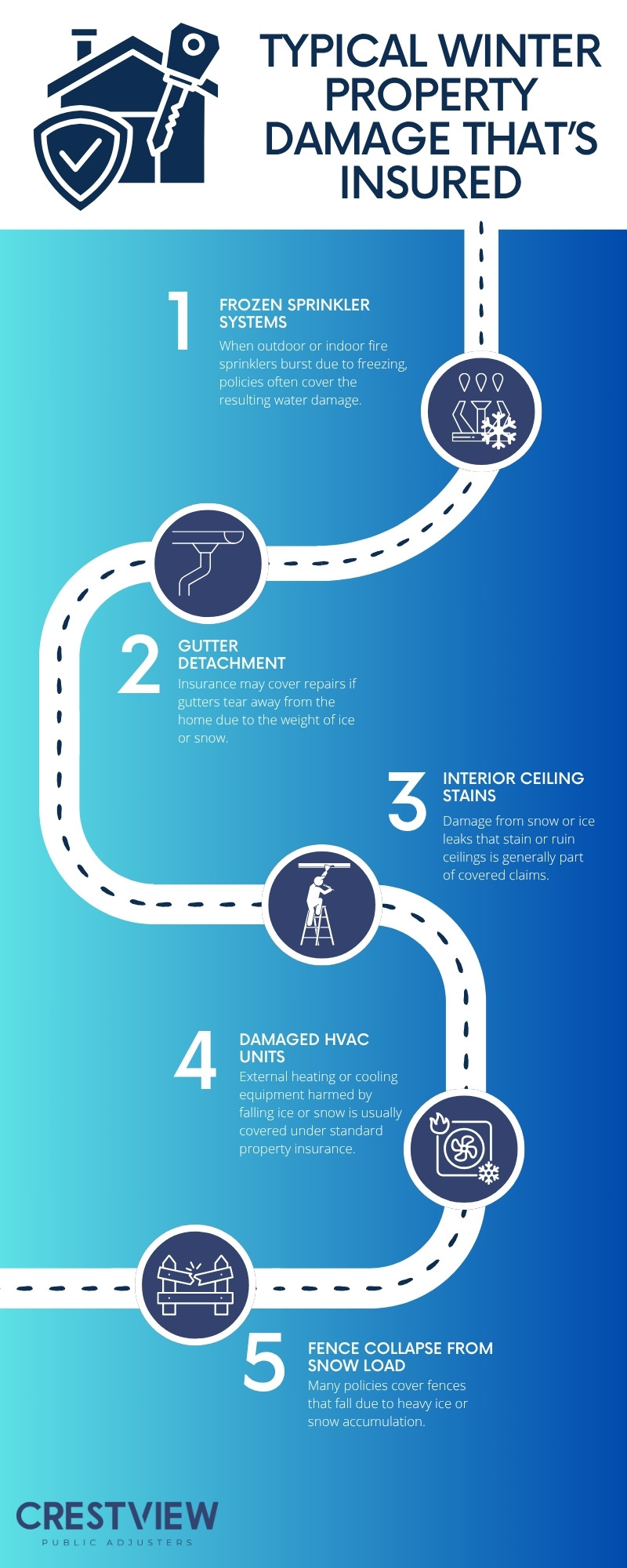
Winter often brings property damage that can happen fast—and the good news is, many of these incidents are typically covered by insurance. Quick examples include roof collapse from heavy snow, burst pipes due to freezing temperatures, and damage caused by ice dams. Fires resulting from overloaded heating systems or space heaters may also fall under your policy’s protection. Even fallen trees or branches that damage your home or garage during a winter storm are often included. Knowing what’s covered helps you act quickly and confidently when disaster hits.
Why Work with a Public Adjuster After Winter Property Damage?
Filing winter damage claims can be complex, as insurance companies often scrutinize whether damage resulted from sudden events or from maintenance issues. Public adjusters work on behalf of policyholders—not insurers—to fully document losses and negotiate fair settlements. They provide detailed documentation of all damage, handle communication and negotiation with the insurer, and help maximize the claim payout to cover necessary repairs. Their expertise is especially valuable when claims involve multiple types of damage or when insurers challenge parts of the claim.
Get Professional Help for Winter Damage Claims
Winter property damage can feel overwhelming, but you don’t have to navigate insurance claims alone. Crestview Public Adjusters offers expert assistance for winter damage claims in New York, New Jersey, and Florida. Our team helps property owners secure the compensation they deserve for winter losses—without the stress and hassle of dealing with insurers on their own.
Contact Crestview Public Adjusters today to get started with your winter damage claim and protect your investment.