
Last updated: October 20, 2026
Key Points:
- A frozen pipe insurance claim needs records connecting the broken pipe to the damaged property.
- Plumber findings and moisture readings can explain damage beyond what photos show.
- Heating records and the policy’s freezing conditions may also affect the insurer’s review.
Water dripping through a ceiling after a freezing night may mean a pipe has burst upstairs. A frozen pipe insurance claim starts with keeping everyone safe, stopping the water when safe, and notifying the insurer promptly. Coverage depends on the policy and the circumstances of the break.
For New York and New Jersey owners facing a winter leak, claim records can grow as professionals inspect the damage. A complete photo collection or repair estimate does not need to come before the first report.
What Should You Do First When a Frozen Pipe Bursts?
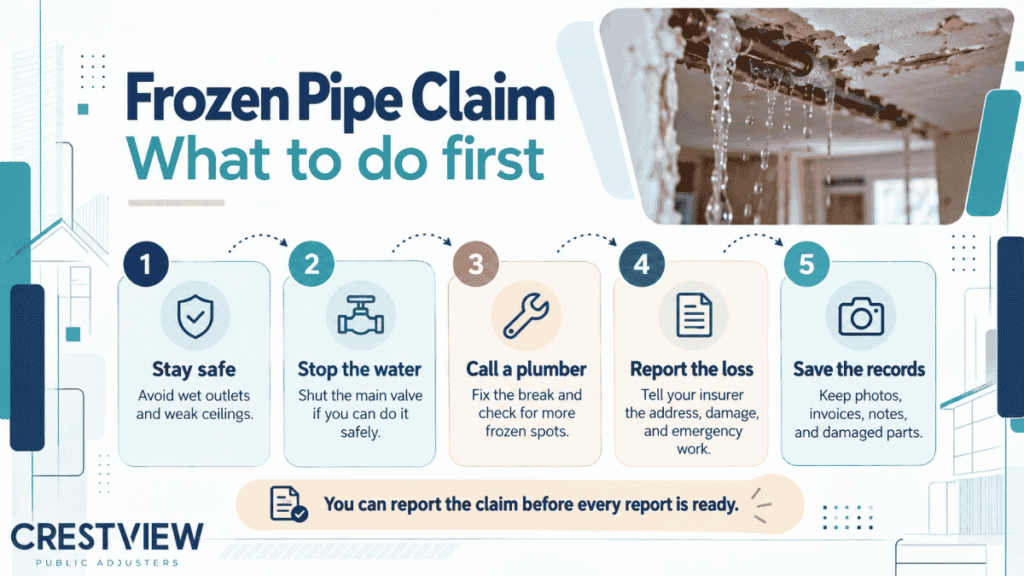
A burst pipe requires immediate attention because water can spread into walls, floors, and ceilings. Safety comes before cleanup, photographs, or insurance paperwork.
Stay Away From Water and Electrical Hazards
Water near outlets, appliances, or damaged wiring creates a risk of electric shock. No one should enter standing water to reach a breaker panel. The CDC’s electrical safety precautions explain that an electrician should handle the shutoff if reaching it requires entering water.
Sagging ceilings can also be dangerous. Everyone should stay away from affected areas until qualified professionals determine that entry is safe.
Stop the Water and Call a Plumber
The main water valve can stop more water from entering the damaged pipe, provided someone can reach it safely. A dry basement shutoff may be accessible even when a leak affects the kitchen above.
A plumber should repair the break and check for other frozen sections. An open flame should never be used to thaw pipes.
When Should You Report a Frozen Pipe Insurance Claim?
The insurer should receive notice as soon as possible after discovery and immediate safety needs. Both New York’s claim-filing recommendations and New Jersey’s property-loss instructions call for prompt reporting.
The first report should include:
- Property address and policy information.
- Date and time of discovery.
- Broken pipe location, if known.
- Visible damage and emergency work already completed.
The account should describe what the owner observed. An unknown cause or failure time should remain unknown until evidence supports it.
The claim number, representative’s name, and instructions belong in the claim file. Written follow-up can confirm the owner’s understanding of a phone conversation.
Emergency Cleanup and Repairs
Necessary emergency work should not wait for the insurer’s inspection when delay would threaten safety or allow further damage. A restoration company can remove water, assess wet materials, and begin drying. Photographs taken before cleanup can preserve the original conditions when safe and practical.
The insurer should receive notice of emergency work. Contractor invoices should describe the services performed, and damaged pipe parts should remain available when safe to keep. The owner should discuss disposal of damaged belongings with the insurer before throwing them away.
Permanent rebuilding should wait until the insurer has inspected the damage or agreed to the work. New Jersey’s home insurance basics distinguish necessary temporary repairs from permanent repairs. Our water damage claim support includes reviewing damage records and repair estimates. Plumbers and restoration crews perform the emergency repairs and drying.
Records to Keep for a Frozen Pipe Claim
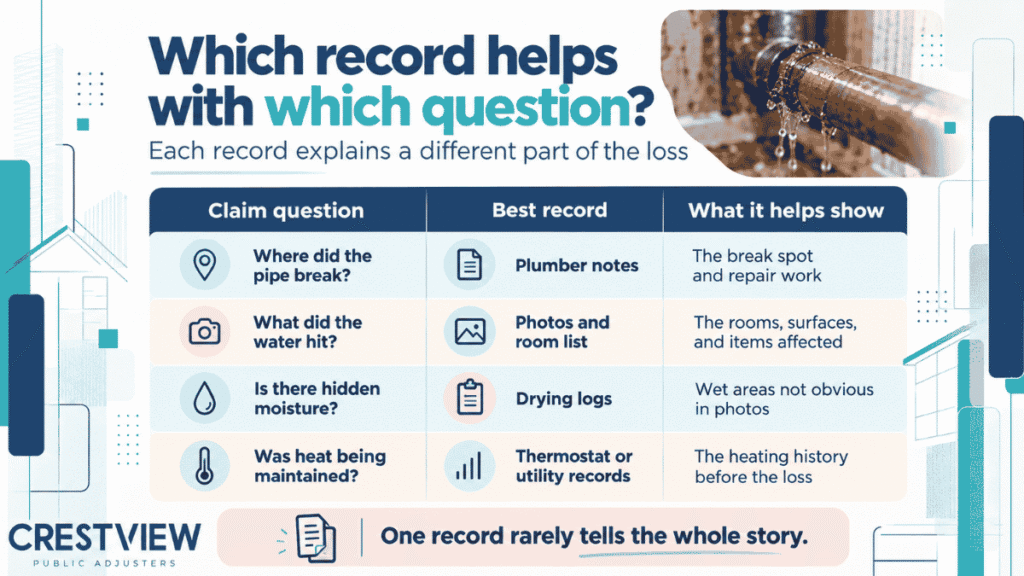
A claim file should explain where the pipe failed, what the water damaged, and what happened afterward. Some records become available only as workers inspect the property.
Photos and a Room-by-Room Damage List
Wide photos show affected rooms; close-ups show stains, swelling, and damaged belongings. Room labels help connect each picture to its location.
For example, a burst bathroom pipe may damage the kitchen ceiling, cabinets, and flooring below. A list should identify each affected surface and item, including damage workers uncover later.
Plumber Notes, Drying Records, and Dates
A plumber’s report can describe the damaged pipe, the likely cause when supported, and the repairs. Drying reports show where crews detected moisture. Dated notes help separate the discovery time from the estimated time of failure.
| Record | What It Shows | Why It May Help |
|---|---|---|
| Photos and videos | Visible damage and affected rooms | Documents property conditions |
| Plumber report | Pipe failure and work performed | Helps explain the water source |
| Drying records | Moisture findings and affected materials | Identifies damage beyond visible water |
| Damage timeline | Discovery, reporting, and repair dates | Connects important events |
| Heating or inspection records | Conditions before the loss | May help answer policy questions |
In our North Bergen frozen-pipe case, a frozen sprinkler pipe burst on the fourth floor of a newly constructed building. Water affected 14 units and reached a neighboring building. We inspected the property and documented the damage, showing why the review needs to extend beyond the room containing the break.
Does Insurance Cover Water Damage From Frozen Pipes?
Homeowners insurance may cover water damage from a frozen pipe that bursts. The NAIC’s explanation of burst-pipe coverage describes how sudden plumbing damage and reasonable steps to prevent freezing can affect the review.
The policy may treat these issues differently:
- Water damage and pipe repair: Coverage for damaged walls or flooring does not automatically establish coverage for replacing the pipe.
- Sudden breaks and ongoing leaks: A new burst may involve different policy terms from repeated seepage.
- Heat and occupancy: Freezing conditions may require reasonable care to maintain heat or protect plumbing when a building is empty.
A thermostat setting alone does not establish coverage. The actual policy wording and facts of the loss control the decision.
Our frozen pipe claim services include comparing those conditions with damage findings and available property records.
What Happens After You File a Frozen Pipe Claim?
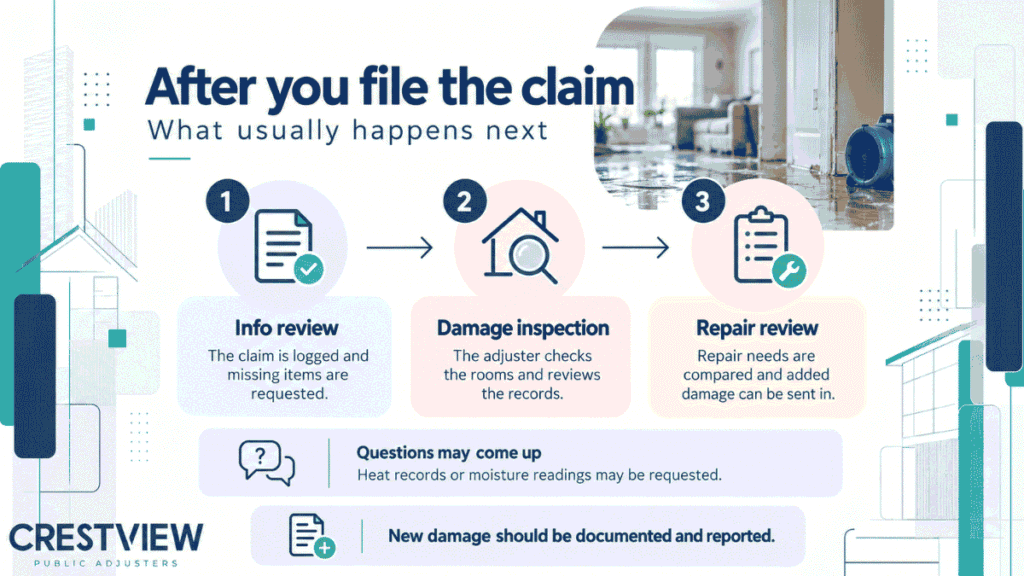
The insurer generally reviews the report, arranges any needed inspection, and requests supporting records. The process commonly involves three stages:
- Information review. The representative identifies missing documents and explains the next steps. Copies of submissions help the owner track what the insurer has received.
- Damage inspection. The insurer’s adjuster examines affected areas. Plumber findings and drying reports can help explain moisture or damage that is no longer visible.
- Repair review. The owner and contractor compare the insurer’s repair description with the work needed. Newly discovered damage should be documented and submitted for review.
A public adjuster represents the property owner; the insurer’s adjuster works for or on behalf of the insurance company. We inspect damage, prepare claim documentation and estimates, and communicate with the insurer on our client’s behalf.
Questions About the Cause or Damage
An insurer’s request for heat records or further inspection does not automatically mean a denial. A written explanation of the concern helps the owner respond with relevant evidence.
For example, a question about whether the building had heat may call for thermostat history, utility records, or heating-service reports. A disagreement about wet flooring may call for moisture readings and the contractor’s findings.
Our team reviews insurance correspondence alongside the policy and property records to identify issues that need further explanation.
FAQs About Frozen Pipe Insurance Claims
What if my pipe is frozen but has not burst?
A frozen pipe without a leak does not automatically create an insured property loss. A plumber can assess the blockage. The insurer can explain whether the policy covers any necessary work.
Does a landlord’s insurance cover a renter’s belongings?
A landlord’s building insurance generally does not cover a renter’s personal belongings. A renters policy may cover damaged possessions when the cause is covered. The tenant should notify the landlord and their own insurer.
Is the first claim report the same as a proof of loss?
The first report notifies the insurer of damage. A proof of loss is a separate formal statement the policy may require. The insurer can confirm the form and deadline. Our frozen pipe proof-of-loss checklist covers supporting documents.
Get Help Reviewing Your Frozen Pipe Claim Records
A frozen pipe claim can involve questions about the break, hidden moisture, and repairs across several rooms. The next decision is whether the records explain all the damage or leave specific questions unanswered.
At Crestview Public Adjusters, we help New York and New Jersey property owners review policies, inspect damage, and prepare frozen pipe claims. A free claim assessment lets us discuss the damage and explain how our claim support applies.
Your existing photos and reports are a starting point.