
Key Points:
- A detailed Proof of Loss form must include comprehensive documentation of damages, cause, and repair estimates.
- Supporting evidence like photos, receipts, and expert assessments strengthen your claim.
- Timely and accurate submission can prevent claim denials and delays.
Pipes that burst from freezing temperatures often leave homeowners dealing with extensive and costly repairs. Navigating the insurance claims process can be overwhelming, especially when preparing your Proof of Loss statement. Understanding exactly what to include can mean the difference between a smoothly paid claim and a long, drawn-out dispute.
What to Include in a Proof of Loss for Frozen Pipe Claims
A Proof of Loss for frozen pipe claims must present a complete, accurate, and well-documented account of the damages and their cause. This document essentially acts as your sworn statement, detailing the extent of the loss, how it happened, and the amount being claimed. Insurance companies use this to assess your claim’s validity and calculate payout amounts.
Why Is Proof of Loss Critical in Frozen Pipe Claims?
Insurance carriers rely heavily on your Proof of Loss to determine whether your frozen pipe damage is covered and to what extent. Inadequate or inaccurate information can lead to delays, reduced settlements, or outright denials.
Frozen pipes often burst behind walls, under floors, or in ceilings, causing widespread damage that might not be immediately visible. Without thorough documentation, insurers may question the extent or even the cause of the damage.
Providing a complete Proof of Loss helps:
- Establish the exact cause of damage (freezing vs. negligence or maintenance issues).
- Demonstrate the full extent of property damage.
- Justify the amount you’re claiming for repairs and replacement.
In frozen pipe scenarios, insurers often scrutinize whether reasonable care was taken to prevent the freezing, which is why detailed documentation matters.
What Documents and Information Should You Include?
Before filling out your Proof of Loss form, gather all relevant documents and evidence. The more organized and thorough you are, the smoother the process.
Here’s what you should prepare:
Policyholder and Property Information
Start with the basic details that tie your claim to your insurance policy.
- Your full name and contact information.
- Policy number and effective dates.
- Property address where the loss occurred.
- Date and approximate time of loss discovery.
This helps insurers confirm that you had valid coverage during the incident.
Detailed Description of the Loss
Clearly describe how the frozen pipe incident happened.
- Weather conditions leading up to the event.
- Actions taken to prevent freezing (insulation, thermostat settings, etc.).
- When and how you discovered the pipe burst.
- Immediate steps taken to mitigate further damage (shutting off water, contacting professionals, etc.).
Providing these details can address potential insurer concerns about neglect.
Inventory of Damaged Property
List every item damaged or destroyed due to the burst pipes.
- Structural damage (walls, ceilings, flooring, cabinets).
- Personal property (furniture, electronics, clothing).
- Plumbing system components.
- Appliances affected by water exposure.
For each item, include:
- Description
- Brand and model (if applicable)
- Purchase date
- Original purchase price
- Estimated replacement or repair cost
Using a spreadsheet can help organize this data effectively.
Repair Estimates and Contractor Reports
Attach professional assessments that validate the cost of repairs.
- Licensed contractor estimates.
- Plumbing repair invoices.
- Structural engineer assessments (if applicable).
- Water mitigation service reports.
Multiple estimates can strengthen your claim by showing fair market repair costs.
Photographic and Video Evidence
Visual documentation is one of the strongest supports for your claim.
- Photos of the frozen pipe, burst location, and resulting damage.
- Videos showing water intrusion, flooding, and affected areas.
- Before-and-after images, if available.
Make sure the timestamps are accurate to verify when the damage occurred.
Receipts and Financial Records
Include any expenses related to:
- Emergency services (plumbers, water extraction).
- Temporary lodging if your home was uninhabitable.
- Purchase of dehumidifiers or space heaters for mitigation.
- Materials used to protect the home from further damage.
Insurers may reimburse these under additional living expenses (ALE) coverage.
Expert Opinions and Third-Party Reports
Should disputes arise, third-party documentation can serve as unbiased support.
- Independent adjuster reports.
- Professional plumber certifications regarding cause of damage.
- Meteorological reports confirming extreme weather conditions.
These reports can help counter any insurer allegations of homeowner negligence.
How Detailed Should Your Proof of Loss Be?
Schedule annual inspections because the level of detail you include can significantly influence your claim’s outcome. It’s always better to over-document than to risk missing critical details. While insurance companies may not initially request every piece of information, providing comprehensive documentation upfront can prevent repeated requests for additional information, speed up the settlement process, and reduce the risk of partial denial due to insufficient documentation. Keep in mind that frozen pipe claims often involve not only water damage but also secondary effects such as mold growth, electrical hazards, and compromised insulation—all of which should be fully documented.
When Should You Submit Your Proof of Loss?
Most insurance policies specify a deadline for submitting the Proof of Loss, often ranging from 30 to 60 days after the loss is reported. Failing to meet this deadline can jeopardize your claim. That’s why it’s important to notify your insurer immediately after discovering the damage, start collecting documentation right away, and request an extension in writing if you’re unable to gather everything in time. Working with a public adjuster early can also help ensure that your Proof of Loss is filed accurately and within policy deadlines.
What Happens If Your Proof of Loss Is Incomplete or Inaccurate?
An incomplete or inaccurate Proof of Loss can lead to:
- Claim Denial: The insurer may argue that you failed to meet policy obligations.
- Delayed Payments: Missing information often triggers follow-up requests and prolongs settlement.
- Reduced Settlement Offers: Insurers may undervalue your claim due to lack of supporting evidence.
In many frozen pipe claims, disputes center on whether the homeowner took reasonable preventive measures. The more thorough your documentation, the stronger your defense against these challenges.
What Questions Do Insurers Commonly Ask About Frozen Pipe Claims?
During the claims process, expect your insurer to inquire about several key factors. They may ask about the preventive measures you took, such as whether you left the heat on or had the pipes properly insulated. They’ll also want to know if the home was vacant or unoccupied at the time of the incident. The timing of your discovery and reporting of the damage will be another point of interest, as well as any maintenance records you have that show a history of properly maintaining your plumbing systems. Your Proof of Loss should proactively address these questions wherever possible.
Do You Need a Public Adjuster for Frozen Pipe Claims?
While you are not required to hire a public adjuster, many policyholders benefit greatly from professional assistance, especially for frozen pipe claims where damages can be extensive and complex.
A public adjuster can:
- Ensure all damages are fully documented.
- Prepare a thorough Proof of Loss that meets policy and legal requirements.
- Negotiate directly with the insurance company on your behalf.
- Identify coverages you may have overlooked.
- Defend against partial denials or lowball offers.
Frozen pipe claims often involve multiple layers of damage — structural, personal property, and additional living expenses — which makes the expertise of a public adjuster invaluable.
Can You Amend a Proof of Loss After Submission?
Yes. Many states allow you to file supplemental Proof of Loss statements if additional damages are discovered later. This is particularly relevant for frozen pipe claims where mold or hidden structural damage may surface after initial repairs begin.
However, always check your policy language and state regulations, as some insurers may impose limits on amendments.
How Insurance Companies Evaluate Frozen Pipe Claims
Understanding how insurers evaluate your frozen pipe claim can help you prepare a stronger case. Here’s a breakdown of common factors:
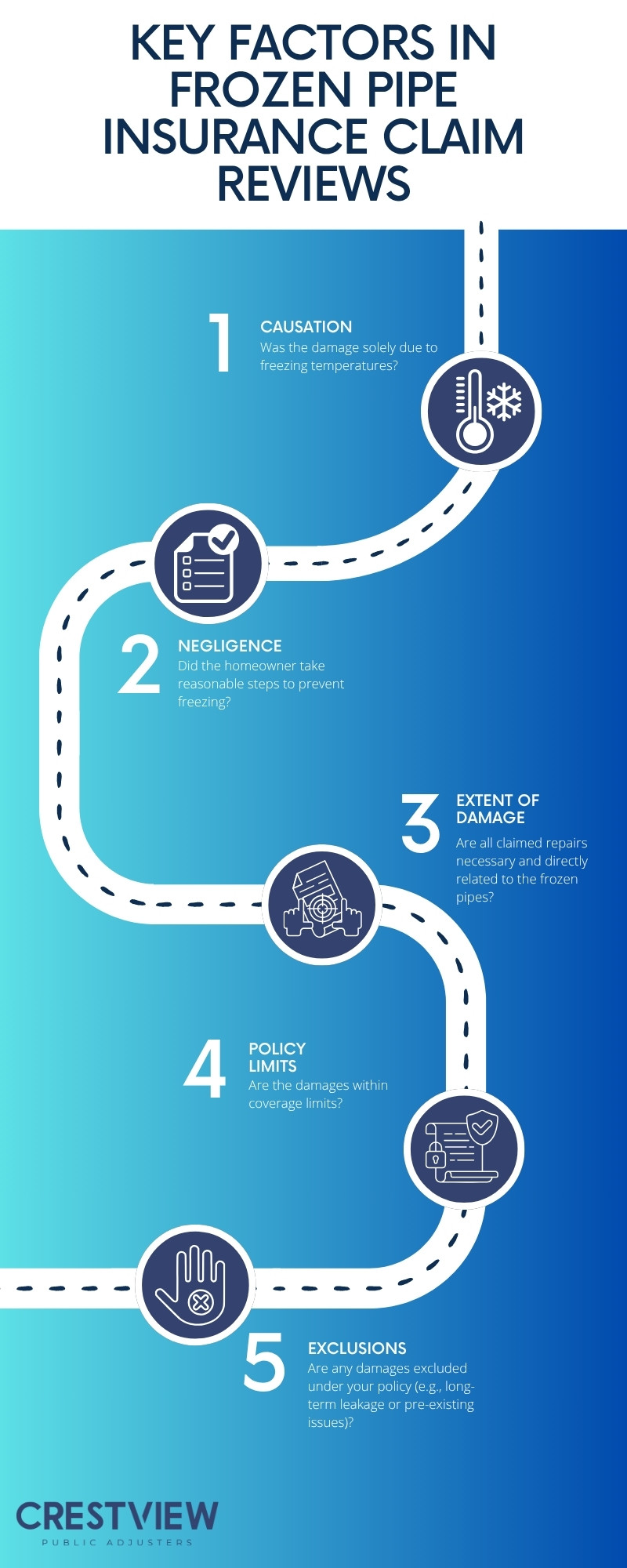
A well-prepared Proof of Loss addresses each of these points with clear documentation, leaving less room for the insurer to dispute your claim.
Precision Matters in Proof of Loss for Frozen Pipe Claims
Submitting a detailed and accurate Proof of Loss for frozen pipe claims is one of the most critical steps you can take to secure a fair settlement. Frozen pipe incidents can be devastating, but careful documentation helps ensure that your insurance policy responds as intended. Don’t underestimate the power of well-organized paperwork—it can save you thousands of dollars and months of frustration.
Get Expert Help for Your Frozen Pipe Claim Today
If you’re struggling to prepare your Proof of Loss or facing challenges with your insurance company, Crestview Public Adjusters is here to help. We specialize in navigating frozen pipe claims and ensuring policyholders receive the full compensation they deserve. Whether you’re located in Florida, New York, or New Jersey, our team has the expertise to advocate for your best interests. Contact us today for a consultation and let us handle the complexities of your claim while you focus on restoring your home.