
Key Points:
- A hurricane insurance checklist helps property owners confirm policy terms, flood coverage, deductibles, reporting contacts, and deadlines before landfall.
- Owners should create dated photos, inventory belongings, and separate old damage from new losses.
- A post-storm plan should assign safe evidence collection, reporting, and receipt-tracking duties.
A hurricane insurance checklist gives New Jersey property owners a clear set of steps to complete before a storm hits. To protect your financial interests before landfall, confirm your policy terms, separate wind and flood records, document property conditions, inventory belongings, record existing damage, and prepare an offline reporting file.
Our team at Crestview Public Adjusters often speaks with owners who know their coverage limit but have never calculated their separate storm deductible or checked whether flood is listed under another policy. Those questions become much harder to answer when a hurricane damage claim involves both water and wind. Here are the seven tasks to check off before landfall.
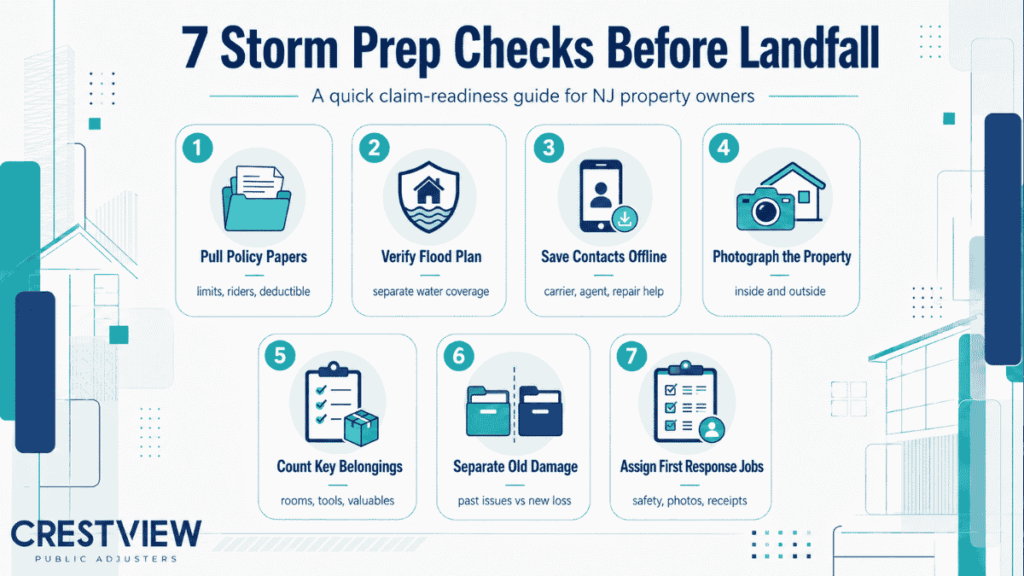
1. Start the Hurricane Insurance Checklist With the Policy Pages That Control the Claim
When storm warnings begin, gather your policy paperwork first. Locate the exact pages that dictate how your insurance company handles property damage.
Pull these documents from your records:
- The declarations page listing policy dates and coverage limits
- The main policy form outlining general duties
- Specific windstorm, hail, and hurricane endorsements
- Exclusions and special limit pages for valuable property
- Building and dwelling coverage sections
- Personal property or commercial stock provisions
- Additional living expense or business interruption terms
- Ordinance or law coverage riders
New Jersey Department of Banking and Insurance guidance states that policies may contain a separate optional or mandatory hurricane deductible or a wind and hail deductible.
A percentage deductible calculates from your total insured value, not the cost of repairs. If your building is insured for $500,000 and your policy has a 5% hurricane deductible, you absorb $25,000 before coverage kicks in.
Many owners assume their standard flat deductible applies to every storm, but endorsements often change those terms for named storm claims.
2. Confirm Whether Flood Coverage Is Already Active
Do not treat hurricane water damage as a single insurance topic. Property policies cover wind-driven rain through roof or window openings, but they exclude surface water entering from the ground.
When completing your hurricane season preparedness tasks in New Jersey, you should confirm whether flood coverage is active rather than assuming a standard policy includes it.
Keep these details together in your storm folder:
- The flood insurance carrier name and policy number
- Active policy dates and overall coverage limits
- Separate deductibles for building structures and contents
- National Flood Insurance Program or private flood policy records
Coastal storm surge threatens Jersey Shore communities, while heavy rain and rising rivers cause New Jersey flooding in inland areas. The state recommends reviewing flood protection even if your property sits outside designated high-risk zones. Check your active policies today, because adding new flood protection takes time to become active.

3. Save Every Reporting Contact and Policy Deadline Offline
When heavy storms knock out power lines and cell towers, accessing online portals becomes difficult. Build a physical storm folder and back it up on a mobile device that works without internet access.
Your reporting file should contain:
- Carrier names and direct claim numbers
- Online portal web addresses and login recovery details
- Local insurance agent contact information
- Policy numbers and exact property addresses
- Mortgage company loan details
- Emergency repair contractor phone numbers
- Written instructions for temporary repairs
If you own a condominium or townhome, save your personal policy information along with the association master policy contact. A single storm can affect building exteriors, common areas, and individual unit interiors simultaneously. Having both contacts ready prevents delays when reporting damage.
4. Create a Dated Record of the Property Before Conditions Become Unsafe
Walk your building and take photographs before tropical weather arrives. Pre-storm insurance documentation should show both undamaged areas and known defects.
Focus your photos on these areas:
- Exterior walls from every angle
- Roof surfaces photographed safely from ground level
- Siding, windows, entry doors, and garage doors
- Attic ceilings and visible structural framing
- Basement walls, floors, sump pits, and utilities
- Interior rooms, appliances, and built-in fixtures
- Existing stains, cracks, or unfinished repairs
Take wide images to establish location, then close-up shots of specific details. Keep original digital files unedited so time stamps remain intact. Combine these photos with recent inspection reports, repair receipts, permits, and contractor warranties.
One New Jersey shore claim we handled involved missing roof sections and water that reached insulation, ceilings, and hardwood flooring. Attic photographs, moisture readings, and room-by-room records helped show how far the water had moved. A pre-storm record gives that later evidence a clear starting point.
Policy pages and property records do not always tell the same story. Crestview Public Adjusters can review your declarations, endorsements, and available documentation before a storm affects the property. Send the records through our contact form, and our team will explain which insurance documents still need attention.

5. List Belongings, Equipment, and Property Ownership Before Items Are Moved
Proving what was inside a damaged building requires an itemized inventory. Go room by room before high winds arrive.
Include these details for major items:
- Room location and detailed item description
- Manufacturer brand name and model number
- Serial numbers for electronics and appliances
- Estimated purchase date and original cost
- Receipts, invoices, appraisals, or credit card records
- Clear photographs or video footage
Homeowners should document furniture, tools, clothing, and items stored in basements or garages. Business owners must record commercial equipment, active stock counts, leased items, and tenant improvements.
After Hurricane Ida, a long-term commercial tenant contacted our team at 6 a.m. after four feet of water caused commercial water damage inside the space while a business sale was pending. Current ownership, inventory, and transaction records become critical when storm damage and a business change happen at the same time.
6. Record Old Damage, Open Repairs, and Previous Claims Separately
Insurance adjusters inspect property closely after a storm. If your building has older water stains or ongoing repair work, document those conditions clearly before new damage occurs.
Gather these items in a dedicated file:
- Photographs of existing ceiling stains or wall cracks
- Invoices and contracts for open repair projects
- Claim numbers and estimates from past storm events
- Written notes showing when older damage occurred
Some owners ask if documenting old damage will hurt a new claim. An honest, dated record actually protects you. Showing an insurance carrier what existed before the storm helps prevent underpaid claim disputes over alleged pre-existing conditions.
Older homes, coastal rentals, and properties with past repair work benefit from keeping past records separate from new storm files.
7. Prepare the First Post-Storm Evidence Plan Before You Leave
Before evacuating or stepping away from your property, assign clear tasks for the post-storm response. Knowing how to prepare for hurricane season includes deciding who will manage initial evidence collection after conditions settle.
Your written plan should assign these roles:
- Who verifies that the building is safe to enter
- Who takes initial exterior and interior photographs
- Who collects receipts for emergency mitigation
- Who notifies the insurance carrier and mortgage lender
- Who contacts tenants, building managers, or association boards
Safety comes first. You should never climb onto a damaged roof, enter standing water, or handle compromised electrical systems to collect evidence.
A study on post-disaster preparation published in Disasters revealed that 35% of surveyed property owners did not plan specific actions after experiencing a major storm. Assigning roles in advance helps prevent missed details.
Following these storm preparation steps and maintaining a completed hurricane insurance checklist gives each person a defined task when the property can be inspected safely.
FAQs About the Hurricane Insurance Checklist
Should I send my pre-storm photos to the insurance company before there is damage?
Keep pre-storm photos in your private files and cloud storage. Insurers do not collect pre-loss photographs unless requested during a coverage review. A storm forecast alone does not open an active property insurance claim.
What should I do if I can’t photograph the roof safely?
Never put yourself in danger to take photos. Ground-level pictures, recent professional inspection reports, contractor estimates, building permits, and material warranties adequately establish your roof condition without taking physical risks.
Can Crestview review a claim if some pre-storm records are missing?
Yes. We review remaining documents and gather secondary evidence like contractor records, permits, bank statements, and moisture logs. One New Jersey shore claim relied heavily on attic photographs and room-level evidence to show the path of interior water damage.
Protect Your New Jersey Property Before the Forecast Becomes a Claim
Organizing policy declarations, property photos, inventory lists, and emergency contacts gives your claim a firm foundation before a storm makes landfall. Taking these steps early separates wind damage, flood issues, and pre-existing property conditions clearly.
At Crestview Public Adjusters, we review hurricane claim documents for homeowners, business owners, associations, and property managers across New Jersey, including shore communities and inland towns.
Call (551) 316-7204 or submit our online contact form with your property details. Our team will review your available records, identify missing insurance documents, and explain your next steps.