
Key Points:
- Insurance coverage for roof leaks after a snowstorm depends on the cause of the leak, such as ice dams or structural damage.
- Timely documentation and clear evidence of storm-related damage are critical to a successful claim.
- Public adjusters can help policyholders in Florida, New York, and New Jersey maximize their winter damage claims.
Most homeowners insurance policies do cover roof leaks after a snowstorm if the damage was caused by the weight of ice or snow, or if the storm directly compromised the roof’s structure. However, coverage can be denied if the insurer deems the leak the result of neglect or a pre-existing maintenance issue. It’s essential to understand what your policy includes so you can act quickly and effectively.
The Growing Impact of Snowstorm-Related Roof Damage
As snowstorms become more intense, roof leaks have emerged as one of the most common — and costly — issues homeowners face after heavy snowfall. Snow buildup, ice dams, and rapid freeze-thaw cycles can strain even a well-maintained roof. When melting snow seeps into your home, it can damage ceilings, walls, insulation, and personal property. Beyond the immediate mess, water intrusion can cause mold growth and structural weakening over time.
What Triggers Insurance Coverage for Roof Leaks After a Snowstorm?
Homeowners insurance typically covers sudden and accidental damage. When it comes to snowstorms, the following scenarios generally fall under coverage:
- Weight of snow or ice: If heavy snow accumulation causes your roof to collapse or crack, your policy should cover the resulting damage.
- Ice dams: These block melting snow from draining, forcing water under shingles and into your home. Insurers often cover resulting interior water damage, but not always the ice dam removal.
- Wind-driven snow: If snow blows in through storm-damaged areas (such as a broken shingle or flashing), that intrusion is often covered.
However, damage from long-term wear, poor maintenance, or pre-existing conditions — like an aging, compromised roof — may not be eligible.
Does Homeowners Insurance Cover Water Damage From a Roof Leak After a Snowstorm?
Yes — if the roof leak stems from storm-related causes like ice dams or the weight of snow, homeowners insurance generally covers both the roof repairs and the interior damage. However, if the insurer determines that the leak resulted from neglect (like failing to address a minor issue before the storm), coverage can be denied.
Here’s what policies often cover:
- Emergency repairs (like tarp services) to prevent further water intrusion.
- Interior damage caused by water entering through storm-damaged parts of the roof.
- Replacement of damaged insulation, drywall, and flooring.
What policies often exclude:
- Routine roof maintenance or pre-existing deterioration.
- Costs to remove ice dams unless they’ve already caused covered damage.
- Upgrades or code compliance work unrelated to storm damage.
How Should You Document Roof Leaks for an Insurance Claim?
Before contacting your insurer, take these critical steps to strengthen your claim:
- Photograph everything: Document the exterior roof damage, interior water intrusion, and any snow or ice buildup.
- Save receipts: Keep records of any emergency repairs or mitigation measures you pay for.
- Write down timelines: Note when the snowstorm occurred, when you discovered the leak, and when you contacted professionals.
A detailed and organized claim helps reduce delays and disputes. Insurers want to see proof that the damage is storm-related — not from gradual wear.
Why Do Insurance Companies Deny Roof Leak Claims After Snowstorms?
Insurance companies may reject a claim for roof leaks after a snowstorm for several reasons:
- Neglect: The insurer argues that the roof was already compromised before the storm.
- Excluded causes: They claim the leak resulted from a cause not covered, such as long-term deterioration.
- Delayed reporting: A delay in reporting the leak or taking mitigation steps can weaken your case.
Insurers often send adjusters who interpret policies in the company’s favor. If your claim is denied unfairly, consider consulting a public adjuster to review and dispute the decision.
How Can You Strengthen Your Roof Leak Insurance Claim?
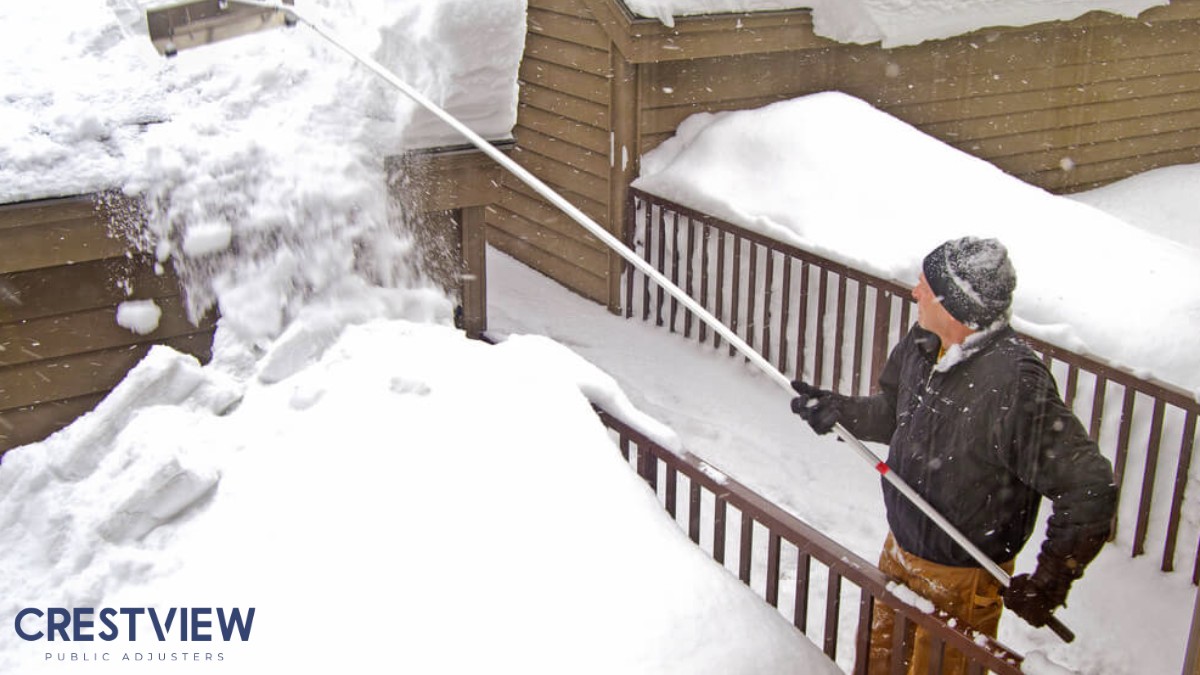
Being proactive can make or break your claim. It’s important to schedule regular inspections—especially before winter—so a professional can assess your roof’s condition and identify any vulnerabilities. After a storm, make sure snow and ice are cleared safely by hiring professionals to handle the buildup. If damage occurs, act fast by reporting it promptly and taking steps to prevent further harm. Working with a public adjuster early on can also help ensure your claim is accurately valued and properly documented.
Common Signs of Roof Leaks After a Snowstorm
A roof leak after a snowstorm can reveal its warning signs quickly. Knowing what to look for helps you act before the damage spreads. Here are some red flags to watch out for:
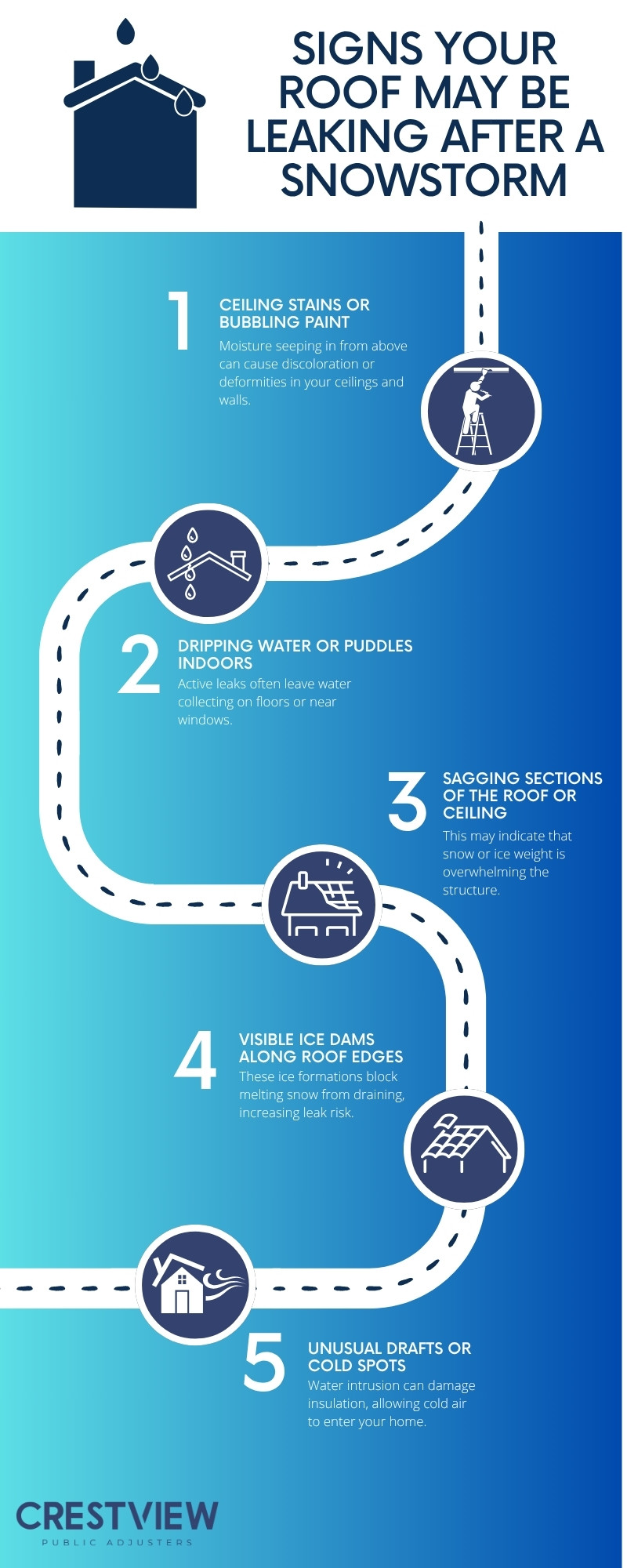
Spotting these early can help you limit damage and strengthen your insurance claim.
Do You Need a Public Adjuster for Roof Leaks After a Snowstorm?
While you can file a claim on your own, many homeowners find that a public adjuster’s expertise leads to a more accurate damage assessment and stronger claim outcome. Public adjusters represent you — not the insurance company — and negotiate to help you receive what your policy promises.
Some ways a public adjuster can assist:
- Provide a thorough, independent damage evaluation.
- Help gather and organize evidence to support your claim.
- Handle negotiations with the insurance company on your behalf.
This is particularly valuable if your insurer challenges the cause of the leak or tries to minimize the payout.
Call Crestview Public Adjusters for Help With Your Winter Damage Claim
Get the compensation you deserve — don’t face your insurance company alone. Crestview Public Adjusters specializes in Winter Damage Claims, including roof leaks after snowstorms. Our team serves homeowners across Florida, New York, and New Jersey, helping you document damage, file claims, and negotiate fair settlements.
Let us advocate for you. Contact Crestview Public Adjusters today to protect your rights and maximize your claim.