
Key Points:
- Frozen pipe damage can cost thousands of dollars in repairs, depending on the severity.
- Several factors determine whether filing a claim or paying out of pocket makes more financial sense.
- Policyholders must carefully weigh deductible costs, claim history impact, and long-term premium increases.
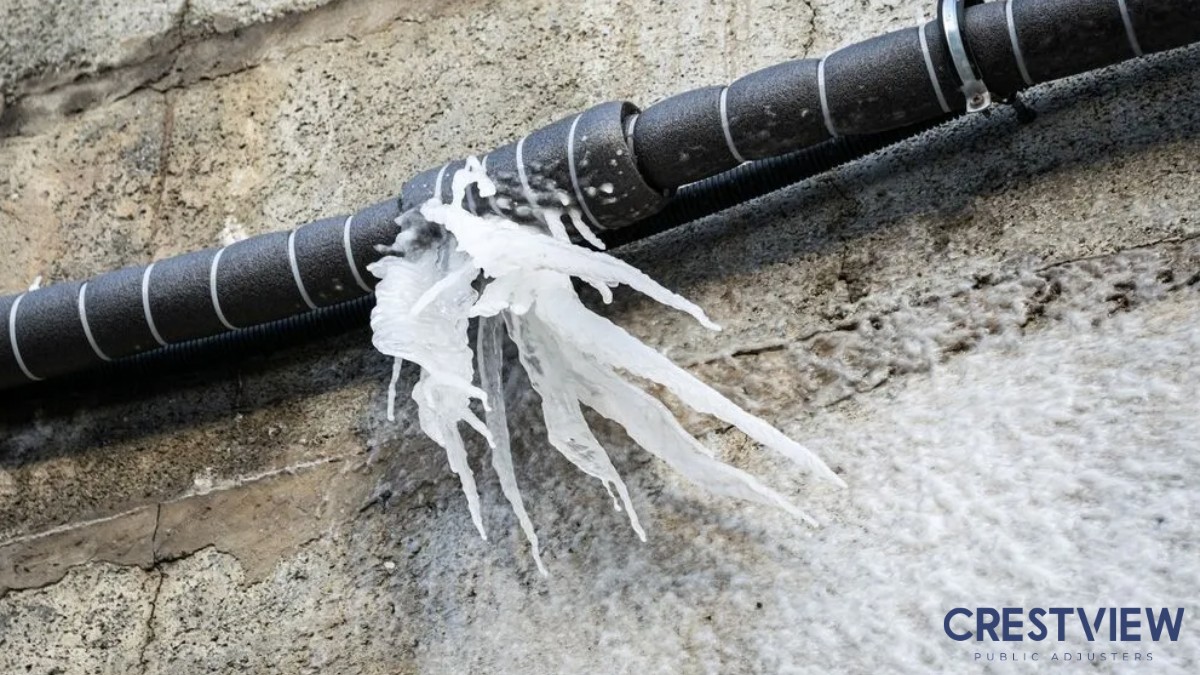
According to the Insurance Information Institute, frozen pipes are one of the leading causes of property damage during winter, causing an average of $10,000 or more per incident. As temperatures drop, homeowners face a crucial decision when pipes freeze and burst: Should You File a Frozen Pipe Claim or Pay Out of Pocket? This choice carries both immediate and long-term financial implications. Let’s break it down carefully so you can make an informed decision.
Should You File a Frozen Pipe Claim or Pay Out of Pocket?
The decision depends on the extent of damage, your insurance policy terms, deductible amount, and how a claim may affect your premiums. Filing a claim makes sense when repair costs significantly exceed your deductible and long-term insurance consequences are minimal. Paying out of pocket is often better for minor damage to avoid premium hikes and protect your claims history.
How Much Does Frozen Pipe Damage Typically Cost?
Frozen pipe incidents aren’t minor inconveniences—they’re major financial headaches. The cost depends heavily on factors like pipe location, severity of the break, water spread, and structural damage.
For minor leaks in accessible areas, you may only spend a few hundred dollars on repairs and cleanup. But for extensive damage:
- Water extraction: $2,000 to $5,000
- Pipe replacement (multiple areas): $1,500 to $3,500
- Drywall, flooring, and insulation repairs: $3,000 to $10,000
- Mold remediation (if delayed): $1,000 to $6,000
- Electrical system repairs: $500 to $3,000
Once total costs approach or exceed your deductible by several thousand dollars, filing a claim might become the more logical route. However, if repairs are relatively simple, paying directly can help you avoid future insurance headaches.
How Does Your Insurance Deductible Factor In?
Your deductible plays a central role in determining whether filing a claim is worth it. A higher deductible means you pay more upfront before your insurance coverage kicks in.
For example:
- If your deductible is $1,000 and repairs cost $1,500, your insurer would only cover $500.
- If repairs cost $10,000, you’d receive $9,000 in coverage after your deductible.
The smaller the gap between repair costs and deductible, the less valuable a claim becomes. If you can comfortably absorb minor repair costs, paying out of pocket may preserve your claims record and protect against premium increases.
How Will Filing a Claim Impact Your Insurance Premiums?
Insurance companies track your claim history closely. Submitting a claim for frozen pipes might lead to higher premiums down the line, even if it’s covered.
Several insurers may:
- Increase your premium by 10-20% for 3 to 5 years.
- Classify you as higher risk after multiple water damage claims.
- Potentially deny future water damage coverage if recurring.
Before filing, contact your insurance agent to discuss how a frozen pipe claim may affect your rates. A single minor claim might not trigger a hike, but repeated claims definitely can.
When Should You Absolutely File a Frozen Pipe Claim?
There are situations where paying out of pocket simply isn’t realistic or advisable. Filing makes sense if:
- The damage far exceeds your deductible. If repairs cost $15,000 and your deductible is $1,000, filing may save you significantly.
- The damage affects structural integrity. Significant flooding may compromise walls, floors, and foundations.
- Mold growth has begun. Mold remediation is expensive, often requiring specialized cleaning that insurance may fully or partially cover.
- The damage requires professional remediation. Water mitigation companies may charge thousands for drying, cleaning, and sanitizing your home.
In these scenarios, the financial relief insurance provides outweighs potential long-term premium adjustments.
When Should You Pay Out of Pocket for Frozen Pipe Repairs?
In many cases, paying out of pocket can be the smarter move, especially if:
- Repairs cost close to or slightly above your deductible. You’ll bear most of the cost regardless.
- You’ve filed multiple claims in recent years. Additional claims could raise red flags with your insurer.
- The damage is isolated and easily repairable. A single burst pipe under a sink might cost just a few hundred dollars.
- You’re financially able to absorb the cost. Avoiding a claim preserves your spotless record, protecting you from higher future premiums.
Think of your insurance policy as protection for catastrophic losses—not minor home maintenance issues.
What Questions Should You Ask Before Filing a Frozen Pipe Claim?
Before filing a frozen pipe claim, it’s important to ask yourself—and your insurer—a few key questions. Start by reviewing your current deductible and estimating the likely cost of repairs. Consider how many claims you’ve filed in the past three to five years, as multiple claims may impact your record. Ask whether filing will trigger a premium increase and whether your policy has any limitations on water damage coverage. Finally, consider how filing might affect your long-term insurability. Getting clear answers to these questions can help you determine whether filing a claim is financially wise or carries unnecessary risks.
What Are Common Insurance Policy Exclusions for Frozen Pipes?
Even if you decide to file, insurance doesn’t automatically guarantee full coverage. Policies often have fine print that limits or denies payouts if certain conditions aren’t met.
Some common exclusions include:
- Neglect or poor maintenance. If you failed to properly heat your home or insulate pipes, your claim may be denied.
- Vacant properties. If your home was unoccupied and not properly winterized, coverage may be limited.
- Delayed reporting. Failing to report the issue promptly could reduce your payout.
- Sump pump or drain failures. Water backups from these systems may require separate endorsements.
Always review your policy details or consult with a professional to understand what’s truly covered.
What Steps Should You Take After Discovering Frozen Pipe Damage?
The way you respond immediately after discovering the damage can directly affect your claim outcome.
Here’s what to do:
- Shut off the main water supply to prevent further flooding.
- Document everything — take photos and videos of all affected areas.
- Contact your insurance company or public adjuster promptly to initiate the claim process.
- Hire licensed contractors for estimates on necessary repairs.
- Keep records of all expenses, including temporary accommodations or emergency mitigation services.
Prompt, organized action not only minimizes the damage but also strengthens your claim if you choose to file.
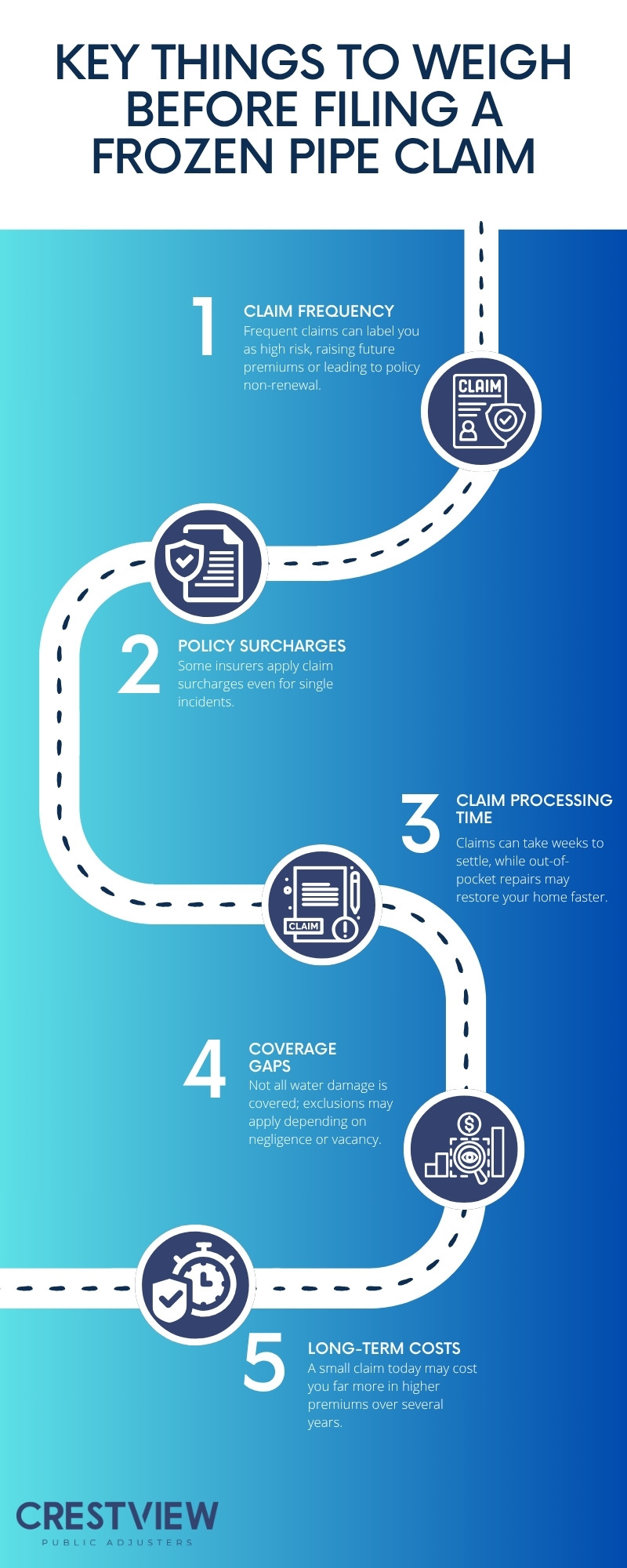
Quick Factors to Consider Before Filing Your Frozen Pipe Claim
Before you rush to call your insurance company, review these quick-hit factors to sharpen your decision:
Why Working With a Public Adjuster Can Make All the Difference
Frozen pipe claims aren’t always straightforward, as insurance companies often try to minimize payouts or invoke policy exclusions that confuse homeowners. This is where an experienced public adjuster becomes invaluable. They advocate for you—not the insurance company—carefully review your policy to ensure you claim the maximum allowable coverage, negotiate directly with your insurer to secure a fair settlement, and handle all the complex paperwork and documentation involved. Many policyholders who handle claims on their own end up leaving money on the table, but a skilled public adjuster can often recover far more than what homeowners initially expect.
Trust Crestview Public Adjusters to Handle Your Frozen Pipe Claim
Frozen pipe damage can quickly spiral into a financial nightmare. Whether you’re located in New Jersey, Florida, or New York, Crestview Public Adjusters is here to guide you through every step of your frozen pipe insurance claim. Our experts fight for your rightful compensation while relieving you of the confusing insurance process.
Contact Crestview Public Adjusters today to schedule your no-obligation consultation and let us help maximize your frozen pipe claim settlement.