
Key Points:
- Proper documentation of frozen pipe damage is crucial for successful insurance claims.
- Take clear photos, videos, and written notes immediately after discovering the damage.
- Retain receipts, professional repair reports, and communication logs to support your claim.
Each year, frozen pipes cause significant property damage in the United States. Property owners facing this issue often find themselves overwhelmed, not just by the water damage, but by the complex insurance claims process that follows.Effective documentation plays a crucial role in maximizing your insurance payout. Without proper records, your claim may get underpaid or denied. That’s why knowing the tips for documenting damage from frozen pipes can make all the difference.
Tips for Documenting Damage From Frozen Pipes
Documenting damage from frozen pipes requires detailed, organized, and timely evidence to support your insurance claim. This includes photos, videos, written records, professional evaluations, and more. The quality of your documentation directly impacts how smoothly your claim will be processed and how much compensation you can receive.
Why Is Documenting Frozen Pipe Damage Important?
Frozen pipes that burst can unleash rapid damage—soaking floors, damaging drywall, ruining personal belongings, and even compromising your home’s structure. Insurance companies require proof to validate the extent of the loss and determine fair compensation.
Documentation serves several purposes:
- Establishes the cause of damage (frozen pipes vs. negligence or wear-and-tear).
- Demonstrates the extent of the damage.
- Provides a timeline showing when the damage occurred.
- Supports any mitigation efforts you took to prevent further loss.
Without solid documentation, insurers may argue that the damage was pre-existing or not covered under your policy.
What Should You Photograph After Discovering Frozen Pipe Damage?
Photos are often the most compelling evidence in an insurance claim. The clearer and more detailed your photos, the stronger your claim.
Start photographing immediately, focusing on:
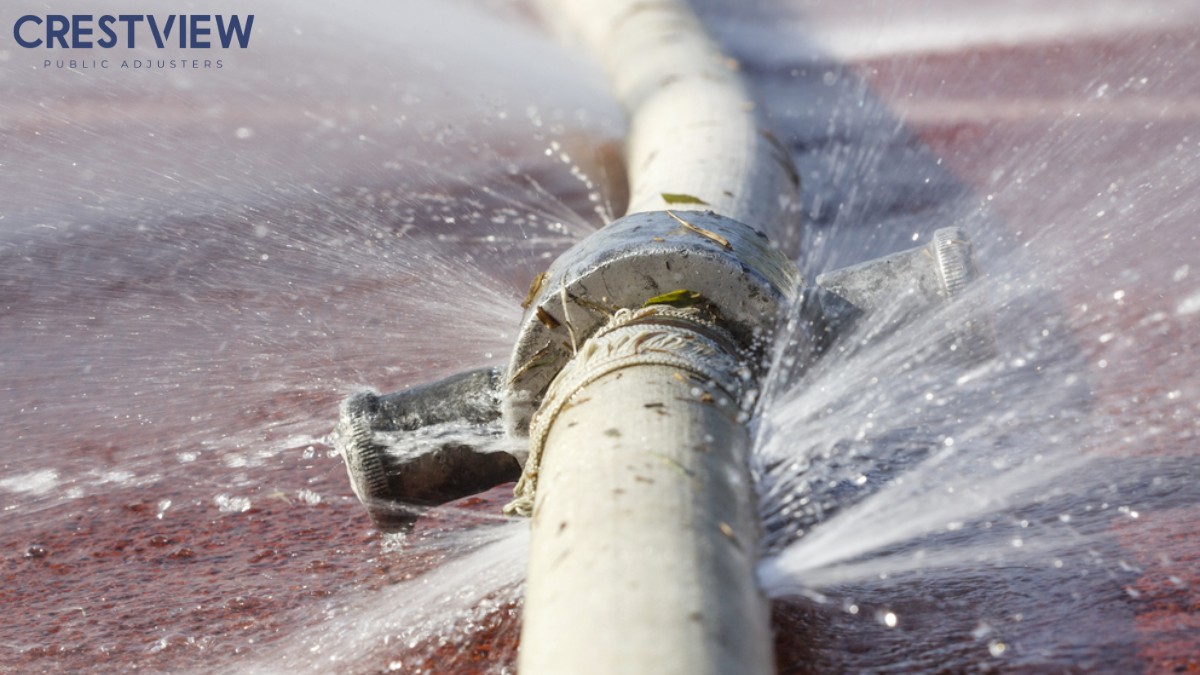
- The broken pipe itself — include close-ups and wide shots showing the exact location.
- Visible water damage — walls, ceilings, flooring, and furniture.
- Affected personal belongings — electronics, appliances, clothing, etc.
- Structural damage — warped wood, sagging ceilings, mold growth.
- Utility areas — HVAC units, electrical panels, and plumbing systems impacted.
Use your smartphone’s timestamp feature to add credibility to your documentation. If possible, take photos from multiple angles and distances to provide full context.
How Can Videos Strengthen Your Frozen Pipe Claim?
While photos capture specific details, videos provide a fuller narrative of the damage.
Videos should include:
- Walking tours of all affected areas, narrating what you’re filming.
- Water flow evidence if water is still actively leaking or pooling.
- Ambient sounds like dripping water or creaking structures.
- Damage progression over time if repairs are delayed.
Videos can also capture subtle details insurers might miss in photos, such as continuous water flow or widespread mold growth.
What Written Records Should You Keep?
Written records complement visual evidence and help build a complete claim file.
Keep detailed notes on:
- Discovery date and time — when you first noticed the frozen pipe issue.
- Mitigation efforts — steps you took to stop further damage (e.g., shutting off the main water valve, using fans to dry areas).
- Contractor reports — plumber assessments, repair estimates, and invoices.
- Insurance communications — names, dates, and summaries of every conversation with your insurance company.
- Personal notes — any obstacles encountered, delays faced, or decisions made.
Having a written chronology shows that you took prompt and reasonable action, which insurers often require.
Should You Save Receipts and Invoices?
Yes. Financial documentation plays a critical role in frozen pipe insurance claims. You’ll need proof of:
- Emergency services — plumbing, water extraction, mold remediation.
- Temporary housing — hotel stays or short-term rentals if your home becomes uninhabitable.
- Replacement purchases — furniture, electronics, clothing.
- Repair costs — labor, materials, and supplies.
Organize these receipts in chronological order. Use digital backups in case physical copies are lost.
How Do You Document Hidden or Delayed Damage?
Sometimes, frozen pipe damage isn’t fully visible right away. Hidden moisture can lead to mold, structural decay, and even pest infestations over time. Proper documentation for these delayed effects is just as crucial.
Here’s how to approach it:
- Schedule professional inspections — certified mold inspectors, structural engineers, and restoration experts can detect hidden problems.
- Request detailed reports — including photographs, moisture readings, and lab test results.
- Monitor and log — keep a running journal of any new issues that appear, such as stains, odors, or unusual sounds.
- Update your insurer — submit new evidence promptly to avoid claim denials for “late reporting.”
Insurers often scrutinize delayed claims closely. Showing that you actively monitored the situation strengthens your case.
What Role Do Public Adjusters Play in Documenting Frozen Pipe Damage?
Public adjusters are licensed professionals who work exclusively for policyholders—not insurance companies. They help you document, file, and negotiate your claim to ensure you receive fair compensation.
Here’s how a public adjuster supports documentation:
- Conducts independent inspections.
- Prepares comprehensive damage reports.
- Organizes supporting evidence for your claim.
- Communicates directly with the insurance company on your behalf.
- Identifies policy coverages that may apply but are often overlooked.
Leveraging their expertise, you can avoid missing critical documentation that may weaken your frozen pipe claim.
Common Documentation Mistakes to Avoid
Even with good intentions, many policyholders make documentation errors that jeopardize their claims. Avoid these common pitfalls:
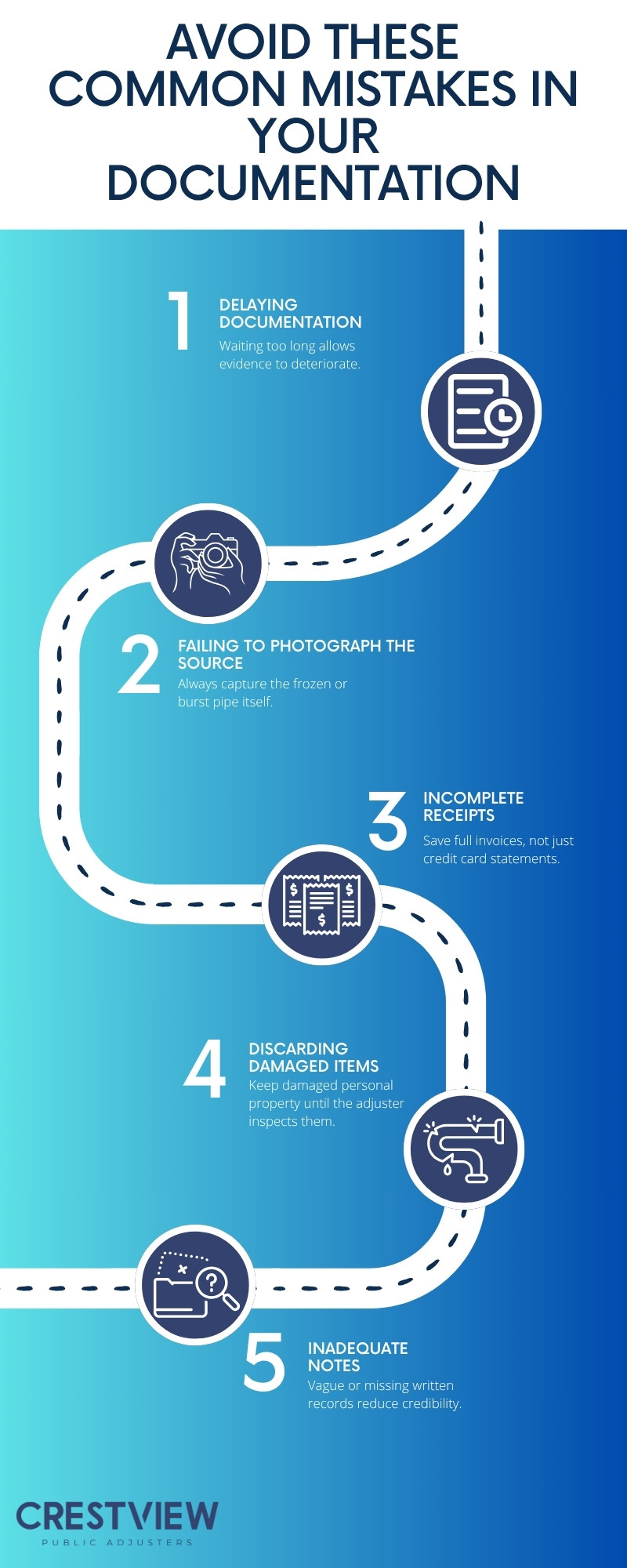
Meticulous documentation gives insurers little room to dispute your claim’s validity.
Is There a Time Limit for Submitting Frozen Pipe Claims?
Insurance policies often include time-sensitive deadlines for filing claims and submitting documentation. These vary by policy and state law but typically range from 30 to 90 days after discovering the damage.
Failing to meet these deadlines may result in:
- Claim denial for late reporting.
- Reduced compensation if supporting documents are submitted late.
- Legal challenges if your insurer disputes liability.
Contact your insurer immediately after discovering frozen pipe damage. When in doubt, consult a public adjuster who understands your policy’s specific requirements.
How Do Insurance Companies Evaluate Frozen Pipe Claims?
Insurers assess multiple factors when evaluating frozen pipe damage claims, including the cause of the pipe freeze—whether it resulted from a lack of heating, a sudden cold snap, or negligence—as well as the severity of water damage to both the structure and its contents. They also consider any pre-existing damage unrelated to the current incident, the efforts made to mitigate damage after its discovery, and any policy exclusions or limitations that may apply. Your documentation helps insurers verify these factors quickly and accurately, and the stronger your evidence, the smoother your claims process.
How Can You Maximize Your Frozen Pipe Insurance Payout?
In addition to proper documentation, certain actions can help you receive full compensation:
- Review your policy thoroughly to understand your coverages and exclusions.
- Document proactively — the more evidence, the better.
- Cooperate with inspections but avoid admitting fault or downplaying damage.
- Consult a public adjuster if you encounter disputes, delays, or low settlement offers.
Frozen pipe claims can become contentious. Proper preparation protects your financial interests.
Secure Your Frozen Pipe Claim—Get Expert Help Today
Frozen pipe damage can turn your life upside down overnight. Navigating the claims process shouldn’t add to your stress. That’s where Crestview Public Adjusters comes in.
If you’re dealing with frozen pipe claims in New York, New Jersey, or Florida, our experienced team will handle the heavy lifting. We’ll help document every detail, negotiate on your behalf, and ensure your insurance company honors your policy. Don’t let frozen pipes drain your finances.
Contact Crestview Public Adjusters today to get the professional support you need to secure the compensation you deserve.