
Key Points:
- File a home insurance claim for water damage by confirming policy coverage and acting fast in the first 24–48 hours.
- Document the cause, scope, and contents with photos, receipts, and reports.
- Organized files, clear timelines, and prompt mitigation improve approval chances and protect your right to fair reimbursement.
Water damage adds stress to a homeowner’s life. You want your water damage insurance claim to move smoothly. You wonder: What counts? What stalls a claim? You seek clarity on filing and getting fair reimbursement.
This article gives practical, clear steps on the insurance claim process for water damage, focusing only on what’s important. You will learn what kind of water is covered, how to document, and ways to protect your rights.
Start With Your Policy: Coverage, Limits, and Flood Exclusions
Standard homeowners forms usually cover “sudden and accidental” releases inside the home, such as a burst supply line or failed appliance. Reading the declarations page and then the exclusions and endorsements sets the scope before you report the loss, especially the coverage limits.
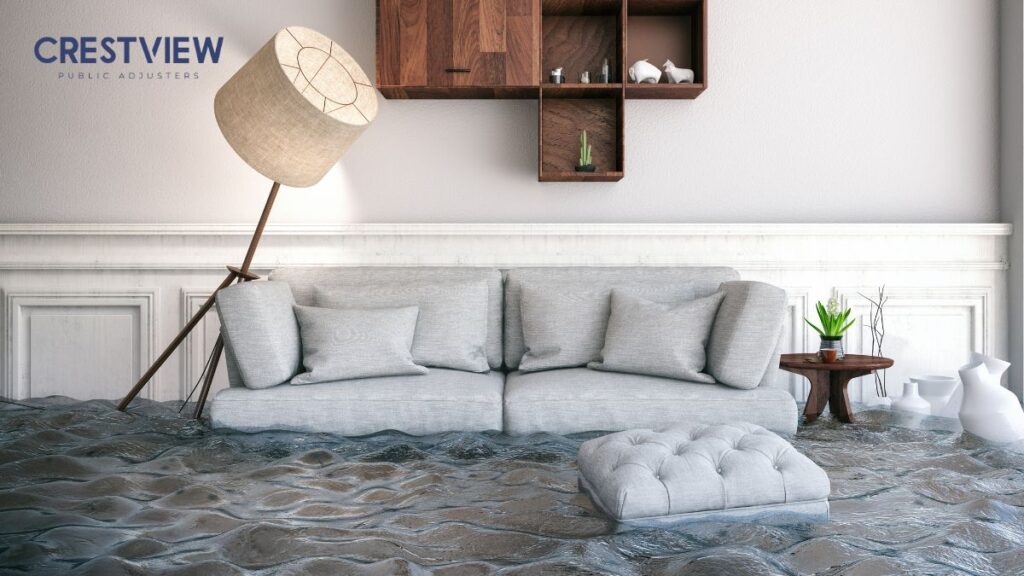
Many readers ask, what is water coverage from an outside water source? In most cases, rising surface water or storm surge is excluded under homeowners’ forms and requires separate flood insurance, typically through the NFIP or a private flood policy. Storm water intrusion falls into that category and often requires separate flood insurance.
Flood risk feels abstract until you see the numbers. Just one inch of water in a home can cause more than $25,000 in damage, and most homeowners policies do not cover floods from rising water.
Before filing an insurance claim for water damage, gather the basics:
- Policy number
- Deductible
- Any endorsements (backup of sewer, equipment breakdown)
- Whether the home is insured on replacement cost (RCV) or actual cash value (ACV) for dwelling and contents
Knowing these terms helps you ask precise questions once the desk adjuster calls.
Act in the First 24–48 Hours: Stop the Source, Mitigate, and Document
Water spreads fast through flooring, baseboards, and cavities. The first two days set the tone for the entire file. Start mitigation and document water damage as you go.
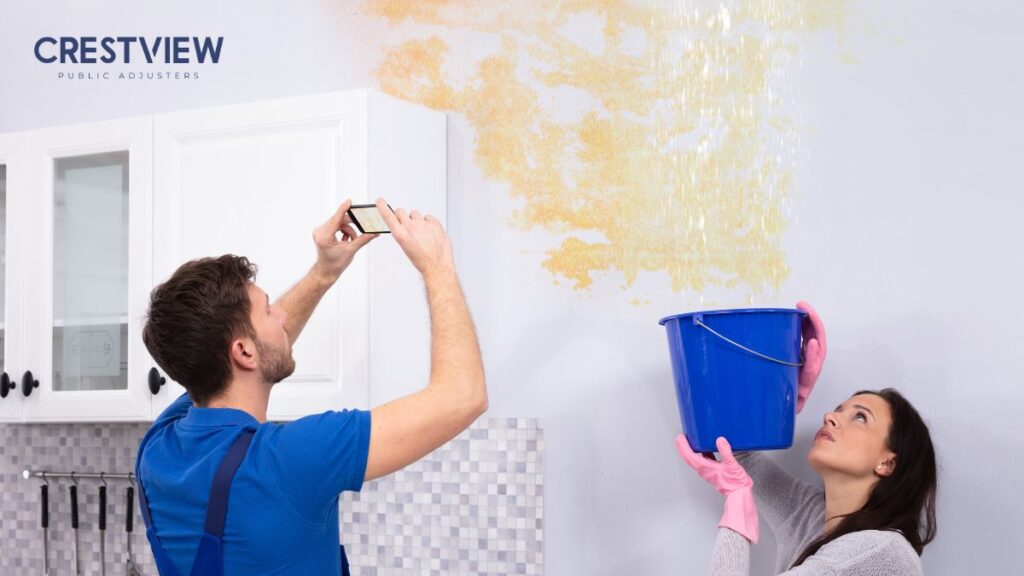
Shut off the supply, cap breaks, and place pans or buckets to limit spread, steps that mirror burst pipe insurance claim tips. Dry-out begins at once:
- Use air movers and dehumidifiers.
- Open accessible cavities where wet insulation sits.
- Remove the saturated carpet pad if required.
If wet materials are dried within 24–48 hours, mold growth is far less likely, which strengthens your argument that you acted reasonably to limit damage and costs.
Create a single claim folder. Keep a simple log: date, action taken, who did it, and why. If the home becomes unlivable, track Additional Living Expenses (ALE) such as lodging, meals, laundry, and pet boarding with itemized receipts.
Build Proof of Cause and Scope: What to Collect and How to Label It
The insurance claim process for water damage depends on proving both cause and scope.
Cause Packet
- Include the plumber’s invoice and a short statement naming the failed component and date of failure.
- Add a water bill if usage spiked to confirm a timeline.
- For appliance leaks, attach a photo of the model and serial label.
- For roof or window leaks, provide interior and exterior photos that trace the water path.
Scope Packet
- Take labeled photos room by room: ceiling, walls, flooring, trim, cabinetry, built-ins.
- Identify material types and finishes (engineered wood, solid hardwood, laminate).
- Photograph cavities with a tape measure when drywall or insulation is removed.
- Add a simple sketch and moisture map for clarity.
Contents Packet
- Build a spreadsheet of damaged property: item, brand/model, age, original cost, condition, and replacement price.
- Group items by room and category (electronics, textiles, furniture, kitchen).
- For textiles, state if specialty cleaning is attempted or replacement is cheaper.
A well-documented claim file that separates cause, scope, and contents increases the chance of a smoother insurance decision.
Understand the Typical Claim Flow: From First Notice to Settlement
Filing an insurance claim for water damage follows a clear water damage claim process. Here are the steps to follow:
- File FNOL with date, cause, and mitigation steps, and get claim number.
- Provide the plumber’s report, moisture logs, and a brief damage summary.
- Expect an adjuster inspection or virtual review; the first estimate is only a baseline.
- Get licensed contractor estimates with detailed line items.
- Keep updates factual: what is wet, removed, readings, and replacement needs.
- Be ready for questions on leaks, maintenance, and finish matching.
Water losses are frequent in homeowners insurance. Water damage and freezing accounted for 27.6% of homeowners’ losses in 2022, so carriers scrutinize cause and mitigation closely. Organized records and fact-based communication increase the chance of a fair resolution to your water damage insurance claim.
Price the Loss Correctly: RCV vs. ACV, Code Upgrades, and ALE
Water damage insurance claim tips often skip valuation details, yet this is where dollars shift. The average insurance payout for water damage and freezing claims ranges from $13,954 to nearly $14,000. Claims usually start with an ACV payment, with the full replacement cost paid after repairs. If items aren’t replaced, ACV may be final.
Contents may default to ACV unless you added replacement coverage. Required code upgrades, like GFCI outlets or drywall changes, may be covered if your policy includes Ordinance or Law.
Track extra living costs, such as lodging, meals, and mileage, and compare them to normal expenses for easier reimbursement.
Handle Common Disputes: Causation, “Matching,” Mold Sublimits, and Tear-Out
Coverage disputes in water damage claims often hinge on documentation and policy language. Staying organized helps counter these common challenges:
- Causation: Support sudden loss with a plumber’s statement, dry-out logs, and a clear timeline.
- Pre-Existing Damage: Use prior photos or maintenance records to show the condition before the event.
- Matching Finishes: Photograph flooring transitions and cabinet details.
- Mold Sublimits: Policies often cap mold coverage, tie scope to the original water event, and show fast mitigation.
- Tear-Out Coverage: Access work for pipes under slabs or behind tile may be covered even if pipe replacement is not. Ask the adjuster to cite policy wording.
Thorough evidence and precise records give you leverage when disputes arise.
Frequently Asked Questions
How does insurance work with water damage?
Homeowners insurance covers sudden, accidental water damage such as burst pipes or appliance leaks, but not outside flooding or sewer backup without endorsements. Coverage includes home repairs, contents replacement, and Additional Living Expenses if the home is uninhabitable. Policies require prompt reporting, mitigation, and full documentation.
What kind of water damage is not covered by insurance?
Homeowners insurance does not cover flood damage from rising water, sewer or sump backups without endorsements, or gradual leaks and wear. Maintenance failures and neglect are excluded. Many policies cap or exclude mold linked to excluded causes. Review policy exclusions and endorsements to confirm coverage specifics.
Why would a water damage claim be denied?
A water damage claim may be denied if the cause is excluded, such as flood or sewer backup without an endorsement, or if damage stems from long-term leaks, wear, or neglect. Denials also follow late notice, poor mitigation, or weak documentation. Clear cause reporting and full proof keep claims valid.
Get Expert Help When the Claim Stalls
At the end of a stressful event, help can make all the difference. Public insurance adjusting and claims management services in New Jersey, New York, and Florida help homeowners document water damage, reconcile estimates, and resolve underpayment or denial issues.
At Crestview Public Adjusters, our team focuses on cause, scope, and valuation so settlements reflect actual conditions. We help you gather evidence, craft strong documentation, and negotiate fair outcomes.
Reach out now to secure your recovery. Let’s protect your home and your peace of mind.