
Key Points:
- Cyber insurance policies typically cover data breaches, ransomware attacks, and business interruption losses.
- Exclusions, policy triggers, and limits significantly impact the actual benefits of your cyber insurance.
- Working with a public adjuster can help ensure a smoother and fairer cyber claims process.
For policyholders, this figure isn’t just staggering—it’s a wake-up call. Many business owners think cyber insurance will automatically cover all cyber-related losses, but the truth is more complex. Understanding coverage in a cyber insurance policy requires more than just reading a policy document—it means understanding how protection kicks in, where it falls short, and what recourse you have if your claim gets denied or underpaid.
What Does “Understanding Coverage in a Cyber Insurance Policy” Really Mean?
Understanding coverage in a cyber insurance policy means knowing what specific cyber events are insured, how and when coverage applies, and what limitations exist. It involves more than assuming you’re covered—it demands a careful review of inclusions, exclusions, limits, and triggers.
In practice, this means learning whether your policy covers:
- First-party losses (like stolen funds or lost income),
- Third-party liabilities (like lawsuits from customers whose data was breached),
- Ransomware or extortion events,
- Regulatory fines or forensic investigation costs.
Knowing these aspects helps ensure that, when the unexpected happens, you’re not blindsided by a denied claim or inadequate payout.
What Types of Events Are Covered in a Cyber Insurance Policy?
Cyber insurance isn’t a one-size-fits-all solution. Policies often differ greatly in how they define covered events. Still, there are common types of incidents that are typically included.
Most policies cover events such as:
- Data Breaches: Loss or theft of personal or sensitive information due to unauthorized access.
- Ransomware Attacks: Incidents where hackers lock your systems and demand payment for restoration.
- Business Interruption: Revenue losses resulting from a cyberattack or system outage.
- Social Engineering Fraud: Deceptive tactics (like phishing) leading to unauthorized wire transfers or data leaks.
- Reputational Harm: PR costs or reputational damage caused by a publicized cyber incident.
These events usually fall under “first-party” or “third-party” coverage. First-party covers your direct losses, while third-party handles claims from others (such as clients or vendors) affected by your cyber breach.
What Are Common Exclusions in Cyber Insurance?
Despite a wide coverage net, cyber insurance policies often contain key exclusions that could surprise you when filing a claim. These exclusions can narrow the scope of your protection—sometimes significantly.
Some of the most common exclusions include:
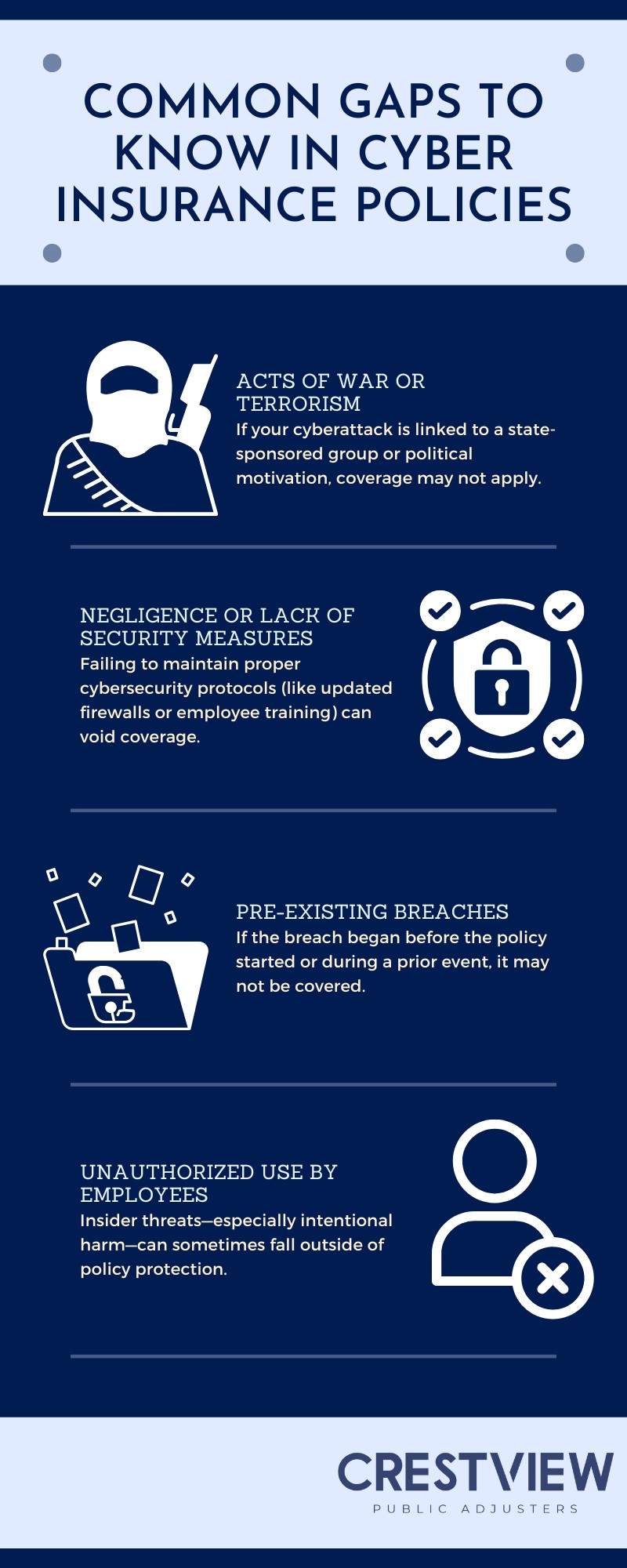
These exclusions can vary widely by insurer and should never be skimmed over. Read the fine print and ask detailed questions during the underwriting process.
How Do Cyber Insurance Limits and Sublimits Work?
Your policy may claim to offer a $2 million limit, but what actually gets paid out depends on the structure of limits and sublimits. This can make or break a claim’s usefulness.
Policy limits cap the total payout for all covered incidents within a policy period. Sublimits cap payouts for specific types of losses.
Here’s a breakdown:
Total Policy Limit: $2M
- Data Breach Notification Costs: $500K sublimit
- Ransomware Payment: $250K sublimit
- Business Interruption: $750K sublimit
This structure means you won’t be able to access the full policy amount for just one type of claim. You’ll need to calculate potential costs across scenarios to determine if your policy’s configuration fits your risk profile.
How Are Cyber Insurance Claims Triggered?
Unlike traditional insurance, which might activate after physical damage or injury, cyber insurance triggers are more nuanced and depend heavily on how a “cyber incident” is defined.
Most policies trigger coverage when:
- A system is breached by an unauthorized party.
- Malicious software disrupts business operations.
- Private or regulated data is exposed.
- A formal claim or lawsuit is filed by a third party.
However, silent cyber risks (events where a cyber incident affects a non-cyber policy) can lead to confusion over which policy should respond. It’s critical to ensure that your coverage language clearly defines what counts as a covered event.
What Documentation Is Required When Filing a Cyber Claim?
Filing a cyber insurance claim can quickly become an administrative nightmare without proper documentation. To avoid delays or denials, policyholders must be prepared to show comprehensive evidence of the event and its impact.
Typically, you’ll need to prepare:
- Incident Reports detailing the timeline, affected systems, and discovery method.
- IT Forensics Findings showing the breach’s cause and scale.
- Communication Logs such as emails with attackers, customers, or regulators.
- Proof of Losses, including bank statements, invoices, or revenue reports.
It’s also essential to notify your insurer immediately after discovering an incident. Some policies have strict notice periods, and delays can jeopardize your payout.
Do Cyber Policies Cover Regulatory Fines and Legal Costs?
This is one of the most commonly misunderstood areas in cyber insurance. The answer depends heavily on the jurisdiction and policy wording.
Some policies will:
- Cover regulatory investigations and fines if they’re legally insurable.
- Pay for legal defense related to third-party lawsuits.
- Reimburse costs for settlements, where allowed by law.
However, some fines—especially under GDPR or other privacy laws—may not be insurable in specific regions. Always clarify with your broker whether your policy includes regulatory coverage and under what conditions.
How Can a Public Adjuster Help in Cyber Insurance Claims?
Even with strong coverage, cyber claims are often complex and highly technical. That’s where a public adjuster can make a major difference. They work on your behalf—not the insurer’s—to document your losses, interpret policy language, and negotiate the best possible outcome.
Here’s how a public adjuster adds value:
- Reviews your cyber policy language to identify all possible entitlements.
- Assists in compiling necessary documentation and quantifying losses.
- Engages directly with the insurer to advocate for a fair and full payout.
- Helps avoid common pitfalls that lead to claim denials or underpayment.
Cyber claims don’t just involve financial losses. They also require navigating a web of legal, regulatory, and technical considerations. A public adjuster brings clarity and expertise when you need it most.

Why Understanding Coverage in a Cyber Insurance Policy Is Essential
Understanding coverage in a cyber insurance policy is your first line of defense. It gives you the power to prepare, respond, and recover more effectively when facing a cyber crisis. Without that understanding, you risk exposure to unexpected gaps and costly surprises. From knowing how your insurer defines a “breach,” to understanding how payouts are calculated and what triggers a claim, the devil is truly in the details.
Get Expert Help with Your Cyber Insurance Claim
Cyber threats are rising, and policyholders in New York, New Jersey, and Florida need someone in their corner when navigating the complicated insurance claims process. At Crestview Public Adjusters, we specialize in cyber insurance claims, helping business owners and professionals understand their policy, file efficiently, and recover their full entitlements.
Don’t let complex policy language stand in the way of your recovery. Contact us today to get expert help from a licensed public adjuster who knows how to fight for your best interest.