
Key Points:
- Homeowners insurance may cover sudden water damage from burst pipes but usually excludes gradual leaks and lack of maintenance.
- Coverage can include damage to ceilings, floors, and personal belongings, but not always the pipe itself.
- Timely documentation and working with a public adjuster can significantly impact the success of your water damage claim.
Homeowners insurance typically covers water damage from burst pipes if the cause is sudden and accidental. However, it does not cover damage due to neglect or poor maintenance. Your claim eligibility depends on the nature of the incident, how quickly you reported it, and what your policy explicitly states.
Understanding How Burst Pipes Cause Water Damage
Burst pipes are among the most destructive household disasters. When water suddenly pours out into walls, ceilings, and flooring, it quickly soaks everything in its path. According to the Insurance Information Institute, water damage is one of the most common and costly home insurance claims, with the average claim reaching over $11,000.
A burst pipe doesn’t just damage the plumbing system—it compromises structural elements, insulation, drywall, and electronics. The longer it takes to address, the higher the cost of repairs. Mold can begin growing within 24–48 hours, escalating the situation further.
The cause of the burst pipe plays a significant role in insurance coverage. Cold weather, high pressure, or accidental impact might qualify for reimbursement. On the other hand, corrosion or long-term leaks may be denied due to being classified as maintenance issues.
What Does Insurance Typically Cover in Burst Pipe Scenarios?
Once the water stops and cleanup begins, policyholders naturally wonder which parts of the damage fall under their policy’s protection. While policies differ, most standard homeowners insurance plans include the following types of coverage after a sudden burst pipe:
- Structural Repairs: If walls, ceilings, or floors are damaged by the water, your policy likely covers repairs or replacements.
- Personal Property: Damaged furniture, electronics, and belongings might be included, though some high-value items may require separate endorsements.
- Water Extraction & Drying: Emergency services like professional water removal and dehumidifying are often covered.
- Mold Remediation: Some policies include limited mold coverage, particularly when the mold is the result of a covered water damage incident.
However, many policies do not cover:
- The actual repair of the pipe itself.
- Upgrades to plumbing systems (e.g., replacing old pipes with new).
- Damage from repeated or unnoticed leaks.
You’ll need to review your declarations page and talk to your insurer—or a public adjuster—to fully understand what your plan includes.
What Types of Water Damage From Pipes Are Not Covered?
Not all water damage is viewed equally by insurers. Even if your house is soaked, the cause and timing of the damage matter.
Here are common scenarios where your insurance may not pay out:
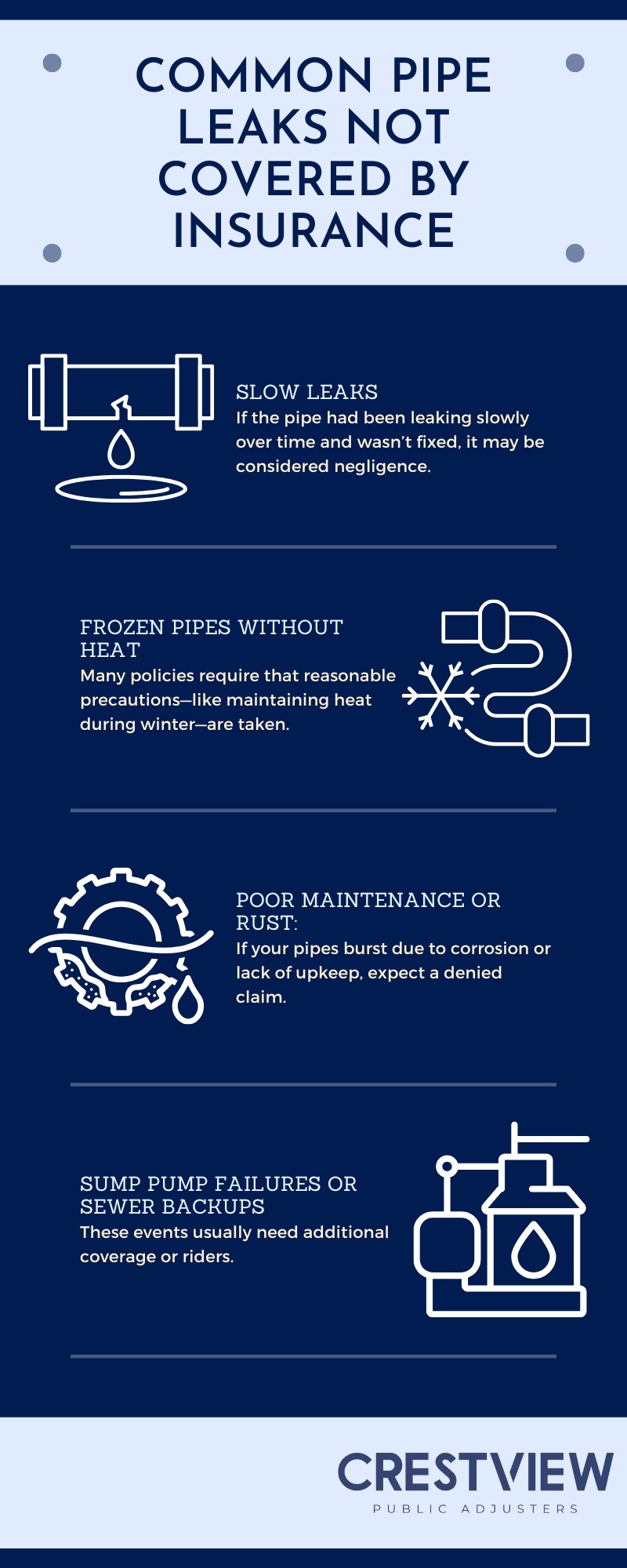
Insurers investigate the source and timeline of water intrusion. They’ll also assess whether you took steps to prevent it. It’s not enough to say “the pipe broke.” You’ll need to prove the damage was both sudden and accidental.
What Should You Do Immediately After a Pipe Bursts?
Taking immediate, documented action can significantly impact your claim’s approval and payout. Even a short delay in response can lead to mold and expanded damage, which complicates the claims process.
Here’s what to do:
- Shut Off the Water Supply: Prevent further flooding by stopping the water flow.
- Document Everything: Take clear photos and videos of the damage, including affected belongings.
- Remove Excess Water: If safe, mop or vacuum up standing water to prevent spread.
- Call a Plumber: Get the cause diagnosed and stopped.
- Contact Your Insurer: Initiate a claim quickly—some policies have strict reporting windows.
- Keep Damaged Items: Don’t throw anything out yet; insurers may need to inspect these for valuation.
Every step you take should be focused on proving that you responded reasonably and quickly. This is where working with a public adjuster becomes a major asset—they know how to handle documentation, negotiation, and insurer follow-ups.
How Can You Tell What Your Policy Covers?
Homeowners policies are written in technical language that’s not always easy to interpret. When it comes to water damage from burst pipes: what your policy might cover, that interpretation is often the difference between a full payout or a denied claim.
Your policy may have:
- Named Perils: Coverage only for specific listed events.
- All-Risk Coverage: Broader protection unless specifically excluded.
- Limits and Sub-Limits: Caps on how much you can be reimbursed, especially for mold or water extraction.
- Deductibles: The amount you pay out of pocket before insurance kicks in.
Review the “Perils Insured Against” and “Exclusions” sections carefully. If you’re unsure what the jargon means, a public adjuster or claims specialist can help interpret it with your specific situation in mind.
Are You Required to Prevent Pipe Bursts?
Absolutely. Insurance companies expect you to take “reasonable care” of your home, and that includes protecting plumbing systems.
Preventative measures include:
- Keeping your home heated to at least 55°F during winter months.
- Letting faucets drip slightly during extreme cold.
- Sealing gaps and insulating pipes in vulnerable areas (attics, crawlspaces, basements).
- Regular plumbing inspections.
Failure to take these steps may lead to denied claims, especially if the damage could have been avoided.
Can a Public Adjuster Help with a Water Damage Claim?
Yes. In fact, hiring a licensed public adjuster can make a substantial difference in the outcome of your claim. Insurance companies are often motivated to pay out the minimum required by your policy. Public adjusters, on the other hand, work exclusively for you, the policyholder.
They help by:
- Evaluating your policy and identifying covered areas.
- Documenting all damages comprehensively.
- Negotiating with the insurance company for a fair payout.
- Reducing the stress and confusion that comes with filing and managing claims.
Especially in situations involving water damage from burst pipes, where insurers often scrutinize every detail, having a knowledgeable expert on your side can ensure you don’t leave money on the table.
Promote Your Claim Success — Get Help from Experts
Dealing with water damage from burst pipes: what your policy might cover can be frustrating—especially when your insurer doesn’t make things clear. That’s where Crestview Public Adjusters steps in. We specialize in water damage claims and act on your behalf to ensure your insurance company delivers the coverage you’re entitled to.
Serving New Jersey, Florida, and New York, we’ve helped countless homeowners recover faster and more completely after water disasters. We don’t just read the fine print—we make it work in your favor.
Let us handle the stress while you focus on getting your life back. Contact Crestview Public Adjusters today.