
Key Points:
- A prompt and structured response is critical when experiencing a data breach, starting with identifying the source and securing your systems.
- Filing a cyber insurance claim involves collecting detailed documentation and acting within your policy’s time window.
- Working with a public adjuster helps policyholders maximize claim value and navigate complex insurer requirements in New York, Florida, and New Jersey.
According to IBM’s 2023 Cost of a Data Breach Report, the average data breach cost in the U.S. has reached a staggering $9.48 million—the highest globally. And while cyber insurance can offset some of that financial blow, knowing how to file a claim properly can make or break your recovery.
Once a breach hits, panic isn’t a strategy—action is. This article offers a step-by-step Cyber Insurance Claims Guide designed for policyholders navigating the chaos of a breach. Whether you’re running a small business or managing a large organization, the following guide will walk you through what to do if you experience a data breach and how to ensure your insurance claim is successful.
What to Do If You Experience a Data Breach: Cyber Insurance Claims Guide
To recover from a data breach and maximize your cyber insurance claim, you need to act fast, document everything, report the incident to your insurer, and work with professionals who can help you value and negotiate your claim. Failing to follow your policy’s protocol can result in delayed or denied payouts.
What Should You Do Immediately After Discovering a Data Breach?
The first 24-48 hours after discovering a breach are critical. Every minute counts. It’s not just about damage control; your next steps determine how your insurer responds—and how much compensation you’re entitled to.
Start with containment. This means isolating affected systems to stop further infiltration. But that’s just the beginning.
Here’s what to do immediately:
Secure Your Network
- Disconnect compromised systems.
- Restrict access to essential personnel only.
- Change all administrator passwords.
Engage Your Incident Response Team
- Internal IT and security staff should begin root cause analysis.
- If your cyber insurance includes access to a forensic expert, now is the time to activate that benefit.
Preserve All Evidence
- Do not wipe infected machines yet.
- Take system images and preserve logs to maintain a timeline of events. These will be vital for your insurance claim.
Failing to respond quickly could be interpreted by your insurer as negligence, leading to reduced payouts or denial. Even if you’re unsure about the source of the breach, documenting every step you’ve taken can protect you later.
What Information Do You Need for a Cyber Insurance Claim?
Insurers are very meticulous when handling cyber claims. They expect clear evidence, detailed timelines, and precise documentation—vague summaries simply won’t suffice. To meet these requirements, prepare a comprehensive incident report that includes a detailed timeline of events: when the breach was discovered, when it likely occurred, and when the insurer was notified. Additionally, outline the scope of the impact by specifying what data was accessed (such as Social Security numbers or payment information), how many users or customers were affected, and which systems were compromised.
Your report should also detail the remediation actions taken, including steps to contain the breach, any forensic vendors consulted, and changes made to prevent future incidents. Include communication records, such as internal emails and notes, as well as external communications with regulators, affected customers, or vendors. Keep in mind that cyber insurance policies vary—some cover ransomware negotiations and data restoration, while others reimburse only after specific steps are followed. Carefully read your policy and pay close attention to reporting deadlines, as most insurers require notification within 48 to 72 hours of discovering the breach.

How Do You File a Cyber Insurance Claim?
Filing a cyber insurance claim is more complex than reporting a minor accident. Before calling your insurer, gather all documentation and notify them promptly using the emergency contact in your policy. Document when and how you made the notification and submit any initial incident details, even if the full picture isn’t clear yet.
Follow your insurer’s claims process, which may involve a breach coach or approved cybersecurity firms. Keep a detailed record of all communications and submissions to protect yourself if the claim is disputed. Delays or vague reports are common reasons claims get denied.
How Can a Public Adjuster Help With Cyber Claims?
Insurance carriers often have one priority—minimizing payouts. That’s where public adjusters come in.
A public adjuster represents you, not the insurance company. Their job is to make sure your losses are fully documented, your claim is properly valued, and your payout reflects the true impact of the breach—not a lowball estimate.
Here’s what a public adjuster does during a cyber insurance claim:
- Reviews Your Policy for Coverage Triggers – Some policies don’t activate until specific criteria are met. Adjusters ensure you meet those terms.
- Values Hidden Losses – Downtime, business interruption, brand damage, lost contracts—these aren’t always obvious. Adjusters help translate these into claimable losses.
- Manages Communications With the Insurer – They can push back against delays or attempts to reduce payout and handle technical negotiations.
This becomes especially valuable in more complex cases involving ransomware, third-party liability, or regulatory penalties. Even if you have strong IT support, adjusters help translate technical losses into insurance language.
Common Mistakes to Avoid When Filing a Cyber Insurance Claim
Even well-prepared companies make mistakes when emotions run high. Here’s how to avoid sabotaging your claim.
Top cyber claim mistakes include:
- Delaying Notification to the Insurer – Late reporting can violate your policy terms.
- Failing to Document Internal Actions – Even informal decisions should be logged during incident response.
- Using Unauthorized Vendors – If your insurer requires you to use pre-approved cybersecurity or forensic firms, hiring outside help can invalidate reimbursement.
- Making Public Statements Too Early – Premature or inaccurate public messaging could be used against you if litigation follows.
Avoiding these errors keeps the claim process smooth and prevents payout delays. When in doubt, consult your public adjuster before taking action.
How Long Does a Cyber Insurance Claim Take?
There’s no standard timeline, but most claims resolve in 90 to 180 days, depending on complexity. Ransomware and breaches involving regulators or lawsuits can stretch much longer.
Factors that impact your timeline:
- Policy complexity
- Insurer responsiveness
- Completeness of documentation
- Disputes over valuation
You can speed up the process by engaging a public adjuster early, submitting thorough documentation, and following up consistently with the insurance carrier. While waiting, make sure to keep updating your insurer on any ongoing costs or losses. These can be added to your claim later.
What Happens If the Insurer Denies the Claim?
A denial isn’t the end of the road. In fact, many initial denials are reversed on appeal—especially with the help of a public adjuster.
Here’s how to challenge a denied cyber claim:
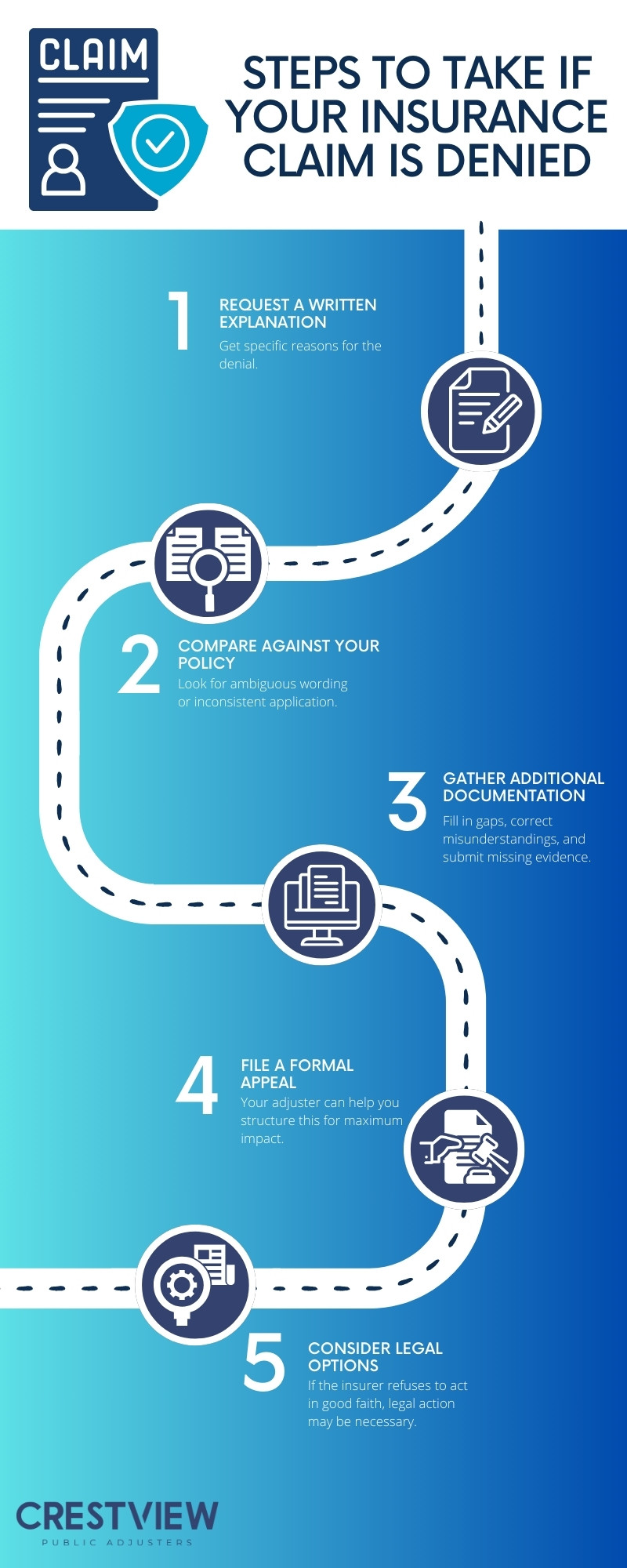
The appeals process can take time but is often successful, especially when technicalities—not intent—led to the initial rejection.
Maximize Your Cyber Insurance Claim With a Trusted Public Adjuster
If you’ve been hit by a cyberattack, don’t go it alone. A skilled public adjuster helps you navigate every stage of the claims process—from documentation to dispute resolution.
Crestview Public Adjusters offers expert cyber insurance claims support for policyholders in New York, Florida, and New Jersey. We specialize in complex digital losses, translating technical impact into clear, well-documented claims that insurers can’t ignore.
Let us help you get what you’re entitled to after a data breach. Contact Crestview Public Adjusters today and take control of your cyber insurance claim.