
Key Points:
- Frozen pipes cause billions in property damage every year, especially in winter.
- Simple but specific preventive steps can drastically reduce the risk of frozen pipes.
- Professional public adjusters can help policyholders maximize insurance claims if pipe damage occurs.
Frozen pipes are not only inconvenient but can cause catastrophic property damage, leading to expensive repairs and insurance battles. The good news? Many of these incidents are preventable if homeowners take the right precautions ahead of time.
Winter Preparedness Tips to Protect Against Frozen Pipes
Frozen pipes occur when water inside your plumbing freezes, expands, and bursts the pipe walls, leading to significant water damage. This typically happens when temperatures drop below 20°F for several hours. The key to avoiding this is a combination of insulation, temperature control, and proactive maintenance.
Why Do Pipes Freeze in Winter?
Understanding the why behind frozen pipes is crucial to prevention. Pipes freeze because water expands as it freezes, creating extreme pressure that can rupture even metal pipes. However, not all pipes are equally at risk.
Pipes most susceptible to freezing include:
- Those located in unheated interior spaces like basements, attics, garages, and crawl spaces.
- Exterior pipes exposed to harsh wind and low temperatures.
- Pipes installed along exterior walls without sufficient insulation.
Even in warmer states like Florida or areas like New Jersey and New York that typically see fluctuating winter conditions, sudden cold snaps can surprise homeowners and overwhelm unprotected plumbing systems.
How to Identify High-Risk Pipes in Your Home
Before winter hits, it’s essential to conduct a full assessment of your plumbing system. This ensures that vulnerable pipes get attention before temperatures drop.
Look for:
- Pipes in areas that lack heat (crawl spaces, garages, basements, attics).
- Plumbing located near exterior walls, especially without insulation.
- Outdoor hose bibs and sprinkler lines.
- Pipes that previously showed signs of frost or freezing.
For homeowners in older properties, insulation and pipe placement may not meet modern building standards, increasing their risk.
How Do You Prevent Pipes from Freezing in Winter?
The most effective Winter Preparedness Tips to Protect Against Frozen Pipes involve addressing both insulation and heat retention in your home. Here are several critical preventive actions:
Insulate Pipes Properly
Pipe insulation sleeves are one of the most effective ways to prevent freezing. Foam or fiberglass pipe insulation can help maintain warmer pipe temperatures.
Focus insulation on:
- Exposed pipes in basements and crawl spaces.
- Pipes near exterior walls.
- Outdoor faucets and hose bibs (use faucet covers).
Seal Air Leaks
Cold air drafts can drastically reduce the temperature near your pipes. Use caulk or spray foam insulation to seal:
- Cracks around windows and doors.
- Gaps in foundation walls.
- Spaces around where pipes enter walls or floors.
Sealing these gaps not only protects pipes but improves your home’s overall energy efficiency.
Maintain Indoor Heat
Never let indoor temperatures fall below 55°F, even if you’re away. Continuous heating keeps both air and pipe temperatures safe.
Open Interior Doors
Keep cabinet doors under sinks open to allow warm air to circulate around plumbing. This is particularly important for kitchen and bathroom sinks along exterior walls.
Let Faucets Drip
Allowing a slow trickle of water keeps water moving, which reduces the chance of freezing.
A dripping faucet may seem wasteful, but it’s far cheaper than the cost of repairs and insurance deductibles from a burst pipe.
What Should You Do if a Pipe Freezes?
Despite taking precautions, pipes can still freeze unexpectedly. Fast action can minimize damage.
Signs of a frozen pipe include:
- Little to no water coming from faucets.
- Frost on exposed pipes.
- Strange clanking or banging noises in the walls.
If you suspect a frozen pipe:
- Shut off the main water supply immediately to prevent flooding if the pipe bursts.
- Apply heat to the frozen section using a hairdryer, heating pad, or space heater. Never use open flames.
- Call a licensed plumber if you’re unable to locate or thaw the pipe safely.
- Document everything. Take photos and notes in case you need to file an insurance claim later.
What Damage Can Frozen Pipes Cause?
The damage from frozen pipes isn’t limited to the plumbing itself. A burst pipe can unleash hundreds of gallons of water per hour into your home, leading to water damage to floors, walls, and ceilings. Lingering moisture can also cause mold growth, while the structure of your foundation may suffer serious harm. Furniture and appliances can be destroyed, and electrical hazards may arise if wiring becomes waterlogged. These types of repairs can cost homeowners between $5,000 and $15,000 on average, depending on the severity. While insurance may cover some of these expenses, filing a successful claim can often be complicated.
How Can Homeowners Maximize Their Insurance Claims for Frozen Pipes?
If a frozen pipe does burst, you’ll likely file a homeowners insurance claim. But many policyholders don’t realize how complex frozen pipe claims can be.
Insurers often scrutinize:
- Whether proper precautions were taken.
- If the damage was sudden or gradual.
- Maintenance records showing winter preparedness efforts.
- Whether negligence (e.g. turning off heat while away) contributed.
Documentation is key. Keep receipts for insulation improvements, heating system maintenance, and weatherproofing purchases. Take time-stamped photos showing your preventive work.
This is where hiring a public adjuster can become invaluable. Public adjusters advocate for policyholders, ensuring you receive fair compensation based on your policy terms.
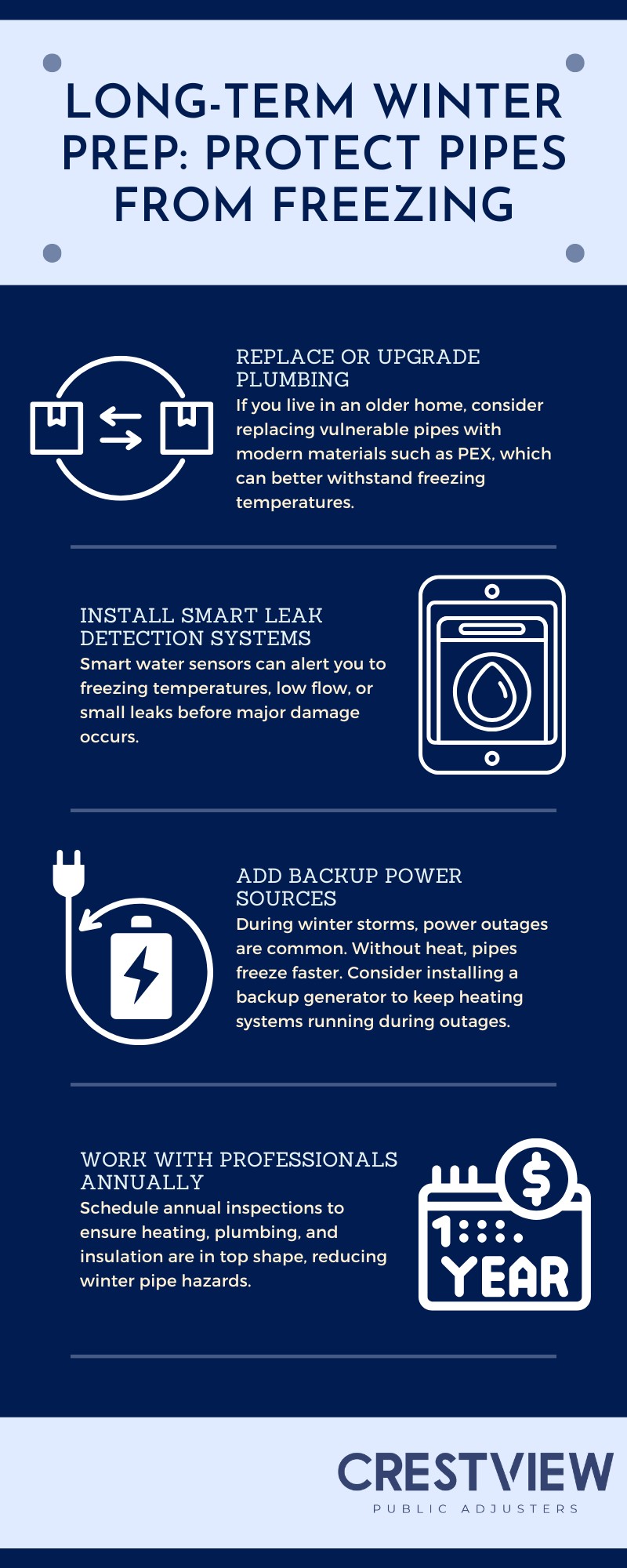
What Are Long-Term Winter Preparedness Tips to Protect Against Frozen Pipes?
Winterizing your home shouldn’t be a last-minute scramble each year. Incorporating long-term strategies provides peace of mind:
Can Frozen Pipes Be Prevented Entirely?
While no prevention plan is 100% foolproof, implementing Winter Preparedness Tips to Protect Against Frozen Pipes can dramatically lower your risk. Even in severe cold snaps, properly insulated and heated homes rarely experience pipe bursts when these best practices are followed.
Call Crestview Public Adjusters for Frozen Pipe Claims Assistance
Frozen pipe damage is stressful. Insurance claims shouldn’t add to that burden. At Crestview Public Adjusters, we help homeowners in New Jersey, Florida, and New York navigate frozen pipe claims with confidence.
Our team fights for policyholders — not insurance companies — to make sure you receive the compensation you deserve after frozen pipe damage. Don’t leave thousands of dollars on the table. Contact Crestview Public Adjusters today for expert assistance with your frozen pipe claim.