
Key Points:
- Prompt documentation and mitigation are essential for a successful water damage insurance claim.
- Understanding your policy’s coverage, exclusions and correct terminology gives you an edge in handling water damage insurance.
- Recognising the common mistakes in water damage claims helps you avoid claim delays, reductions or denials.
Water-related losses are among the most complex insurance cases. Crestview Public Adjusters helps homeowners understand every detail of a water damage insurance claim so they can avoid costly mistakes. When it comes to handling water damage insurance, timing and evidence matter more than anything else.
Whether caused by a burst pipe or roof leak, each scenario is treated differently by carriers. Our team shares water damage claims tips to help you document losses, communicate effectively, and avoid common mistakes in water damage claims that can lead to partial or denied coverage. Knowing what to do in the first 24 hours can make all the difference.
Understanding Coverage and Why It Matters
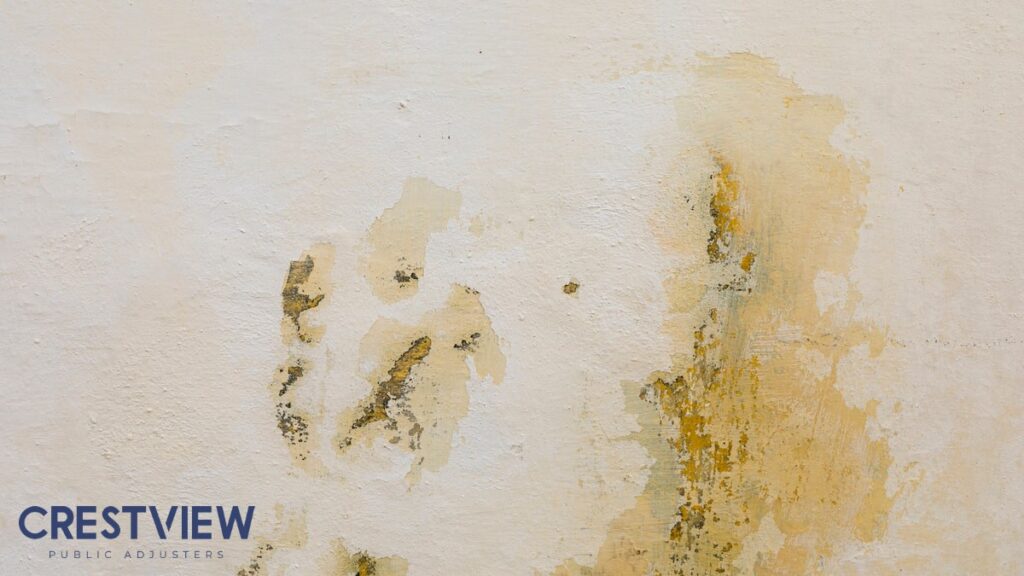
What the policy covers and what it doesn’t
Before you even contact your insurer, it’s vital to review your policy to know exactly what you’re working with.
Coverage keys
- Many standard homeowner policies cover sudden and accidental events such as a burst pipe or appliance overflow.
- Gradual damage, negligence or flood-type damage (depending on region) often falls outside coverage.
- Terminology matters: calling water intrusion a “flood” when you only have standard water damage cover may harm your claim.
Why this matters
If you don’t understand what your contract covers, you may file a claim for something that isn’t eligible, or you may miss evidence needed to prove eligible damage. One of the biggest issues in water damage insurance claim outcomes is misunderstanding what your insurer will or won’t accept.
First Steps After Discovering Water Damage
Immediate actions to protect your claim
Time is of the essence when a leak or water issue becomes evident. The faster you act and document, the stronger your position.
Key steps to take
- Shut off the water supply or isolate the source of the leak to stop further damage.
- Document the scene with photos and videos before you start cleanup or repairs.
- Notify your insurer promptly. Delayed notification is one of the major common mistakes in water damage claims.
- Preserve damaged items for inspection. Don’t discard items before the insurer or adjuster has had a chance to review.
Why document before cleanup
Without time stamped photo evidence, your insurer may contest the extent or cause of the damage. This weakens your claim. For example:
“Not documenting the damage can complicate your insurance claim.”
By documenting first, you provide a clear record of what happened, when and how much damage there is.
Filing Your Claim: Key Steps to Follow
Submitting the claim and staying organised
Once mitigation is in motion and you’ve notified the insurer, follow structured steps to support your case.
Structured checklist
- Review your policy declarations page for water-damage or “escape of water” wording.
- Compile detailed evidence: date/time of loss, source of water, extent of damage, affected items, repair & mitigation estimates.
- Maintain a log of communications with the insurer: names, dates, what was discussed.
- Gather all receipts and invoices for temporary repairs or mitigation (such as removing water, using dehumidifiers, emergency services) because these may be reimbursable.
- Wait for the adjuster’s assessment before making major permanent repairs so as not to jeopardise the claim.
Why these steps improve outcomes
A well-organised claim shows you acted responsibly, which insurers value. When you follow the checklist, you reduce the risk of delays, incomplete reimbursement, or denial.
Pitfalls and How to Avoid Them
Mistakes many homeowners make
Here’s a breakdown of some of the common mistakes in water damage claims, along with how to steer clear.
Key errors and remedies
- Waiting too long to report or act: Insurance policies often expect prompt reporting and mitigation. If you delay, the insurer may claim you worsened the damage through inaction.
- Failing to review your policy or understand coverage: Without knowing your policy, you may assume something is covered that’s not.
- Cleaning up or discarding items before documentation: If you remove or destroy evidence before the insurer sees it, your claim weakens.
- Insufficient documentation (photos, videos, receipts, logs): Weak evidence gives insurers room to reduce payouts or deny coverage.
- Starting permanent repairs or upgrades before adjuster inspection: Going ahead too soon can impact the assessment of the full scope of damage.
- Using wrong wording or mis-describing sources of water: Misrepresenting the cause may shift the claim into an excluded category.
Stress-points to watch
- Maintenance issues: If damage is from long-term neglect (e.g., a leaking roof left unrepaired), insurers may classify it as “wear and tear” and deny the claim.
- Cause of damage: A burst pipe may be covered, but groundwater seepage or flood may not be unless you had specific coverage.
- Communicating with your insurer: Keep the language factual and neutral. Avoid language that might imply wrongdoing or misrepresentation.
Maximising Your Claim Outcome
Smart strategies to strengthen your position
While you can’t guarantee a full payout, you can maximise your standing by adopting proactive measures.
Best practices
- Hire experienced restoration professionals to document damage, dry the structure correctly, and provide credible mitigation estimates.
- Get multiple repair estimates and keep them; choose trusted contractors who can submit detailed scopes of work.
- Negotiate: The first settlement offer may not be optimal, analyse it carefully and consider asking for justification or re-evaluation.
- Maintain maintenance records: If you were keeping up with plumbing and roof inspections, you’re in better shape to argue the damage was sudden and accidental.
- Use correct terminology: If you’re unsure of the cause, simply say “water damage” rather than “flood” until a professional determines the source. This avoids mis-classification of your claim.
Special Considerations and Complex Scenarios
When things get more complicated
Not all water damage claims are straightforward. Be prepared for scenarios that require extra care.
Examples and guidance
- Hidden damage: Water may have seeped into walls, flooring, HVAC systems, or foundations Insurers expect thorough inspection.
- Mold growth: If water sits too long, mold may develop. Delays may reduce your leverage because the insurer may claim the mold was due to negligence.
- Flood or sewer backup: Standard homeowner policies often exclude these unless there is additional coverage. Always review exclusions.
- Business property or rental homes: If you’re a landlord or own commercial rental property, additional rules and timelines may apply. Ensure you’re treating the claim like a business asset.
- Multiple policies: Some properties have both homeowner and flood policies; understanding which triggers is important to avoid gaps in coverage.
Practical Checklist: Your 24-Hour Claim Startup
- Stop the source of water (shut off valve)
- Take comprehensive photos/videos of damage and source
- Move valuables out of harm’s way (if safe)
- Notify your insurer immediately
- Preserve damaged items, receipts, invoices
- Document all communication (calls, emails)
- Schedule a professional damage and mitigation assessment
- Keep your policy accessible and review relevant water damage coverage
FAQ
How soon should I file a water damage insurance claim?
You should notify your insurer as soon as possible after you discover the damage, ideally within the first 24-48 hours, because delays can jeopardise your claim.
Does my policy cover damage from a slow leak that I discovered late?
Usually not. Most policies exclude damage from gradual leaks or deterioration; only sudden and accidental events are typically covered.
Can I start repairs before my insurance adjuster arrives?
You can perform emergency mitigation to prevent further damage (e.g., stop water flow, dry out), but avoid permanent repairs until the adjuster has been inspected. Starting repairs too early may reduce your payout.
Avoid Costly Mistakes; Let Experts Handle Your Water Damage Claim
A water damage insurance claim can quickly become complicated without the right documentation and cause analysis. Crestview Public Adjusters helps you avoid the common mistakes in water damage claims that insurers use to delay or deny payment. We specialize in handling water damage insurance cases from inspection to final settlement, ensuring every leak, burst, or backup is properly classified and valued.
Our water damage claims tips are built on years of experience negotiating with carriers and building airtight documentation. Whether the source was sudden or gradual, our experts specialize in water damage claims throughout New Jersey, New York, and Florida. Contact Crestview Public Adjusters today for a free policy review and maximize your insurance payout.