
Key Points:
- A frozen pipe insurance claim file should connect each heating or property-care record to its date, location, and source.
- Separate records distinguish planned precautions from conditions someone actually observed.
- Original files and timely notes help explain gaps, while the policy determines which heating and vacancy conditions apply.
A frozen pipe insurance claim may require evidence of heating and property care from before the pipe broke. New York and New Jersey owners can begin saving those records in November, before winter travel or tenant changes leave a building empty.
A dedicated folder gives thermostat history, service reports, and visit notes a home before anyone needs them. At Crestview Public Adjusters, our frozen pipe claim support includes reviewing these records alongside the policy and damage findings. The seven record groups below focus on conditions before a loss.
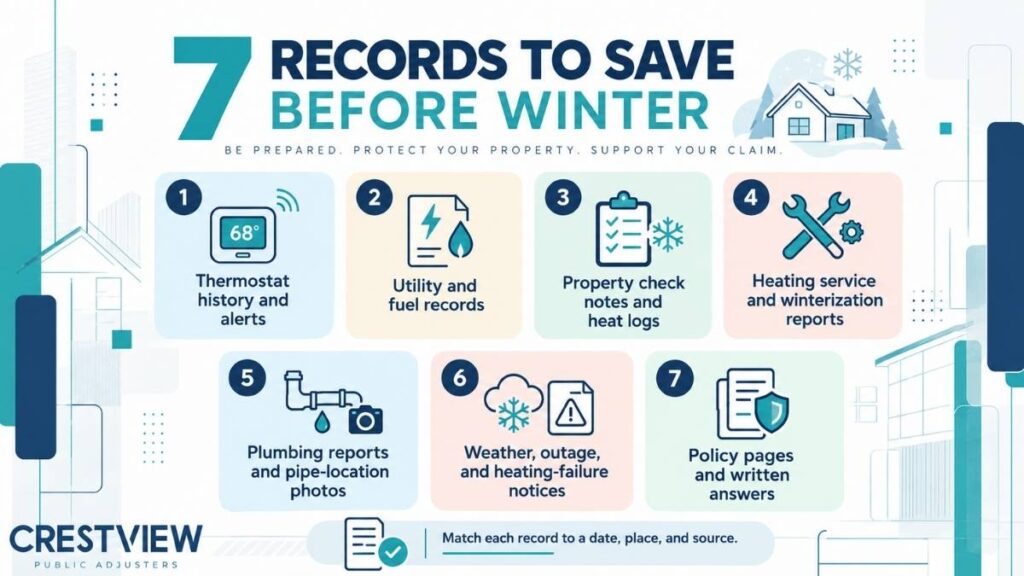
1. Thermostat History and Temperature Alerts
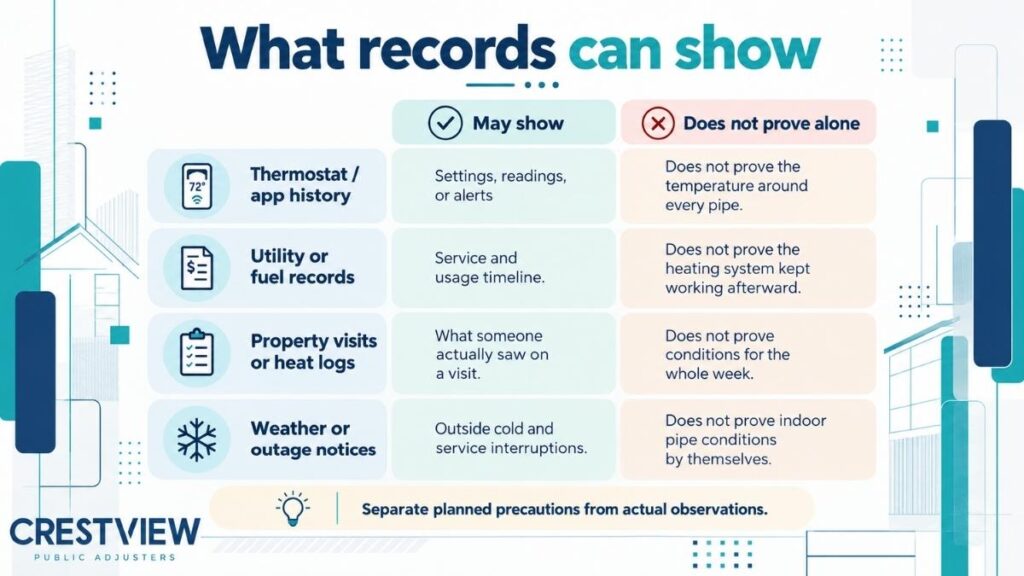
Thermostat records can show settings, measured temperatures, or heating activity, depending on the device. Those details describe different things: a setting shows the temperature requested, while a sensor reading shows the temperature at that sensor.
Before winter, the record folder can include:
- Available temperature and heating-history downloads.
- Screenshots showing dates and the device or property name.
- Low-temperature alerts and delivery times.
- Notes identifying which room or heating zone each device monitors.
A hallway reading does not establish the temperature around a pipe inside an exterior wall. For example, a warm downstairs sensor cannot describe an upstairs room served by a different heating zone.
The app’s history limits also deserve attention. Regular downloads can preserve information that may later disappear from the account.
2. Utility Bills and Fuel-Delivery Records
Utility records can support a heating timeline when thermostat information is limited. Gas or electric statements, oil-delivery receipts, and fuel-account notices belong together, with the service address and billing period visible.
Monthly usage does not show the temperature inside a particular room on a particular night. An oil delivery confirms that fuel arrived; it does not establish that the boiler worked afterward.
For properties with separate meters or heating systems, a short label can identify which account serves which area. That detail prevents a bill for one apartment from being mistaken for evidence about another. Original provider statements should remain available alongside any working notes.
3. Property-Check Notes and Heat Logs
Property-check records should describe what someone actually checked during an absence. A driveway visit and an indoor heating check provide different information.
A written arrangement can identify who has access, which areas they will check, and whom they should contact about a problem. The policy and the property’s needs should inform the arrangement; this checklist does not set a required visit schedule.
What Should a Heat Log Include?
A heat log should record the visit, observation, and response in enough detail for someone else to understand them later.
| Log Field | What to Record |
|---|---|
| Visit details | Date, time, property address, and visitor’s name |
| Area checked | Room, unit, floor, or heating zone |
| Reading | Temperature observed and the device used |
| System observation | Any visible error message, leak, or heating concern |
| Response | Person contacted, action taken, and follow-up result |
| Supporting file | Related photo, alert, or service-report filename |
A note such as “upstairs thermostat displayed 62°F at 10 a.m.” describes one observation. “Heat fine all week” makes a broader claim unless other records support it.
4. Heating Service and Winterization Reports
Maintenance files should identify the work completed, its date, and the equipment or plumbing involved. Relevant records include furnace or boiler service reports, insulation invoices, prior plumbing repairs, and winterization work orders.
An invoice labeled “winterized” can leave important details unstated. The contractor’s description should identify whether the work included closing the water supply, draining particular lines, or servicing a specific system. Any excluded areas or recommended follow-up should remain in the file.
In our North Bergen frozen-pipe case, water remained after testing in an incorrectly installed sprinkler pipe, which later froze and burst. Our team inspected and documented the damage. The installation and testing history added context that a general heating bill could not provide.
5. Plumbing Reports and Photos of Pipe Locations
Plumbing records can establish where pipes run and what professionals observed before a problem. Existing repair reports and dated photos can identify exposed lines, insulation, and areas a contractor recommended checking.
If a pipe later bursts, the plumber’s report should describe:
- The pipe’s location, material, and damaged section.
- Conditions observed during the visit.
- Findings supporting any stated cause.
- Repairs performed and parts removed.
A report should distinguish direct observations from conclusions that need further investigation. The plumber should reach their own findings; the owner’s account should describe what the owner saw.
Our claim documentation work connects source findings with affected rooms and repair records. A plumber investigates and repairs the plumbing; we represent the policyholder in the insurance claim.
6. Weather, Power-Outage, and Heating-Failure Notices
Weather and outage records can help explain an interruption to heating. Utility texts, outage confirmations, equipment alerts, and repair attendance times should retain their original dates.
NOAA’s historical weather archive provides temperature records searchable by location and date. A saved report should identify the observation station and the period covered. Regional weather describes outdoor conditions; it cannot establish the temperature inside a wall.
A power-outage notice also leaves questions open. The heating system may have stopped, restarted, or required repair. Service findings can help explain what happened at the property, without assuming that every outage caused a freeze.
7. Policy Pages and Written Answers About Absences
The complete policy belongs in the winter folder, including the declarations page and endorsements, which change or add terms. Relevant passages may address freezing, heating, vacancy, unoccupancy, and duties after damage.
New Jersey’s homeowners policy summary identifies freezing and vacancy among potential coverage restrictions. The policy itself governs the loss, so an owner’s records need to address its actual wording.
Written answers from the insurer or agent can help clarify questions before a trip or tenant change. Those answers should identify the property and relevant policy terms. Any agreed coverage change should appear in updated policy documents, which belong with the original policy.
Owners already facing a refusal of coverage can review our article on frozen-pipe claim denials in unoccupied New Jersey homes. That article addresses the separate task of responding to a denial.
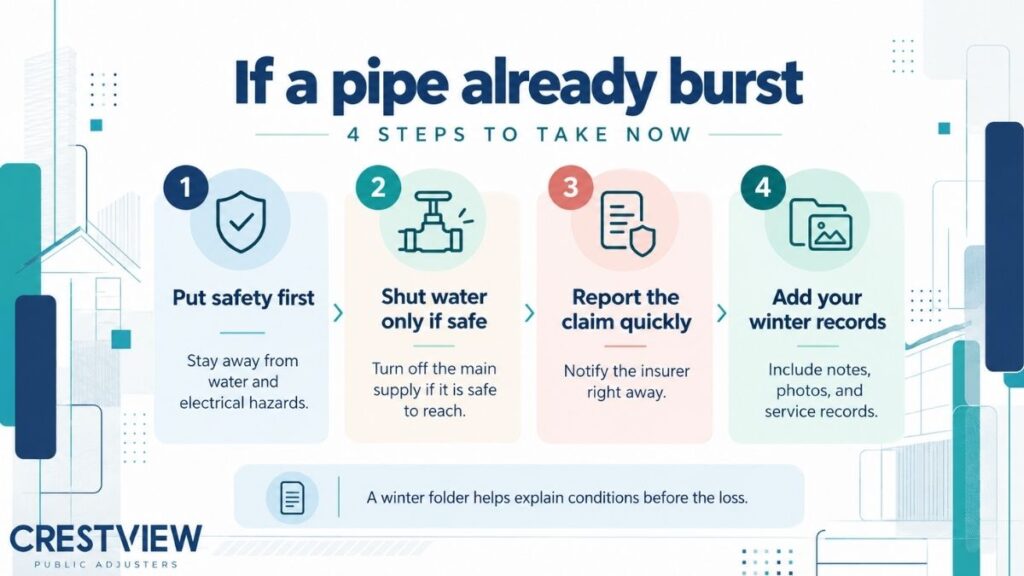
What If a Pipe Has Already Burst?
Immediate safety needs come before paperwork. Everyone should avoid water near electrical equipment and stay away from sagging ceilings. Water shutoff should happen only when the valve is safe to reach; qualified professionals should handle unsafe conditions.
New York DFS recommends prompt claim reporting, so notice should not wait for all seven record groups. Our first steps after a frozen pipe bursts explain the response and damage-documentation process. A winter folder supplies background records as that work continues.
FAQs About Frozen Pipe Insurance Claims
Should each rental property have a separate record folder?
A separate folder helps keep addresses, heating accounts, and contractor reports together. Within a multi-unit building, unit or system labels can distinguish individual heating equipment from shared equipment. The same bill should not imply separate proof for areas it does not serve.
Does the insurer need my thermostat account password?
A document request does not automatically require account access. The owner can ask which dates and data the insurer needs and whether an export or screenshots will meet the request. Passwords and security codes should remain private; any proposed access needs a defined purpose and scope.
Can I correct an error in a heat log?
A correction should preserve the original entry and identify when and why it changed. Supporting evidence can accompany the correction. A note written later from memory should say so, because a later recollection and a note made during a visit are different records.
Prepare Your Frozen-Pipe Records Before Winter
A winter record folder gives owners a starting point if an insurer later asks about heat or property care. The next step is checking whether the available records address the policy’s conditions and identifying gaps while the details remain available.
At Crestview Public Adjusters, we review policies, property records, and damage documentation for frozen-pipe claims across New York and New Jersey. Owners dealing with a loss can request a free claim assessment and share the records already on hand.
Your existing documents can start the conversation.