
Key Points:
- A lightning strike insurance claim can involve internal electrical damage with no visible scorching.
- Electrical testing belongs with qualified specialists, while owners can record equipment failures from safe locations.
- Prompt notice gives the insurer an opportunity to explain its documentation and inspection requirements before damaged items leave the property.
A late-summer thunderstorm passes through New York. The lights return, but the router will not connect, and the thermostat screen stays blank. Neither device shows a burn mark. A lightning strike insurance claim in New York can still have support, but the equipment failures need more explanation than “it happened after the storm.”
The next steps involve safety, an accurate timeline, and professional inspections. Each record has a different job: photographs show the condition, weather reports establish storm activity, and technicians investigate the cause. Together, those records help explain what happened without asking the homeowner to diagnose electrical damage.
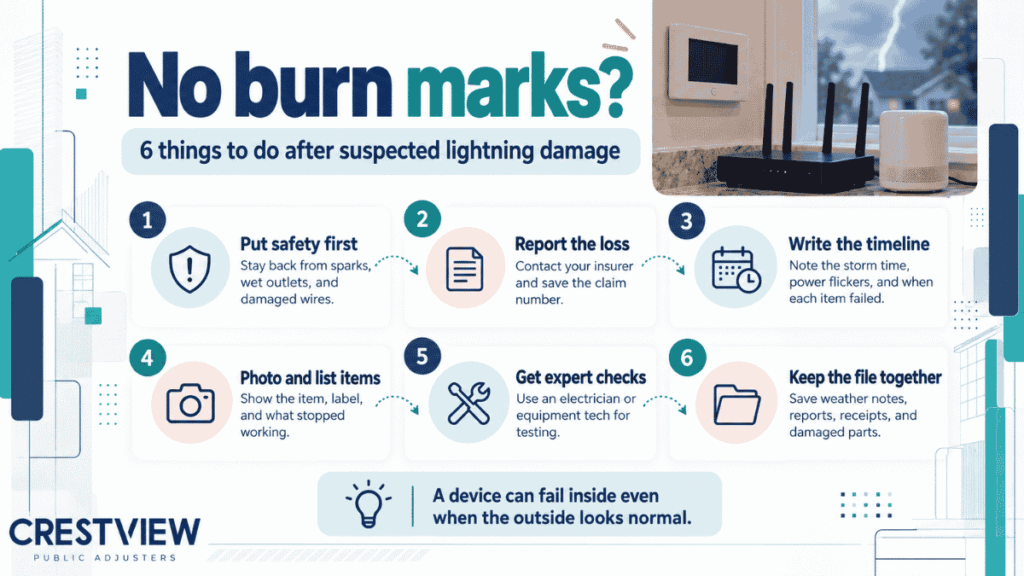
Can Lightning Damage Equipment Without Leaving Burn Marks?
Lightning can damage internal electrical parts while the outside of an appliance looks normal. The National Weather Service identifies three ways lightning enters buildings: a direct strike, wires or pipes extending outside, and the ground. A nearby strike can therefore affect connected equipment without hitting the roof.
For example, a thermostat’s plastic cover may look unchanged while its control board no longer works. That failure calls for testing. Age, an equipment fault, and other electrical problems can also cause a device to stop working, so its appearance alone cannot establish the cause.
Step 1: Stay Safe Before Checking Lightning Damage
Electrical hazards take priority over photographs and insurance paperwork. The National Weather Service recommends remaining in safe shelter for at least 30 minutes after the last thunder.
The precautions below apply before any equipment check:
- Smoke, fire, or sparking calls for leaving the affected area and contacting emergency services.
- Damaged wires, wet outlets, and downed power lines require distance.
- Electrical panels and questionable breakers need a qualified electrician.
- Plugged-in equipment and plumbing should remain untouched during a thunderstorm.
- Fire-damaged areas require permission from emergency officials before reentry.
A qualified professional should handle an unsafe power shutoff. An owner should never open electrical equipment or reset questionable breakers to gather claim evidence.
Step 2: Notify Your Insurer and Record the Storm Timeline
A suspected lightning loss needs prompt reporting, even while testing continues. The New York Department of Financial Services recommends filing claims as soon as possible and keeping detailed records of insurer conversations.
The first report should separate known facts from a suspected cause. “The router stopped working after the lights flickered” describes an observation. “Lightning destroyed every appliance” claims more than the owner may know.
A written timeline should include:
- Storm date and approximate time
- Power interruptions or unusual electrical sounds
- Discovery date and symptoms for each failed item
- Utility outage notices or available camera recordings
- Claim number, reporting date, and insurer requests
For example, the router may fail during the storm while the owner discovers the air conditioner problem the next morning. Both discovery times belong in the record.
Step 3: Photograph the Equipment and Make a Damage List
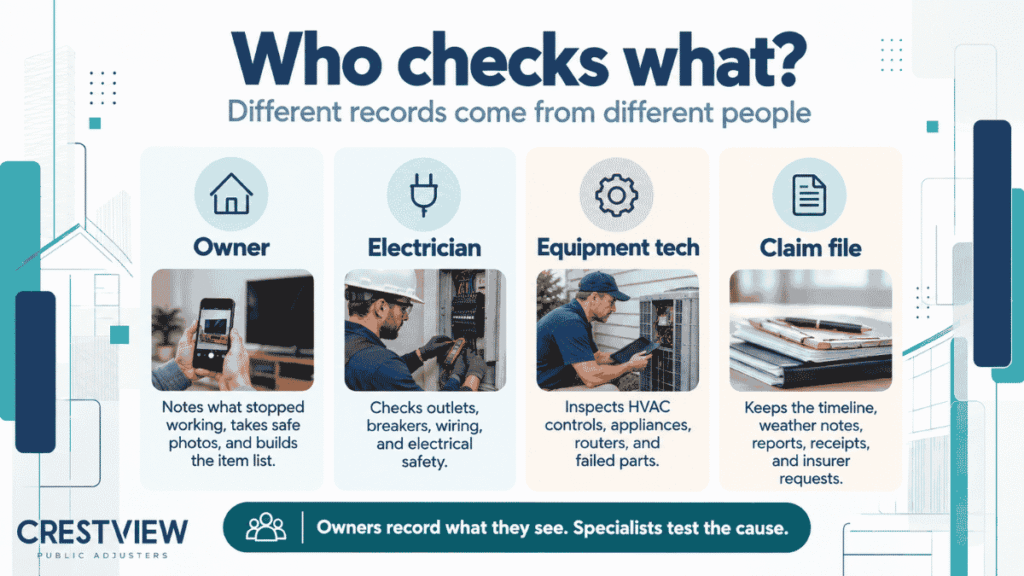
Photographs should show affected items and their labels only when access is safe. A room-by-room list can then connect each photograph to the item’s brand, model, serial number, approximate age, and reported problem.
An entry might read: “Living room router: no power light after the evening storm; working that morning.” Specific observations help a technician understand the complaint without treating the owner’s description as a diagnosis.
| Equipment | What the Owner Can Record | What a Specialist May Check |
|---|---|---|
| Air conditioner | Thermostat went blank or cooling stopped | Electrical supply, controls, and components |
| Electrical outlet | Visible damage or reported loss of power | Outlet, wiring, and related circuits |
| Router or computer | Device stopped starting or connecting | Power supply, circuit boards, and ports |
| Garage door opener | Opener stopped responding | Motor controls and electrical connections |
Purchase receipts and existing photographs can help identify belongings. The inventory should describe actual problems; a shared outlet does not establish that every connected item suffered damage.
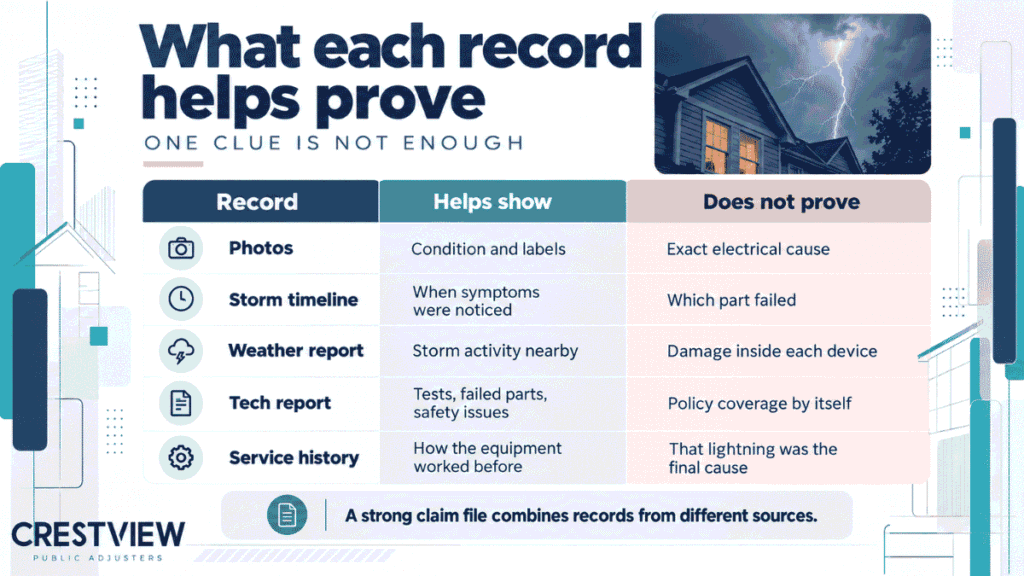
Step 4: Have Qualified Specialists Check for Electrical Damage
A written inspection report can explain damage that photographs cannot show. Different systems may need different specialists.
What Should an Electrician Inspect?
A qualified electrician may examine affected circuits, outlets, wiring, and electrical panels. The report should identify observed damage, tests performed, safety concerns, and possible causes. Any uncertainty about the source of the failure belongs in the findings.
Which Other Specialists May Be Needed?
An HVAC technician may inspect heating or cooling controls. Appliance and electronics technicians can examine individual devices. Their reports should identify failed parts, explain whether repair is possible, and describe evidence of a sudden electrical event. A surge finding alone may not identify lightning as the source.
A Lightning Loss We Handled in Old Westbury
In our Old Westbury lightning and fire claim, a strike hit a roof gas vent. The discharge traveled down the vent pipe, started a basement fire, and caused smoke damage throughout the home. Our assessment included affected belongings beyond the basement.
That case involved visible fire damage, but it shows why inspections may extend beyond the first affected area. Our fire damage claim support addresses building and contents documentation. For damage beyond burned materials, our article on partial-loss fire claims explains related concerns when a home remains standing.
Step 5: Collect Weather Records and Earlier Service Reports
Weather information helps establish storm conditions near the property. NOAA’s Storm Events Database contains reports of significant weather events, but it is not a record of every lightning strike. A missing entry does not settle the cause of an equipment failure.
Earlier equipment records add context:
- Recent service invoices and maintenance reports
- Dated photographs or videos
- Existing equipment activity logs
- Installation records and warranties
Consider an air conditioner serviced two weeks before the storm. The earlier invoice may show normal operation, while a new report identifies damaged controls. The comparison supports the equipment history; the technician still needs to assess the cause.
Step 6: Preserve Damaged Parts and Keep the File Together
Damaged appliances and electronics should remain available for inspection when keeping them is safe. The owner should ask the insurer about inspection requirements before disposal or permanent replacement. A technician can photograph removed parts, label them, and explain whether safe storage is possible.
Emergency work needed to protect people or prevent further damage should proceed without waiting for a complete claim file. Available photographs, work descriptions, and receipts can document those repairs. New York’s post-loss repair and documentation recommendations explain the distinction between emergency work and permanent repairs.
At Crestview Public Adjusters, we review policies, organize damage records, prepare claim information, and communicate with insurers on the policyholder’s behalf. We can bring the equipment list, specialist findings, and repair estimates into one file. Electrical diagnosis remains with the appropriate specialist.
Does Homeowners Insurance Cover Lightning Damage in New York?
Homeowners policies typically include lightning coverage, according to the National Association of Insurance Commissioners. Coverage for a particular building, appliance, or belonging depends on the policy terms, exclusions, limits, and deductible.
A lightning-related surge may receive different treatment from wear or another electrical problem. An inspection helps explain the cause; the policy determines the available coverage. A failure during a thunderstorm does not automatically qualify.
FAQs About a Lightning Strike Insurance Claim
What if more damaged equipment turns up after the first report?
The owner should notify the insurer promptly, reference the claim number, and provide the actual discovery date. New photographs and inspection findings can support the update. The insurer can explain any additional forms or deadlines.
Who reports damage to shared electrical equipment in a condo?
The building manager or association should receive notice when shared equipment is affected. Responsibility depends on the governing documents and applicable policies. Association insurance typically covers common areas, while an owner’s policy addresses certain property within the unit.
What if the insurer disagrees about the cause?
The owner can ask for the reasons in writing and compare them with the policy and technician’s findings. Unresolved insurance concerns can go through New York DFS’s consumer complaint process.
Get Help Reviewing Your New York Lightning Damage Claim
A lightning claim without burn marks depends on how well the records explain the loss. An owner’s observations, equipment history, and specialist findings give the insurer different pieces of that explanation.
At Crestview Public Adjusters, we help New York owners prepare and document storm damage claims. A free claim assessment can begin with the storm date, photographs, equipment list, and reports already available.
Your available records can start the conversation.