
Key Points:
- Handle frozen pipes during a winter storm by finding the freeze, opening a faucet to relieve pressure, and clearing nearby items.
- Shut off water if bursting is likely, cut power to wet areas, and thaw with safe heat like a hair dryer.
- Document bursts with photos and receipts for insurance claims.
Winter storms test your home’s plumbing when temperatures dip. Frozen pipes can crack and flood your home suddenly. Here’s how to act fast, keep water flowing, and stay ahead of pipe damage.
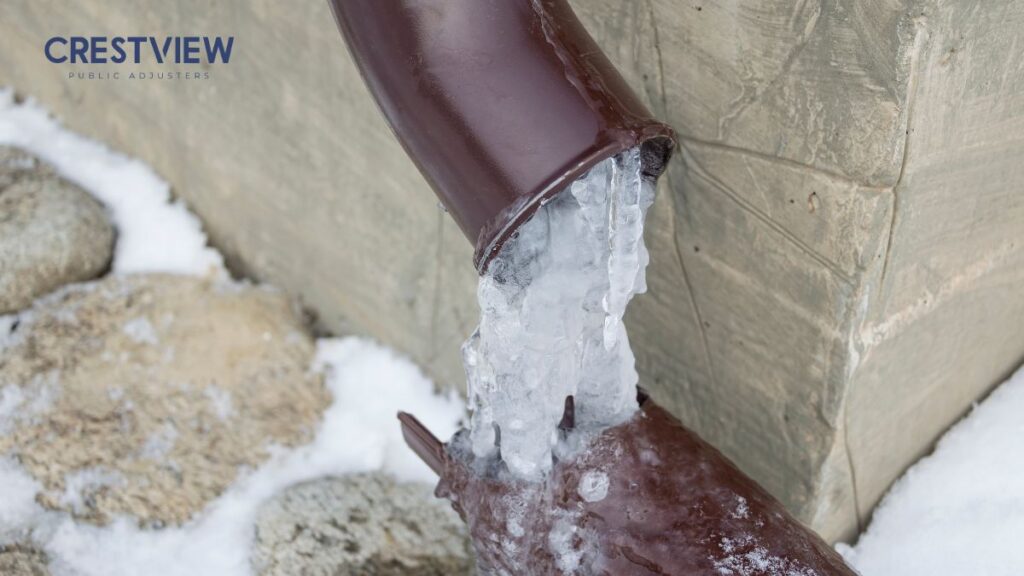
1. Find the Frozen Pipe Fast and Control Risk
A frozen pipe during a winter storm creates urgency the moment water stops or a faucet trickles. Losses grow when pressure builds behind an ice plug or when a thaw turns into a burst. Frozen pipe claims depend on a proper damage estimate. Homeowners often ask, “What to do if your pipes freeze?” or “What do you do if pipes freeze in the middle of the night?”
The first goal is simple: locate the cold section, reduce pressure, and protect people and property in the immediate area. Data shows that about 1 in 60 insured homes reports water damage or freezing each year, which explains why water damage claim process steps should start early.
Do this first:
- Open one cold-side faucet slightly. A small trickle lowers pressure behind the freeze and gives melting ice somewhere to go.
- Trace the cold line. Follow exposed runs in basements, crawl spaces, and attics; feel for sections that are icy to the touch.
- Clear the area. Move rugs, books, or electronics away from the suspect wall or ceiling in case a split pipe starts to spray.
2. Shut Water, Protect People, and Stabilize the Scene
A frozen line during a winter storm can burst without warning. Once the frozen pipe is suspected, take steps that stabilize the scene before you attempt thawing. Households often ask how to keep pipes from freezing when heat goes out. These same steps help even when the freeze has already happened:
- Shut off the main if a burst seems likely. Turn the valve clockwise; if it’s a gate valve, spin it until it stops.
- Kill power to wet areas. Switch off affected breakers before entering rooms with standing water.
- Set up catch-all protection. Place a bucket and towels under suspect runs; puncture a small hole in a bulging ceiling to drain into a bucket if needed.
3. Thaw a Frozen Pipe Safely (Without Creating New Damage)
A frozen pipe thaws best with low, steady heat applied to the cold section while a faucet trickles. Open flames damage pipes and start fires, so skip torches. Standard frozen pipe emergency steps rely on dry heat. Water volume increases by about 9% when it freezes, which explains why plugs can split copper or plastic lines.
Thaw in this order:
- Warm the room first. Raise the thermostat, set portable heaters at a safe distance, and close exterior doors and windows.
- Target the pipe. Use a hair dryer, a heat gun on low, or a heating pad. Sstart near the faucet and move toward the colder section.
- Keep water moving. Leave the faucet dripping. Steady flow speeds thawing and lowers pressure spikes.
4. Temperatures That Prevent Freezing and Low-Heat Workarounds
Common searches when planning heat settings include “What temperature will prevent pipes from freezing?” and “Does homeowners insurance cover frozen pipes?” A simple rule works for most homes: keep living spaces at 55–60°F or higher during cold snaps, and avoid deep nighttime setbacks.
Keep pipes above freezing when heat is low or out:
- Open interior doors and sink cabinets. Airflow warms plumbing along exterior walls and vanities.
- Let faucets drip. A small stream on the cold side reduces freezing risk in exposed runs and branch lines.
- Add temporary warmth. Place an electric space heater in the coldest room if power is on. Keep it clear of combustibles and never run it unattended.
Use a simple temperature plan:
- Aim for 55–60°F indoors during cold snaps, higher for homes with known cold runs.
- Avoid long setbacks at night or when away; steady heat keeps the building mass warmer.
- Know local alerts. In many homes, risk rises as outdoor temperatures sit near 20°F with wind for hours, especially in uninsulated spaces.
5. After a Burst: Dry-Out, Document, and Start the Claim
Homeowners searching for burst pipe help or water damage claim steps often miss one key point: documentation is as important as dry-out. A tiny crack flows more water than most people think; a 1/8-inch pipe crack can leak roughly 250 gallons in a day, enough to soak drywall, flooring, and contents in hours.
Stabilize and document right away:
- Shut water and power to the affected area, then start controlled drain-down with buckets and wet/dry vacs.
- Photograph every stage. Take wide shots, close-ups of the break, and serial photos as materials are opened and dried.
- Save everything you need for a Proof of Loss for frozen pipe claims. Keep damaged parts, labels, and packaging for heaters, hoses, and valves; attach receipts to one claim folder.
Prepare the claim file:
- Write a short timeline. Note when flow slowed, when the line burst, and when shutoff occurred.
- Collect estimates. Get licensed repair bids for plumbing, drywall, flooring, and contents cleaning.
- Ask for a clear scope. Request line-item estimates that match the damaged rooms, not just lump sums.
A winter storm exposes weak points in plumbing and the building shell. Documentation is as important as dry-out to avoid water damage claim denials.

Frequently Asked Questions
Should you shut your water off if your pipes freeze?
Yes, you should shut your water off if your pipes freeze. Closing the main valve reduces pressure, prevents flooding, and keeps damage contained. Leave a faucet open to relieve pressure, thaw pipes carefully, and restore water slowly while checking for leaks. Shut off immediately if a pipe bursts.
Will frozen pipes unfreeze on their own?
Yes, frozen pipes can unfreeze on their own when outdoor temperatures rise above freezing, but waiting increases the risk of bursts. Keep faucets open, close the main during thawing, and restore water slowly while checking for leaks. Active monitoring and controlled thawing remain safer than passive waiting.
Will my pipes burst if they freeze?
No, frozen pipes do not always burst, but they often can. Expanding ice strains pipe walls, and pressure rises during thaw as water pushes against ice plugs. Exterior and uninsulated runs face the highest risk. Opening a faucet relieves pressure, while insulation and steady heat lower but do not eliminate risk.
Protect Your Claim After Pipe Damage
When winter storms damage your pipes, you may face unexpected water loss, insurance delays, and repair battles. Public insurance adjusting and claims management help you get fair compensation quickly.
Working with public adjusters in Florida, New York, and New Jersey makes a difference for homeowners. At Crestview Public Adjusters, we step in when you need expert claims support with clarity and care.
Contact us today to discuss your situation and find out how our team can guide you through the claims process, support restoration costs, and help you recover what you deserve.